Quick Answer: How to Clean Your Lawn Mower Deck
Disconnect power to your mower, allow the engine to cool, then scrape away dried grass and debris using a putty knife or deck scraper. Rinse the underside with a garden hose, dry thoroughly with a towel or compressed air, and inspect for rust or damage. Clean your deck after each mowing session to prevent buildup, rust, and performance issues. Never attempt to clean a running mower or use a pressure washer, which can damage internal components.
Why Cleaning Your Lawn Mower Deck Matters
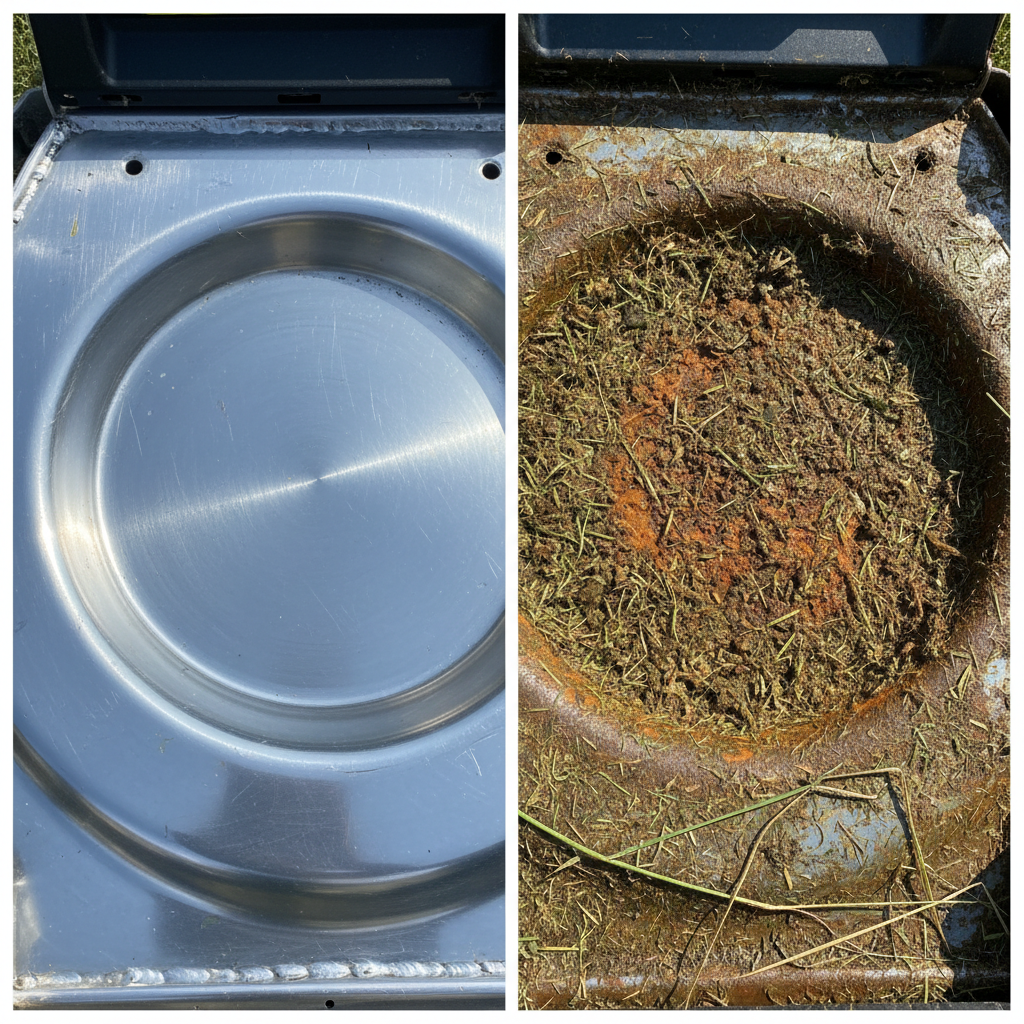
Your lawn mower deck works hard during every cutting session. Grass clippings, moisture, and debris accumulate on the underside where blades spin, creating several problems if left unchecked.
Performance impact: Dried grass buildup acts like an insulating layer, preventing heat from dissipating properly and reducing blade efficiency. This means your mower works harder to achieve the same cutting results, consuming more fuel and straining the engine.
Rust and corrosion: Moisture trapped beneath dried clippings accelerates rust formation on steel decks. Once rust starts, it spreads quickly and eventually compromises the deck’s structural integrity. Rust can also affect blade alignment and cause uneven cuts.
Blade problems: Buildup can interfere with blade rotation, causing vibration, noise, and uneven cutting patterns. In severe cases, hardened clippings can throw off blade balance, leading to costly repairs.
Safety concerns: A dirty deck with wet grass creates slipping hazards and can harbor debris that becomes a projectile when blades spin.
Safety Precautions Before You Start
Cleaning a lawn mower deck requires careful attention to safety. Mower blades remain sharp and dangerous even when the engine is off.
- Disconnect power: For gas mowers, remove the spark plug wire to prevent accidental engine start. For electric and battery-powered mowers, disconnect the battery or unplug the cord from the outlet. Never rely on an “off” switch alone.
- Allow cooling time: Wait at least 15 minutes after mowing before cleaning. The deck, engine, and exhaust components reach high temperatures during operation and can cause burns.
- Wear protective gear: Use work gloves to protect against sharp grass edges and metal burrs, safety glasses to shield against debris and splashing water, and closed-toe shoes with good grip to prevent slipping.
- Choose a flat work surface: Place your mower on level ground or a flat driveway to prevent it from rolling or tipping during cleaning.
- Never clean while running: This is the most critical safety rule. A running mower with exposed blades is an emergency waiting to happen.
- Avoid pressure washers: High-pressure water can force moisture into bearings, air filters, and the engine, causing damage or premature failure. Stick with a standard garden hose.
Tools and Materials You’ll Need
Gather these items before starting:
- Putty knife or deck scraper (plastic or soft metal to avoid damaging the deck)
- Garden hose with spray nozzle
- Wire brush (for stubborn buildup or rust spots)
- Clean towels or rags
- Compressed air (optional, for drying tight spaces)
- Work gloves and safety glasses
- Bucket of water (for rinsing tools and hands)
Step-by-Step Deck Cleaning Procedure
Step 1: Disconnect Power and Cool the Engine
Remove the spark plug wire (gas mowers), disconnect the battery (electric mowers), or unplug from the outlet (corded mowers). Allow the mower to sit for at least 15 minutes so the deck and engine cool completely.
Step 2: Scrape Dried Grass and Debris
Use a putty knife or soft-edged deck scraper to gently remove dried grass, clippings, and caked-on debris from the deck’s underside. Work in one direction, applying moderate pressure. Avoid gouging or scratching the deck surface, as this creates spots where rust can start. Pay special attention to the areas around the blades and discharge chute, where buildup tends to accumulate most.
Step 3: Rinse the Deck
Connect a garden hose and spray water across the deck’s underside, working from one end to the other. Use a medium spray setting—not so powerful that it forces water into gaps or bearings, but forceful enough to flush away loose debris and fine grass particles. Rinse until the water runs clear and you can see bare metal or deck surface.
Step 4: Dry Thoroughly
Use clean towels to wipe down the deck, removing standing water. Pay attention to crevices, seams, and spaces around blade bolts where water can pool. If available, use compressed air to dry hard-to-reach areas. Proper drying prevents rust formation and ensures your mower is ready for the next use.
Step 5: Inspect for Damage
Once dry, visually inspect the deck for rust spots, cracks, or blade damage. Small rust spots can be addressed immediately; larger corrosion or structural damage may require professional service.
Dealing with Stubborn Buildup and Rust
Hardened or Caked-On Clippings
Fresh grass is easy to remove, but dried clippings that harden can be stubborn. If your scraper isn’t making progress, try these methods:
- Soak the deck: Spray the problem area with water and let it sit for 10-15 minutes to soften the buildup, then scrape again.
- Use a wire brush: Gently brush hardened clippings with a soft or medium wire brush. Avoid heavy scrubbing, which can damage the deck finish.
- Heat helps: On warm days, the sun can soften dried grass. Park your mower in sunlight for a few minutes before cleaning.
Rust Spots and Surface Corrosion
Light surface rust can be addressed during routine cleaning:
- Use a wire brush to gently scrub away surface rust until bare metal shows.
- Dry the area completely with a towel.
- Consider applying a thin coat of oil or rust-preventative spray to protect the exposed metal.
Deep rust pitting or structural corrosion indicates more serious decay. If rust has eaten through the deck or significantly weakened it, the deck may need replacement. Consult your mower’s manual or a repair technician.
Cleaning Frequency and Maintenance Schedule
After Each Mowing Session
The best practice is to clean your deck after every use. This 5-10 minute task prevents buildup from hardening and keeps moisture from lingering on metal surfaces. Decks cleaned regularly rarely develop serious rust or stubborn debris.
Seasonal Deep Clean
At the start and end of mowing season, perform a more thorough inspection. Check for rust, inspect blade condition and sharpness, and ensure all bolts are tight. Clean out the discharge chute completely, as material stuck inside can jam blades.
Extended Storage
Before storing your mower for winter or long periods, clean the deck thoroughly, dry it completely, and consider applying a protective oil or rust-preventative coating to vulnerable areas. Store the mower in a dry location whenever possible.
Preventative Tips to Extend Deck Life
- Mulch dry grass only: Mow when grass is dry. Wet grass clumps and sticks to the deck, promoting rust and buildup. Wait until morning dew dries or avoid mowing after rain.
- Keep blades sharp: Dull blades tear grass instead of cutting cleanly, producing more debris and clippings that stick to the deck. Sharp blades make cleaner cuts and reduce buildup.
- Spray the deck before storage: Apply a light coat of oil, silicone spray, or commercial rust-preventative product to the underside of the deck before long-term storage. This creates a protective barrier against moisture.
- Inspect bolts and fasteners: Loose parts create vibration and can come off during use. Check that all blade bolts, deck fasteners, and mounting hardware are tight at the start of each season.
- Store properly: Keep your mower in a dry garage or shed, not exposed to rain or humidity. Moisture is the primary enemy of deck longevity.
- Use a deck cover: Protective covers designed for mowers shield the deck from rain and humidity when stored outside, though a dry storage location is always preferable.
When to Seek Professional Help
Most deck cleaning can be done at home with basic tools. However, consult a professional if:
- The deck has deep rust pitting or structural damage
- Blades are bent, cracked, or severely worn
- The deck is severely warped or no longer sits flat
- You’re uncomfortable working around mower components
- Cleaning and maintenance haven’t resolved cutting or performance problems
Frequently Asked Questions
How often should I clean my lawn mower deck?
Clean your deck after every mowing session for best results. This prevents grass buildup from hardening and keeps moisture off metal surfaces. Even a quick 5-minute rinse and scrape makes a significant difference in preventing rust and maintaining performance. At minimum, clean the deck at the start and end of each mowing season.
Can I use a pressure washer to clean my mower deck?
No. Pressure washers force water into bearings, air filters, spark plugs, and engine components, causing damage, corrosion, and premature failure. A standard garden hose with a gentle spray nozzle is safe and effective. Reserve the pressure washer for cleaning exterior surfaces only, and keep water away from vents and openings.
What’s the best way to remove really stubborn, hardened clippings?
Soak the problem area with water for 10-15 minutes to soften the dried grass, then scrape gently with a putty knife. For extremely stubborn buildup, use a soft or medium wire brush after soaking. Avoid heavy scrubbing or metal-on-metal scraping, which can damage the deck’s protective finish and create rust-prone areas.
How can I prevent grass from sticking to my mower deck?
Mow only when grass is dry—moisture causes clippings to clump and stick. Keep blades sharp, as dull blades tear grass and produce debris that adheres to the deck. Apply a silicone-based deck spray or light oil coating to the underside to create a non-stick surface. Clean the deck after each use so buildup doesn’t accumulate.