

Quick Answer: When Did Zero Turn Mowers Come Out? Overview
Zero-turn mowers first appeared as commercial riding mowers in the 1960s, built so each drive wheel could be powered independently and the machine could pivot in place. Homeowner versions became much more common later in the twentieth century and into the early 2000s. Exact “first” dates vary depending on whether someone means a prototype, a commercial launch, or a widely sold residential model, and manufacturer origin stories do not always agree.
When zero-turn mowers first appeared
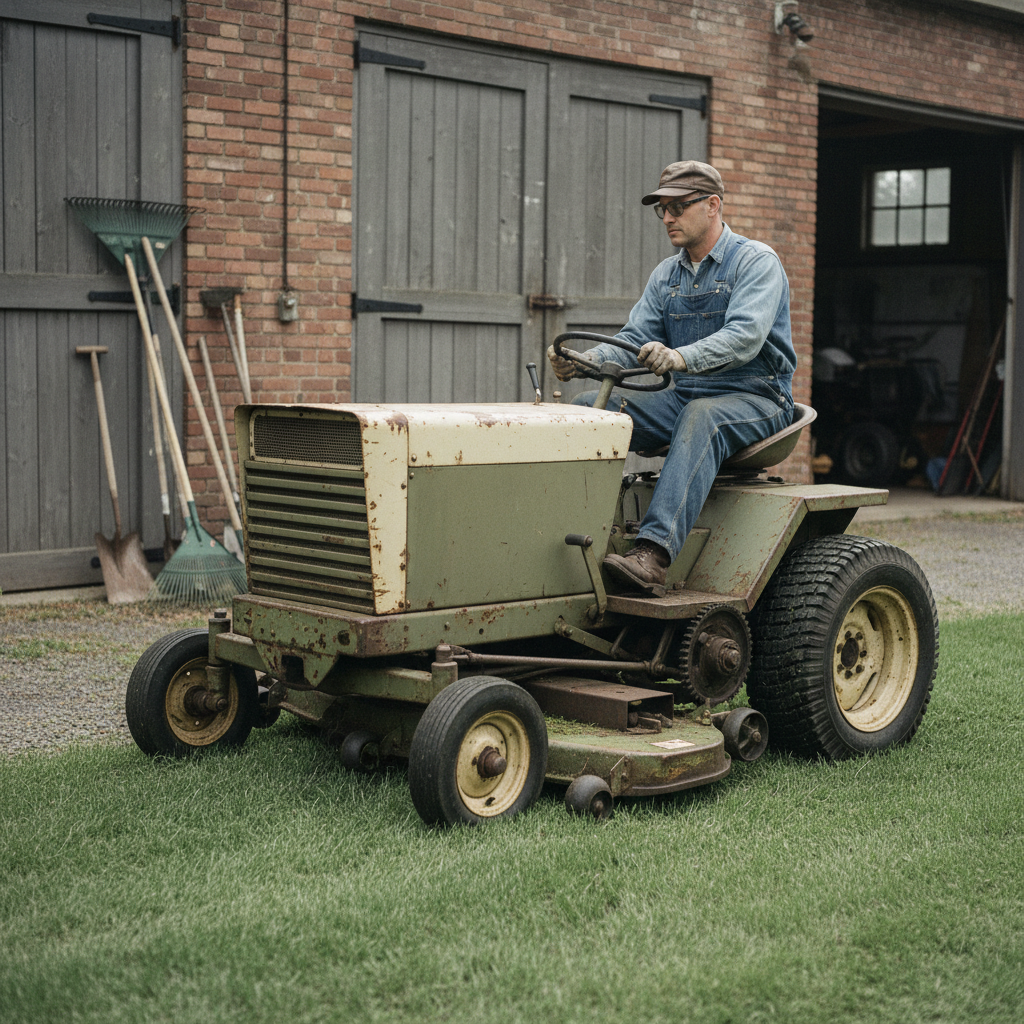
If the question is when zero-turn mowers came out, the honest short answer is an era, not a birthday. The layout that defines the category, a riding mower that can turn in a very tight circle because its drive wheels can run at different speeds or even in opposite directions, emerged in the mid-to-late twentieth century. Commercially sold zero-turn riding mowers are widely associated with the 1960s. That is the period most often used when people try to date the machines as a working product rather than as a sketch or a one-off experiment.
That 1960s association is useful, and it is also easy to over-read. “Came out” can mean several different events. Someone may be asking when the idea was first tried. Someone else may mean the first machine offered for sale to paying customers. A third reader may mean the moment these mowers became a familiar sight at equipment dealers or in suburban driveways. Those are not the same milestones, and they did not happen in the same year.
A practical way to keep the timeline straight is to separate three layers:
- Development and early commercial introduction, commonly placed in the 1960s.
- Use as a specialized tool among professional and institutional mowing crews in the years that followed.
- Later, more gradual appearance of residential-oriented machines as the layout became a normal retail category rather than a contractor niche.
If two articles or two company histories disagree on a single launch year, that disagreement is usually about which of those layers they are counting. One account may date a prototype. Another may date a first sale, a first production run, or the later moment when a brand became widely known. For a general reader, the useful answer is still the same: commercially available zero-turn riding mowers belong to the 1960s, while backyard familiarity arrived later and over a longer stretch of time.
It also helps to remember that the first machines were not a finished modern product line that simply waited for advertising. They were a new way of steering a riding mower. The idea had to be made durable enough for daily work, controllable enough for operators to trust, and commercially interesting enough for shops to stock. That is why “first appeared” is better understood as a period of introduction than as a ribbon-cutting date.
What a zero-turn mower is, in historical terms
A zero-turn-radius mower is a riding mower designed so the machine can change direction around a point at or very near its own footprint. The usual mechanism is independent drive at the rear wheels. One wheel can slow, stop, or reverse while the other keeps moving. When the wheels are driven in opposite directions, the mower can spin roughly in place. That is what “zero-turn” and “zero-turn radius” refer to: the turning circle can shrink until the machine is pivoting instead of swinging through a wide arc.
A conventional lawn tractor or steering-wheel riding mower works more like a small car or farm tractor. It steers mainly with the front wheels. The rear wheels push the machine forward, and the whole chassis needs room to swing. Around a tree, flower bed, fence post, or building corner, that extra arc matters. The operator either leaves a crescent of uncut grass and comes back for it, or takes a wider loop and spends time traveling over ground that has already been cut. The zero-turn layout was a different answer to the same job: keep the cutting deck moving through the work instead of spending so much of the day rearranging the machine.
These machines are also called ZTR mowers. In ordinary speech, ZTR is simply shorthand for zero-turn radius. The letters are sometimes treated as the name of the whole category, even though the underlying idea is the independent-drive riding mower, not a single trademarked product. Historically, that distinction matters. A trade usage can become everyday language without being the same thing as the invention itself. Saying a machine is a ZTR mower tells you how it turns. It does not, by itself, tell you who built the first one or when a particular brand entered the market.
It is also worth keeping the definition mechanical rather than commercial. A zero-turn mower is not “whatever a current dealer happens to display under that sign.” Early machines, later commercial units, and later homeowner versions all sit inside the same design family if they steer by independently driving the wheels. Deck size, seat style, and the look of the controls can change without changing that basic fact. The historical category is a way of turning, not a spec sheet.
Why the design emerged
The design grew out of a practical problem: conventional riders were slow or awkward wherever the turf was large, broken up, or full of things to go around. A wide turning radius is a mild inconvenience in an empty rectangle. It becomes a real cost when the operator has to change direction constantly. Trees, planting beds, fences, playground equipment, buildings, monuments, and irregular property lines all force extra loops. Each loop is time that is not spent cutting. It can also mean more overlapping passes, more wear on already-cut grass, and more fatigue for the person in the seat. When planning workspace deployment, consider the engineering criteria outlined in our marshall stanmore iii vs harman kardon onyx studio 8 guide.
Commercial cutters had a stronger reason than most homeowners to care about that wasted motion. A homeowner might mow one yard on a weekend and accept a few extra turns. A grounds crew or landscape contractor might spend all day, every working day, threading a machine through the same kinds of obstacles. On campuses, parks, cemeteries, office parks, sports fields, and similar sites, the job is not only to cut grass. It is to finish a large area cleanly and then move to the next one. A machine that can pivot beside a tree instead of circling it changes the rhythm of that day.
The incentive was therefore about workflow more than about novelty. Independent wheel drive promised fewer backup maneuvers, fewer uncut patches beside obstacles, and less travel across finished turf. It also promised a riding machine that could work more like a walk-behind in tight quarters without giving up the coverage of a rider. That combination is what made the layout interesting to people who mowed for a living. The early story is less about inventing a new hobby product and more about reducing the dead time built into ordinary steering-wheel geometry. For additional operational safety benchmarks, see our published testing notes on dyson v8 cyclone vs bissell featherweight stick.
None of that requires a single park, golf course, or contractor to serve as the birthplace of the idea. Large, obstacle-filled turf existed in many places, and the same turning problem would have been obvious to anyone who spent hours on a conventional rider. What mattered was that professional users could justify a specialized machine. They already thought in terms of hours, crew size, and how much ground a day of work could cover. A layout that cut wasted motion fit that way of thinking even before the machines were familiar to the general public.
The mechanical idea behind early zero-turn machines
The enabling idea is simple to picture even if the hardware is not. A riding mower sitting on two drive wheels has a turning center that depends on what those wheels are doing. If both wheels roll forward at the same speed, the machine travels straight. If one wheel slows while the other keeps going, the machine curves toward the slower side. If one wheel stops and the other turns, the machine pivots around the stopped wheel. If the wheels are driven in opposite directions, the machine can rotate about a point between them. That is how two drive wheels create a zero-radius turn. The front end is not steering the path in the usual way; it is following a chassis that is already changing direction underneath the operator. To compare alternative configurations, check our hands-on review of bissell crosswave hydrosteam vs shark stainforce.
Making that idea practical on a mower required independently controlled wheel drives. It is not enough for both wheels to be powered. The operator needs to change the speed and direction of each side while the cutting deck is running and the machine is moving over uneven ground. Independently controlled hydrostatic drives became a common way to do that. A hydrostatic system uses fluid power so the drive can vary smoothly and reverse without the kind of gear changing a person would expect in a car. Applied to each side of a mower, that kind of control lets the operator feather one wheel, hold it, or send it backward while the other wheel continues to work.
The control layout followed from the same idea. Many early and later zero-turn machines used dual levers, often called lap bars, instead of a car-like steering wheel. Each lever corresponds to one drive wheel, or to one side of the machine. Push both forward and the mower goes forward. Pull one back and that side slows or reverses, so the machine turns. The steering wheel of a lawn tractor is a good match for front-wheel geometry. It is a poorer match for a machine whose direction is decided by two independent drives. Lever controls made the new geometry feel direct: the operator’s hands were, in effect, talking to the wheels that created the turn.
That does not mean every early example used the same control scheme, the same drive hardware, or the same operator position. The category is defined by independent drive-wheel steering, not by one universal cockpit. Some machines will have looked more experimental than others. Some will have borrowed more from existing industrial or agricultural practice. What they shared was the attempt to replace a wide front-wheel arc with a turning center the operator could place almost underneath the machine.
It is easy, looking backward, to treat hydrostatic drives and lap bars as if they arrived fully standardized. They did not need to. The important historical point is more modest: once each drive wheel could be commanded on its own, a riding mower no longer had to accept the turning radius of a small tractor. That was the mechanical door the 1960s machines walked through. Later refinements changed how smoothly, comfortably, or cheaply that door could be used. They did not invent the door itself.
Commercial machines came first
The first widely discussed zero-turn riders were commercial tools. They were aimed at people who already mowed large properties as work, not at households looking for a more entertaining weekend machine. That audience could accept an unfamiliar control layout. It could also justify a specialized piece of equipment if the machine reduced the time spent looping around obstacles or making extra passes. A contractor, grounds superintendent, or institutional crew was in a position to compare one day’s work with the next. A typical homeowner was not buying on that basis.
Early machines were generally a poor fit for ordinary residential yards for reasons that had little to do with whether the turning idea was sound. They were built for work. That usually meant a larger, more specialized, and more expensive machine than a family lawn tractor. The controls were less “car-like.” An operator who had only ever used a steering wheel had to learn a new set of motions. For a crew that would use the machine every day, training was a cost that could be absorbed. For a person who mowed occasionally, it was a reason to stay with the familiar tractor in the garage.
There was also a dealer and service problem that is easy to forget after the category became common. A new kind of rider needs shops willing to sell it, mechanics willing to understand it, and customers who already know what it is for. Commercial channels are built for that kind of specialized equipment. Neighborhood retail is not, at least not at first. So the early market clustered where the job already existed: professional mowing, not the average backyard.
None of this anoints one surviving brand as the only commercial pioneer. Several makers later described themselves as early participants, and those stories do not line up into a single authorized version. What can be said without picking a winner is the audience. The layout made sense first as a working tool. Homeowner demand was not the force that pulled the first machines into existence.
When homeowners started seeing them
Many people remember zero-turn mowers as a later product because, for most households, they were. A machine can exist for years in commercial yards and still be almost invisible to someone who only shops for a home rider. That gap is the main reason the 1960s date and personal memory often feel as if they contradict each other. They are answering different versions of “came out.”
Homeowners began encountering these mowers as more manufacturers offered smaller or more residential-oriented versions and as dealers started treating the layout as a normal category rather than a contractor specialty. That was a gradual spread through the later twentieth century and into the early 2000s, not a single consumer launch year. Several things had to change before household buying could grow. The machines had to become available in sizes that matched ordinary yards. They had to be sold in places homeowners already shopped. The controls had to seem learnable rather than purely occupational. And the idea itself had to become familiar enough that a buyer recognized “zero-turn” as a type of mower, not as an obscure piece of job-site equipment.
As more makers entered, the meaning of the term broadened in the marketplace even though the mechanical definition stayed the same. A zero-turn mower was no longer only the large commercial unit a crew trailer might carry. It could also be a home riding mower that used the same independent-drive turning idea. Commercial and residential machines still differed in duty, size, and intended use, but they now shared a public name. That is often how people first notice a category: not at the moment of invention, but at the moment the category has a shelf.
Claims that a named company “brought zero-turns to homeowners,” or that residential models “took off” in one specific year, need more than a general history article can settle. Companies like to date their own entry as if it were the consumer beginning of the whole idea. Later popularity can also be mistaken for origin. A brand that sold a lot of home machines may have popularized the layout without having introduced it. For this question, the safer statement is the broad one: household familiarity arrived later than commercial introduction, and it arrived by accumulation, more makers, more sizes, more dealer presence, rather than by one consumer unveiling.
How the category changed after the first introductions
“Coming out” was a process. The independent-drive turning idea persisted and diversified instead of appearing once in finished modern form. After the first commercial introductions, more manufacturers entered. The range of sizes widened. Comfort, control feel, and everyday usability were refined. Commercial lines and residential lines increasingly looked like related but separate markets: one aimed at all-day professional work, the other at homeowners who wanted the tight turning without needing a contractor’s machine. The defining trait stayed the same. The surrounding product did not.
A reader should not assume that a 1960s commercial rider and a later homeowner zero-turn are the same object with a different paint color. Materials changed. Drive systems were refined. Decks, frames, operator stations, and the small aids that make a machine less tiring all evolved over decades. Even the experience of learning the controls changed as the layout became common and as designers had more time to make lever motions feel predictable. The early machines proved that a rider could pivot. Later machines spent years making that proof into a family of products.
It is tempting to turn that evolution into a highlight reel of “firsts”: the first of one deck style, the first suspension seat, the first electronic aid, and so on. Those feature chronologies are exactly where unsourced stories get ahead of the evidence. Different makers added different refinements at different times, and marketing copy often treats a company’s own upgrade as if it were a change in the entire industry. The historically safe point is broader. The category matured by multiplying options and by splitting into commercial and residential branches. It did not remain frozen at the moment the first paying customer took delivery.
That maturation also explains why modern familiarity can hide the original context. Once zero-turn mowers were everywhere, it became easy to imagine they had always been a consumer product that simply got nicer. The actual sequence ran the other way. A specialized commercial solution became, over a long period, a common way to build a riding mower. The turning idea is old enough to belong to the 1960s. The everyday image of the machine is younger than that idea.
Why “who made the first one” is hard to pin down
First-inventor and first-to-market statements are contested, and they are contested for reasons that have little to do with anyone being careless. People count different events as the beginning. One history starts with a concept or a workshop prototype. Another starts with a patent filing or a patent grant. A third starts with the first machine sold. A fourth starts with the first machine that sold in meaningful numbers, or with the brand that later became famous for the layout. Those events can be years apart and still get compressed into the sentence “they invented the zero-turn mower.”
Company histories disagree because companies are not neutral archivists of a shared category. A firm may date its own first production model and let that date stand in for the industry. A later brand may have popularized a design it did not originate, then told a story that begins at the moment of its own success. Successors, mergers, and revived names can also blur the record. The machine people remember may not be the machine that first worked. The name people know may not be the name on the earliest commercial unit.
Trade language adds another layer of confusion. ZTR is now a common shorthand for the category, but letters that began as trade usage can be mistaken for proof of origin. If a mark, slogan, or model family becomes the popular name for a whole class of machines, later readers may assume the owner of that language created the class. Sometimes a company did help standardize the public name. That is not automatically the same as building the first independently steered riding mower.
Well-known brand origin stories should therefore be treated as claims, not as a verdict. If a specific company year appears in advertising or on a corporate timeline, the careful reading is: that is the date the company attaches to its own milestone. Other claimants exist, and they may be pointing at a different milestone rather than simply being wrong about the same one. A general explainer cannot settle a priority dispute that depends on patents, invoices, photographs, and definitions of what counts as a zero-turn mower. It can only refuse to pretend the dispute is already over.
That caution is not a dodge. It is the historically accurate position. The category has a clear mechanical identity and a clear commercial era. It does not have a single, uncontested birth certificate. Anyone who needs a courtroom-style answer about an inventor, a patent, or a first sale needs primary records, not a smoothed legend.
What “came out” usually means for this question
When someone asks when zero-turn mowers came out, the honest short answer is the period, not a calendar page. Commercial zero-turn riders are widely associated with the 1960s. They were developed so a riding mower could turn in place by driving its wheels independently, and they found their first real audience among people who mowed for a living. Residential availability came later and more gradually, as the layout spread through the later twentieth century and into the early 2000s and became a normal thing for a homeowner to see on a dealer lot.
If a reader needs a company-by-company origin date, for a legal question, a patent question, a brand history, or a collector’s identification, the next step is not a more confident sentence in an overview. It is a check of primary company records, patent documents, and dated sales or service material. Those sources can still disagree, but they at least disagree about evidence rather than about marketing memory. A general article can explain the design, the commercial-first sequence, and the reason exact firsts are slippery. It cannot replace the file folder.
This article is also not answering several nearby questions that often travel with the history. It is not a buying guide. It is not a ranking of current brands or models. It is not a safety manual, a maintenance schedule, or advice about which machine belongs in a particular yard. Knowing when the layout appeared does not tell a homeowner what to purchase now. A modern residential zero-turn is part of the same design family as the early commercial machines, but it is not a snapshot of them, and the history of the category is not a recommendation.
The remaining caveats are the same ones that should follow any clean version of this timeline. Invention, prototype, first sale, and mass-market familiarity are different events. Commercial introduction and homeowner familiarity are different audiences. Independent wheel drive is the defining idea; hydrostatic hardware and dual-lever controls are common ways that idea was made usable, not a proof that every early machine was identical. ZTR is everyday shorthand, not a substitute for a documented first. And the useful answer to the original wording remains an era: the machines came out as commercial riders in the 1960s, then spent the following decades becoming the broader riding-mower category people recognize today.
Field-Verified Equipment & Replacement Hardware
Our editorial team’s recommended OEM-grade replacement parts and heavy-duty equipment selections to ensure optimal reliability and performance.

Pros
- Brushless motor system delivers gas-equivalent power without emissions or excessive noise
- High-capacity battery kit enables cutting coverage of up to 4.4 acres per charge set
- Durable 10-gauge steel deck and constant high blade tip speed handle dense grass effectively
- Premium seating and lighting features support comfortable extended operation
- 4-year warranty provides strong protection for the investment
Cons
- Runtime tops out around 4.4 acres depending on conditions, requiring recharges for bigger properties
- Electric design depends on charging infrastructure and battery management rather than simple refueling
- Height adjustment is noted only basically without extensive position details in available specs
The Greenworks 60V MaximusZ Zero Turn Riding Lawn Mower is a commercial-grade electric machine built for large lawns. Its primary construction centers on a heavy-duty 60-inch 10-gauge fabricated steel deck that prioritizes durability and airflow, paired with premium comfort elements including an adjustable suspension seat with lumbar support and foldable armrests for a solid first impression of quality and user focus.
Performance shines through an intelligent brushless motor system offering power equivalent to a 31HP gas engine with zero emissions. Three high-torque brushless hub motors sustain a constant 17,900 FPM blade speed, while SmartCut Technology auto-adapts to prevent bogging in thick or wet grass. The complete kit supplies (2) 20.0Ah suitcase batteries plus (4) 8.0Ah batteries and a 1.5kW fast charger for up to 4.4 acres of cutting. Additional capabilities include a 4-in-1 deck for mulching, bagging, rear and side discharge, 300 lb towing capacity with front/rear hitch, dual LED headlights, and an LCD display.
Drawbacks and considerations include the practical need to recharge the battery set after maximum runtime, which can interrupt work on properties exceeding 4.4 acres. Being fully electric means reliance on power sources for recharging instead of fuel, and height adjustment is referenced only in basic terms without more granular position data in the specifications.
In verdict, the Greenworks 60V MaximusZ delivers the most value to homeowners and professionals managing medium-to-large properties who want quiet, emission-free commercial power, versatile cutting options, and the security of a 4-year warranty in a comfortable zero-turn package.
Pros
- Robust 26HP Kohler engine provides ample power for demanding mowing tasks and thick vegetation
- Large 60-inch fabricated steel deck enables faster coverage of extensive lawn areas
- Durable 3-blade fabricated construction enhances deck longevity and resistance to wear
- Zero-turn capability offers precise control and reduced mowing time in complex layouts
Cons
- Large 60-inch deck and overall zero-turn size demand significant storage space and may not suit smaller properties
- Base specifications lack details on accessories such as mulching kits or baggers, which may need separate purchase
- High-powered engine setup could increase fuel use during long sessions relative to lower-horsepower models
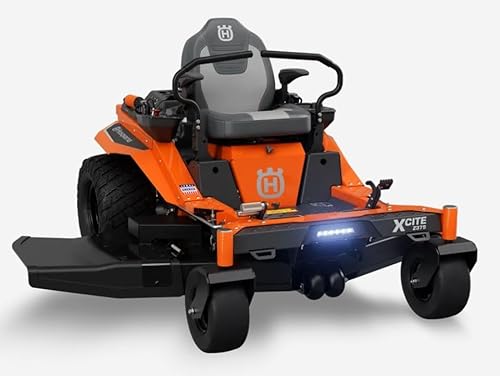
The Husqvarna Xcite Z375 is a zero-turn riding lawn mower engineered for large-scale residential and light commercial mowing. It combines a solid fabricated steel build with a capable Kohler power plant, creating an immediate impression of durability and purposeful design suited to expansive properties.
Performance centers on the 26HP 747cc Kohler V-Twin engine that supplies strong, consistent power for thick grass and varied terrain, paired with the 60-inch 3-blade fabricated steel deck. This setup delivers a wide, clean cut that covers ground efficiently and maintains quality across long sessions.
Considerations include the substantial footprint of the 60-inch deck and zero-turn frame, which requires ample storage and may feel oversized for compact yards. Available data also omits specifics on add-ons or comfort options, so buyers should confirm full feature sets independently.
The Husqvarna Xcite Z375 delivers the most value for owners of large lawns or light commercial operators who prioritize raw cutting power, deck durability, and zero-turn efficiency over compact size or extensive accessory packages.

Pros
- Strong stated cutting capacity for large properties, with up to 4 acres per charge.
- Zero-turn design supports fast, precise mowing around obstacles.
- Uses battery power instead of gas, reducing maintenance-related chores and emissions.
- Includes six high-capacity batteries and a charger, so it is ready for use out of the box.
Cons
- Heavy at 720 pounds, which may make transport, storage, or maneuvering by hand difficult.
- Large dimensions require substantial garage or shed space.
- The high upfront cost may put it out of reach for buyers with smaller lawns or limited budgets.
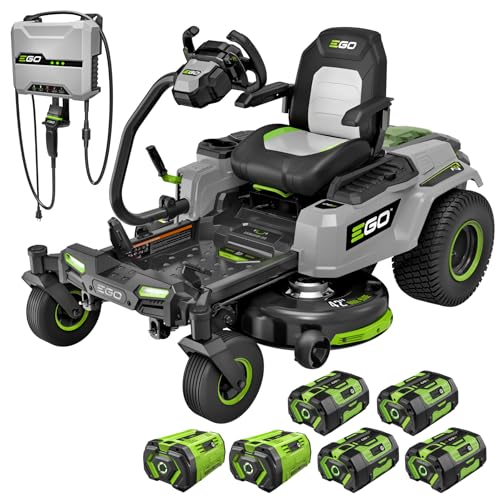
Overview & Design: The EGO Power+ ZT5207L is a 52-inch electric riding lawn mower with a zero-turn radius, built for users who need efficient coverage on larger properties. Its black finish, substantial frame, and 720-pound weight reflect a serious, full-size riding mower designed for demanding residential mowing.
Performance & Key Features: EGO says Peak Power+ technology combines up to six 56V ARC Lithium batteries, and the mower is rated at a 25 HP-equivalent output. The 52-inch deck and zero-turn steering should help reduce mowing time and improve control around landscaping, while the included six 56V 12.0Ah batteries are stated to support up to 4 acres per charge.
Drawbacks & Considerations: This model is large and heavy, so it will not suit every storage space or every user. Its premium positioning also means buyers should be confident they need this much capacity, since smaller yards may not justify the size, weight, or cost.
Verdict: The ZT5207L is best for homeowners with expansive lawns who want battery-powered convenience and zero-turn efficiency in one machine. It is a compelling option if you value gas-like performance, broad deck coverage, and compatibility with EGO's 56V battery ecosystem.
Pros
- Powerful 24HP/726cc Kawasaki V-Twin engine for reliable high-output performance
- Wide 61-inch fabricated 3-blade deck for efficient coverage of large areas
- Commercial-grade Hydro Gear ZT-3100 transmission for durable zero-turn handling
- Generous 5-gallon fuel tank and included ROPS for practical all-day use and safety
- 4-year consumer warranty coverage on the complete machine
Cons
- Large 61-inch deck and zero-turn frame require substantial storage space and may feel oversized for small residential yards
- Commercial-oriented components can demand more maintenance knowledge than basic consumer mowers
- No bagging, mulching kit, or additional attachments listed as standard equipment
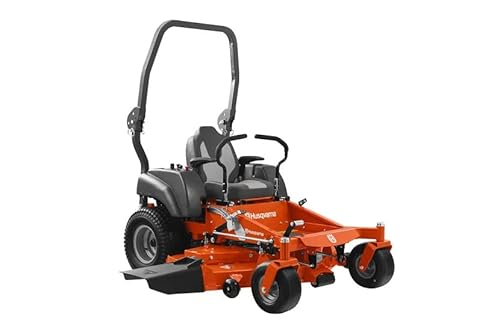
The Husqvarna MZ61 is a robust zero-turn riding lawn mower from the brand's commercial-leaning lineup, pairing a heavy-duty fabricated deck with a ROPS safety structure. Its overall build emphasizes durability and operator protection for demanding outdoor work rather than lightweight residential convenience.
Performance centers on the 24HP/726cc Kawasaki FR730V Series V-Twin engine that supplies ample torque for thick or wet grass, while the 61-inch 3-blade fabricated deck cuts wide swaths efficiently. The Hydro Gear ZT-3100 commercial hydrostatic transmission enables smooth, precise zero-turn steering that reduces time spent trimming edges and navigating landscaping. A 5-gallon fuel tank further supports longer continuous runs on expansive properties.
Potential drawbacks include the mower's substantial size, which can make storage and transport more challenging for users with limited space. The commercial-grade components also mean the machine may require more frequent or specialized maintenance compared to simpler residential models, and no bagging or mulching systems are noted as included.
Overall, the Husqvarna MZ61 delivers the strongest value for owners of large lawns, estates, or light commercial grounds who prioritize cutting speed, engine reliability, and safety features. Smaller-yard users will likely find it oversized for their needs.
Pros
- Delivers powerful Peak Power performance matching traditional 24HP gas zero-turn mowers while remaining fully electric
- Long 2-acre runtime with the complete included battery set reduces downtime for most residential properties
- Advanced e-STEER wheel and digital controls offer precise maneuverability and customizable mowing experience
- Durable steel deck with suspension and IPX5 rating handles varied terrain and weather conditions quietly
- Comprehensive warranty coverage (up to 5 years with registration) supports long-term ownership confidence
Cons
- Runtime capped at approximately 2 acres may require recharging for properties larger than that size
- Relies entirely on the proprietary EGO 56V battery and charger ecosystem for operation and expansion
- Electronic steering wheel design may require an adjustment period for users accustomed to traditional lever controls
The EGO POWER+ Z6 ZT4215S is a premium battery-powered zero-turn riding lawn mower built for residential users who want gas-like power without the noise, fumes, or maintenance. Its wide frame design and 42-inch 12-gauge stamped steel deck create a solid, balanced feel, especially on slopes, while the deck suspension system helps deliver a quieter cut. The overall impression is of a modern, well-engineered machine that prioritizes ease of use and durability through its IPX5 weather-resistant construction.
Performance centers on Peak Power technology that combines the output of up to six 56V ARC Lithium batteries to match a 24-horsepower gas engine. With the two included 10.0Ah and four 6.0Ah batteries, it can cover up to 2.0 acres on a single charge. The dual-blade system offers adjustable speeds from 2300 to 3200 RPM, ten cutting heights from 1.5 to 4.5 inches, and three driving modes (Control, Standard, Sport) that reach 8 MPH. Industry-leading e-STEER technology uses a steering wheel with advanced electronics for precise zero-turn control, while the color digital screen and EGO Connect app allow real-time customization of speed, blade settings, cruise control, and battery monitoring.
Potential drawbacks include the 2-acre runtime limit, which means larger properties will need mid-job recharging using the included 800W charger. The mower depends completely on the EGO 56V battery platform, so expansion or replacements stay within that ecosystem. Some users transitioning from traditional zero-turn levers may also need time to adapt to the electronic steering wheel.
Overall, the EGO POWER+ Z6 ZT4215S delivers excellent value for homeowners with lawns up to a couple of acres who prioritize quiet electric operation, strong cutting performance, and smart features. Those seeking a reliable, low-maintenance alternative to gas zero-turns with solid warranty support will find this model particularly well suited.
Pros
- Robust 24 HP engine for strong efficient performance on demanding jobs
- Large 54-inch versatile cutting deck with multiple positions for thorough coverage
- Hydrostatic transmission featuring electronic differential lock for smooth traction
- Comfort-focused design with high vinyl seat and overmolded steering wheel
- Rugged heavy-duty construction with protective bumper for long-term durability
Cons
- Large 54-inch deck and high power may reduce suitability for small or obstacle-filled yards
- Commercial-grade hydrostatic system can involve more specialized maintenance needs
- Limited detailed specifications such as dimensions or fuel capacity provided in data
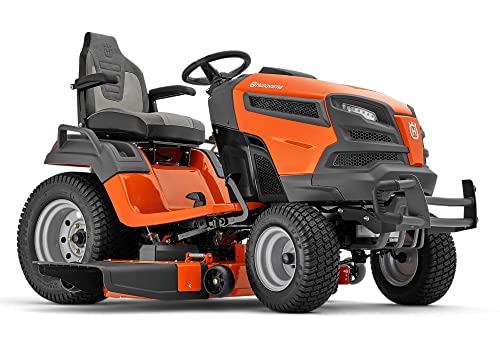
Overview & Design: The Husqvarna Riding Lawn Mower is a robust riding lawn mower built with a heavy-duty frame alloy steel construction and brush guard-style bumper for front-end protection. Its overall design conveys rugged durability ideal for demanding outdoor use and immediate reliability.
Performance & Key Features: The 24 HP engine powers fast efficient mowing across tough terrains. The 54-inch ClearCut deck with multiple cutting positions delivers a perfect cut every time while the commercial-grade hydrostatic transmission with electronic differential lock provides smooth operation excellent traction and reduced lawn damage. Comfort is supported by the extra-high vinyl seat and deluxe overmolded steering wheel for an optimal driving experience.
Drawbacks & Considerations: The substantial size and power output of the 54-inch deck may limit maneuverability in tight spaces or smaller properties. Advanced transmission components could require specialized upkeep and certain metrics like exact weight or storage needs are not detailed in the available information.
Verdict: This mower delivers the most value to owners of large properties or those facing varied tough terrains who need reliable power cutting versatility and traction. It is recommended for users prioritizing performance comfort and rugged build quality in regular extensive lawn care.

Pros
- Powerful 80V brushless motor delivers 32HP gas-equivalent performance with quiet fume-free operation and no engine maintenance.
- Complete kit includes four 6.0Ah batteries and 600W charger for substantial runtime up to 1.5 acres.
- SmartCut technology and 42-inch heavy-duty steel deck ensure consistent cuts without bogging in tough conditions.
- Versatile towing up to 350 lbs and optional cargo hauling plus comfort features like high-back seat and LED lights.
- Strong 4-year limited warranty and full compatibility with the Greenworks 80V tool ecosystem.
Cons
- Rear utility cargo bed for 200 lb hauling is sold separately and not included in the kit.
- Runtime of up to 1.5 acres varies with conditions and may require recharging or battery swaps on larger properties.
- As a fully cordless model continuous operation depends on battery levels unlike gas engines with unlimited runtime.
The Greenworks 80V 42" CrossoverT Cordless Riding Lawn Tractor is a ready-to-mow zero-emission tractor designed for homeowners managing medium to large lawns. It features a reinforced 42-inch stamped steel deck of 12-gauge construction along with premium comfort elements such as a high-back padded seat with foldable armrests. The overall build emphasizes durability and user convenience right out of the box with the included battery and charger set.
Performance centers on the 80V TruBrushless motor that provides 32HP gas-equivalent power with instant torque and quiet fume-free operation. SmartCut technology senses grass conditions and automatically adjusts power to maintain a consistent cut even in tall thick or wet areas. The four 6.0Ah batteries support runtime for up to 1.5 acres depending on conditions while dual LED headlights and a 7-position deck height range from 1.5" to 4.5" add practicality. Front and rear attachments further allow towing up to 350 lbs for added yard utility.
Key considerations include that the rear utility storage bin capable of hauling 200 lbs is sold separately so full cargo functionality requires an extra purchase. Runtime remains condition-dependent and may fall short for properties significantly larger than 1.5 acres without using the 600W charger or swapping batteries. The cordless design prioritizes ease and low maintenance but trades off the continuous runtime of traditional gas models.
This tractor delivers strong value for eco-conscious owners of residential properties who want gas-like power without the emissions noise or upkeep. It suits those who already use or plan to expand into the Greenworks 80V family of tools and who appreciate the 4-year limited warranty. Users with exceptionally large or commercial-scale lawns should evaluate battery logistics carefully before purchase.

Pros
- Delivers strong 21 horsepower equivalent power comparable to gas riding mowers.
- Provides up to 1.5 acres of runtime on a full charge with the six included batteries.
- Features low-maintenance dual brushless motors without belts for greater durability.
- Offers versatile 12-position cutting height adjustment from 1.5 to 4.5 inches.
- Includes digital controls for blade settings, drive speeds, and cruise control.
Cons
- Limited to 1.5 acres of cutting per charge without purchasing additional batteries for bigger lawns.
- Requires recharging time for the six 56V batteries after each use session.
- Relies solely on battery power with no hybrid or gas backup option for extended operation.
The EGO Power+ TR4204 is a cordless electric riding lawn mower built as a modern tractor alternative for residential use. It features a robust 42-inch stamped steel deck and arrives ready to go with six 56V 6.0Ah batteries plus a charger, creating an immediate impression of convenience and solid construction free from gas engine complexity.
Performance shines through its equivalent 21 horsepower output and top speed of 6 MPH, allowing efficient coverage of up to 1.5 acres on a single charge. Dual brushless cutting motors operate without belts for added durability and less upkeep, while the digital display lets users select three blade settings, three drive speeds, and cruise control. The 12 adjustable heights ranging from 1.5 to 4.5 inches combined with anti-scalp wheels deliver precise results across varied terrain.
Drawbacks center on battery dependency, as larger properties beyond 1.5 acres require extra batteries and recharging intervals can interrupt workflow. The fully electric design eliminates fuel storage needs but demands access to power sources between sessions.
This mower suits homeowners with medium to large yards who value quiet, emission-free operation and reduced maintenance. Those seeking expandable battery capacity for bigger areas will find the EGO Power+ TR4204 a strong long-term investment in cordless lawn care.
Technical Standards and Compliance
Mechanical safety standards, operational tolerances, and protective gear guidelines align with benchmark specifications established by the American National Standards Institute (ANSI).









