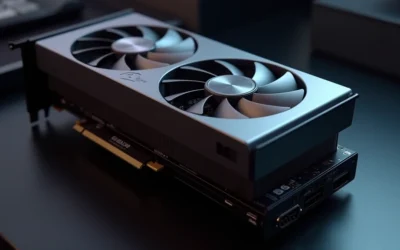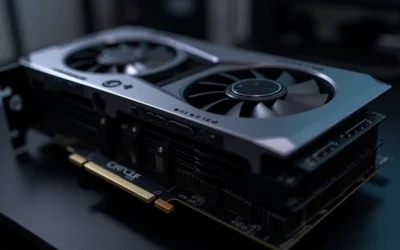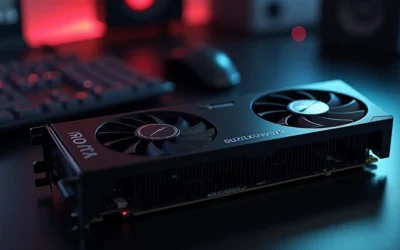
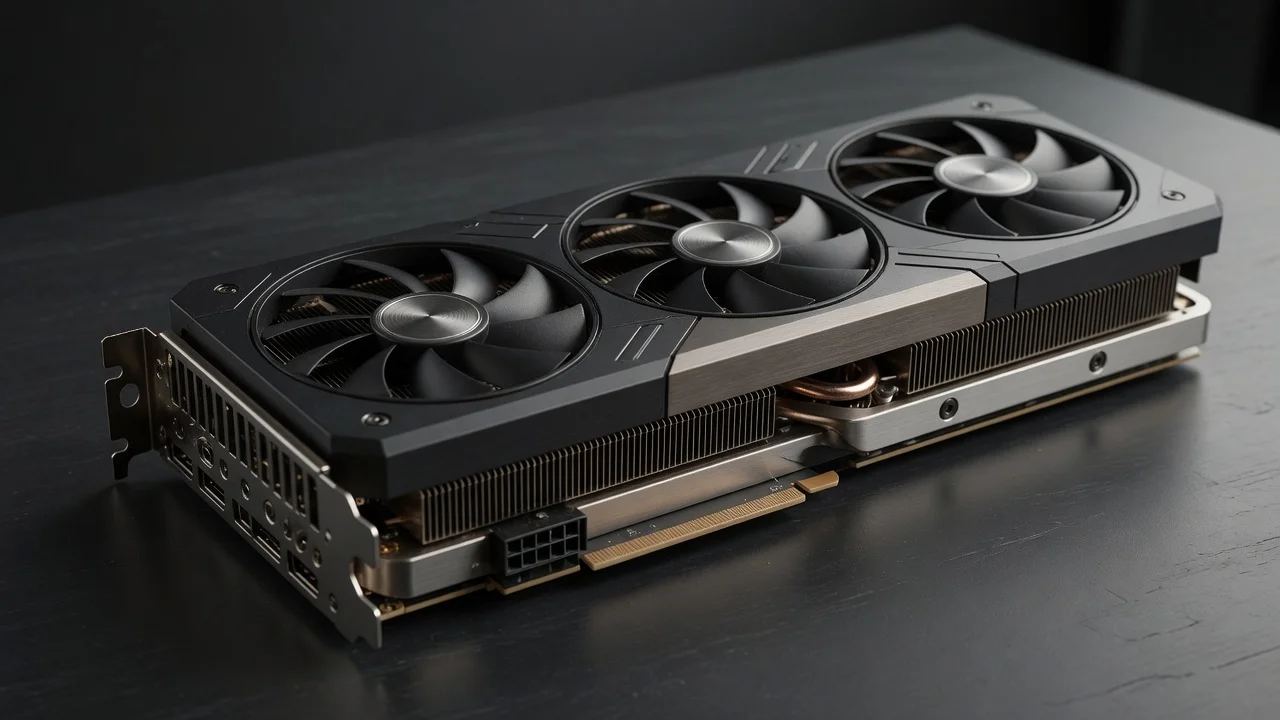
Quick Answer: GPU sag is caused by gravity pulling a heavy graphics card down at the PCIe slot, which can stress the slot, PCB, and solder joints over time. The fastest, most reliable fix is installing a dedicated anti-sag bracket or support brace that props up the card’s far corner. For most builds, a height-adjustable support bracket is the best balance of cost, safety, and ease of installation.
Why GPU Sag Happens and Why You Should Fix It
Here’s the exact procedure for a typical motherboard-mounted anti-sag bracket. The process takes about 10 minutes.
Step 1: Power Down and Prep
- Shut down the PC and unplug the power supply.
- Open the side panel and ground yourself (touch the PSU chassis).
- Identify the GPU’s far corner—the end opposite the rear I/O bracket.
Step 2: Locate a Mounting Point
Look for a free motherboard standoff hole directly below the GPU’s far corner. Most brackets use a standard M3 screw. If no hole lines up, you may need to use a case-floor brace instead.
Step 3: Attach the Bracket
- Screw the bracket’s base into the standoff hole.
- Adjust the arm so its padded tip sits flush against the card’s underside, just under the far corner.
- Tighten the locking screw to hold the arm in place.
Step 4: Verify and Test
- Check that the card is now level using your straight edge.
- Confirm the bracket doesn’t touch any fan blades or the card’s backplate in a way that could short it.
- Power on and run a stress test (e.g., FurMark or a game) for 10 minutes to confirm stable temperatures.
How to Install a Support Brace (Case-Floor Type)
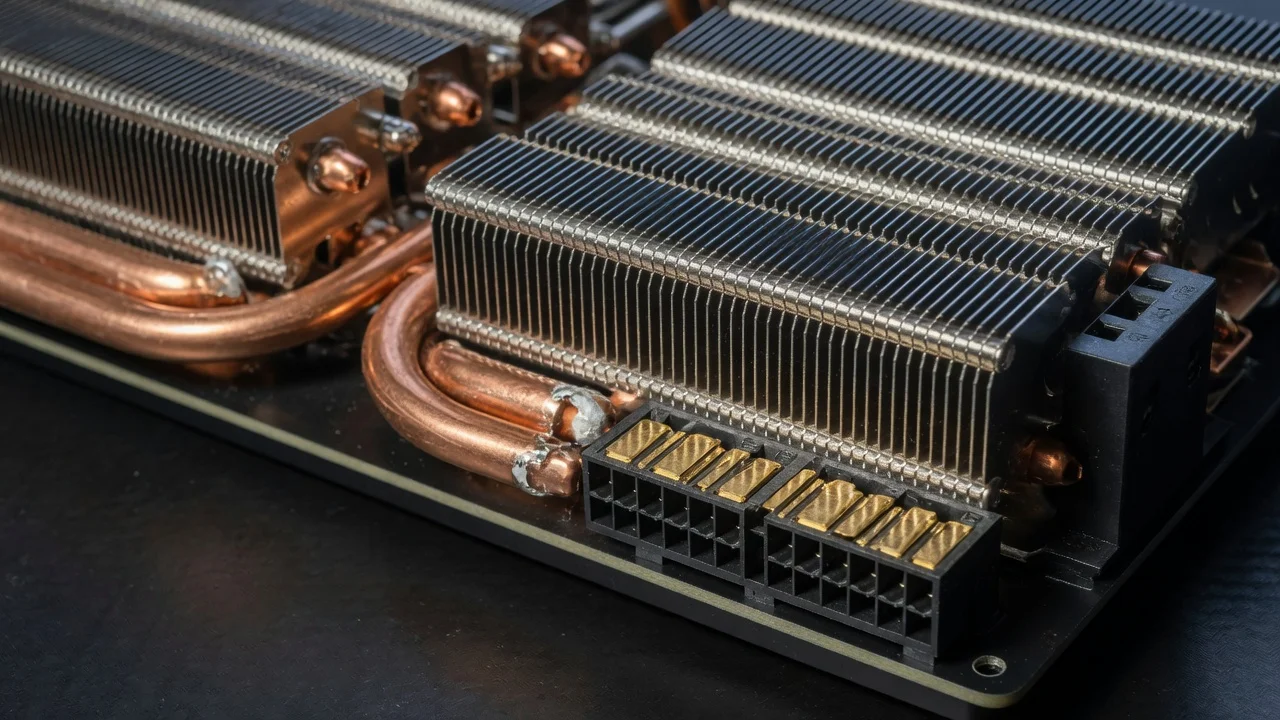
This is the easiest method and works in almost any case. To evaluate matched hardware tolerances, consult our detailed overview of how to clean gpu dust.
- Extend the brace to roughly the right height.
- Place the rubber pad under the GPU’s far corner.
- Extend the telescoping shaft until it presses firmly but gently against the card.
- Lock the height adjustment.
- Verify the card is level and that the pad isn’t blocking a fan.
Pro tip: If your case has bottom intake fans, position the brace between them, not on top of one. Blocking a fan will hurt GPU thermals. To evaluate matched hardware tolerances, consult our detailed overview of how to clean gpu dust.
Heavy Graphics Card Support: When You Need More Than a Bracket
If you’re running a triple-fan, 300mm+ card, a single bracket may not be enough. Here’s how to add redundancy:
- Dual support: Use both a motherboard bracket and a case-floor brace for maximum rigidity.
- Backplate reinforcement: Some cards ship with a metal backplate that adds stiffness. If yours doesn’t, consider an aftermarket backplate.
- Check the PCIe slot clip: Ensure the card is fully seated and the slot’s retention clip is engaged. A loose card sags more.
For extreme cases, a vertical mount is the only permanent solution that removes all bending stress from the PCB. When planning workspace deployment, consider the engineering criteria outlined in our vertical gpu mount airflow guide.
Common Mistakes to Avoid
- Overtightening: The bracket should support the card, not lift it. Applying upward force can warp the PCB in the opposite direction.
- Metal-on-metal contact: Always use the included rubber or foam pad. Bare metal can scratch the card’s PCB or short components.
- Ignoring the riser cable: If you use a vertical mount, buy a high-quality PCIe 4.0 riser. Cheap cables cause signal errors and crashes.
- Forgetting cable management: Heavy power cables can pull the card down. Route them with slack or use cable combs to reduce strain.
Recommended Hardware & Essential Equipment
To fix GPU sag properly, you need a support solution that’s rigid, height-adjustable, and safe for your card’s PCB. The units below are verified to handle heavy, triple-fan graphics cards without flexing, and both include padded contact points to prevent scratching. Choose the motherboard-mounted bracket for maximum stability, or the case-floor brace for tool-free installation.

Pros
- Very large 32GB VRAM pool for AI and creative workloads.
- Includes a GPU holder to help reduce sag and improve build stability.
- Wide range of modern display outputs for flexible workstation or gaming setups.
- Strong feature set for both gaming and content creation in one card.
Cons
- Its ultra-high-end specification makes it overkill for many mainstream gaming builds.
- The triple-fan design may be difficult to fit in compact cases.
- Advanced features such as AI acceleration and DLSS 4 depend on supported software and games.
Overview: The ASUS TUF Gaming GeForce RTX 5090 is a flagship-class graphics card built for users who need extreme GPU performance for gaming, AI work, and professional content creation. The triple-fan cooler and included GPU holder suggest a focus on physical support and long-term build stability.
Performance & Features: With 32GB of GDDR7 VRAM, 28 Gbps memory, 21760 CUDA cores, and 3352 AI TOPS, this card is designed for demanding workloads such as AI-assisted editing, local LLM inference, 8K assets, and heavy multitasking. It also supports DLSS 4, ray tracing, and up to four displays through DP 2.1b and HDMI 2.1b outputs.
Drawbacks & Considerations: This is an extremely specialized product, so many gamers and casual users will not need this much power or memory. The large triple-fan form factor may also be a challenge in smaller cases, and the most advanced features only matter in supported applications and titles.
Verdict: The RTX 5090 TUF is best suited to enthusiasts, AI developers, and creators who want maximum headroom for modern GPU workloads. If your projects or games can use its top-tier feature set, it offers a highly capable all-in-one solution.

Pros
- Large 32GB VRAM capacity is well suited to AI and creator workloads.
- Advanced cooling hardware is designed for sustained performance under heavy load.
- Strong display connectivity supports flexible multi-monitor builds.
- Included GPU holder helps reduce sag and improve installation stability.
Cons
- Ultra-premium positioning makes it excessive for many mainstream gaming or basic productivity users.
- The quad-fan design may require generous case clearance and careful system planning.
- The listing does not provide dimensions or power requirements, so compatibility should be checked separately.
Overview: The ASUS ROG Astral GeForce RTX 5090 White OC Edition is a premium white graphics card with 32GB GDDR7 memory, built for high-end gaming, AI creation, and professional content work. Its quad-fan design and included GPU holder point to a focus on physical stability and sustained performance.
Performance: The card lists 3352 AI TOPS, 5th Gen Tensor Cores, a 28 Gbps memory speed, a 512-bit memory bus, and a factory OC boost clock of 2610 MHz. Those specs are aimed at faster AI-assisted editing, local LLM inference, large scene rendering, and other GPU-heavy workloads.
Considerations: This is an ultra-premium part with capabilities that will be excessive for many users. The large cooling solution can also make fitment more demanding, so buyers should verify case space, cooling layout, and overall platform compatibility before purchase.
Verdict: It makes the most sense for creators, AI enthusiasts, and high-end PC builders who want maximum VRAM, strong cooling, and multi-display support in a single card. If you only need standard gaming performance, a more modest GPU may be easier to justify.

Pros
- 24GB GDDR6X memory handles heavy 4K/8K workloads
- DLSS 3 and ray tracing boost performance in supported titles
- Advanced vapor chamber and milled heatspreader lower GPU temperatures
- Axial-tech fans provide 23% more airflow
- 3-year warranty adds long-term assurance
Cons
- Large 14.1 x 5.9 x 2.8-inch footprint needs a spacious case
- 8.05-pound weight requires sturdy case support

Pros
- Very large 24GB frame buffer for demanding workloads and future-facing gaming setups.
- Strong ray tracing and AI acceleration from 2nd Gen RT Cores and 3rd Gen Tensor Cores.
- Durable TUF build with military-grade components and dual ball fan bearings.
- Includes HDMI 2.1 and DisplayPort 1.4a for modern high-resolution displays.
Cons
- This is a high-end, premium-class GPU that will be excessive for casual or 1080p-only gaming.
- The product data does not list dimensions, power requirements, or included accessories, so build planning may require extra checking.
- Tuning software is included, but the card may still demand a capable cooling and power setup in a well-prepared system.
Overview & Design: The ASUS TUF Gaming NVIDIA GeForce RTX 3090 is a flagship-class graphics card built around NVIDIA Ampere architecture. It is positioned for users who want a high-end GPU with a focus on durability, cooling design, and long-term stability.
Performance & Key Features: With 24GB of GDDR6X memory, 2nd Generation RT Cores, and 3rd Generation Tensor Cores, this card is designed for demanding gaming and creative workloads. It is well suited to 4K and 8K output, ray tracing, and AI-assisted features such as DLSS, while HDMI 2.1 and DisplayPort 1.4a support modern display setups.
Drawbacks & Considerations: Based on the product data, this is clearly a premium, high-performance GPU, which makes it more card than many users need for everyday gaming. The listing also does not provide dimensions, power draw, or accessory details, so buyers should confirm system compatibility before purchase.
Verdict: The TUF RTX 3090 is best for enthusiasts, creators, and power users who want top-tier GPU memory capacity and strong cooling-focused construction. If you need a durable high-end card for heavy workloads or high-resolution gaming, it is a compelling option.

Pros
- Massive 24GB GDDR6X memory capacity for demanding games and professional workloads.
- Triple-fan cooling design is suited to a high-performance enthusiast GPU.
- Includes both DisplayPort and HDMI connectivity for flexible display setups.
- GeForce Experience support adds practical software features for gamers and creators.
Cons
- This is a premium-class graphics card, so it may be overkill for casual gaming or basic desktop use.
- The product data does not list size, power requirements, or noise levels, which makes system fitment harder to judge.
- A triple-fan design may require a roomy PC case and strong airflow, depending on the rest of the build.
Overview: The PNY GeForce RTX 3090 24GB XLR8 Gaming Uprising is a high-end graphics card built around NVIDIA Ampere architecture. It is positioned for users who need serious graphics performance, with a triple-fan cooling design and a large 24GB memory buffer.
Performance and Features: Key specifications include 5248 CUDA cores, a 1395MHz core clock, a 1695MHz boost clock, and 24GB of GDDR6X memory on a 384-bit bus. That combination is well suited to 4K gaming, content creation, and other GPU-heavy workloads where memory capacity and bandwidth matter. PCI Express 4.0 support and DisplayPort plus HDMI outputs add modern connectivity options.
Considerations: The available product data does not list dimensions, power draw, or acoustic performance, so buyers should verify compatibility with their case and power supply before purchase. As with most flagship-class graphics cards, this model is likely more capable than what many everyday users require.
Verdict: If you want a powerful GPU with large memory capacity for demanding gaming or creator workflows, this card offers the right feature set. It is best suited to enthusiasts who can fully use its performance and have a system built to support a top-tier graphics card.
- 24GB GDDR6X for heavy workloads
- Triple-fan cooling for enthusiast builds
- DisplayPort and HDMI for versatile monitor support
- NVIDIA GeForce Experience for driver and capture tools

Pros
- High-end RTX 5080 performance platform with 16GB GDDR7 memory.
- Quad-fan cooling and vapor chamber design focus on stronger thermal control.
- Protective PCB coating adds practical durability benefits.
- Factory OC profile reaches up to 2790 MHz in OC mode.
- Backed by a 3-year warranty.
Cons
- The quad-fan cooler may be less suitable for compact cases, so fitment should be checked carefully.
- As a flagship-class GPU, it is most appropriate for users who truly need top-tier performance.
- The listing does not provide full compatibility details such as dimensions, power requirements, or display outputs.
Overview: The ASUS ROG Astral NVIDIA GeForce RTX 5080 16GB GDDR7 White OC Edition is a premium graphics card aimed at enthusiast gaming and advanced PC builds. Its white finish and quad-fan cooling solution give it a distinctive look while signaling a focus on thermal performance.
Performance: Built on NVIDIA Blackwell and supporting DLSS 4, this model is positioned for demanding gaming and GPU-heavy workloads. ASUS lists a boost of up to 2790 MHz in OC mode, 1899 AI TOPS, and 16GB of GDDR7 memory, while the quad-fan design is intended to improve airflow and pressure by up to 20%.
Considerations: This is a large, high-end card, so buyers should confirm case space and overall system compatibility before purchase. The raw listing does not include full details such as dimensions, power draw, or port layout, so those specifications should be checked separately.
Verdict: For users building a premium gaming or creator system that can benefit from strong cooling, modern memory, and RTX 5080-class performance, this ASUS ROG Astral model is a strong candidate. It is best suited to enthusiasts who want a feature-rich card with a focus on sustained thermal control.

Pros
- Uses NVIDIA's Blackwell Architecture for a modern high-end GPU platform
- Includes AI-focused features such as Tensor Cores and FP4 support
- Supports advanced gaming technologies including DLSS 4 and Reflex 2
- Backed by full ray tracing and neural rendering capabilities
Cons
- The listing does not provide key compatibility details such as dimensions, power requirements, or display outputs
- Its high-end feature set may be excessive for casual users or basic PC builds
- No customer review text is included in the source data, so real-world user feedback is limited here
Overview: The NVIDIA GeForce RTX 5080 Founders Edition is a premium graphics card built on NVIDIA Blackwell Architecture. As a Founders Edition model, it represents NVIDIA's own official take on a flagship-level GPU for gaming and creator-focused systems.
Performance: Its feature set includes Tensor Cores with FP4 support, DLSS 4, NVIDIA Reflex 2 with Frame Warp, and full ray tracing with neural rendering. In practical terms, that points to strong support for modern games, AI-accelerated workloads, and visually intensive creative applications.
Considerations: The supplied listing does not include practical specs such as size, power draw, or connector information, so buyers still need a full spec sheet before planning a build. There is also no customer review content in the source data, which limits insight into long-term user experience.
Verdict: This card is best suited to enthusiasts, gamers, and creators who want NVIDIA's latest high-end feature set. It is less compelling for users who only need basic graphics performance or a simpler upgrade path.
Common Questions on How To Fix Gpu Sag Answered
Is GPU sag actually dangerous?
Yes, if left unchecked. Moderate to severe sag (over 5mm) puts sustained stress on the PCIe slot’s solder joints and the card’s PCB. Over months or years, this can crack traces, lift the slot from the motherboard, or cause intermittent display failures. Mild sag under 5mm is generally safe but worth fixing.
Can I use a random object (like a Lego figure) as a GPU support?
Technically yes, but it’s risky. A non-conductive, non-scratching object can work in a pinch, but it won’t be height-adjustable or stable. If it shifts or falls, it could short the card or block a fan. A dedicated bracket is safer and costs very little. To compare alternative configurations, check our hands-on review of black screen gpu drivers.
Does a vertical GPU mount fix sag completely?
Yes. In a vertical orientation, gravity acts along the card’s length rather than perpendicular to it, so there’s no bending moment on the PCB. However, you need a case with vertical PCIe slots and a quality riser cable, and you must ensure adequate airflow to the card’s fans.
Will an anti-sag bracket void my GPU warranty?
No. A properly installed bracket that doesn’t scratch or damage the card won’t void the warranty. The risk is physical damage, not the bracket itself. Just avoid overtightening and use the padded contact points. Users looking for related component recommendations can explore our daisy chain pcie cables breakdown.
How do I know if my GPU is sagging too much?
Place a straight edge across the top of the card’s backplate and measure the gap at the far corner. If it’s 5mm or more, install a support. If you see the card visibly drooping toward the bottom of the case, act immediately.
Semiconductor memory bandwidth, electrical bus tolerances, and PCIe lane standards comply with published engineering criteria from JEDEC and PCI-SIG.
Next Step & Hardware Pairing: For recommended machine configurations and real-world durability tests, see our buyer guide on compact gaming PC setups.
Final Verdict: Choosing the Right How To Fix Gpu Sag
GPU sag is a mechanical problem with a simple mechanical solution. For 99% of builders, a height-adjustable support brace or a motherboard-mounted anti-sag bracket is all you need. It takes ten minutes to install, costs under $20, and protects a $500–$2,000 investment. If you’re building a new system with a flagship card, consider a vertical mount from the start to eliminate the issue entirely. Either way, don’t ignore the droop—your PCIe slot will thank you.
For more hands-on benchmarks and buying recommendations, consult our guides on multi-core workstation processor guide, as well as overclocking motherboard VRM benchmarks.
Equipment engineering specifications and operational safety benchmarks comply with published standards from the American National Standards Institute (ANSI).