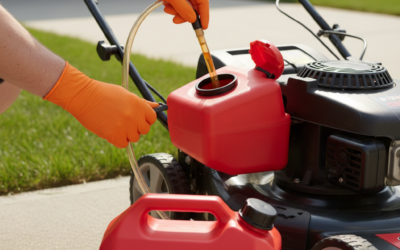
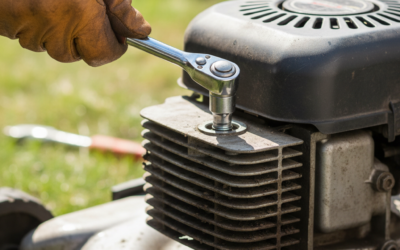
You can get gas out of a lawn mower by running a cool engine outdoors until the fuel tank is empty, or by moving gasoline into an approved fuel container through a designed drain or the filler neck with a hand fuel pump or siphon pump. Do not siphon by mouth. Keep flames, sparks, and hot surfaces away, and expect leftover fuel in the fuel line or carburetor. Reuse clean gasoline in another engine or take unwanted fuel to a proper disposal program.
The practical ways to get gas out of a lawn mower
People empty a lawn mower when they need to store it, haul it in a vehicle, open the fuel system for repair, or get rid of stale fuel. The job is straightforward in principle: move liquid gasoline out of the fuel tank without starting a fire, creating a large spill, or leaving a hazardous container of fuel sitting around the yard. The details change with the machine, the amount of gasoline left, and whether the engine still starts.
For a typical small-engine mower, three approaches cover most situations:
- Run the mower outdoors until it stops from lack of fuel, when that is safe and the remaining volume is small enough to burn off.
- Drain the tank through a manufacturer-provided drain, petcock, or similar fitting if the owner’s manual describes one and you can catch the fuel cleanly.
- Transfer gasoline from the filler neck into an approved fuel container with a hand fuel pump or a siphon pump made for gasoline.
None of those methods is universally best. Tank shape, filler-neck access, and fuel-system design vary from a small walk-behind mower to a riding mower with a larger tank and more lines. If your manual conflicts with general advice, follow the manual. After the tank looks empty, some gasoline can still sit in the fuel line, filter, and carburetor. That leftover fuel is why a machine can still smell like gas, drip, or be hard to start later even when you can no longer see liquid in the tank.
Choose the method from the job, not from habit. Running the engine empty is often enough before seasonal storage if the tank is already low and the mower starts. Pumping or draining is the better first move when the tank is nearly full, the engine is dead, or you need the gasoline out immediately for transport or repair. The rest of this article walks through safety, each method, leftover fuel, machine differences, and what to do with the gasoline you remove.
Safety first: gasoline, vapors, and a hot mower
Gasoline is flammable, and its vapors can ignite from a spark, an open flame, a cigarette, a pilot light, or a hot engine or exhaust. Emptying work should happen outdoors or with strong ventilation, on a stable surface, with the engine cool. A closed garage that also holds a water heater, furnace, or other ignition source is a poor place to open a fuel tank.
Where and when it is reasonably safe to handle mower gasoline
Pick a level outdoor spot where the mower cannot roll, the container cannot tip, and fumes can disperse. Keep sparks, cigarettes, pilot lights, and other running engines away from the open tank and the receiving can. Do not work beside a running vehicle, a lit grill, or power tools that throw sparks. If weather forces you closer to a building, keep doors open, keep ignition sources off, and still treat the vapors as the main hazard, not just the liquid.
Let a hot engine cool before you unscrew the fuel cap, handle a fuel line, or put a pump into the tank. Heat raises vapor, makes metal parts harder to hold, and can ignite fuel that spills onto an exhaust or engine block. There is no single wait time that fits every mower; if the deck, muffler, or engine is still hot to the touch, wait longer.
Ignition, skin, inhalation, and spill risks
The risks that matter most are fire from vapors, a spill that spreads under the machine, skin contact, and breathing fumes in a tight space. Gasoline on skin can irritate; repeated contact is worth avoiding with gloves meant for fuel handling if you have them. Do not lean over the filler neck and inhale on purpose. Keep children and pets away from the mower, the open can, and any rags that have absorbed fuel.
If someone swallows gasoline, treat that as an emergency and get emergency help. Do not improvise home treatment from an article. For a small outdoor spill, stop the source, keep ignition away, and soak up liquid with material you can handle as contaminated waste. Do not hose gasoline into soil, a driveway drain, or a storm sewer.
What to do before you touch the tank or fuel lines
- Park the mower so it cannot roll or tip, and chock a rider if that is how you normally keep it still.
- Confirm the engine is cool and the area is ventilated.
- Set out a labeled approved fuel container with enough empty volume for what you expect to remove, plus a little space at the top.
- Have a way to wipe drips and contain a small spill. Recap both the tank and the container as soon as you can.
- Many owner manuals tell users to disconnect the spark-plug lead before fuel-system work so the engine cannot start unexpectedly. Treat that as a common manual instruction, follow the procedure for your machine, and keep the lead from snapping back against the plug.
Never siphon gasoline by mouth. A tube in the mouth can send fuel into the stomach or lungs. Household garden hose and random vinyl tubing are also the wrong tools: they may not be meant for gasoline, they can soften or leak, and they invite unsafe siphoning habits. Use a hand fuel pump or siphon pump made for gasoline, or a drain the manufacturer provided.
When running the mower until the tank is empty is enough
Running a mower outdoors until it stops from lack of fuel can empty most of the tank and use up some fuel in the lines. That is often useful before seasonal storage if the remaining gasoline is already in the machine, the engine starts, and the setting is safe. You are not transferring a can of fuel, and you are not opening fittings that can drip.
When running the mower dry is a good fit
This method fits best when the tank is already low, you can operate the mower in a legal outdoor area, and your goal is to finish the fuel rather than salvage a large volume. It also fits when you want some of the fuel in the line and carburetor used up after the tank runs dry, without turning the job into carburetor service. Stay with the machine. A running mower is not something to start and walk away from while you wait for it to stall.
When this method is a poor fit
Running the tank empty is a poor first choice when the tank is nearly full and you would be operating the machine for a long stretch only to dispose of fuel through the engine. It is also a poor fit when the mower will not start, when you need the gasoline out immediately for transport or repair, or when local rules or the owner’s manual say not to run the machine dry. Indoor storage and vehicle transport are other reasons to pump first: even a low tank can slosh, and a mower that dies mid-job in a driveway still leaves liquid in the system.
If the gasoline already smells sour, looks cloudy, or has been sitting for a long time, burning it off in the mower may be unwise. Stale fuel can make the engine run poorly and can leave deposits. In that case, transfer the liquid out and keep it out of the mower rather than forcing a long run on fuel you already distrust.
Empty tank versus an engine that simply stalled
An engine can stall from a clog, old fuel, a safety interlock, an empty oil-related shutoff on some machines, or a problem that has nothing to do with a dry tank. “It stopped” is not proof the tank is empty unless you also check. After the engine cools, look into the filler neck away from flames and sparks, or use a fuel gauge only if the machine has one you already know is trustworthy. If you still see liquid, the stall had another cause and you still need to drain or pump.
Do not treat a stoppage as a guarantee that the carburetor is bone-dry. Running dry empties most of the tank and can reduce what is left in the lines. It does not come with a standard run time, idle speed, or promise that every passage is empty.
How to drain or pump gasoline from the tank
Start by reading the owner’s manual and looking at the tank area before you invent a procedure. You are checking for a designed drain, a petcock, or a fuel shutoff valve, and you are confirming whether the only opening you should use is the filler neck. Not every mower has an accessible drain. Many people must use the filler opening and a pump.
Look for a drain, shutoff valve, or only a filler neck
A designed drain or petcock, if present, is meant to release fuel in a controlled way into a container. A fuel shutoff valve is different: it stops flow to the engine so remaining fuel in the line and carburetor can be used up, but it may not empty the tank into a can. Do not assume a bolt under the tank is a drain. Forcing the wrong fastener can open the crankcase, strip a thread, or create a leak you cannot close.
If the manual describes a drain and you can reach it without lying in a pool of fuel or supporting a rider unsafely, that path is usually cleaner than tipping the machine. If you only have a filler neck, plan on a hand fuel pump or siphon pump and an approved fuel container.
If the mower has a drain the manual supports
Keep the steps high-level and controlled. Cool the engine. Work outdoors. Place an approved fuel container so it will catch the stream without sitting on a slope. Open the drain the way the manual describes, and be ready for fuel to move faster than you expect once the fitting is loose. Close the drain, recap the tank and the container, and wipe drips so a film of gasoline is not left on the deck, belt area, or ground. If the fitting weeps after you close it, stop and treat that as a leak that may need parts or a shop, not more force.
Transferring fuel from the filler neck without mouth siphoning
When there is no drain, put the receiving can below the tank whenever gravity can help. Insert the pickup of a gasoline-rated hand pump or siphon pump so it reaches liquid. Pump slowly. Watch the container, not just the mower, and stop before the can overflows. Leave headspace; a full-to-the-brim can is harder to carry and has no room for the fuel to expand. Recap both openings when you pause or finish.
Reject mouth siphoning entirely. Reject garden hose and household tubes not meant for fuel. A tool made for gasoline is about chemical resistance and control, not about speed. If the pump will not prime, check that the pickup is actually in liquid and that the hose is not kinked before you assume the tank is empty or the cap is “vacuum locked.” Do not keep yanking or blowing into fittings to force flow.
How to position the mower and what should receive the gas
Keep the mower as level and stable as you can. Tipping a mower can spill crankcase oil, flood the air filter, or leak fuel from the carburetor. Tilting is a last resort, and only in the orientation the manual allows. A walk-behind laid the wrong way can make a larger mess than the tank you were trying to empty. A rider jacked or blocked poorly is a crush hazard; do not crawl under a machine that is not supported the way a shop would support it.
The receiving container should be an approved fuel container with a proper cap, not a milk jug, glass jar, paint can, or open bucket. Keep it labeled, upright, and away from living spaces and ignition. Move only as much gasoline as you can store or transport safely in that kind of can. If you need more than one container, stop and cap the first before you fill the second.
Fuel left in the lines and carburetor
A tank that looks empty can still leave gasoline in the fuel line, filter, and carburetor bowl. Those parts hold a small volume compared with the tank, but it is enough to smell, drip when a fitting is disturbed, or go stale in storage. Stale leftover fuel is a common reason mowers are hard to start after they sit.
Why fuel remains after the tank is empty
Gravity and the pump or carburetor circuits do not automatically suck every passage dry when the tank runs out. Fuel can remain in low spots in the line, in a filter, and in the carburetor bowl. On some machines a fuel pump adds more hose and fittings. Emptying the tank solves the large spill risk. It does not, by itself, certify that the fuel system is dry.
When running after you shut off the fuel supply helps
Some mowers have a fuel shutoff valve. If the manual describes closing that valve and then running the engine until it stops, that sequence can use more of the remaining fuel in the line and carburetor. Follow the written process for your machine. Do not assume every walk-behind or rider has a shutoff, and do not assume that one extra run fully dries the system. It is a way to reduce leftover fuel, not a promise of a bone-dry carburetor.
When to stop and use the manual or a shop
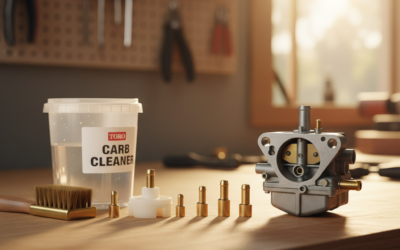
Do not treat a universal carburetor-bowl drain, a specific bowl screw, or a jet-cleaning method as a standard home step. Those procedures are model-specific. Gaskets, tiny fasteners, and spilled bowl fuel can turn a simple emptying job into a repair. Line disconnection and bowl work belong in the manufacturer instructions or with a qualified small-engine shop, especially on riding mowers and machines with more complex fuel systems.
If your only goal is storage and the tank is already empty, leftover fuel in the carburetor is still a starting-risk later. Some owners run the engine after closing a shutoff, if the machine allows it. Others have a shop service the carburetor before a long sit. Fuel stabilizer is a storage option for fuel that will stay in a tank. It is not a way to repair already-removed bad gas, and it does not clean a bowl that already holds stale fuel.
Walk-behind mowers, riders, and other machine differences
The same question—how do you get gas out of a lawn mower—does not have the same physical answer on every machine. Use the comparisons below to avoid applying walk-behind habits to a rider, or assuming a small filler-neck job is all you face.
Push and self-propelled walk-behind mowers
Walk-behind tanks are often small and reached at the filler neck. The volume is lower, so running dry or pumping into one approved can is usually manageable. Access is better, but tipping is still a problem: oil, fuel, and the air filter do not stay put if you lay the mower over the wrong way. Stay with the manual’s allowed orientation if you must change the angle so a pump can reach.
Riding mowers and more complex fuel systems
Riders and zero-turns may have larger tanks, harder access under a seat or cowl, a fuel pump, and more lines. Larger volume means a larger spill and more vapor if you open the system carelessly. Extra caution is warranted. Isolate a battery only if the manual calls for that before fuel work. Do not crawl under a rider that is poorly supported. If the tank sits where you cannot see the pickup or a suspected drain, professional help is the safer choice.
If the goal is repair rather than storage, shops often prefer the tank as empty as practical so they are not working under dripping gasoline. That still does not mean you should drop the tank, cut lines, or remove panels without the machine’s service guidance. Empty what you can reach safely, then let a qualified shop finish access that requires lifting or disassembly.
Other mowers and mixed fuel
Tow-behind units, larger commercial decks, and machines that use mixed two-stroke fuel still hold flammable gasoline. Do not assume the tank, shutoff, and carburetor match a home walk-behind. Mixed fuel is not something to dump on the ground or pour into household trash. Treat it with the same container, ventilation, and disposal rules as straight gasoline, and keep it out of an engine that is not meant to run that mix.
What to do with the gasoline you removed
Removing the fuel is only half of the task. The other half is keeping that gasoline from becoming a fire hazard in the garage or a contaminant in soil and water.
When removed gasoline can be reused
Clean, uncontaminated, relatively fresh gasoline can sometimes be reused in another gasoline engine that accepts it—another mower, a generator, or similar equipment—if that machine’s guidance allows it. Look at and smell the fuel in a well-ventilated place away from ignition. Fuel that is clear, free of water layers or rust flakes, and does not smell sharply sour is the only kind worth considering for reuse. Even then, use it soon in equipment that can burn it, and do not stretch “looks fine” into a long storage plan in an unlabeled can.
Do not put varnish-like, watery, heavily stale, or mystery fuel back in a mower. Old gasoline can make starting worse than leaving the original tank problem in place. If you are unsure what is in the can—mixed two-stroke oil, diesel, leftover mystery liquid from a shed—keep it out of every engine and move it toward disposal.
Old, dirty, or mixed fuel
Keep unwanted fuel in a labeled approved fuel container until you can hand it off through a proper channel. Do not try to “fix” already-removed bad gas with fuel stabilizer. Stabilizer is a storage option for fuel that will stay in a tank and is still in usable condition, not a rescue for fuel you have already rejected. There is no reliable home test in this article that turns questionable gasoline back into something you should pour into a carburetor.
Why dumping is a bad idea
Do not pour gasoline on the ground, into storm drains, into household plumbing, or into regular trash. It is a fire hazard in a garbage truck or can, and it contaminates soil and water. Evaporating a pan of gasoline outdoors is also a poor plan: the vapors are still flammable, and the leftover film is still a waste problem.
Disposal and household hazardous-waste rules are local and they change. Check your municipality or a local hazardous-waste program for how they accept gasoline. Do not assume a particular hardware store, fire station, or landfill will take it. Transport only in approved, sealed containers, in a ventilated vehicle, and only in the amount you can move without stacking open cans.
If the gas will not come out, or the job does not feel safe
Stop forcing the system if the next step is cutting, prying, or guessing at hidden fasteners. Most stuck jobs are safer in a shop than in a driveway with an open can of gasoline.
The mower will not start, so you cannot run it dry
If the engine is dead, skip the run-dry method. Use a designed drain if the manual supports one, or pump from the filler neck. A no-start condition is often why the fuel is sitting there in the first place—stale gasoline, a clog, or an unrelated mechanical problem. Pouring more effort into starting just to burn the tank empty can waste time and still leave you with a machine that will not run.
A pump will not pick up fuel, or a suspected drain will not open
Confirm the tank actually has liquid in it. Make sure the pump pickup is reaching that liquid and that the hose is not kinked or above the fuel level. Use a pump meant for gasoline. If a fitting you thought was a drain will not move, do not treat it as a seized drain until the manual or a clear marking says that is what it is. Hidden or painted fasteners are easy to damage, and the wrong opening can dump oil or strip a thread that holds the tank.
Do not cut fuel lines, drop the tank without guidance, or blow the fuel system with compressed air. Those shortcuts can spray gasoline, damage fittings, and turn a containment job into a larger leak. There is no reliable success rate for driveway workarounds, and the downside is fire or a mower that now needs more parts.
When to get in-person help
Get a small-engine shop involved when the fuel is old and the engine is dead, a fitting is stuck, the mower is a rider with poor tank access, or you would have to support the machine unsafely to reach the tank. Professional help is also the right call if gasoline has already leaked into the deck, belt area, or soil and you cannot contain it, or if the job simply does not feel controlled. Emptying a fuel tank is a maintenance task, not a test of persistence.
A short checklist before you start
- Engine cool, outdoor or strong ventilation, no flames or sparks nearby.
- Mower stable; spark-plug lead handled the way your manual describes if you will open the fuel system.
- Approved fuel container ready, labeled, and below the tank if you are pumping.
- Method chosen: run dry only if the engine starts and the remaining fuel is practical to burn off; otherwise drain or pump.
- No mouth siphoning, no random household hose, no tipping unless the manual allows a specific orientation.
- Plan for leftover fuel in the line and carburetor, and a legal place for fuel you will not reuse.
Owner manuals and local disposal rules override generic how-to steps when they differ. If you remember only a few points, remember these: gasoline and vapors can ignite, never siphon by mouth, an empty-looking tank can still hide fuel in the carburetor, and removed gasoline does not belong on the ground or in household trash.