
Quick Answer: Your Lawn Mower Disposal Options
The best way to dispose of your lawn mower depends on its condition. If it still works, donate it to a local charity, school, or community center. For non-functional mowers, take it to a scrap metal recycler or hazardous waste facility. You can also list it online for sale, arrange municipal bulk trash pickup, or contact local landscaping companies. Always drain fuel and oil before any disposal method.
Assess Your Lawn Mower’s Condition First
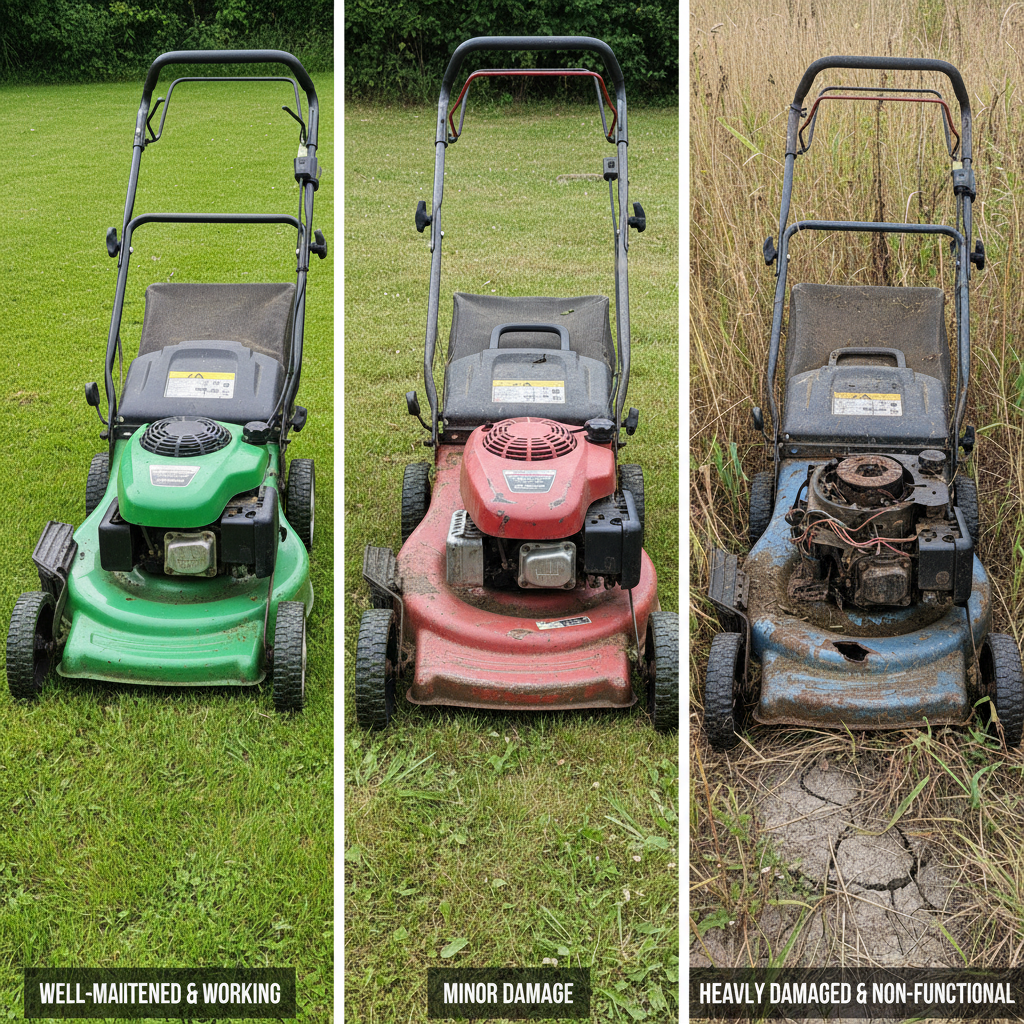
Before choosing a disposal method, determine whether your lawn mower is functional or broken. This decision affects your options significantly and influences how you should prepare the equipment.
- Working condition: The mower starts reliably, runs smoothly, and requires no major repairs. These are candidates for donation or resale.
- Partially functional: The mower starts but may need minor repairs, maintenance, or has cosmetic damage. These can still be donated or sold to someone willing to repair them.
- Non-functional: The mower won’t start, has major mechanical damage, or safety hazards. These belong at recycling or hazardous waste facilities.
Be honest about the mower’s condition when deciding on disposal. Misrepresenting a broken mower as functional creates safety risks for recipients and may be illegal in some jurisdictions.
Donate Your Working Lawn Mower
Donation is often the best option for functional lawn mowers. It extends the equipment’s life, helps others, and may provide tax deductions.
Organizations That Accept Lawn Mower Donations
- Local charities and nonprofits: Habitat for Humanity, Goodwill, and The Salvation Army often accept lawn equipment. Call ahead to confirm they accept mowers and whether they provide pickup.
- Schools and community centers: Educational institutions may use mowers for grounds maintenance or grounds-keeping programs. Contact your local school district or parks department.
- Landscaping trade schools: Vocational programs need equipment for training. Your state’s department of education can connect you with nearby programs.
- Gardening clubs and community gardens: Local garden associations maintain shared spaces and welcome equipment donations.
- Religious institutions: Churches, synagogues, and mosques often maintain grounds and may accept mower donations.
- Libraries and tool-sharing libraries: Some communities operate tool libraries where residents can borrow equipment, and they accept donations.
How to Prepare a Lawn Mower for Donation
- Drain all fuel from the tank. Use a siphon pump or remove the fuel line carefully.
- Change the oil or drain it completely, depending on the organization’s requirements.
- Remove or disconnect the battery if your mower has one.
- Clean the deck and exterior to remove dried grass and debris.
- Test-start the mower (if safe to do so) to confirm it works for the recipient.
- Document any known issues or maintenance history to provide to the organization.
- Provide any manuals or parts documentation you have.
Tax Deduction Benefits
Donations to qualified nonprofit organizations may be tax-deductible. Keep a receipt from the charity documenting the donation date and estimated fair market value of the mower. Consult your tax professional about whether your specific donation qualifies for deductions under IRS guidelines.
Recycling and Scrap Metal Disposal
Lawn mowers contain valuable metals, aluminum, steel, and sometimes copper, making them suitable for recycling. This option works well for broken or unwanted mowers.
Finding Scrap Metal Recyclers
- Search online for “scrap metal recyclers near me” or “metal recycling centers” in your area.
- Call local recycling facilities to confirm they accept lawn mowers and ask about drop-off procedures.
- Ask whether they provide pickup service for larger equipment. Some facilities charge a small fee or offer payment based on metal weight.
- Check if they require you to drain fuel and oil beforehand.
Preparation for Recycling
- Drain all fuel: Use a manual siphon pump to remove gasoline. Store drained fuel in an approved container for proper disposal at a hazardous waste facility.
- Drain the oil: Tip the mower carefully and drain engine oil into a container. Many recycling centers and quick-lube shops accept used oil for free or small fee.
- Remove the battery: If your mower has a battery, remove it before recycling. Batteries must be handled separately due to chemical content.
- Disconnect spark plugs: This reduces fire risk during transport and processing.
Potential Payment for Scrap
Metal prices fluctuate, but recyclers typically pay by the pound for scrap metal. A lawn mower might yield $10-$40 depending on its size and current scrap prices. Some facilities charge a small drop-off fee instead. Call ahead to understand their payment structure.
Hazardous Waste Disposal
Lawn mowers contain hazardous materials, gasoline, oil, and batteries, that cannot safely enter standard landfills. Proper hazardous waste disposal protects groundwater and the environment.
Why Hazardous Waste Handling Matters
Gasoline and oil contaminate soil and groundwater for years. Improperly disposed batteries leak heavy metals. Most municipalities have strict regulations against placing mowers in regular trash because of these risks. Ignoring proper disposal can result in fines. For troubleshooting and reliability insights, consult our in-depth marshall stanmore iii vs harman kardon onyx studio 8 report.
Locating Hazardous Waste Facilities
- Contact your city or county waste management department and ask for hazardous waste drop-off locations.
- Use the EPA’s household hazardous waste finder tool online (search “EPA hazardous waste locator”).
- Many communities host seasonal hazardous waste collection events. Check your municipality’s website for dates.
- Some retailers like Home Depot and Lowe’s offer hazardous waste disposal for fuel and oil, though they may not accept entire mowers.
Safe Fuel and Oil Drainage
Drain hazardous liquids before any disposal method to reduce environmental risk:
- Fuel drainage: Use a battery-powered or manual siphon pump (never mouth-siphon). Position a clean container underneath the fuel tank valve or disconnect the fuel line. Store drained fuel in an approved gasoline container away from ignition sources.
- Oil drainage: Tip the mower on its side (check your manual for safe positioning). Place a container beneath the drain plug and let oil flow completely into the container. Wipe excess oil with rags or newspaper.
- Proper storage: Keep drained fuel and oil in labeled, sealed containers in a cool, well-ventilated area away from children and pets. Transport to a hazardous waste facility promptly.
Municipal Bulk Trash and Curbside Pickup
Many municipalities offer free or low-cost bulk trash collection for large items like lawn mowers. This is often the easiest option if your community provides the service.
Check Your Local Program
- Visit your city or county waste management website and search for “bulk item pickup” or “large item collection.”
- Call your local sanitation department to confirm lawn mowers are accepted and learn scheduling requirements.
- Ask about size, weight, and quantity limits. Most programs accept one or two items per collection cycle.
- Confirm whether you need to schedule pickup in advance (often 3 to 7 days before your regular collection day).
Preparation and Scheduling
- Drain fuel and oil before pickup to meet environmental and safety standards.
- Place the mower in an accessible location (driveway, curb edge) on your scheduled pickup day.
- Some programs require items to be set out the evening before. Check specific timing requirements.
- Document the pickup date in case the item isn’t collected, so you can follow up.
Selling or Giving Away Your Lawn Mower
If your mower has resale value or you want to give it away directly, online platforms and local networks offer alternatives to formal disposal. Readers comparing setup options can review our technical analysis on dyson v8 cyclone vs bissell featherweight stick.
Online Marketplaces
- Facebook Marketplace: List locally with photos and condition details. Buyers arrange pickup, eliminating shipping concerns for large equipment.
- Craigslist: A traditional platform for selling used equipment. Use caution with safety and meet in public locations.
- OfferUp or Letgo: Mobile-first platforms with local buyer networks.
- eBay: Suitable for lighter mowers; shipping costs for heavy equipment make local pickup preferable.
Pricing Your Lawn Mower
Research comparable listings in your area. Factors affecting price include:
- Age and condition: Well-maintained mowers from the last 5 to 7 years fetch higher prices.
- Type: Push mowers typically sell for $50-$300; riding mowers $200-$2,000+.
- Brand reputation: Honda, Toro, and John Deere hold value better than generic brands.
- Recent maintenance: New blades, fresh oil, or recent tune-ups justify higher pricing.
Be realistic about condition. Overpricing leads to slow sales; underpricing leaves money on the table. Test-start the mower to demonstrate functionality to potential buyers. For complementary field maintenance guidelines, examine our breakdown of bissell crosswave hydrosteam vs shark stainforce.
Free Giveaway Options
- Nextdoor app: Post in your neighborhood group for free pickup.
- Buy Nothing groups: Facebook groups dedicated to free items within communities.
- Freecycle network: Online community for free exchanges of used goods.
- Friends and family: A simple message to people you know often finds a new owner quickly.
Steps to Prepare Your Lawn Mower for Disposal
Regardless of your chosen disposal method, follow these preparation steps for safety and environmental compliance:
1. Drain Fuel Completely
- Turn off the mower and let the engine cool for 15 to 20 minutes.
- Locate the fuel tank valve (usually at the bottom or side of the tank).
- Place a container beneath and slowly open the valve, or use a siphon pump to extract fuel.
- Leave the tank empty or nearly empty.
2. Drain or Change the Oil
- Locate the oil drain plug underneath or on the side of the engine.
- Place a large, shallow container underneath.
- Loosen the drain plug with a wrench and let oil drain completely (may take several minutes).
- Store drained oil in a sealed, labeled container.
3. Remove or Disconnect the Battery
- If your mower has a battery, disconnect the negative terminal first, then the positive terminal.
- Remove the battery and store separately for recycling or safe disposal.
4. Clean the Mower Deck
- Remove dried grass clippings and debris from the underside of the deck.
- Wash with a garden hose to remove dirt and grass buildup.
- Allow to dry completely before disposal.
5. Document Condition and Issues
- Write down any known mechanical issues, maintenance history, or repairs needed.
- Note the brand, model, and approximate age of the mower.
- Provide this information to the recipient if donating, or include it in online listings.
Additional Disposal Methods
Contact Local Landscaping Companies
Professional landscapers sometimes accept old equipment for recycling or parts harvesting. Call a few local companies to ask if they accept donated or free mowers.
Take It to an Auction or Estate Sale
If your mower has collectible or vintage value, consigning it to a local auction house or estate sale company may yield better returns than private sale.
Rent a Dumpster
For bundling disposal of multiple items, renting a small dumpster ($150-$300) can be practical, though this is typically the most expensive single-item option.
Frequently Asked Questions About How To Get Rid Of A Lawn Mower
Can I just throw my lawn mower in the trash?
No. Most jurisdictions prohibit placing lawn mowers in regular trash or curbside bins due to hazardous materials (fuel, oil, batteries). Violating this can result in fines. Always use proper disposal or recycling channels. If your municipality offers bulk trash pickup, that’s a legal option if you drain fuel and oil first.
How much can I sell a used lawn mower for?
Push mowers typically sell for $50-$300 depending on age, condition, and brand. Riding mowers range from $200-$2,000+. Research completed listings on Facebook Marketplace and Craigslist in your area for realistic pricing. A well-maintained mower from a reputable brand sells faster and for higher prices than older or generic models.
What should I do with the fuel and oil I drained from my mower?
Store drained gasoline in an approved gas container in a cool, well-ventilated area. Take it to a hazardous waste facility or quick-lube shop for proper disposal. Used oil can be taken to most quick-lube shops, auto parts stores, or recycling centers for free or a small fee. Never pour fuel or oil down drains or into the ground.
Will a charity really pick up a lawn mower from my home?
Some do, but not all. Habitat for Humanity and similar organizations often provide pickup for donations. Always call ahead and ask about their pickup service before assuming they’ll come to you. If pickup isn’t available, you’ll need to arrange transportation to their facility or use a different disposal method.
Summary: Choose the Right Disposal Method
The best way to dispose of your lawn mower depends on three factors: its condition, your local options, and how quickly you need it gone. Working mowers should be donated to extend their useful life and help others. Broken mowers belong at recycling facilities or hazardous waste centers to protect the environment. If you have time and want to recover some money, selling online through Facebook Marketplace or Craigslist is viable. Municipal bulk pickup is convenient if your community offers it and you don’t mind waiting for the scheduled collection date.
Regardless of method chosen, always drain fuel, oil, and remove batteries before disposal. This protects workers, prevents environmental contamination, and ensures your mower is handled safely through its final journey.
Disposing of an Old Mower
An old mower may be sold, donated, traded in, or taken to a scrap facility, depending on its condition. Fuel and oil should be drained before the machine leaves your property. Background on safe handling of retired equipment can be found through American National Standards Institute (ANSI).