Quick Answer: How To Mulch A Lawn?
For most home lawns, mulching means cutting turfgrass finely and leaving a thin, even layer of grass clippings on the surface so they dry and break down in place. Mow when the grass is dry, take off only a modest amount at a time, and use a mulching-style cut so pieces sift into the canopy instead of sitting in clumps….

Pros
- Manufacturer-stated 15 Amp corded power
- 18-inch size listed in the title
- Six steel tines per the listing
- Adjustable wheels included in the listing
Cons
- Corded design limits range to nearby outlets
- Power and tilling claims are unverified

Pros
- 13.5 Amp corded electric power stated
- 16-inch size listed in the title
- Steel tines per the listing
- Model SUJ-TJ604E identified
Cons
- Corded design limits range to nearby outlets
- Power and performance claims are unverified
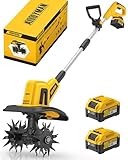
Pros
- Two 4.0Ah batteries and charger listed
- 360 RPM speed per the manufacturer
- 9-inch tilling width stated
- 6.6-inch tilling depth stated
Cons
- RPM, width and depth figures are unverified claims

Pros
- Battery-powered for cord-free tilling
- Designed for gardening and garden rototilling
Cons
- Battery, dimensions and power details not supplied
What people mean by mulching a lawn
The phrase covers two jobs that look similar only because both involve organic material on the ground. Mixing them up is how people either smother a lawn they meant to improve or leave a messy thatch of clippings they thought would disappear.
The usual meaning for an established lawn is grasscycling: a mulching-style cut that chops leaf blades into small pieces and returns them to the turf. Those clippings are a thin mulch, not a blanket. When they are short and dry enough, they fall between the living blades, fade from view, and decompose at the soil surface. The lawn stays a lawn. You are recycling what you already grew, not covering the grass.
The other meaning is covering turf with organic mulch or sheet mulching. That is a conversion method. A deep layer of wood chips, shredded bark, leaves, or compost, sometimes over cardboard or newspaper, blocks light and holds moisture against the grass until the turf weakens and dies. People use it to turn lawn into planting beds, paths, or a new landscape, not to keep turfgrass green.
A living lawn wants a disappearing layer of chopped leaves. A lawn you intend to replace can take a continuous organic cover. Those are opposite outcomes, so decide which one you want before you change how you mow or order a pile of chips.
Choose the method that matches your goal
If you want a living lawn with less bagging, grasscycling is the default. It fits healthy, regularly mowed turf that is not buried in weeds or obvious disease. Fine clippings return some moisture and nutrients to the soil as they break down. They do not replace every feeding or watering decision, and they do not make fertilizer optional in every climate, but they do keep a useful amount of organic matter on the lawn instead of in a bag.
Choose bagging, at least for a stretch of the season, if the lawn is already matted, recovering from a long skip in mowing, full of seedheads you do not want to spread, or showing widespread disease. Leaving every cutting is not a rule. It is a habit that works when the pieces can vanish into the canopy.
Choose organic mulch or sheet mulching if the real goal is beds, a planted border, a play area that will not stay in turf, or a lawn you are ready to give up. A deep wood-chip or bark layer on living grass is not a shortcut to a healthier lawn. It is a way to suppress that grass. Local rules, shade, slope, and what you plan to plant next all matter, so treat conversion as a landscape change, not a mowing tweak.
Lawn condition should also steer you. Thin, drought-stressed, or newly seeded turf is easier to smother with leftover clippings. A lawn that already has a thick mat of stems and debris at the soil surface may need mechanical cleanup more than another layer of organic material. When grass type, season, or neighborhood rules are unclear, follow local turf guidance rather than a one-size calendar.
What you need before you start
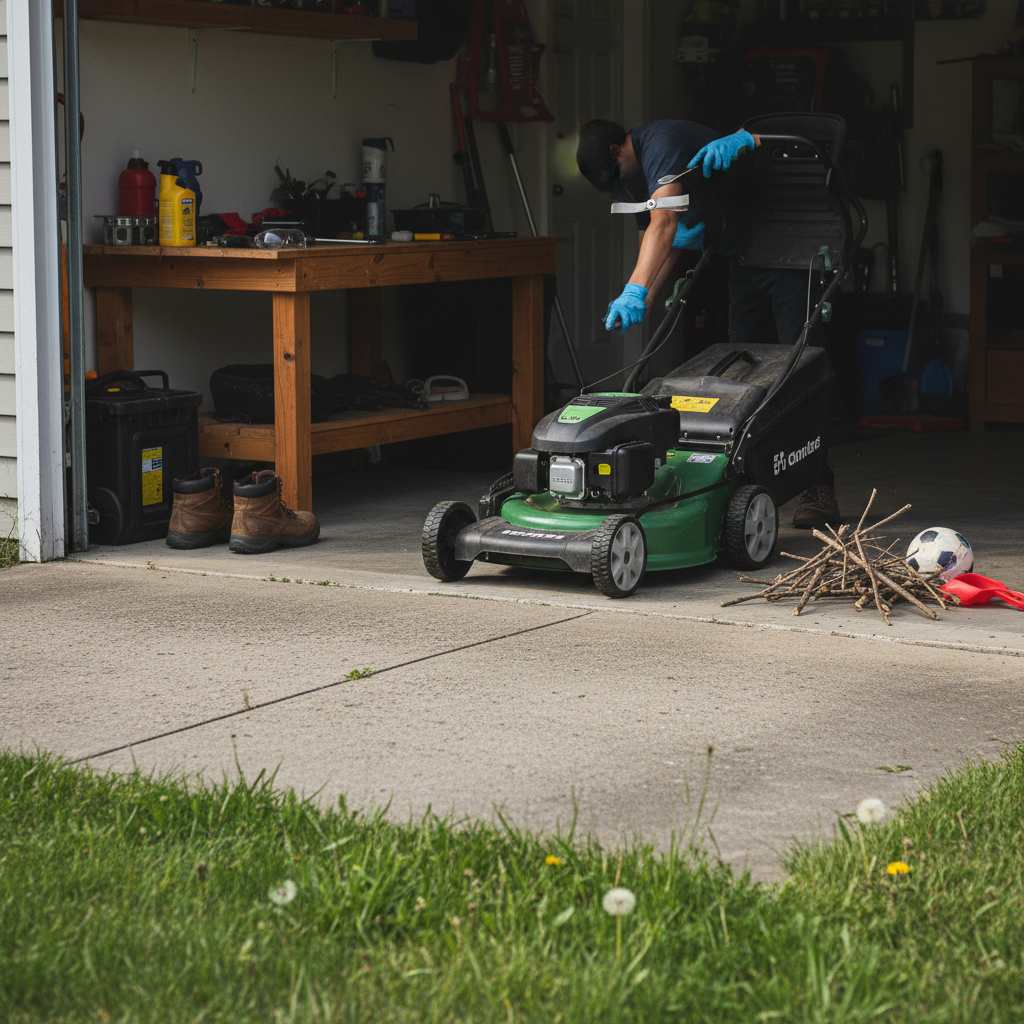
You do not need a specially branded machine to recycle clippings, but the cut has to be fine and the discharge has to stay under the deck. Many walk-behind and riding mowers can mulch if the side chute is closed or a mulching plug is installed and the blade is sharp enough to chop rather than tear. Some decks accept a mulching blade with extra cutting edges or a dedicated kit. Others simply run with the bagger off and the chute blocked. Follow the manual for your mower: a plug or blade that does not match the deck can throw debris or overload the engine.
A sharp blade matters more than the marketing name on the deck. Dull steel shreds leaf tips, leaves a gray or brown cast, and produces ragged pieces that sit on top of the lawn. Check the blade on a regular maintenance schedule, and replace or sharpen it when the edge is nicked or rounded. Clear the yard of sticks, stones, toys, and wire before you start. Rotary mowers can throw objects and cause serious injury. Keep the discharge guard or mulching cover in place, wear sturdy shoes and eye protection, and never reach under a running deck.
For grasscycling, useful extras are simple: a rake or blower for the occasional clump, a bagger you can reattach after a wet week, and enough fuel or charge to finish without parking a half-cut lawn in the sun. Mow when the surface is dry enough that clippings do not paste themselves to the deck or the turf.
If you are converting lawn to beds instead, the tool list changes. You will want a way to define edges, cut or flatten tall grass, and move bulk organics. Common materials include shredded leaves, arborist wood chips, compost, cardboard, or several sheets of newspaper. You do not need a chemical lawn killer to understand the basic method, and plastic sheeting is not required for a simple sheet-mulch explanation. Keep a water source nearby so paper layers can be wetted in place. Plan how mulch will stay off tree flares, shrub crowns, siding, and foundations before you dump the first load.
How to mulch a living lawn with grass clippings
The goal is a cut so fine that the lawn looks freshly mowed, not covered. If you can see a continuous blanket of clippings, the pieces are too long, too wet, or too heavy for that pass.
Set up the mower and the lawn
Pick a dry day. Wet grass folds, clumps, and clogs a mulching deck. Walk the lawn and remove debris that could become a projectile. Confirm the blade is sharp and the deck is reasonably clean; packed wet residue under the housing chops poorly and can leave streaks.
Close the side-discharge chute or install the mulching plug if the mower has one. If you normally bag, leave the bagger off only when you are sure the deck will recut the clippings instead of dumping them in a line. Set the cutting height so you leave plenty of green leaf tissue. A widely used rule of thumb is to remove only about one-third of the leaf blade in a single mowing. Exact height still depends on grass type and season, so treat that fraction as a guide, not a species chart. Scalping, or cutting so low that stems and crowns are exposed, stresses turf and leaves nowhere for clippings to hide.
Mow in a sequence that recuts the clippings
Start at a comfortable pace. Rushing a mulching deck often means the blade does not have time to recut what it just threw. Overlap each pass enough that you do not leave a strip of taller grass or a windrow of discharge. On a side-discharge mower used without a bag, point the chute toward the uncut or already-cut lawn in a way that lets pieces fall back under the deck rather than onto a sidewalk or flower bed. Change mowing direction from one visit to the next so you are not always rolling the same tracks or laying clippings in the same pattern.
Turns and tight corners are where clumps appear. Slow down, lift the deck slightly if your machine is designed for that, or make a second light pass over any ridge of clippings. Do not lower the deck to “clean up” a missed strip if that means scalping the high spots.
Judge the finish, then correct it
When you are done, the surface should look even, with clippings small enough to sift into the canopy. A light dusting that disappears by the next day is normal. Rows, lumps, or a felted layer on top of the blades are not. Rake or blow those piles apart while they are still loose. If a patch was cut too short, raise the deck for the next mowing and give that area time to rebuild leaf area. If the whole lawn looks shredded, stop and service the blade before the next cut.
Mowing habits that keep clipping mulch healthy
Grasscycling works as a rhythm, not a one-time trick. Frequent, modest cuts on dry grass produce better mulch than infrequent scalping. When growth is fast, that may mean mowing more often so each visit removes a small amount. When growth slows in heat, drought, or cool weather, stretch the interval rather than forcing a cut that only nicks dry tips.
Wet grass, deep shade, and a sudden growth surge all argue for a lighter hand. After rain, wait until the surface dries. In shade, turf is already thinner and easier to smother, so keep the cut higher and bag if clippings linger. After a skip of a week or more, either raise the deck and take two visits to get back to height, or bag the first heavy cutting so you are not burying the lawn in long pieces.
Fine leaf clippings are not the same thing as thatch. Thatch is a tight layer of stems, roots, and debris that accumulates at the soil surface when production outruns breakdown. Short, chopped leaves usually decompose. They can contribute to a messy surface if you leave them in wet mats, but blaming every spongy lawn on grasscycling oversimplifies the problem. Compaction, overwatering, species that produce a lot of stem tissue, and heavy nitrogen use can all affect thatch. Do not assume mulching never adds to surface buildup, and do not assume it always does.
Watering and fertilizing still depend on grass type, soil, and season. Returned clippings can reduce how much you need to add over time, but they do not give a fixed share of nitrogen or make a lawn fertilizer-free. Follow local extension-style guidance when you need heights, intervals, or feeding plans for your turf.
When to bag clippings instead of leaving them
Bag or rake when the clippings will not disappear. Long pieces from a skipped mowing sit on top of the grass, block light, and dry into visible mats. Wet, heavy clippings paste themselves into clumps that can yellow the turf underneath. If you can grab a handful that stays together, it does not belong as a mulch layer.
Bag after seeding or overseeding until the new plants are established enough that a shower of clippings will not bury them. Bag when the lawn is full of weed seedheads you do not want to spread, and consider bagging when disease is obvious across a large area. Removing infected leaves will not by itself diagnose or cure a pathogen, and it is not a substitute for identifying the problem, but leaving a wet, diseased mat on the surface is a poor default.
A lawn that already looks matted or thatchy is another reason to collect clippings for a while. Adding more organic debris on top of a dense surface layer makes the finish worse and can keep the crown of the plant damp. In those cases, bagging is a reset, not a failure of the method.
Removed clippings can go into a managed compost pile if they are not loaded with persistent weeds or materials you cannot verify as appropriate for composting. Do not dump them into streets or drains. Local disposal rules vary, and stormwater systems are not a compost bin.
If you want to cover or convert the lawn with organic mulch
This path is for conversion or new beds, not for a healthy lawn you intend to keep. A deep blanket of bark, chips, or other organic mulch cuts off light and keeps the turf wet and dark. Living grass under that cover typically declines. That is the point of the method, and it is why the same materials are the wrong choice on turf you still want.
Prepare the area
Define the edge so mulch does not creep onto walks or remaining lawn. Move or protect plants you intend to keep, and locate irrigation heads, valve boxes, and the root flares of trees. Cut or flatten tall grass so the cover can sit tightly. Some people mow as short as practical first; others knock the grass down and cover it. Optional compost on the soil surface can add organic matter under the mulch, but it is not a required product step.
Sheet mulching with cardboard or newspaper
Sheet mulching uses a paper barrier to suppress grass and weeds while a top layer of organic mulch finishes the cover. Overlap cardboard or several sheets of newspaper so there are no open seams, wet the paper so it stays put and begins to soften, then cover it with a continuous layer of leaves, chips, compost, or similar organics. How thick those layers should be, and how long the grass takes to die, vary with climate, season, grass species, and how complete the light block is. Treat any numeric recipe you see elsewhere as local advice that needs confirmation, not as a universal specification.
Plastic sheeting can smother turf, but it also changes soil moisture and biology in ways many gardeners prefer to avoid, and it is not required for a basic sheet-mulch description. Herbicides are likewise not required to explain the method. If you ever consider a chemical lawn killer, that is a labeled pesticide job: read the product label, follow it exactly, and get qualified help when the site or the product is beyond a homeowner task. This article will not walk through mixing rates or kill recipes.
Keep mulch off the parts that rot
Pull mulch back from tree flare, the point where the trunk widens at the soil. Do not bury shrub crowns or the turf crowns of any grass you still want at the edge of the bed. Keep organic piles away from siding and foundations, where trapped moisture and hidden pests become building problems. A volcano of chips stacked against a trunk is a common mistake, not a finished look.
Common mistakes that damage grass or look unkempt
The fastest way to make grasscycling look like neglect is to leave thick, wet clumps. Those piles block light, hold moisture against the leaves, and can yellow or kill the turf underneath. The same harm, on a larger scale, comes from burying a lawn you meant to keep under wood chips or bark.
Dull blades tear instead of cutting. The lawn grays, the clippings are stringy, and disease-prone wounds stay open on every leaf tip. Scalping, whether from a deck set too low or from bouncing over uneven ground, exposes crowns and leaves a stubbly surface that cannot hide even a light mulch of clippings. Always mowing in the same direction can create persistent tracks and lay grass over so the cut looks ribbed.
Mulching soaked grass is another regular error. The deck packs with paste, the blade stops recutting, and you paint the lawn with wet ribbons. Wait for a drier window, or bag that visit.
People also confuse clippings with thatch and either stop grasscycling for the wrong reason or ignore a real stem mat because they assume all surface organic matter is harmless. Look at what is actually there: short leaf pieces that crumble are different from a springy layer of undecomposed stems and roots.
On the conversion side, piling mulch against trunks, crowns, siding, or foundations creates rot and pest harborage. Using conversion mulch on a lawn you still want is simply smothering it by accident.
Around the mower itself, the preventable mistakes are safety mistakes. Keep guards and covers on, clear the yard, keep children and pets away, and follow the manufacturer’s instructions. Do not bypass safety devices. Rotary blades can cause severe injury even at idle-looking speeds.
Fixing clumps, yellow patches, and a messy finish
If you already tried mulching and the lawn looks worse, start with the surface you can see. Break up or remove clipping mats with a rake or blower while they are still loose. If they have dried into felt, bag them on the next mowing or lift them off by hand in small areas. Let the lawn dry before you cut again.
Raise the deck, sharpen the blade, and bag for a few mowings after a surge of growth. That combination resets height without burying the canopy. Change direction on the next visit so you are not recutting the same laid-over strips.
Yellowing or thinning has many causes: smothered patches under clumps, scalping, drought, shade, insects, disease, or nutrient issues. Do not assume a single deficiency or treat the lawn with a product rate invented for this page. If the turf is failing across a wide area, stop leaving clippings until you can see new growth, and look up local turf guidance or ask a qualified lawn-care professional. Aeration, dethatching, or a change in water and fertility may be appropriate in some situations, but the interval and the need depend on the site.
Stop grasscycling and reset when every pass leaves a visible blanket, when disease or weed seed is dominating, or when you have decided the space should not stay in turf. In the last case, switch deliberately to a conversion plan with defined edges and mulch kept off trunks and walls. In every other case, return to a higher, drier, sharper cut and leave only what the canopy can swallow.
A simple way to remember the difference
Mulching a lawn, for most households, is grasscycling: a dry-day, modest-height, sharp-blade cut that returns fine clippings to living turf. Bag when the pieces will sit on top. Cover with organic mulch or sheet mulch only when you are ready for the grass underneath to go. Keep the mower’s guards on, keep bulk mulch off flares and foundations, and let the finish of the lawn tell you whether the last pass was mulch or a mess.