
Direct Answer: How to Recycle an Old Lawn Mower
Recycling an old lawn mower typically involves safely preparing the machine by draining all hazardous fluids, such as oil and gasoline, and removing any batteries. Once prepared, you can take the mower to a local recycling center, scrap metal yard, or municipal waste facility that accepts large appliances. Some components may still be reusable, offering opportunities for donation or part sales before final disposal.
Why Proper Lawn Mower Disposal Matters
Disposing of a lawn mower improperly is not just a matter of clutter; it poses significant environmental and safety risks. Understanding why proper lawn mower recycling is essential helps motivate homeowners to take the extra steps required for responsible lawn mower disposal.
Environmental Hazards of Improper Disposal
Lawn mowers contain several hazardous materials that can leach into soil and groundwater if left in landfills. The most critical contaminants are:
- Motor Oil: Even small amounts of used oil can contaminate large volumes of water, harming aquatic life and disrupting ecosystems.
- Gasoline: Residual fuel is highly flammable and contains volatile organic compounds (VOCs) that contribute to air pollution and soil contamination.
- Batteries: Whether lead-acid or lithium-ion, batteries contain heavy metals and corrosive acids that are dangerous if they rupture or leak in a landfill.
By choosing environmental disposal methods, you prevent these toxins from entering the natural environment, protecting local wildlife and community health.
Resource Recovery and Sustainability
Beyond preventing harm, recycling a lawn mower contributes to resource conservation. Mowers are primarily made of steel, aluminum, and other metals that are infinitely recyclable. Recovering these materials reduces the need for virgin mining and manufacturing, lowering the overall carbon footprint associated with producing new equipment. Additionally, plastic components and rubber tires can often be processed and repurposed, further minimizing waste.
How to Prepare Your Lawn Mower for Recycling
Before transporting your mower to a recycling facility, proper preparation is crucial for safety and compliance with facility rules. Most centers will refuse a mower that still contains fluids due to fire hazards and environmental regulations. Follow this checklist to ensure your mower is ready for appliance recycling.
Safely Draining Oil and Gasoline
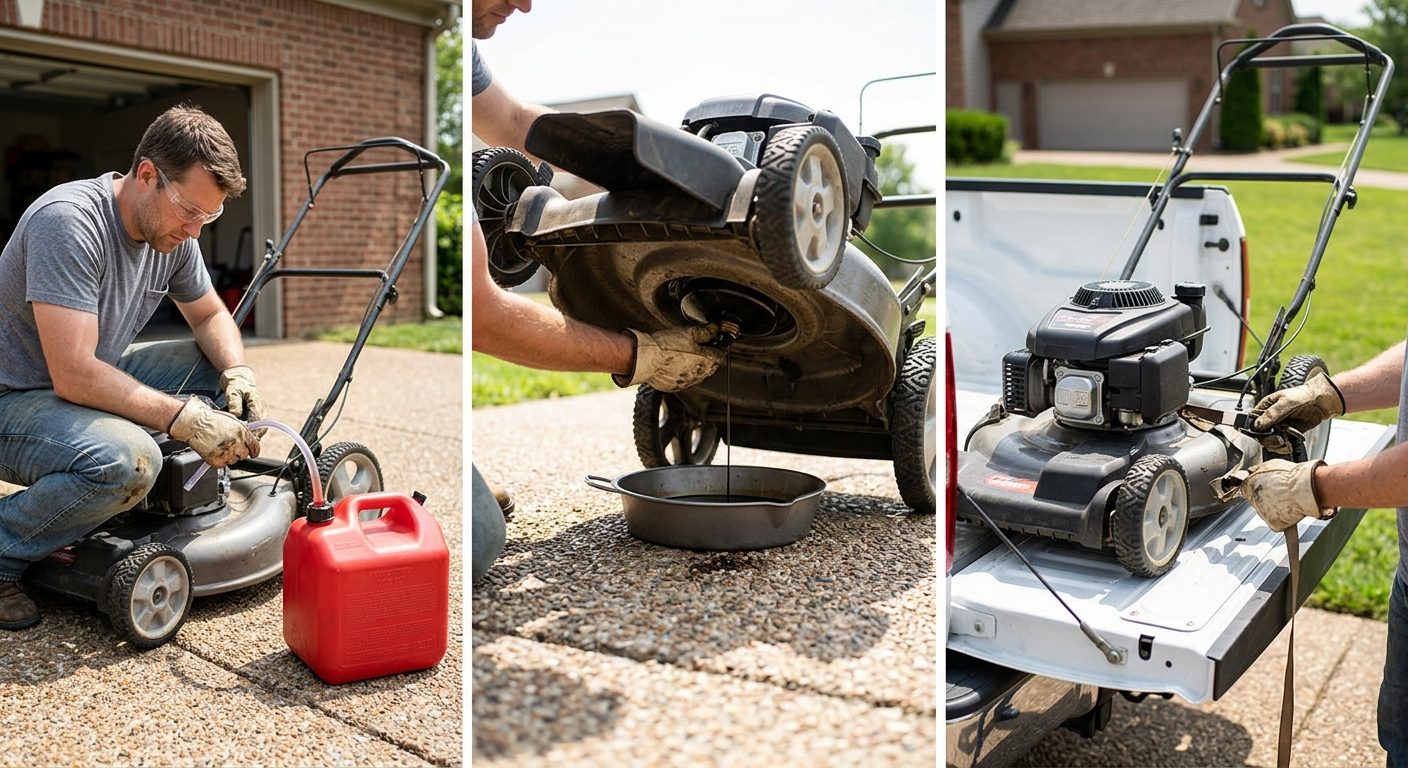
The most labor-intensive part of lawn mower recycling is removing the fluids. Here is how to handle draining oil from lawn mower engines and draining gas from lawn mower tanks safely:
- Gather Supplies: You will need a drain pan, a funnel, approved containers for oil and gas, gloves, and safety glasses. Work in a well-ventilated area, preferably outdoors on a flat surface.
- Drain the Gasoline:
- Locate the fuel tank. If your mower has a fuel shut-off valve, turn it off.
- Use a siphon pump or a turkey baster to remove gasoline from the tank into an approved gas container. Do not use mouth siphoning.
- If the tank is difficult to access, you may need to tilt the mower carefully. Ensure the air filter is facing up to prevent oil from entering the carburetor.
- Dispose of old gasoline at a hazardous waste collection site. Do not pour it down drains or on the ground.
- Drain the Engine Oil:
- Warm up the engine for a few minutes to thin the oil, making it flow more easily. Then, turn off the engine and let it cool slightly so it is safe to touch but still warm.
- Place the drain pan under the oil drain plug or dipstick tube, depending on your mower model.
- Remove the dipstick to allow air flow, then unscrew the drain plug. Let the oil drain completely.
- Replace the drain plug securely to prevent leaks during transport.
- Pour the used oil into a sealed container. Many auto parts stores and recycling centers accept used oil for free.
Lawn Mower Battery Removal
Lawn mower battery removal is a critical step, especially for electric and riding mowers. The process varies by battery type:
- Lead-Acid Batteries (Common in Riding Mowers): These are heavy and contain sulfuric acid. Disconnect the negative terminal first, then the positive terminal. Lift the battery out carefully and place it in a sturdy box. Lead-acid batteries are highly recyclable and often accepted at auto parts stores.
- Lithium-Ion Batteries (Common in Cordless Electric Mowers): These are lighter but pose a fire risk if damaged. Remove the battery pack according to the manufacturer’s instructions. Tape over the terminals to prevent short circuits. Do not crush or puncture the battery casing.
Never throw batteries in regular trash. Take them to designated battery recycling drop-offs, which are often available at hardware stores or municipal waste facilities. For additional operational safety benchmarks, see our published testing notes on marshall stanmore iii vs harman kardon onyx studio 8.
Removing Blades and Other Parts
While not always required, removing the blade can make the mower safer to handle and transport. Use a wrench to loosen the bolt holding the blade, keeping in mind that it may be tight. Wrap the blade in cardboard or heavy paper to prevent cuts. Additionally, consider removing any easily detachable plastic covers or wheels if you plan to recycle materials separately, though most scrap yards accept the whole unit.
Where to Recycle Your Old Lawn Mower
Once your mower is drained and prepped, you need to find a facility that accepts it. Several options exist for lawn mower disposal, each with different requirements and potential benefits. To compare alternative configurations, check our hands-on review of dyson v8 cyclone vs bissell featherweight stick.
Local Recycling Centers and Municipal Waste Facilities
Many municipal waste facility locations have specific days or areas for large item disposal. Check your local city or county website for “bulk item pickup” or “appliance recycling” schedules. Some centers charge a small fee for dropping off large metal items, while others offer free drop-off for residents. Always call ahead to confirm they accept lawn mowers and inquire about any specific preparation requirements.
Scrap Metal Yards
A scrap metal yard is an excellent option for gas-powered mowers, which are largely made of steel and aluminum. Unlike municipal centers that may charge you, scrap yards often pay you for the metal weight. Prices fluctuate based on market conditions, but even a small push mower can yield a few dollars. Call local yards to ask if they accept “white goods” or small engines and whether they require the engine to be removed or if the whole unit is acceptable. Users looking for related component recommendations can explore our bissell crosswave hydrosteam vs shark stainforce breakdown.
Retailer and Manufacturer Take-Back Programs
Some retailers and manufacturers offer take-back programs to encourage responsible disposal. When purchasing a new mower, ask if the store offers a haul-away service for the old one. Brands like Honda, Toro, and others sometimes partner with recycling initiatives. Additionally, big-box home improvement stores occasionally host seasonal recycling events where you can drop off small engines and batteries.
Junk Removal Services
If you cannot transport the mower yourself, junk removal services can pick it up. However, ensure you choose a company that prioritizes recycling over landfilling. Ask about their disposal practices to ensure your mower is being handled responsibly. This option is more expensive but offers convenience.
Can I Sell or Donate My Old Lawn Mower Instead?
Recycling should be the last resort if the mower is beyond repair. If the mower still runs or only needs minor fixes, selling or donating extends its life and reduces waste.
Selling Used Equipment
Online marketplaces like Craigslist, Facebook Marketplace, and eBay are popular for selling used lawn equipment. Be honest about the condition. If it starts and cuts grass, it has value. Even non-running mowers can be sold as “parts mowers” to DIY enthusiasts who need engines, decks, or wheels. Cleaning the mower before listing it can significantly increase interest and sale price.
Donating to Charities and Organizations
Several organizations accept used lawn equipment. Local community gardens, schools with agricultural programs, or Habitat for Humanity ReStores may accept working mowers. Churches and non-profits serving elderly or disabled individuals might also appreciate a donation if they maintain grounds. Always call ahead to confirm acceptance criteria, as most organizations require the item to be in working condition.
Key Considerations for Different Mower Types
The disposal process varies slightly depending on whether you have a gas, electric, or riding mower. Understanding these differences ensures you follow the correct protocols.
| Mower Type | Key Disposal Considerations | Battery Handling |
|---|---|---|
| Gas Push Mower | Focus on draining oil and gas. Heavy on steel. Ideal for scrap yards. | Usually no battery, unless it has electric start. |
| Cordless Electric Mower | No fluids to drain. Focus on battery removal. Lightweight. | Lithium-ion battery must be recycled separately at e-waste centers. |
| Riding Mower | Larger volume of oil and gas. Heavier frame. May require trailer for transport. | Lead-acid battery. Recyclable at auto parts stores or scrap yards. |
| Zero-Turn/Commercial | Complex hydraulics and larger engines. Professional disposal recommended. | Often multiple batteries. Handle with care due to weight and acid content. |
Gas vs. Electric Mowers
For gas mowers, the primary concern is fluid management. Failure to drain oil and gas properly is the most common reason for rejection at recycling centers. For electric mowers, the focus shifts entirely to the battery. Since there are no fluids, preparation is faster, but the battery requires special handling to prevent fire hazards during transport and processing.
Handling Different Battery Types
As noted, lawn mower battery removal procedures differ. Lead-acid batteries are robust but heavy and corrosive. Lithium-ion batteries are sensitive to physical damage and heat. Always store removed batteries in a cool, dry place away from flammable materials until you can drop them off at a certified recycler.
Buyer FAQs: How To Recycle Old Lawn Mower Solved
Can I put my old lawn mower in the regular trash?
No. Lawn mowers are considered bulk items and contain hazardous materials like oil, gasoline, and batteries. Most municipal waste services prohibit placing them in regular trash bins due to safety and environmental regulations. You must use a specialized disposal method such as recycling, scrap yard drop-off, or bulk item pickup services.
Do I get paid for recycling my lawn mower?
You may get paid if you take it to a scrap metal yard. Scrap yards pay based on the weight of the metal, primarily steel and aluminum. While the amount may be small for a push mower, riding mowers can yield more due to their larger metal content. Municipal recycling centers typically do not pay for drop-offs and may charge a fee.
What should I do if my lawn mower leaks oil after I drained it?
If residual oil leaks during transport, contain it immediately using absorbent materials like cat litter or sand. Do not wash it into storm drains. Dispose of the contaminated absorbent material as hazardous waste. To prevent leaks, ensure the drain plug is tightly secured and consider placing the mower on a tarp or in a truck bed lined with protective covering.
Are there any parts of the lawn mower that I should keep?
Yes. If the mower is not completely destroyed, parts like the blade, wheels, handles, and even the engine (if functional) can be valuable. You can sell these parts online or keep them as spares for other mowers. Removing reusable parts before recycling the main frame can also reduce the weight and effort required for disposal.
Related Maintenance and Operating Guides
To keep your equipment running at peak operating efficiency, explore our related technical walkthroughs and maintenance tutorials:
- Consult our detailed breakdown on heavy-duty chainsaw buyer guide.
Recycling Guidance for Mowers
Metal housings and blades can often go to scrap yards, while batteries and oil need separate drop off at a recycling center. For broader reading on outdoor power equipment, see American National Standards Institute (ANSI).