Direct Answer: How to Sharpen a Chainsaw
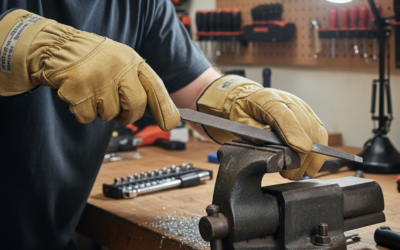
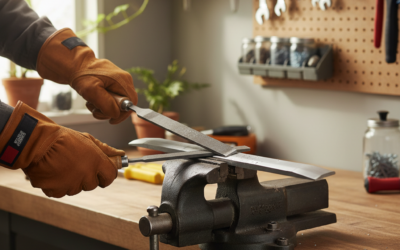
To sharpen a chainsaw, secure the bar in a vise, then use a round file matched to your chain’s pitch (typically 5/32″ or 3/16″) at a 30-degree angle to file each cutter tooth from the inside out. After filing all cutters, use a flat file to lower the depth gauges (rakers) to the correct height. Alternatively, you can use a power chain grinder for faster, more consistent results. Always wear gloves and eye protection, and ensure the chain brake is engaged before starting.
Why and When to Sharpen Your Chainsaw Chain
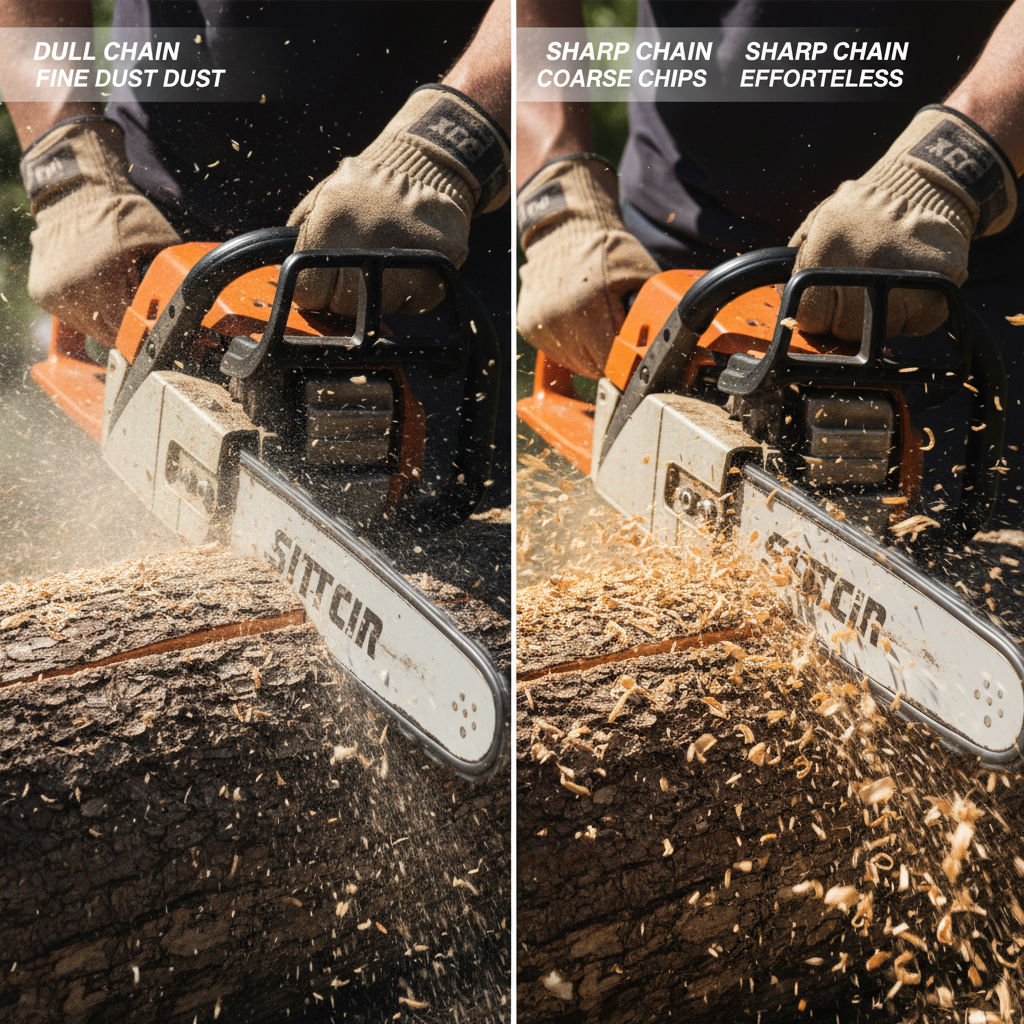
A sharp chainsaw chain is essential for both performance and safety. A dull chain cuts slowly, produces fine sawdust instead of wood chips, and requires you to push harder on the saw—which increases the risk of kickback and personal injury. A sharp chain also reduces strain on the engine and lowers fuel consumption.
Signs Your Chain Is Dull
- The saw produces fine dust rather than coarse wood chips.
- You have to apply excessive downward pressure to cut.
- The cut wanders or becomes difficult to keep straight.
- The saw vibrates more than usual.
- You notice visible damage, such as rolled or chipped cutter edges.
How a Dull Chain Affects the Saw
When the chain is dull, the motor has to work harder to pull the cutters through the wood. This increases heat, accelerates wear on the bar and sprocket, and can lead to premature engine failure. Sharpening on a regular basis—roughly every three to five tanks of fuel for frequent users—keeps the saw running efficiently.
Essential Tools and Safety Precautions
Manual Filing Kit
- Round file sized to your chain pitch (commonly 4.0 mm, 4.8 mm, or 5.5 mm).
- File guide to maintain the correct angle (usually 30 degrees).
- Flat file for depth gauges.
- Depth gauge tool to measure raker height.
- Bar vise or clamping device to hold the saw securely.
Power Grinder Equipment
- Chain grinder with a correctly sized grinding wheel.
- Chain vise built into the grinder to hold the chain.
- Protective eyewear rated for grinding sparks.
Personal Protective Equipment (PPE)
- Safety glasses or a full face shield.
- Cut-resistant gloves to protect against sharp cutters.
- Hearing protection if using a power grinder.
- Dust mask if filing indoors or in dusty conditions.
Securing the Chainsaw
Before sharpening, clean the chain with a brush and solvent to remove resin and debris. Engage the chain brake, then clamp the bar in a bench vise or use the saw’s built-in bar clamp. The chain should be snug but still movable so you can rotate it as you work.
Step-by-Step Guide: Sharpening with a Manual File
Determine the Correct Filing Angle
Most standard chains require a 30-degree filing angle relative to the bar. Some chains, especially ripping chains, use 10 degrees. Check the side plate of your chain or the manufacturer’s manual. The file guide will have angle markings to help you set this correctly.
File Each Cutter Tooth
- Place the round file in the file guide and position it on the first cutter.
- Align the guide so the file sits at the correct angle (30 degrees) and the file’s top edge is about 1/5 above the cutter’s top plate.
- Push the file forward in a smooth, steady stroke—never pull backward—applying light pressure.
- Make 2–4 strokes per cutter until a sharp edge is visible and the cutter’s corner is clean.
- Rotate the chain to the next cutter and repeat. File every other cutter first, then rotate the bar to access the opposite side.
Adjust the Depth Gauges (Rakers)
After sharpening the cutters, the depth gauges may be too high, which limits cutting depth. Use a depth gauge tool to check the height: the gauge sits on the cutter top, and the raker should be flush with the tool’s slot. If it protrudes, file it down with a flat file, then round the front edge slightly to maintain smooth operation.
Check for Uniformity
All cutters should look identical in length and angle. If one is noticeably longer, it will cut deeper and cause vibration. Use a caliper or simply eyeball each cutter against its neighbor. When in doubt, file all cutters the same number of strokes.
Step-by-Step Guide: Sharpening with a Power Grinder
Set Up the Grinder
- Mount the chain in the grinder’s vise, with the cutter facing the wheel.
- Adjust the grinding wheel’s angle to match the chain’s specifications (typically 30 degrees horizontal and 60 degrees vertical).
- Set the depth stop so the wheel removes only a minimal amount of metal—about 0.5 mm per pass.
Grind Each Cutter
- Lower the wheel onto the cutter with light pressure.
- Hold for 2–3 seconds, then lift and advance to the next cutter.
- Maintain the same pressure and duration for every tooth to ensure even sharpening.
- After all cutters are ground, check the depth gauges and file them down if needed.
Key Differences from Manual Filing
A grinder is faster and more consistent, but it removes more metal per pass, which shortens chain life. It also generates heat that can alter the temper of the steel if you press too hard or linger too long. Manual filing is gentler and gives you more control, but it takes longer and requires more skill.
Common Grinder Mistakes
- Using too much pressure, causing overheating and blueing of the steel.
- Setting the wrong angle, which ruins the cutter geometry.
- Grinding the depth gauges accidentally by not lowering the wheel correctly.
- Skipping cutters or grinding unevenly, leading to a wobbly chain.
Maintenance and When to Seek Professional Help
Clean and Lubricate After Sharpening
After sharpening, brush off metal filings from the chain and bar. Apply bar and chain oil to the chain before reinstalling it on the saw. Check the chain tension—it should be snug against the bar but still pull freely by hand. Over-tight chains bind; loose chains can derail and cause injury.
When to Replace the Chain
If the cutters are filed down to the depth gauges, if the drive links are worn, or if the chain has broken or bent teeth, replace it. A chain can typically be sharpened 10–15 times before the cutters become too short. Also replace the chain if it frequently comes loose despite proper tensioning.
How Often to Sharpen
- Casual users: Sharpen every 5–10 hours of cutting.
- Frequent users: Sharpen every 3–5 tanks of fuel.
- Professionals: Sharpen daily or as needed, often multiple times per day.
If you hit dirt, nails, or rocks, sharpen immediately—these materials dull the chain instantly. When in doubt, seek professional sharpening service, especially if you lack experience or the chain has significant damage.
Frequently Asked Questions
What file size do I need for my chainsaw chain?
File size depends on the chain’s pitch. Common sizes are 4.0 mm (for small chains), 4.8 mm (for 3/8″ low-profile chains), and 5.5 mm (for standard 3/8″ chains). Check the chain’s side plate or your saw’s manual for the exact specification. Using the wrong file size will produce incorrect cutter geometry.
Can I sharpen a chainsaw without removing the chain?
Yes, you can sharpen the chain while it’s mounted on the bar, provided you secure the saw in a vise and engage the chain brake. Many users prefer this method for quick touch-ups. However, removing the chain gives better access and is recommended for thorough sharpening or when using a grinder.
How do I know if my depth gauges are too high?
Use a depth gauge tool that sits on top of the cutter. The raker should be flush with the tool’s slot. If it protrudes above the slot, it’s too high and will limit cutting depth. File it down with a flat file, then round the front edge slightly to prevent chattering.
Is a power grinder better than a manual file?
It depends on your needs. A grinder is faster, more consistent, and ideal for heavily dulled chains or frequent sharpening. However, it removes more metal and can overheat the cutters if used improperly. Manual filing is gentler, cheaper, and gives finer control, making it the preferred method for most DIY users.
Final Thoughts
Sharpening a chainsaw is a straightforward skill that pays off in cutting efficiency, safety, and equipment longevity. Whether you choose a manual file for precision or a power grinder for speed, the key is consistency: maintain the correct angle, keep all cutters uniform, and check the depth gauges regularly. With practice, you’ll be able to restore a dull chain to factory-sharp condition in minutes, saving time and money while keeping your saw performing at its best.