How Do You Sharpen a Lawn Mower Blade?
Sharpening a lawn mower blade involves disconnecting the spark plug for safety, removing the blade with a socket wrench, securing it in a vise, and sharpening the original cutting edge bevel (typically 30–40 degrees) using a file, bench grinder, or angle grinder. It’s crucial to remove equal material from both ends to maintain balance, avoid overheating the steel, and then balance the blade on a screwdriver or blade balancer before reinstalling it with proper torque.
Why and When Should You Sharpen Your Lawn Mower Blade?
A sharp blade is essential for a clean cut that promotes lawn health. A dull blade tears grass, leaving ragged edges that are more susceptible to disease and browning. It also forces the mower to work harder, reducing fuel efficiency and putting extra strain on the engine.
You should consider sharpening your blade if you notice these signs:
- The grass tips appear torn or shredded rather than cleanly cut.
- The lawn has a brownish, unhealthy appearance a few days after mowing.
- The mower seems to struggle or vibrate excessively.
- The blade’s cutting edge is visibly dull, rounded, or has minor nicks.
As a general rule, sharpening the blade once or twice per mowing season is sufficient for most homeowners. If the blade has deep chips, cracks, or is worn thin, it’s safer and more effective to replace it entirely.
What Tools and Safety Gear Do You Need?
Gathering the right tools beforehand makes the process smoother and safer. Here’s what you’ll need:
- Safety Gear: Heavy-duty work gloves and safety glasses are non-negotiable.
- Socket Wrench or Breaker Bar: To remove the blade bolt. A 15/16-inch or 1-inch socket is common, but check your mower’s manual.
- Block of Wood: To wedge between the blade and mower deck to prevent the blade from turning while you loosen the bolt.
- Vise or Clamp: To securely hold the blade while you sharpen it.
- Sharpening Tool: Choose one based on your comfort and available equipment:
- Mill File: A 10- or 12-inch mill file is inexpensive, offers great control, and is ideal for beginners. It produces minimal heat.
- Bench Grinder: Faster than a file but requires care to avoid removing too much material or overheating the blade.
- Angle Grinder: Very fast but the most aggressive option. High risk of overheating and removing material unevenly if you’re not experienced.
- Blade Balancer or Screwdriver: To check if the blade is evenly weighted after sharpening.
How to Remove the Lawn Mower Blade: A Step-by-Step Process
Safety is the first priority. Always disconnect the spark plug wire (or disconnect the battery on electric mowers) to prevent accidental starting.
Step 1: Prepare the Mower
Empty the fuel tank or add a fuel stabilizer to prevent leaks. For a push mower, tip it so the air filter and carburetor side faces up. This prevents oil from flooding the air filter or leaking from the muffler. For a riding mower, use a jack or ramps and consult your manual for the proper lifting points.
Step 2: Remove the Blade
Locate the blade bolt underneath the mower deck. Wedge a block of wood between the blade and the deck to stop it from spinning. Use your socket wrench to turn the bolt counter-clockwise (lefty-loosey) to remove it. Note the orientation of the blade—often marked “Grass Side” or “Down”—as it must be reinstalled the same way.
How to Sharpen the Blade: Technique and Angle
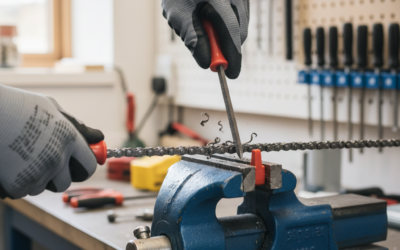
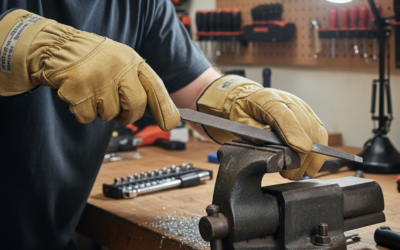
Secure the blade in a vise so the cutting edge is accessible. The goal is to restore the original bevel angle, which is typically between 30 and 40 degrees for most rotary mower blades.
Using a Mill File (Recommended for Beginners)
Hold the file at the existing bevel angle. Push the file smoothly along the cutting edge from the heel (inner part of the blade) to the tip (outer end) in one direction. Apply firm, even pressure. Repeat until the edge is sharp and any nicks are removed. Sharpen only the beveled side; the flat back should remain flat.
Using a Bench Grinder or Angle Grinder
Grind lightly along the existing bevel, moving the blade steadily across the wheel or disc. Do not overheat the metal. If the steel turns blue or black, you’ve overheated it, which ruins its temper and hardness, making it dull quickly. Dip the blade in water frequently to keep it cool. These tools remove material quickly, so work slowly and check your progress often.
Crucial Tip: Remove an equal amount of material from both ends of the blade to maintain its balance. An unbalanced blade causes dangerous vibrations that can damage the mower’s engine and bearings.
How to Balance and Reinstall the Blade
Check the Balance
After sharpening, the blade must be balanced. The easiest method is to place the center hole of the blade on a screwdriver shaft or a dedicated blade balancer. Hold it level and see if one side dips. If one side is heavier, carefully remove a small amount of material from the back (flat side) of the heavier end using your file or grinder. Repeat until the blade stays level.
Reinstall the Blade
Place the blade back on the mower in its original orientation. Hand-tighten the bolt, then use your socket wrench to secure it firmly. Consult your mower’s manual for the specific torque specification, as over-tightening can strip threads, while under-tightening is a safety hazard. Reconnect the spark plug wire.
Frequently Asked Questions
Can I sharpen my lawn mower blade without removing it?
While it’s possible to touch up the edge with a file without removing the blade, this is not recommended. It’s difficult to achieve a consistent angle, you can’t properly balance the blade, and it’s less safe. Removing the blade ensures a thorough, balanced, and safe sharpening job.
What is the best angle to sharpen a lawn mower blade?
The correct angle is the original bevel angle, which is almost always between 30 and 40 degrees for standard rotary mower blades. You should follow the existing angle on your blade rather than creating a new one.
How often should I sharpen my lawn mower blade?
For most residential lawns, sharpening the blade once or twice per season is adequate. If you mow very frequently, have a large lawn, or frequently hit rocks or debris, you may need to sharpen it more often.
Should I sharpen or replace my lawn mower blade?
Sharpen the blade if it has a dull edge but is otherwise in good condition with no cracks or excessive wear. Replace the blade if it has deep nicks, cracks, is bent, or is worn so thin that sharpening would remove too much material, compromising its strength.