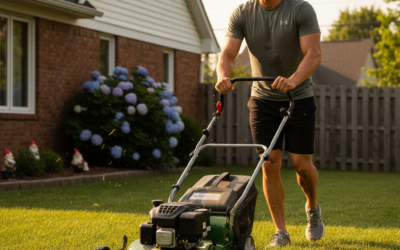
Start a typical walk-behind mower with a Briggs & Stratton engine outdoors after you clear the area, check oil and fresh fuel, and hold the blade-control bail. Set choke or primer and throttle as your engine is labeled, then pull the recoil cord or use the key or start button. Treat this as a general sequence only and match every control to your mower and engine owner’s manuals.
Briggs & Stratton engines power many consumer walk-behind lawn mowers, but handle layouts, cold-start aids, and interlocks are not identical from model to model. The steps below describe a common, safety-first order of work. They are not a substitute for the plates on your machine or for the mower and engine owner’s manuals that shipped with it. If a label and this article disagree, follow the label.
Safety checks before you try to start
Starting is the moment a blade, belt, and exhaust become live. Do the safety work first, even if you only intend a short test run. A gasoline walk-behind mower should be started and operated outdoors only. Exhaust contains carbon monoxide, which can build to dangerous levels in a garage, shed, carport with closed sides, or other enclosed space. Opening a door is not a reliable fix. Roll or carry the mower into open air, then start it there.
Clear the cutting path before you touch the starter. Keep children, pets, and other people well away from the deck, the discharge opening, and the area you plan to mow. Do not start with anyone standing in front of the chute or bagger. Remove sticks, stones, toys, wire, and loose debris from the lawn and from under the cutting deck so they cannot be thrown when the blade turns.
Wear closed, sturdy shoes with decent traction. Avoid sandals, bare feet, and loose clothing, drawstrings, or jewelry that can catch in moving parts. Tie back long hair. Eye protection is a reasonable extra precaution when you are near a spinning blade and flying clippings, but local rules and your manuals take precedence over any generic list of gear.
Treat fuel as a fire hazard before the first pull. If you spilled gasoline while filling, wipe the tank and surrounding plastic or metal, move the mower away from the spill, and let vapors clear before you use the recoil starter or turn a key. Do not smoke or work next to an open flame or hot grill. Keep the fuel container closed and off the mower deck.
Do not reach under the deck to clear grass while the engine can start. Do not tip a running mower to inspect the blade. After any previous run, assume the muffler and nearby engine surfaces are hot enough to burn skin. If the unit was just refueled, keep the hot muffler away from spilled fuel and from dry grass packed against the engine.
Stand in a stable stance with both feet on firm ground, not on a slope you cannot control and not on wet, slick pavement if you can avoid it. Know how you will stop the engine before you start it. On many walk-behind mowers, releasing the operator-presence control, often called the blade-control bail, is the normal shutoff. Confirm that path with your handle labels so you are not hunting for a stop switch after the engine fires.
Confirm fuel, oil, and basic readiness
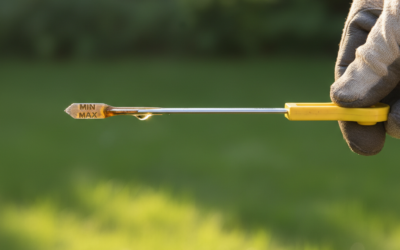
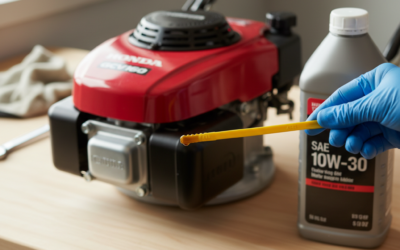
A Briggs & Stratton engine that is short of oil, dry of fuel, or fed stale gasoline will often refuse to start, and forcing the starter will not fix those conditions. Park the mower on a level surface and let it sit so the oil can settle. Check the oil using the dipstick or the oil-fill mark shown on that engine. Wipe the dipstick, reseat it the way the engine instructions describe (some thread in, some rest in the tube), and read the level. Add only the oil type printed on the engine or listed in the engine owner’s manual. Do not guess a viscosity, an API category, or a fill capacity from memory or from another machine.
Look at the fuel, not just the tank level. Fresh gasoline in a clean tank matters. Fuel that has sat for a long time, smells like varnish, looks cloudy, or has water sitting in it is a frequent no-start cause. If the can you are pouring from is old, unlabeled, or mixed with unknown two-stroke oil, do not use it as a shortcut. This article cannot give a single ethanol limit, octane rule, or tank size that applies to every Briggs & Stratton lawn-mower engine. Use the fuel guidance in your engine manual and on the fuel cap or shroud.
If the mower has a fuel shutoff valve, open it so gasoline can reach the carburetor. Not every walk-behind unit has one. If you do not see a clearly labeled valve, do not invent a tap to twist.
Do a short visual pass before you engage any starter:
- The spark-plug boot is pushed fully onto the plug.
- The air filter cover is in place and the filter is not a wad of soaked debris you can see without tearing the engine apart.
- There are no obvious fuel leaks under the tank, lines, or carburetor area.
- The recoil handle, if fitted, moves freely and the rope is not frayed or jammed.
- The cutting deck is free of packed clumps, and the discharge or bagger path is not stuffed shut.
- Guards, the rear door, and any side chute you intend to use are in their normal positions.
If the mower sat unused with old fuel in the tank, was stored with no oil in the crankcase, arrived still in shipping configuration, or has a seized recoil, stop. Do not invent a storage-revival recipe, a fogging procedure, or a compression test. Use the mower and engine manuals or a qualified shop. Forcing a dry or unassembled engine to start can damage it and can put a blade in motion before the machine is even ready to be used.
Identify choke, primer, throttle, and the blade-control bail
Walk-behind controls look similar from a few feet away and still work differently up close. Read the icons on the handle and on the engine. Those labeled positions override any generic starting advice, including the sequence in this article.
On many walk-behind lawn mowers the engine will not start or stay running unless you hold the operator-presence control against the handle. That lever is commonly a blade-control bail: a bar you squeeze toward the main grip. Holding it allows the engine and blade drive to run on a typical consumer deck. Releasing it is the normal stop method and is meant to keep the blade from being driven if you let go of the handle. Some machines also have a separate zone-control or blade-stop feature. If your handle has more than one lever, do not assume the tallest bar is the only one that matters. Identify each control from the decal and the mower owner’s manual.
Cold-start aids differ across Briggs & Stratton engines. Some use a manual choke lever. Some use an automatic choke you do not set by hand. Others use a primer bulb you press with a thumb. A few combine more than one of those. You cannot reliably guess a pump count or a choke time from the engine family name. Find the primer bulb or choke lever on your shroud or control panel and follow the cold-start and warm-start marks printed there.
Throttle or engine speed control is often a lever on the handle or a rocker on the engine. Many consumer mowers are started with that control in a fast or start-marked position, then left there for cutting. That pattern is common, not universal. Some units have a dedicated start detent, a rabbit-and-turtle icon, or a combined choke-and-throttle slide. Move the control only to the position your labels call for. Do not assume idle is the right place to start, and do not assume wide-open is required if the engine shows a different mark.
Other items that may or may not be present include a fuel shutoff valve, a removable safety key, a flywheel-brake interlock tied to the bail, and a separate engine on/off rocker. Open a fuel valve if the unit has one and it is closed. Insert a safety key if the mower uses one and it is missing. Do not tape, wedge, or tie the bail down. Defeating an operator-presence control or blade brake is unsafe and is outside the scope of any starting guide.
Start a recoil-pull Briggs & Stratton mower
Most homeowner walk-behind mowers still use a recoil starter: a handle on a rope that turns the engine when you pull. Use this only after the outdoor, clearance, oil, fuel, and control checks above.
Stand behind the handle in a balanced stance, not beside the discharge and not leaning over the hot-muffler side of the engine. Keep both feet clear of the deck. Hold the blade-control bail against the handle with one hand so the operator-presence system can allow a start. Set choke or the primer bulb for a cold or warm engine exactly as the engine is labeled. Set the throttle or speed control to the labeled start or run position.
Grip the recoil handle. Pull in a firm, full stroke that stays in line with the starter housing. Do not wrap the cord around your hand. Do not yank sideways or upward at a sharp angle, which can damage the rope and the pulley. Let the rope rewind fully into the housing before the next pull. Short, snatching tugs waste effort and are harder on the recoil.
If the engine coughs or fires briefly, keep the bail held and try again with the same labeled choke or primer setting unless the engine instructions tell you to change it after a fire. When a manual choke is fitted and the engine begins to run, move the choke toward the run or open position as the sound smooths out. Leaving a manual choke fully closed after the engine is running can flood or stall some engines. There is no single warm-up clock or “correct” number of pulls that applies to every Briggs & Stratton lawn-mower engine, so do not chase a promised first-pull start.
If several careful attempts fail, stop. Repeated yanking can overheat a recoil starter, and repeating an unknown primer routine can flood the engine. Recheck only the user-level items in the last section of this article, then use the manuals or a technician rather than pulling until the rope fails.
Start an electric-start model
Some walk-behind mowers with Briggs & Stratton engines add a key, a push button, or another labeled start control, often with a small onboard battery. The outdoor location, clear deck, oil check, fresh fuel, bail, and choke or primer setup still apply. Electric start does not bypass operator-presence or blade-brake interlocks on a typical consumer mower. Hold the bail unless your specific manual describes a different, labeled sequence.
Set choke or primer and throttle as marked. Then turn the key or press the start control only as long as the mower instructions allow. Do not hold a starter motor for an extended crank if the engine is not catching. Many systems need a charged battery even when a recoil backup is also fitted. If your machine has both, the recoil method above is the usual fallback after you stop and think, not something to use while the key is still trying to crank.
If the starter clicks, cranks slowly, or does nothing, stop. Check only obvious user-level items: a safety key that is missing or not seated, a battery connector that is already exposed and visibly loose, or a user-accessible fuse if the mower manual shows one and you can see that it is open. Do not jump-start the mower with jumper cables, a car battery, or homemade leads. Do not guess charger voltage, polarity, or charge time. Weak batteries and corroded terminals belong to the official instructions or a qualified technician.
Once the engine is running
Keep both hands on the handle and keep the blade-control bail held. If the engine has a manual choke, open it gradually as idle or run quality steadies. Do not invent a fixed warm-up time or a target engine speed. Listen for a smoother note and watch that the mower does not load up and stall from a choke left fully on. Automatic-choke engines generally manage that transition themselves; do not force their linkage.
Begin mowing only after the area is still clear and you have stable footing. Engage travel, if the mower is self-propelled, with a deliberate motion rather than a lunge. Keep the discharge pointed away from people, vehicles, and windows. Do not pull the mower toward your feet in a way that puts you in the blade path, and do not lift the front wheels as a habit unless you are following a technique your mower manual actually describes for a specific obstacle.
To stop, release the bail or use the labeled engine-stop control. Wait until the blade has stopped fully before you approach the deck, bagger, or discharge. Never leave a running mower unattended, even for a moment, and never walk away to move a hose or a toy while the engine is up. After shutdown, the muffler and engine remain hot. Keep children and dry fuel containers away from those surfaces. If you must tilt the mower for a later inspection, wait until it is stopped and cool enough to handle, and follow the tilt direction in the manuals so oil and fuel do not run into the wrong parts of the engine.
New, stored, and model-specific cases you should not guess
A brand-new walk-behind unit may still need handle assembly, removal of shipping blocks or cable ties, oil fill before the first start, and whatever registration or first-use steps the manufacturer printed. Do not assume oil was shipped in the crankcase. Do not invent a break-in hour count or a special first-tank ritual. Assemble and fill the machine the way the unboxing and owner’s manuals describe, then use the same outdoor starting sequence as any other ready mower.
After winter or a long pause, the usual extras are stale fuel, a spark-plug boot that was left off for storage, a closed fuel shutoff valve, a disconnected battery on an electric-start model, or a recoil that will not pull because the engine or starter is bound. Those are reasons to pause, not reasons to disassemble the carburetor, fog the cylinder, or run a compression test from a web article. Drain or refresh fuel only as your manuals allow, and stop if the starter will not turn by hand with normal recoil effort.
This article is aimed at typical walk-behind lawn mowers. Ride-on tractors, robotic mowers, commercial walk-behinds, pressure washers, and generators may share a Briggs & Stratton engine brand and still use different interlocks, throttles, parking brakes, and starting safety switches. Do not transfer a walk-behind bail-and-rope sequence onto a rider or a job-site engine. Identify whether your machine is recoil start, electric start, or both from the starter housing, the key or button, and the manuals. Identify choke versus primer from the parts you can see, not from a series name you remember from another tool.
Model plates on the mower deck and on the engine are the right place to confirm what you own before you buy parts or book service. This article cannot replace those plates or the mower and engine owner’s manuals for a specific model.
If it will not start, stop after basic checks
When a careful start attempt fails, repeat only conservative, user-level checks. Confirm the tank is not empty and the fuel does not look or smell stale. Confirm oil is at a safe mark on a level surface. Hold the bail fully against the handle for the whole attempt. Set choke or primer for the actual engine temperature, not for the weather you wish you had. Open a fuel shutoff valve if the unit has one. Reseat the spark-plug boot. Confirm the air filter cover is on and that a visibly clogged filter you can reach under a typical user cover is not choking the intake. On electric-start models, confirm the safety key and an obviously empty or disconnected battery.
Do not remove the spark plug to “check for spark” by grounding it near the engine, especially after you have been handling fuel. Do not take the carburetor apart, set a float, measure an ignition air gap, or quote a compression number. Do not bypass a blade brake, flywheel brake, or other interlock to see whether the engine will run. Those tests and repairs are out of scope and can create a serious injury or fire risk.
Stop pulling or cranking if the rope binds, the starter motor sounds labored, you smell raw fuel as if the engine is flooded and you do not have a labeled recovery procedure, or nothing has changed after a short round of the checks above. Continuing to yank a recoil or spin a weak battery is a good way to break a rewind starter or flatten a pack without getting a running mower. Consult the engine and mower owner’s manuals or authorized service. That is how you protect yourself from the blade and the fuel system, and how you avoid turning a no-start into a damaged starter.
Quick answers to common starting questions
Can I start the mower in the garage if the door is open?
No. Start and run a gasoline walk-behind mower outdoors only. Carbon monoxide from the exhaust can collect in a garage or shed even with a door raised. Roll the mower outside, then start it.
How many times should I press the primer bulb?
There is no universal count for every Briggs & Stratton engine. Use the number and the cold-versus-warm instructions printed on your engine or in the engine owner’s manual. If those are missing, do not invent a routine of extra pumps. Extra priming often floods the engine.
The engine starts and then dies. What should I try first?
Keep the bail held. If there is a manual choke, move it toward run as the engine catches. Confirm the fuel shutoff valve is open if fitted, and that you are not trying to run on a nearly empty tank of stale gasoline. If it still dies immediately after those labeled adjustments, stop and use the manuals or a technician rather than repeating primer presses.
Do I need the same steps on a warm engine?
Often you use less choke or no primer when the engine is already warm, but only the icons on your engine define that. A warm restart still happens outdoors, with the area clear, oil already confirmed, and the blade-control bail held.
Is this the same process for every Briggs & Stratton product?
No. The brand appears on many engines. Walk-behind lawn mowers, riders, and non-mower equipment can use different safety switches and controls. Match the starter type and the cold-start aid on the machine in front of you.