Direct Answer: How to Start a Gas Lawn Mower
To start a gas lawn mower, check your fuel level, set the choke to cold, prime the engine 3-5 times if it has a primer bulb, position the throttle to start, then pull the starter cord firmly and quickly until the engine catches. As the engine warms, gradually move the choke toward the run position. For warm engines, skip priming and use a lower choke setting.
Safety Precautions Before Starting

Before attempting to start any gas lawn mower, take these essential safety steps:
- Clear the mowing area of rocks, sticks, toys, and other debris that could become projectiles if caught by the blade.
- Wear protective gear including closed-toe shoes, long pants, and eye protection.
- Check fuel and oil levels to ensure the engine has adequate lubricant and fuel. Low oil can damage the engine.
- Inspect the blade for damage or dullness. Never attempt to start a mower with a bent or broken blade.
- Keep bystanders away, especially children and pets, until the mower has finished running.
- Never start on a slope or uneven ground where the mower could tip.
- Ensure proper ventilation if starting indoors or in an enclosed space—gas engines produce carbon monoxide.
Understanding Your Mower’s Components
Familiarizing yourself with key startup mechanisms will make starting your mower easier and safer:
The Choke
The choke controls the air-to-fuel ratio in the engine. When set to the cold position, it restricts airflow, enriching the fuel mixture so the cold engine can start more easily. Once the engine warms, you gradually move the choke toward the run position to allow normal airflow. Most modern mowers have an automatic choke that adjusts itself, but many manual-choke models require you to adjust it during startup.
The Primer Bulb
The primer bulb forces fresh fuel into the carburetor before starting. Pressing it 3-5 times fills the fuel lines and carb with gasoline, making cold starts easier. Not all mowers have primer bulbs—check your manual to see if yours does. If your mower has one, priming before a cold start is essential.
The Throttle
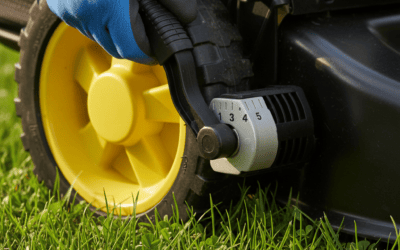
The throttle controls engine speed. For starting, set it to the start or half-throttle position. This gives the engine enough air and fuel to catch without stalling. Once the engine is running smoothly, you can adjust the throttle based on your mowing needs.
The Starter Cord (Pull Cord)
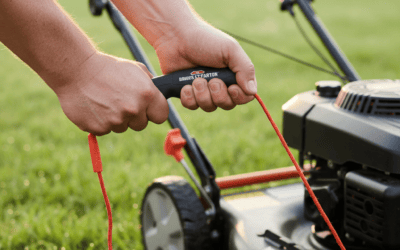
This manual cord engages the engine’s crankshaft. A quick, firm pull creates the compression and spark needed to start combustion. Technique matters—jerky or weak pulls are less likely to start the engine.
Cold Start Procedure for Walk-Behind Push Mowers
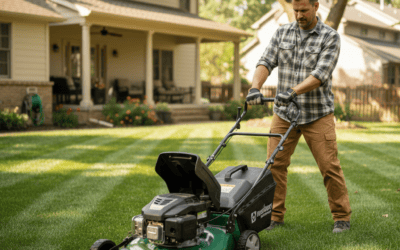
Most homeowners use walk-behind push mowers, and cold starts are the most common scenario. Follow these steps for reliable starting:
Step 1: Check Fuel and Oil
Open the fuel cap and visually inspect the tank. It should be at least half full. Check the oil level by removing the dipstick—it should reach the full line. Add fuel or oil if needed, then replace the caps securely.
Step 2: Position the Choke
Locate the choke lever or dial, usually on the side of the engine. Move it fully to the cold position. If your mower has an automatic choke, you can skip this step—it will adjust on its own.
Step 3: Prime the Engine (If Applicable)
If your mower has a primer bulb, press it firmly 3-5 times. You may see fuel return to the bulb—this is normal. The goal is to fill the fuel lines and carburetor with fresh gasoline. If your mower has no primer bulb, proceed to the next step.
Step 4: Set the Throttle
Move the throttle lever to the start or half-throttle position. This varies by model—check your manual for the exact position. Some mowers have a dedicated start position marked on the throttle.
Step 5: Pull the Starter Cord
Grip the handle firmly and pull the starter cord with a quick, confident motion. The cord should extend fully in one smooth pull, then reset. If it doesn’t catch on the first or second pull, wait a few seconds and try again. Never yank it repeatedly in frustration—this can damage the mechanism.
Proper technique: Stand with your feet shoulder-width apart for stability. Use your entire arm and core, not just your wrist. Pull at an angle downward and slightly forward, not straight down.
Step 6: Adjust the Choke as the Engine Warms
Once the engine starts, let it run for 10-15 seconds, then gradually move the choke toward the run position. If the engine sputters or dies, move the choke back to cold. As it continues to run, slowly transition the choke. Within 30 seconds to 1 minute, it should be fully in the run position. If your mower has an automatic choke, it will handle this adjustment for you.
Step 7: Allow the Engine to Warm Up
Let the mower idle for another 30 seconds before beginning to mow. This allows the engine to reach stable operating temperature and ensures smooth performance.
Warm Start and Quick Restart
Starting a warm engine is simpler than a cold start because the fuel is already in the lines and the engine retains heat.
For a Recently Shut-Down Mower
If you’ve turned off the mower less than an hour ago:
- Move the choke to the run position or half-choke, depending on how warm the engine still is.
- Skip priming—the fuel lines are already filled.
- Set the throttle to start position.
- Pull the starter cord. Warm engines typically catch on the first or second pull.
For a Mower Left Overnight or Longer
If the engine has cooled completely, treat it as a cold start and follow the full procedure above. However, if the mower was sitting for only a few hours and still feels warm to the touch, use the warm-start procedure above.
Starting a Riding Lawn Mower
Riding mowers operate on similar principles but have important differences:
Key Differences
- Key ignition: Most riding mowers use a key ignition rather than a pull cord. Insert the key and turn it to start, just like starting a car.
- Automatic choke: Riding mowers typically have automatic chokes that don’t require manual adjustment.
- Seat switch: Many riding mowers have a safety switch that prevents starting unless the operator is seated. Ensure you’re seated before turning the key.
- Blade engagement: Always disengage the blades (move the blade engagement lever to off) before starting. This prevents the blades from spinning unexpectedly.
Step-by-Step for Riding Mowers
- Check fuel and oil levels.
- Sit on the mower seat fully, ensuring the seat switch engages.
- Disengage the blades by moving the blade engagement control to the off position.
- Insert the key and turn it to the start position. Hold it for 3-5 seconds, then release.
- The engine should start. If it doesn’t, wait 10 seconds and try again.
- Allow the engine to idle for 30 seconds to warm up before engaging the blades.
Troubleshooting When Your Mower Won’t Start
If your mower isn’t starting despite following the correct procedure, diagnose the problem:
Engine Cranks But Won’t Catch
Possible causes: Incorrect choke position, flooded engine, or weak spark.
- Try adjusting the choke to a different position—sometimes engines need less or more enrichment.
- If you’ve pulled the cord many times, the engine may be flooded with fuel. Set the choke to run, remove the spark plug, and let it dry for 10 minutes. Reinstall and try again.
- Check the spark plug. Remove it and inspect for carbon buildup or damage. Replace if necessary.
Engine Won’t Crank at All
Possible causes: Dead fuel line, faulty spark plug, or mechanical damage.
- Verify fuel is actually reaching the carburetor. Remove the fuel line from the carburetor and check for flow (do this over a container, not over the engine).
- Replace the spark plug if it’s corroded or damaged.
- Check for a broken pull cord or damaged recoil mechanism.
Mower Starts But Immediately Dies
Possible causes: Stale fuel, carburetor buildup, or air leak.
- Stale fuel: Gasoline degrades after 30 days of storage, especially if left in the tank without a fuel stabilizer. Old fuel clogs the carburetor and prevents smooth running. Drain the old fuel and refill with fresh gasoline. If the problem persists, the carburetor may need cleaning.
- Clean or replace the air filter. A clogged filter restricts airflow and causes starting and running issues.
- Check for vacuum leaks around fuel lines and connections.
Weak or Inconsistent Starting
Possible causes: Dirty air filter, low compression, or worn spark plug.
- Inspect and clean the air filter. Replace if it’s torn or very dirty.
- Replace the spark plug with a new one of the correct type (check your manual for the part number).
- If the pull cord feels unusually hard to pull, the engine may have low compression. This typically requires professional repair.
When to Seek Professional Help
If you’ve tried basic troubleshooting and the mower still won’t start, consider professional repair. Issues like internal engine damage, carburetor rebuild, or timing problems require specialized tools and expertise. A small engine repair shop can diagnose and fix these problems efficiently.
Maintenance Tips to Keep Your Mower Starting Reliably
- Use fresh fuel: Buy gasoline regularly and use it within 30 days. For off-season storage, add fuel stabilizer to prevent degradation.
- Change the oil: Follow your manual’s recommendation, typically every 50 hours of operation or once per season.
- Replace the air filter: Check it before each mowing season and replace if dirty.
- Inspect the spark plug: Replace it annually or when it shows wear.
- Store properly: At the end of the season, empty the fuel tank or add stabilizer, change the oil, and store the mower in a dry location.
- Clean the carburetor: If you store your mower for winter without stabilizer, the carburetor will likely get clogged. Clean it in spring or have it professionally serviced.
Frequently Asked Questions
How many times should I pull the starter cord before giving up?
Typically, a healthy mower should start within 3-5 pulls on a cold start or 1-2 pulls on a warm start. If it hasn’t started after 10 pulls, stop and troubleshoot. Repeated pulling can flood the engine or damage the recoil mechanism. Wait a few minutes, check the choke and fuel, and try again.
What’s the difference between cold and warm start positions on the choke?
The cold position fully restricts airflow, enriching the fuel mixture for easier cold starts. The warm (or run) position allows normal airflow for regular operation. As the engine warms, combustion becomes easier, so you gradually transition to the run position. Running the engine in the cold position for too long can cause fouling or overheating.
Can I use old gas left over from last season?
Gasoline begins to degrade after about 30 days, especially if stored in a warm or humid environment. Old fuel gums up the carburetor and prevents starting. It’s safest to drain old fuel at the end of the season and start fresh each year. If you must store fuel, use a fuel stabilizer to extend its lifespan to about 3-6 months.
Why does my mower start with the choke in the wrong position?
Modern mowers with automatic chokes may start in multiple positions because the choke adjusts during the starting process. However, manual-choke mowers should be started with the choke fully in the cold position. If a manual-choke mower starts in the run position, it may indicate a rich fuel mixture or a carburetor issue that needs adjustment or cleaning.