Direct Answer: How to Start Your Lawn Mower
To start a gas-powered push lawn mower, check that fuel and oil levels are adequate, set the choke to the full position, engage the safety bar with one hand, then pull the starter cord firmly and quickly. For electric mowers, ensure the battery is fully charged and press the power button. For riding mowers, insert the ignition key, engage the parking brake, and turn the key to start. Always consult your specific model’s manual for exact procedures, as designs vary by manufacturer.
Pre-Start Safety Checks
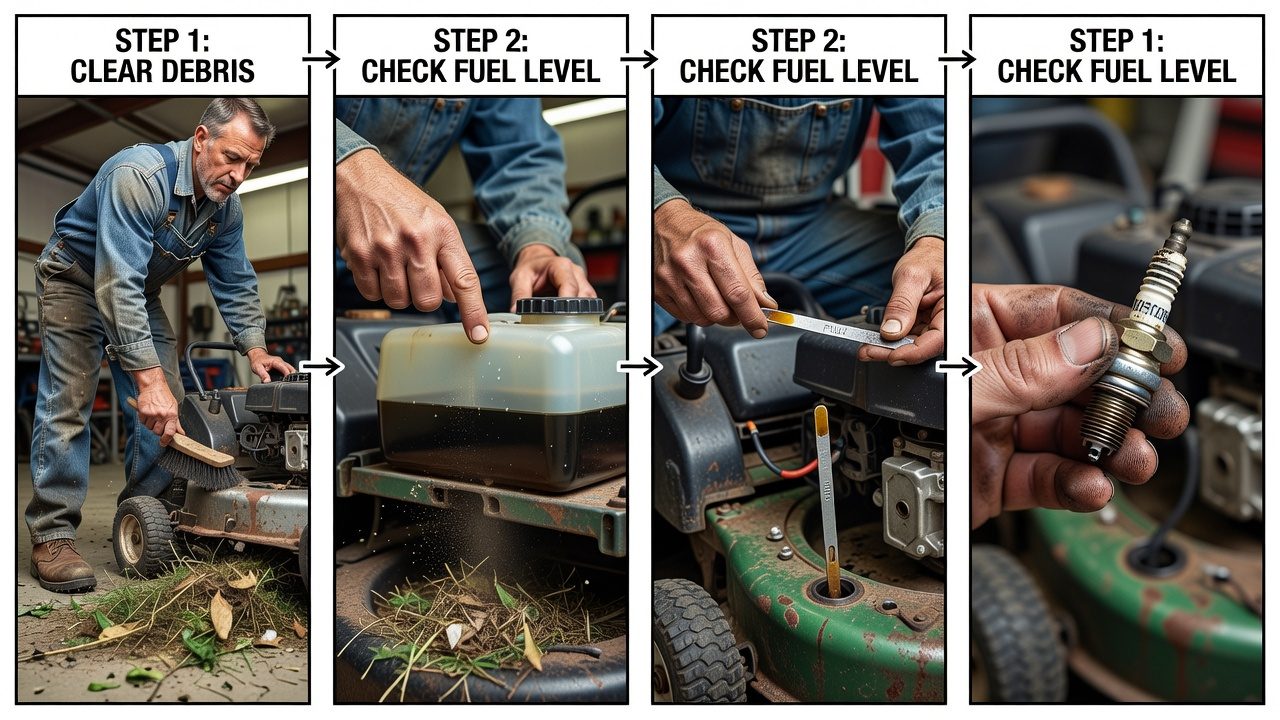
Before you attempt to start any lawn mower, perform these essential safety checks to prevent injury and damage:
- Inspect the blade area: Clear the deck of debris, leaves, and sticks. Never start the mower with objects near or under the blade.
- Check fuel level: Ensure you have adequate fuel. For gas mowers, use fresh gasoline (not fuel older than 30 days). Stale fuel is a common cause of starting problems.
- Check oil level: Most gas mowers require oil checks before each use. Use the dipstick to verify oil is between the minimum and maximum marks. Low oil can damage the engine.
- Verify spark plug condition: A worn or fouled spark plug prevents ignition. If the mower hasn’t started in months, consider replacing the spark plug.
- Ensure proper placement: Place the mower on level ground, away from flammable materials. This prevents tip-over and fuel spillage.
- Wear appropriate gear: Wear closed-toe shoes, long pants, and avoid loose clothing that could catch on moving parts.
Understanding Your Mower Type
Lawn mowers fall into three main categories, each with a different starting procedure:
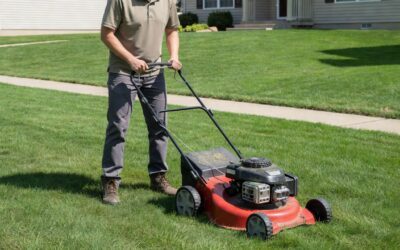
Gas-Powered Push Mowers
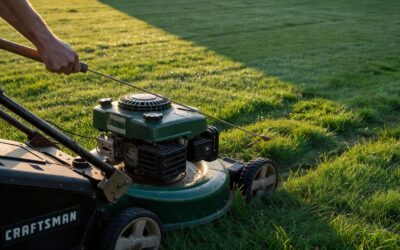
These are the most common residential mowers. They use a small internal combustion engine, typically started with a pull cord or recoil starter. Starting requires engaging the choke, priming the engine, and pulling the cord with proper technique.
Electric Mowers (Battery-Powered)
Cordless electric mowers use rechargeable lithium-ion batteries. They start with a power button and eliminate the need for fuel, oil changes, and engine priming. Starting is simpler but requires the battery to be charged beforehand.
Corded Electric Mowers
These plug into a standard outlet and are always ready to start. Simply press the power button once plugged in. No fuel, oil, or battery charging needed.
Riding Mowers
These larger mowers use an ignition key system similar to vehicles. The starting process is more straightforward than push mowers but requires more setup for safe operation.
How to Start a Gas-Powered Push Mower (Step-by-Step)
This is the most detailed procedure because gas push mowers require the most steps:
Step 1: Locate the Choke
The choke is a lever or dial typically on the side or top of the engine. It controls the fuel-to-air ratio. For a cold start (when the engine is at ambient temperature), the choke must be in the full or closed position. This enriches the fuel mixture, making ignition easier.
Step 2: Prime the Engine (If Applicable)
Some mowers have a primer bulb—a small rubber button on the carburetor. Press it 3-6 times to push fuel into the engine. This step is optional on newer models with automatic choke systems. Check your manual to see if your mower has a primer.
Step 3: Engage the Safety Bar
Locate the safety bar (also called a deadman switch or bail) on the handle. Squeeze this bar firmly against the handle with one hand. The engine will not start if the safety bar is not engaged—this prevents accidental starts.
Step 4: Position Your Body
Stand with one foot firmly on the mower deck to prevent it from lurching forward. Hold the handle with your dominant hand while your other hand will pull the cord.
Step 5: Pull the Starter Cord
Grasp the cord handle with a firm grip. Pull it quickly and smoothly in one continuous motion. Use your arm and shoulder muscles, not just your wrist. The pulling motion should take about one second. Do not jerk abruptly or pull too slowly—both reduce effectiveness.
- For a cold start: Pull with full force. Expect 1-3 pulls before ignition.
- For a warm start (engine recently run): Pull with less force. Move the choke to the half or run position first.
Step 6: Return the Choke to Run Position
Once the engine starts, immediately move the choke lever from full to the run (or half) position. Leaving the choke in full position will cause the engine to stall or run rough. Modern mowers often do this automatically.
Step 7: Let the Engine Warm Up
Allow the engine to run for 30-60 seconds at idle before mowing. This warms the oil and stabilizes the engine’s operation.
How to Start an Electric Lawn Mower
Battery-Powered Mowers
Electric mowers are the simplest to start:
- Charge the battery fully: Most lithium-ion batteries take 2-24 hours to charge, depending on capacity. Check the manufacturer’s manual for your specific model.
- Insert the charged battery: Slide the battery into the designated slot on the mower. You’ll hear a click when it’s seated correctly.
- Press the power button: Depending on the model, you may need to press and hold, or press twice. The blade should engage immediately with no warm-up time needed.
- Safety consideration: Even though there’s no gas engine, many electric mowers have a safety lever similar to gas mowers. Check your manual.
Troubleshooting: If the mower doesn’t start, verify the battery is fully charged. A partially charged battery may not have enough power to turn the blade.
Corded Electric Mowers
Starting a corded electric mower is even simpler:
- Plug the extension cord into a grounded outlet.
- Ensure the power cord is clear of the blade path.
- Press the power button or switch. The mower starts immediately.
Safety: Always use a GFCI (ground-fault circuit interrupter) protected outlet outdoors. Keep the cord away from the blade and wet surfaces.
How to Start a Riding Lawn Mower
Riding mowers use an ignition system more similar to vehicles:
- Check fuel and oil: Verify fuel level is adequate and oil is within the correct range.
- Engage the parking brake: Pull the parking brake lever or pedal to lock the wheels in place. The engine will not start without the parking brake engaged for safety.
- Insert the ignition key: Insert the key into the ignition switch, typically located on the right side of the steering column.
- Turn to start: Turn the key clockwise to the start position. Release once the engine catches. The engine typically starts within 2-3 seconds.
- Adjust the choke if needed: Some riding mowers have a choke lever for cold starts. Move it to the full position before starting in cold weather, then return it to run position once the engine is running.
Modern riding mowers often have electric starters, so no pulling is required. If your mower has a manual pull-cord backup, follow the same procedure as a push mower.
Common Starting Problems and Troubleshooting
The Mower Won’t Start at All
Likely causes and solutions:
- No fuel: Check the fuel tank level. If empty, add fresh gasoline.
- Stale fuel: Gasoline degrades after 30 days, especially if the mower sat idle over winter. Drain old fuel and replace with fresh gasoline. Consider adding fuel stabilizer for future storage.
- Fouled spark plug: Remove the spark plug (consult your manual for location). If it appears black or wet, replace it with a new one of the correct type.
- Flooded engine: If you’ve pulled the cord many times without starting, the engine may be flooded with excess fuel. Move the choke to the run position and try pulling the cord again. If still no start, let the mower sit for 15-20 minutes to allow fuel to evaporate.
- Low oil: Check the oil level with the dipstick. If low, add the correct oil type and amount (check your manual). An engine with insufficient oil may have a safety shut-off that prevents starting.
The Engine Starts but Stalls Immediately
Likely causes:
- The choke is still in the full position. Move it to the run position.
- The safety bar is not engaged properly. Squeeze it firmly.
- Carburetor is dirty. If the mower has sat for months, the fuel system may need cleaning.
Hard Starting or Requiring Multiple Pulls
Likely causes:
- Dirty air filter reducing airflow. Replace or clean the air filter.
- Spark plug is worn. Replace with a new plug of the correct type.
- Weak battery (for riding mowers with electric start). Charge or replace the battery.
Frequently Asked Questions
Q: What should I do if my lawn mower has been sitting unused for 6 months?
A: Before starting, drain the old fuel and replace it with fresh gasoline. Check and replace the oil if needed. Inspect the spark plug for corrosion or fouling, and replace if necessary. Prime the engine by pressing the primer bulb 6-10 times, then attempt to start. If the carburetor is clogged, you may need to use a carburetor cleaning solution or take the mower to a service technician.
Q: Can I use old gasoline in my lawn mower?
A: No. Gasoline older than 30 days can degrade and form varnish, which clogs the fuel system and prevents starting. Always use fresh fuel. To prevent this issue, add fuel stabilizer to the tank if you know the mower will sit unused for more than a month.
Q: How do I know if my spark plug needs replacing?
A: Remove the spark plug and inspect it. A healthy spark plug has a tan or light gray electrode. If it appears black (carbon buildup), wet (excess fuel), or the gap appears too large, replace it with the correct type. Spark plugs typically last one mowing season and should be replaced annually for best performance.
Q: Is it normal for a pull-cord starter to feel stiff or hard to pull?
A: Some resistance is normal, but excessive stiffness can indicate a stuck engine or incorrect choke positioning. Ensure the choke is in the correct position for cold or warm starts. If the cord is extremely difficult to pull, the engine may have internal damage and should be serviced by a professional. Never force the cord or pull it too aggressively, as this can damage the recoil starter mechanism.
Post-Start Operation Tips
- Wait for warm-up: Allow the engine to run for 30-60 seconds at idle before applying load. This gives the oil time to circulate and stabilize the engine.
- Gradual throttle increase: Don’t immediately go to full throttle. Slowly increase the throttle to full speed.
- Check blade engagement: For gas push mowers, engage the blade clutch after warm-up. Verify the blade is cutting evenly.
- Monitor engine sound: A healthy engine has a steady hum. Unusual sputtering or knocking indicates a problem—stop and investigate.
Seasonal Storage and Maintenance
To ensure your mower starts reliably next season:
- Change the oil before storing (follow your manual for recommended oil type and capacity).
- Clean or replace the air filter.
- Replace the spark plug if it’s more than one year old.
- Add fuel stabilizer to the tank, or drain all fuel before long-term storage.
- Store the mower in a dry location, away from extreme temperatures.