Direct Answer: How to Turn On a Lawn Mower
To turn on a lawn mower, first move it to flat, clear ground and check the fuel and oil levels. For a gas push mower, engage the safety handle, open the fuel shutoff if present, press the primer bulb 3–5 times when cold, set the choke and throttle, then pull the starter cord firmly until the engine starts, adjusting the choke as it warms. For a riding mower, sit in the seat, engage the parking brake, insert and turn the ignition key, and follow the same choke/throttle steps if equipped. For an electric mower, insert the safety key or battery, press the start button or squeeze the bail handle, and begin mowing. If the engine won’t start, check the spark plug, fuel valve, oil level, and safety interlocks before retrying.
What Does “Turning On” a Lawn Mower Actually Mean?
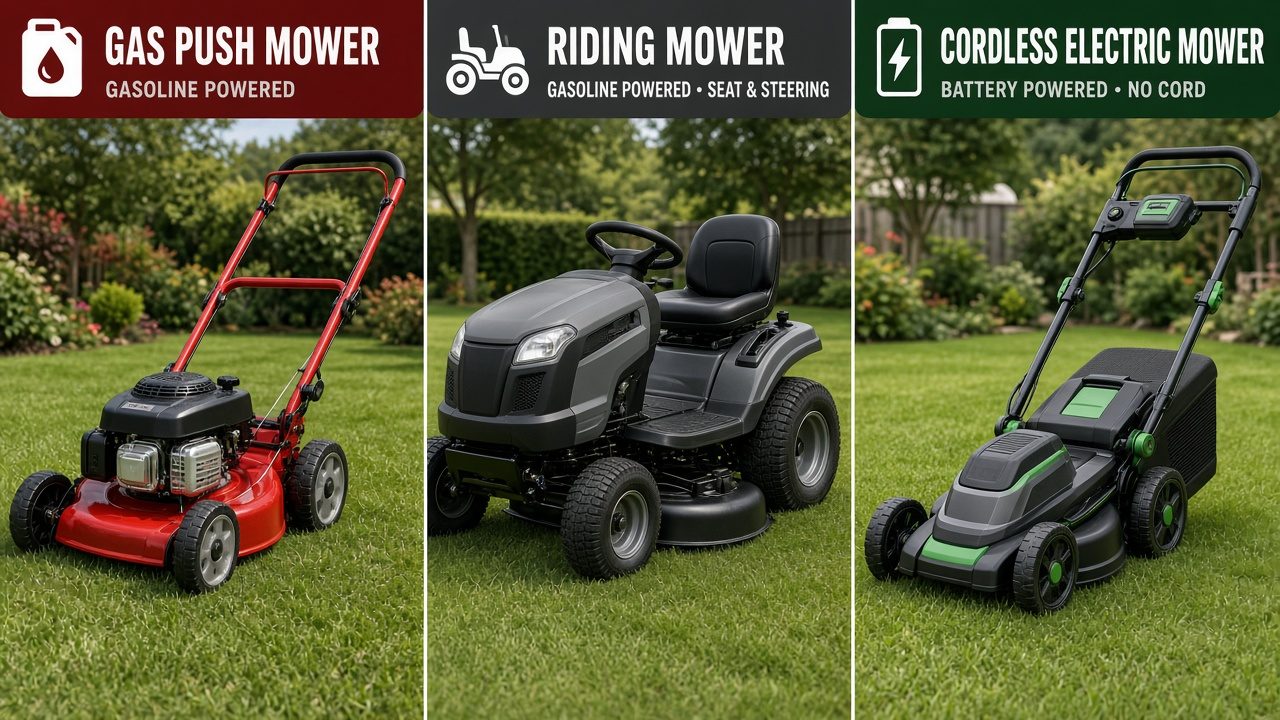
Before anything else, it helps to clear up a common point of confusion: “turning on” a lawn mower means starting the engine, not steering or turning the machine. If you searched for “how to turn on a lawn mower” or “how to turn a lawn mower on,” you are almost certainly looking for the starting procedure. This guide answers that question for every major mower type.
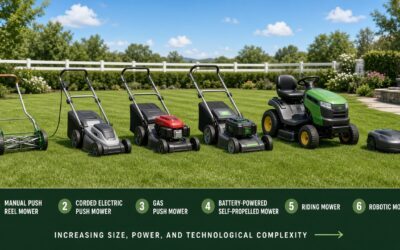
Lawn mowers fall into three broad categories, and each has a different starting method:
- Gas push mowers – walk-behind machines powered by a small gasoline engine, started with a pull cord (starter rope).
- Riding mowers – sit-on mowers with an ignition key, safety interlocks, and often a choke and throttle control.
- Electric mowers – either corded (plugged into an outlet) or battery-powered, started with a button, lever, or bail handle rather than a pull cord.
Identify which type you own before you start, because the procedure differs significantly. The rest of this guide walks through each one step by step.
Before You Start: Safety Preparation and Pre-Start Checklist
No matter which type of mower you have, a few universal preparation steps reduce risk and make the engine far easier to start. Skipping these is one of the most common reasons a mower refuses to fire.
Position the Mower on Flat, Clear Ground
Always move the mower to a flat, level surface before starting. Starting on a slope can cause fuel to slosh away from the carburetor, making the engine hard to start or preventing it from starting at all. Clear the area of rocks, sticks, toys, and heavy wet grass, because debris can be thrown by the blade the moment the engine turns over.
Check the Fuel Level and Freshness
Make sure there is fresh gasoline in the tank. Old or stale fuel is one of the most common causes of hard starting, because gasoline degrades and leaves gummy deposits in the carburetor after a few months. If the fuel has been sitting since last season, drain it and refill with fresh gasoline before attempting to start.
Check the Oil Level
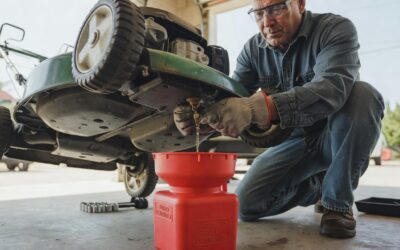
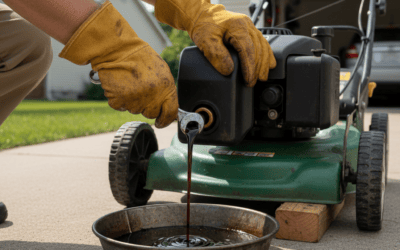
Most gas mowers have a dipstick or a fill cap with a dipstick built in. Check the oil level before every use, or at least according to the interval in your owner’s manual. Running an engine low on oil can cause serious damage, and many mowers have a low-oil sensor that will prevent the engine from starting if the level is too low.
Understand the Safety Features
Modern mowers are equipped with safety interlocks and an operator presence control (often a handle bar or bail that must be squeezed). These features prevent the engine from starting or the blade from spinning when the operator is not in position. If the mower will not start, the very first thing to check is whether every safety interlock is engaged:
- On a push mower, the blade brake or operator presence handle must be held against the handlebar.
- On a riding mower, the parking brake must be set, the blades disengaged, and the operator must be sitting in the seat.
- On an electric mower, the safety key must be inserted and the bail handle squeezed.
How to Start a Gas Push Mower
Gas push mowers are the most common type, and their starting procedure is straightforward once you know the controls. Here is the full sequence.
Step 1: Open the Fuel Shutoff Valve (If Equipped)
Many mowers have a fuel valve (also called a fuel shutoff) located near the fuel tank or carburetor. If yours has one, turn it to the open position so gasoline can flow to the engine. If you skip this step, the mower will crank but never fire.
Step 2: Engage the Safety Handle
Squeeze and hold the safety handle (also called the blade brake control or operator presence bar) against the handlebar. This is required on most modern mowers: the engine will not start, and the blade will not spin, unless this handle is held down. Keep holding it throughout the starting process.
Step 3: Press the Primer Bulb 3–5 Times (Cold Start Only)
If the engine is cold (it has not been running recently), press the primer bulb 3–5 times. The primer bulb is a small rubber button, usually located on the side of the engine, that pushes fuel into the carburetor. You should see a small amount of fuel appear in the bulb as you press it. Do not prime a warm engine – doing so floods it with too much fuel and makes it harder to start.
Step 4: Set the Choke and Throttle
For a cold start, move the choke lever to the closed (or “choke”) position. The choke restricts air flow to create a richer fuel mixture, which helps a cold engine fire. If your mower has a throttle lever, set it to the “fast” or “start” position. For a warm start, leave the choke in the open position – you generally will not need it.
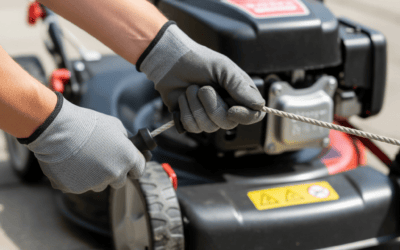
Step 5: Pull the Starter Cord Firmly
Grasp the starter cord handle with one hand while keeping the other hand on the safety handle. Pull the cord out in one smooth, firm motion until you feel resistance, then give it a quick, strong yank. Let the cord rewind slowly rather than letting it snap back. The engine should start within one to three pulls. If it does not, check the troubleshooting section below.
Step 6: Adjust the Choke as the Engine Warms
Once the engine fires, gradually move the choke to the open position over the next 30–60 seconds as the engine warms up. If you leave the choke closed too long, the engine may run rough, smoke, or stall. Set the throttle to your desired mowing speed and begin.
Warm-Start Procedure
If the engine is already warm (for example, you stopped for a moment to empty the bag), do not press the primer bulb and do not close the choke. Simply engage the safety handle and pull the starter cord. The engine should start on the first or second pull.
How to Start a Riding Mower
Riding mowers use the same engine principles as push mowers, but they add an ignition key and a series of safety interlocks that must be satisfied before the starter will engage.
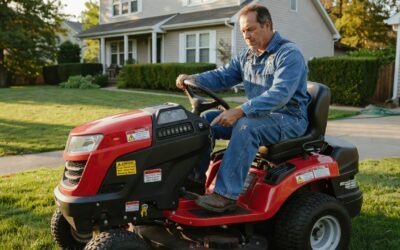
Step 1: Sit in the Seat and Set the Parking Brake
Climb into the seat and engage the parking brake. Most riding mowers have a seat safety switch that prevents the engine from cranking unless the operator is sitting in the seat. Set the parking brake firmly; on many models, the engine will not start unless the brake is engaged.
Step 2: Disengage the Blades
Make sure the blade engagement lever (often called the PTO, or power take-off) is in the off or disengaged position. Most riding mowers will not start with the blades engaged, as a safety precaution.
Step 3: Set the Choke and Throttle
If the engine is cold, move the choke control to the closed position. Set the throttle to about half or the “fast” position, depending on your model. Some newer mowers have an automatic choke, in which case you can skip this step.
Step 4: Insert and Turn the Ignition Key
Insert the ignition key and turn it to the start position. Hold it there until the engine cranks and fires, then release it so it springs back to the run position. Do not hold the key in the start position for more than about 10 seconds at a time, as this can overheat the starter motor.
Step 5: Adjust the Choke as the Engine Warms
Once the engine is running, gradually open the choke as it warms up, then set the throttle to the desired mowing speed. Engage the blades only after the engine is running smoothly and you are seated and ready to mow.
What If the Riding Mower Clicks but Won’t Crank?
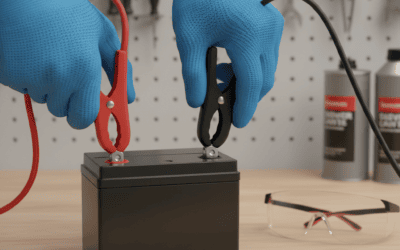
A rapid clicking sound when you turn the key usually means the battery is weak or the connections are corroded. Check the battery terminals for corrosion, make sure the cables are tight, and charge or replace the battery if needed. If the mower clicks once but the engine does not turn over, the starter solenoid or starter motor may be faulty.
How to Start an Electric Lawn Mower
Electric mowers are the simplest to start because there is no engine, fuel, or pull cord. However, they have their own safety features you need to understand.
Starting a Battery-Powered Mower
Battery mowers are started in three quick steps:
- Insert the safety key – Most battery mowers require a removable safety key to be inserted before the mower will operate. This prevents accidental starting by children.
- Insert the battery – Make sure the battery is fully charged and locked firmly into place. Some models have the battery built in, in which case just confirm it is charged.
- Squeeze the bail handle or press the start button – Hold the bail handle against the handlebar, or press the start button, and the blade will begin spinning.
The safety key is a critical feature: the mower will not run without it, so if your electric mower does not respond, check that the key is inserted and turned to the on position.
Starting a Corded Electric Mower
Corded mowers are even simpler:
- Plug the power cord into a grounded outdoor outlet, ideally a GFCI-protected one.
- Route the cord so it trails behind you and cannot be cut by the blade.
- Squeeze the bail handle or press the start switch to begin mowing.
Because corded mowers have no battery, there is no priming, choking, or fuel to worry about. Just make sure the outlet is live and the cord is in good condition with no cuts or exposed wires.
Why Won’t My Lawn Mower Start? Common Troubleshooting
If you have followed the correct procedure and the mower still will not start, work through this troubleshooting table from the most likely cause to the least likely.
| Symptom | Likely Cause | What to Do |
|---|---|---|
| Engine does not turn over at all (no sound) | Safety interlock not engaged; dead battery (riding mower); no safety key (electric) | Engage the safety handle, sit in the seat, set the parking brake, insert the safety key, or charge the battery |
| Engine cranks but will not fire | Fuel valve closed; stale fuel; choke not set for cold start; no spark | Open the fuel valve, drain old fuel, set the choke, and check the spark plug |
| Engine starts but stalls immediately | Choke left closed too long; clogged air filter; dirty carburetor | Open the choke gradually, clean or replace the air filter, and clean the carburetor |
| Engine runs rough or smokes | Too much priming; oil overfill; choke closed while warm | Wait a few minutes, restart without priming, check the oil level, and open the choke |
| Riding mower clicks but will not crank | Weak battery; corroded terminals; faulty starter solenoid | Charge the battery, clean the terminals, and test the solenoid |
How to Check the Spark Plug
The spark plug is a common culprit when an engine cranks but will not fire. Remove the spark plug wire, unscrew the plug with a spark plug socket, and inspect it. A healthy plug has a light tan or gray insulator. If it is black, oily, or covered in carbon, clean it with a wire brush or replace it. Also check the gap – the space between the electrode and the tip – and adjust it to the specification in your owner’s manual. A fouled plug or incorrect gap will prevent the engine from starting reliably.
How to Check the Fuel Valve and Fuel Lines
Confirm the fuel valve is in the open position. Then check the fuel lines for cracks, kinks, or leaks. If fuel is not reaching the carburetor, the engine cannot start. You can often see fuel flowing through a clear inline filter when the valve is open.
How to Check the Oil Level
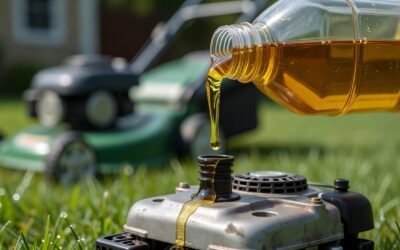
Remove the dipstick, wipe it clean, reinsert it fully, and pull it out again. The oil should be between the “full” and “add” marks. If it is low, add the oil type recommended in your manual. Remember that many mowers have a low-oil sensor that will prevent starting until the level is corrected.
How to Check the Air Filter
A clogged air filter starves the engine of air and makes starting difficult. Remove the filter cover, inspect the filter, and tap it clean or replace it if it is dirty or damaged. This is one of the quickest fixes for a mower that starts but stalls.
Key Factors That Affect Starting Success
Even with the correct procedure, some mowers start easily and others fight you. These variables make the biggest difference.
Fuel Freshness
Gasoline begins to degrade in as little as 30 days. Old or stale fuel is a leading cause of hard starting, because it leaves varnish and gum in the carburetor. Use fuel stabilizer if you store the mower for more than a month, and drain or run the mower dry at the end of the season.
Temperature and Cold Starts
Cold engines need a richer fuel mixture, which is exactly what the choke and primer bulb provide. On a cold morning, expect to use the choke and prime 3–5 times. On a warm engine, skip both. Getting this wrong – priming a warm engine or leaving the choke closed too long – is one of the most common starting mistakes.
Maintenance Frequency
A well-maintained mower starts on the first or second pull. Change the oil annually or every 50 hours of operation, replace the air filter and spark plug each season, and keep the underside of the deck clean. Regular maintenance prevents the vast majority of starting problems.
Direct Answer: The Fastest Safe Way to Turn On Your Lawn Mower
Here is the complete starting sequence in a quick-reference format.
Gas Push Mower
- Move to flat, clear ground and check fuel and oil.
- Open the fuel valve (if equipped).
- Hold the safety handle against the handlebar.
- Press the primer bulb 3–5 times if the engine is cold.
- Close the choke and set the throttle to fast.
- Pull the starter cord firmly until the engine starts.
- Open the choke as the engine warms.
Riding Mower
- Sit in the seat and engage the parking brake.
- Disengage the blades (PTO off).
- Set the choke and throttle if equipped.
- Turn the ignition key to start, then release it.
- Open the choke as the engine warms.
Electric Mower
- Insert the safety key and a charged battery (or plug in the cord).
- Squeeze the bail handle or press the start button.
- Begin mowing.
Frequently Asked Questions
Why won’t my lawn mower start even after I pull the cord many times?
The most common causes are a closed fuel valve, stale fuel, a fouled spark plug, or an unengaged safety handle. Check these in order: confirm the safety handle is held down, open the fuel valve, verify the fuel is fresh, and inspect the spark plug. If the engine cranks but will not fire, the spark plug and fuel supply are the first suspects.
Should I press the primer bulb on a warm engine?
No. The primer bulb is only for cold starts. Pressing it 3–5 times on a warm engine floods the carburetor with excess fuel, which makes the mower hard to start and can cause it to run rough or smoke. For a warm restart, skip the primer and the choke entirely.
How do I start a lawn mower with a bad spark plug?
You generally cannot. The spark plug provides the ignition that fires the fuel-air mixture, so a fouled, cracked, or incorrectly gapped plug will prevent starting. Remove the plug, clean it with a wire brush, set the gap to the specification in your owner’s manual, or simply replace it with a new plug each season.
Do electric mowers need the safety key to start?
Yes, on most models. The safety key is a removable interlock that prevents the mower from being started accidentally, especially by children. If your battery or corded electric mower does not respond when you squeeze the bail handle, check that the safety key is inserted and turned to the on position and that the battery is charged.