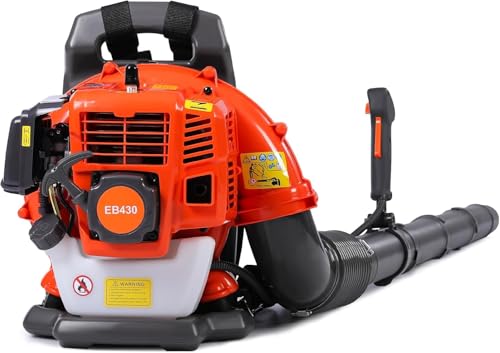
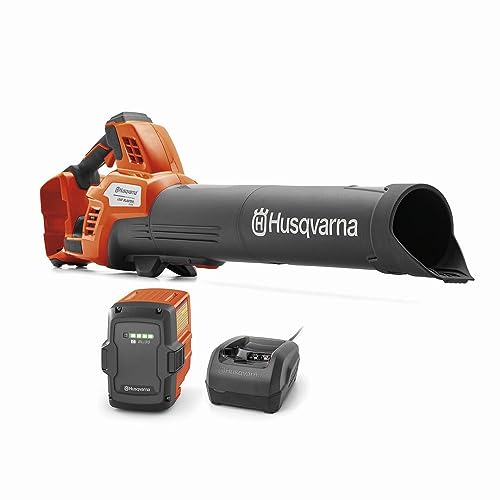
Quick Answer: How To Turn On A Leaf Blower
Turn on a leaf blower by priming the fuel bulb 5 to 10 times, setting the choke to full, pressing the throttle interlock, and pulling the starter cord 1 to 5 times until the engine pops. Battery models need a charged pack and trigger press. Root causes of failure: empty tank, stale fuel, flooded engine, or a dead battery.
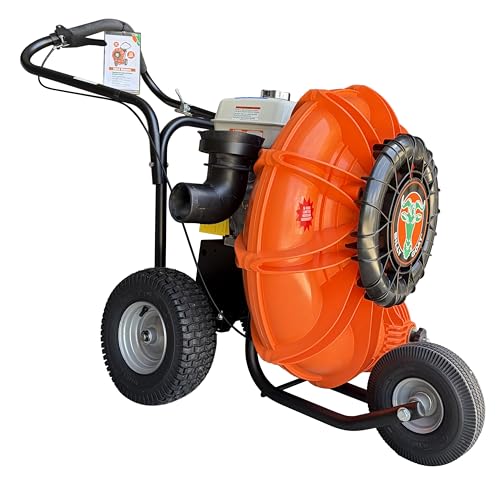
Pros
- Powered by a commercial-grade Honda GX270 engine
- Delivers a high rated airflow of 1,700 CFM and 200 mph velocity
- 17-inch 16-blade composite fan designed for efficient output
- Fingertip directional lever controls airflow up and down
- Pneumatic rear wheels ease maneuvering over uneven terrain
Cons
- Large 58 x 29 x 45 inch frame demands ample storage room
- Heavier commercial walk-behind build lacks handheld agility

Pros
- High-volume clearing with a rated 3000 CFM and 207 MPH
- Electric start eliminates manual pulling effort
- Standard clevis pin hitch connects easily to ATVs and tractors
- Adjustable vertical airflow discharge for directed blowing
- Durable steel frame construction with large wheels
Cons
- Requires a towing vehicle like an ATV or lawn tractor
- Weighs 291 pounds and demands significant storage space
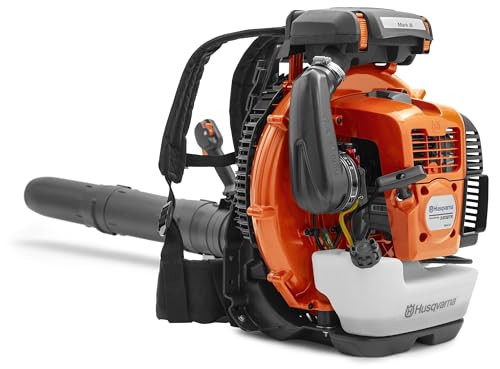
Pros
- Strong rated output of 1000 CFM, 220 MPH, and 47 N blow force
- Ventilated ergonomic harness with load-distributing hip belt
- Two-stage intake air filtration protects engine in dusty jobs
- Intuitive tube-mounted throttle control
Cons
- Substantial 34-pound weight can lead to operator fatigue
- Requires ongoing 2-cycle fuel mixing and maintenance
Why “Turning On” a Leaf Blower Is Not One Procedure
Unlike a light switch, a leaf blower is an internal combustion engine (gas models) or a high-current DC motor (battery models). Each power type has a distinct startup sequence governed by different physics. Before you touch a control, identify which of the four categories your machine falls into:
| Power Type | Startup Mechanism | Typical Airflow (CFM) | Startup Time |
| 2-Cycle Gas (Handheld) | Primer bulb + choke + recoil pull | 350 to 700 CFM | 5 to 30 seconds |
| 4-Cycle Gas (Backpack) | Primer + choke + recoil or electric start | 600 to 1,100 CFM | 10 to 45 seconds |
| Cordless Battery | Trigger press (safety interlock) | 250 to 800 CFM | Instant |
| Corded Electric | Plug in + trigger press | 200 to 600 CFM | Instant |
For a deeper breakdown of which category suits your property, read our gas or electric leaf blower comparison.
The Physics: What Actually Happens When You Start a Blower
Gas Engines: The Four-Stroke Ignition Cycle (Simplified)
A gas leaf blower engine needs three things simultaneously to fire: fuel, spark, and compression. The starter cord spins the crankshaft, which drives the piston and impeller. On the intake stroke, the piston draws in air mixed with fuel vapor. Compression squeezes that mixture. The spark plug ignites it, forcing the piston down and sustaining the cycle. For broader ecosystem context, read through our operational guide on how to choose leaf blower.
The choke exists because cold gasoline does not vaporize well. Closing the choke restricts airflow, creating a fuel-rich mixture that ignites easily. Once the engine warms, you open the choke to lean out the mixture for efficient running.
Battery Motors: Instant Torque, No Choke
Cordless blowers use brushless DC motors. Pressing the trigger completes the circuit, and the motor spins the impeller immediately. There is no ignition cycle, so there is no choke, primer, or pull cord. The limiting factor is battery voltage and amp-hour rating: a 40V 5.0Ah pack delivers roughly 30 to 40 minutes of runtime at medium speed.
Step-by-Step: How To Turn On a Gas Leaf Blower (2-Cycle and 4-Cycle)
Follow this sequence exactly. Skipping or reordering steps is the most common cause of a “flooded” engine.
Step 1: Pre-Start Safety Checks
- Set the blower on flat, stable ground away from gravel (loose stones can be sucked into the impeller).
- Check the fuel tank. Use the correct mix: 2-cycle engines require a 50:1 or 40:1 gas-to-oil ratio per your manual. 4-cycle engines use straight gasoline.
- Inspect the air filter. A clogged filter starves the engine of air and prevents starting.
- Ensure the spark plug boot is fully seated.
Step 2: Prime the Fuel System
Locate the primer bulb (a small, clear rubber dome near the carburetor). Press it firmly 5 to 10 times until you see fuel fill the bulb and return lines. This purges air from the carburetor and delivers a metered charge of fuel for ignition.
Step 3: Set the Choke
- Cold start: Move the choke lever to the FULL or CLOSED position.
- Warm restart: Leave the choke in the RUN or OPEN position.
Step 4: Engage the Throttle Interlock
Most handheld blowers have a safety interlock on the top of the handle. Press this lever down with your palm before squeezing the throttle trigger. Without this, the trigger is locked.
Step 5: Pull the Starter Cord
Hold the blower firmly against the ground with your left hand (or foot on the baseplate for backpack units). Grasp the starter handle with your right hand. Pull the cord slowly until you feel resistance, then give a fast, full-length pull. Do not yank from a slack position.
Expect the engine to “pop” or fire briefly after 1 to 5 pulls. This is normal. Once it pops:
- Move the choke to HALF or HALF-CHOKE.
- Pull the cord again until the engine starts and runs.
- Allow the engine to idle for 30 to 60 seconds before engaging the throttle.
Step 6: Disengage the Choke and Begin Work
Once the engine runs smoothly for 30 seconds, move the choke fully to RUN. Squeeze the throttle to bring the impeller up to operating speed (typically 7,000 to 12,000 RPM for handheld units).
Step-by-Step: How To Turn On a Battery Leaf Blower
- Charge the battery fully. A partially charged pack may not deliver enough current to spin the motor under load.
- Insert the battery until it clicks. Ensure the contacts are clean and free of debris.
- Check the speed selector. Start on LOW or ECO mode to conserve power.
- Press the safety lock-off button (usually on the side of the handle).
- Squeeze the trigger. The motor engages instantly.
If the motor does not engage, the battery is likely depleted, the contacts are dirty, or the thermal protection has tripped. Remove the battery and let it cool for 10 minutes if it feels hot.
Step-by-Step: How To Turn On a Corded Electric Leaf Blower
- Inspect the extension cord for frays, cuts, or exposed wire. Replace damaged cords immediately.
- Use a 14-gauge outdoor-rated extension cord for cords under 50 feet; use 12-gauge for longer runs to prevent voltage drop.
- Plug the cord into the blower’s inlet, then into the GFCI-protected outlet.
- Press the safety lock-off and squeeze the trigger.
Diagnostic Matrix: Why Your Leaf Blower Won’t Turn On
| Symptom | Most Likely Cause | Fix |
| Engine won’t fire at all (gas) | Stale fuel (older than 30 days) or empty tank | Drain old fuel, refill with fresh gasoline and correct oil mix |
| Engine fires then dies | Choke left in FULL position | Move choke to HALF, then RUN once warm |
| Engine floods (gas smell, wet plug) | Over-priming or too many pulls with choke closed | Set choke to RUN, hold throttle wide open, pull cord 5 to 8 times to clear |
| Hard starting (5+ pulls) | Dirty air filter or old spark plug | Clean or replace filter; replace spark plug annually |
| Battery blower: no response | Depleted battery or dirty contacts | Charge fully; clean terminals with isopropyl alcohol |
| Corded blower: no response | Blown fuse or damaged cord | Test outlet with another device; inspect cord |
| Engine runs but no airflow | Impeller debris or cracked housing | Disconnect spark plug boot, clear debris, inspect housing |
Maintenance Intervals To Prevent Startup Failure
| Component | Interval | Action |
| Air filter | Every 10 hours or weekly during heavy use | Clean with soap and water; replace if torn |
| Spark plug | Annually or every 100 hours | Replace with OEM-spec plug; check gap |
| Fuel | Every 30 days | Drain stale fuel; use fuel stabilizer for storage |
| Primer bulb | Inspect monthly | Replace if cracked or hardened |
| Choke linkage | Every 50 hours | Lubricate with light machine oil |
| Battery contacts | Monthly | Clean with isopropyl alcohol and a cotton swab |
For chainsaw and general outdoor tool maintenance schedules, see our chainsaw and outdoor tool maintenance guide.
Choosing the Right Blower for Your Property
Startup difficulty often correlates with power type. If you have a small urban lot under 1/4 acre, a battery blower eliminates fuel-mixing and choke issues entirely. For properties over half an acre with heavy leaf fall, a gas blower delivers the sustained CFM and runtime you need. Compare form factors in our backpack vs handheld blowers guide, or browse our top-rated cordless leaf blowers for the best battery options.
Safety Protocols During Startup and Operation
- Always direct the air tube away from people, pets, and windows while the engine is running.
- Wear eye protection and hearing protection (gas blowers exceed 85 dB at the operator’s ear).
- Never start a gas blower indoors or in an enclosed garage, carbon monoxide accumulates rapidly.
- Stop the engine immediately if anyone enters your work zone.
- Follow OSHA equipment safety regulations if operating in a commercial setting.
Buyer FAQs: How To Turn On A Leaf Blower Solved
How many times should I press the primer bulb?
Press the primer bulb 5 to 10 times for a cold start. You should see fuel visibly fill the bulb and travel through the return line. For a warm restart, 2 to 3 presses are sufficient.
What does it mean when the engine “pops” but won’t stay running?
A brief pop indicates the ignition system is working and the engine is receiving fuel. The failure to sustain means the choke is still closed or the fuel-air mixture is too rich. Move the choke to HALF and pull again.
Can I use last season’s gasoline?
No. Gasoline degrades within 30 days, especially when mixed with 2-cycle oil. Stale fuel loses volatility and leaves varnish deposits in the carburetor. Drain and replace any fuel older than one month.
Why does my battery blower only run for 10 minutes?
Runtime depends on battery capacity (Ah), motor efficiency, and speed setting. A 2.0Ah pack on HIGH may last 10 to 15 minutes. Switch to ECO mode or upgrade to a 5.0Ah pack for 30 to 40 minutes of runtime.
Is it bad to flood the engine?
Flooding is not destructive, but it prevents starting until the excess fuel is cleared. Set the choke to RUN, hold the throttle wide open, and pull the starter cord 5 to 8 times. This pumps fresh air through the cylinder and evaporates the excess fuel.
Starting Routine for Blowers
Gas models usually need a primer bulb, a choke setting and several firm pulls on the starter cord. Battery models generally start with a power switch and a trigger press once the pack is seated. Read the manual first, then see American National Standards Institute (ANSI) for general safety context.