Quick Answer: How To Use A String Trimmer As An Edger?
To use a string trimmer as an edger, first orient the cutting line vertically. If your trimmer has a dedicated edging mode, rotate the head 90 degrees. If not, tilt the entire unit so the string spins perpendicular to the ground. Align the trimmer’s guide wheel or guard with the edge you want to define. Walk slowly along the sidewalk,…

Pros
- Listed for clean, consistent vertical edges on borders and curbs
- Listed to shield the operator and nearby windows from debris
- Listed to reduce grass and debris wrapping around the trimmer head
- Described as lightweight with a universal design
- Stays mounted for both edging and general trimming, per the listing
Cons
- Universal fit is manufacturer-stated; confirm your trimmer first
- Listing gives only basic dimensions and no model compatibility list

Pros
- Single-wheel guide for edging along walks and driveways
- Bearing-supported hub described for freer rolling
- Compact one-wheel layout compared with dual-wheel frames
- Includes wheel, support arm and shaft clamp
Cons
- Designed for selected shafts near 1 inch; measure before ordering
- Trimmer and installation tools are not included

Pros
- Listed for EGO ST1620T Line IQ series compatibility
- Designed for sidewalk and driveway edge guidance
- Listed to help support tool weight while edging
- Black finish listed
Cons
- Balance and arm-fatigue claims are unverified
- Third-party part; not affiliated with EGO
Understanding the String Trimmer-to-Edger Conversion
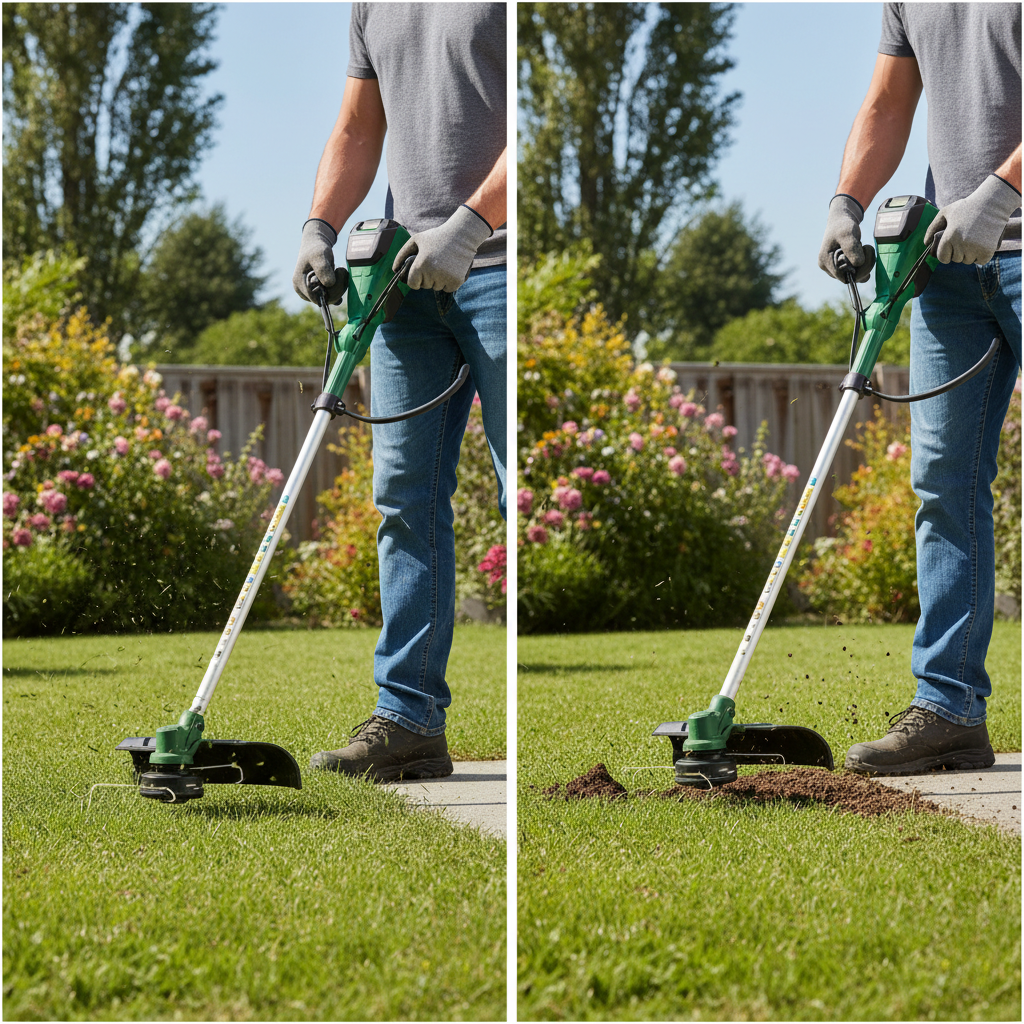
The fundamental difference between trimming and edging lies in the orientation of the cutting line. When you trim, the string spins parallel to the ground to cut grass at a uniform height. For edging, the string must spin perpendicular to the ground to create a clean, vertical cut along hard surfaces. This vertical orientation allows the trimmer to slice through grass and soil at the edge, defining a crisp border between your lawn and sidewalks, driveways, or curbs.
There are two primary ways to achieve this vertical cutting position with a standard string trimmer. The first method involves rotating the trimmer head 90 degrees into a dedicated edging mode, if your model includes this feature. The second method requires tilting the entire trimmer unit so the string spins vertically while the guard or guide wheel runs along the hard surface. Both approaches can produce excellent results when done correctly.
Step-by-Step Guide to Edging with Your String Trimmer
Before you begin edging, prepare both your trimmer and the area. Check that your trimmer has a fresh, properly installed line of appropriate thickness. Clear any debris from the edge you plan to define, and ensure the grass is dry for the cleanest cut. Put on all recommended safety gear, including eye protection, hearing protection, and sturdy footwear.
Position your body and trimmer correctly for edging. Stand with your feet shoulder-width apart, holding the trimmer firmly with both hands. If using the tilting method, angle the trimmer so the string spins vertically while the guard or guide wheel rests against the hard surface. If your trimmer has a rotating head, engage the edging mode and confirm the string is now vertical.
Maintain a consistent line and depth by walking slowly along the edge. Keep the trimmer’s guide wheel or guard in contact with the sidewalk or driveway to maintain a uniform distance. Use a steady throttle to keep the string spinning at a constant speed, and avoid rushing, slow, deliberate movement produces the best results. Pay attention to the string length; it should extend just beyond the guard to cut effectively without excessive wear.
After completing the edge, clean up any grass clippings that have accumulated on the hard surface. Use a broom or leaf blower to remove debris, and inspect your work for any areas that may need touch-up. Proper cleanup not only improves appearance but also prevents clippings from washing into storm drains or creating slippery conditions.
Key Factors for a Clean, Professional Edge
Setting and maintaining the correct cutting depth is crucial for a professional-looking edge. Most trimmers have an adjustable guard or guide wheel that helps control depth. Start with a shallow cut and gradually increase depth if needed. The ideal trimmer line length for edging is typically 2-3 inches beyond the guard, providing enough reach to cut through grass and soil without excessive line wear.
Edge when the grass is dry for the cleanest results. Wet grass tends to clump and stick to the trimmer head, creating uneven cuts and making cleanup more difficult. Dry grass cuts more cleanly and disperses more easily, allowing for better visibility of your progress.
Walk along the hardscape rather than the lawn when edging. This approach allows you to maintain better control and visibility of the edge you’re creating. Keep your eyes focused on the point where the string meets the ground, and use the hard surface as your guide for consistent results.
Safety and Tool Considerations
Essential personal protective equipment for edging includes safety glasses or goggles to protect against flying debris, hearing protection due to the trimmer’s noise level, and sturdy closed-toe shoes. Long pants and sleeves are also recommended to protect against flying grass and soil particles. To compare alternative configurations, check our hands-on review of marshall stanmore iii vs harman kardon onyx studio 8.
An edging guide or wheel serves as a depth control and stability aid. When properly adjusted, it maintains consistent distance from the hard surface and prevents the string from cutting too deep into the soil. To use it effectively, ensure it’s securely attached and adjusted to your desired cutting depth before starting.
Consider using a dedicated edger or attachment when you need precision for extensive edging projects or have specific challenges like thick roots or compacted soil. While a string trimmer works well for most residential edging, specialized tools may provide better results for professional-grade work or difficult conditions.
Frequently Asked Questions About How To Use String Trimmer As Edger
Can any string trimmer be used as an edger?
Most string trimmers can be used for edging with the tilting method, but models with dedicated edging modes or rotating heads provide easier and more precise results. Check your trimmer’s manual to see if it has specific edging features or recommended techniques. Users looking for related component recommendations can explore our dyson v8 cyclone vs bissell featherweight stick breakdown.
How often should I edge my lawn?
Edging frequency depends on grass growth rate and desired appearance. Most homeowners edge every 1-2 weeks during the growing season to maintain clean borders. Edge more frequently if you prefer a manicured look or have fast-growing grass.
What type of trimmer line is best for edging?
Round or square trimmer line works well for edging. Square line tends to cut more cleanly through grass and soil, while round line is more durable. Choose a line thickness appropriate for your trimmer model and the conditions you’ll be edging. Before finalizing equipment decisions, refer to our comprehensive bissell crosswave hydrosteam vs shark stainforce comparison.
Should I edge before or after mowing?
Edge after mowing for the best results. Mowing first gives you better visibility of the edge and prevents freshly cut grass from being disturbed during edging. This sequence also allows you to see exactly where the lawn meets hard surfaces.
Technical Standards and Compliance
Mechanical safety standards, operational tolerances, and protective gear guidelines align with benchmark specifications established by the American National Standards Institute (ANSI).