Quick Answer: Is Weed Eater String Universal?
\nNo, weed eater string is not completely universal. Compatibility depends on the line diameter, its shape (round, square, or twisted), and the design of your trimmer head. Always check your trimmer’s manual or the existing line for the correct specifications. Standard operational and maintenance protocols can be consulted via OSHA national chainsaw safety and operational standards.
\n\n

Pros
- Six-pack bundle listed in the product title
- Square profile line named in the product title
- Commercial 5 lb size listed for heavier use
Cons
- Trimmer compatibility is not verified in manufacturer listing

Pros
- Six-pack bundle listed in the product title
- Star profile line named in the product title
- Commercial 5 lb size listed for heavier use
Cons
- Line length and trimmer fit are not stated in manufacturer listing

Pros
- Title lists 1280 feet of line length
- Square profile named in the product title
- Lists a 5 lb line rating
- Title describes it as commercial-style line

Pros
- Title lists .095-inch square nylon line
- Lists 1280 feet of line length
- Manufacturer states fit with most string trimmers
- Lists a 5 lb line rating
What ‘Universal’ Really Means for Trimmer Line
\nWhen people ask whether weed eater string is universal, they often mean two different things. The first is whether the line is widely available, and the second is whether it fits every trimmer. These are not the same. Trimmer line is certainly easy to find in most hardware stores and garden centers, and it is sold under many brands. However, being widely available does not mean it will work in every trimmer.
\nThe term universal is misleading in this context. A package of trimmer line may be labeled as fitting a range of trimmers, but that range is usually limited to trimmers that accept a specific line diameter and head type. A line that works well in one brand’s bump feed head may not fit or feed properly in another brand’s fixed-line head.
\nThink of trimmer line like a tire for a car. Tires are widely available, but you cannot put just any tire on any car. You need the right size and type for your vehicle. The same principle applies to weed eater string. The correct line must match your trimmer’s specifications to cut effectively and feed without jamming.
\nSo, while trimmer line is universal in the sense that it is a common, readily available product, it is not universal in the sense that one size fits all. Understanding the specific factors that determine compatibility will help you choose the right line for your machine.
\n\nLine Diameter and Why It Matters
\n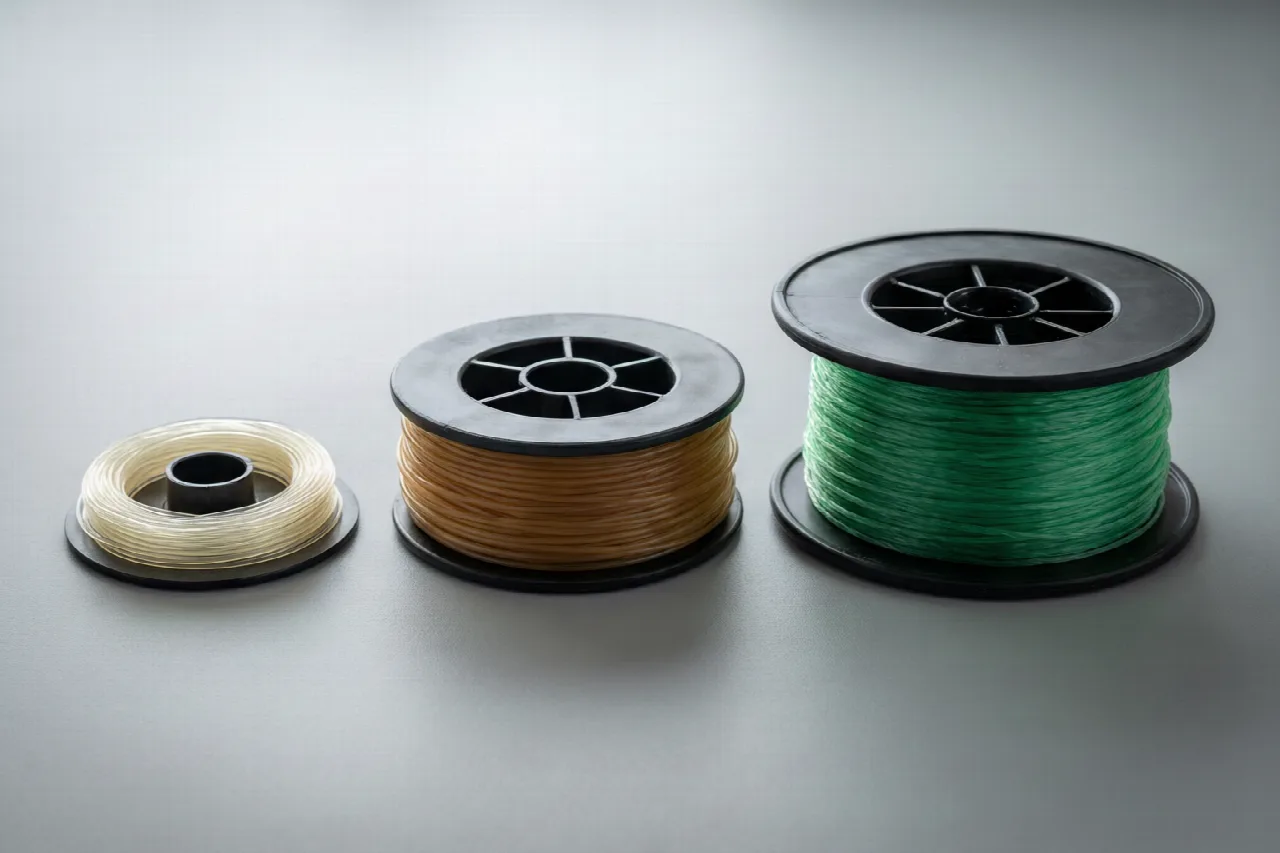
Line diameter is one of the most important factors in trimmer line compatibility. Trimmer line is measured in inches or millimeters, and common diameters range from about 0.065 inches to 0.155 inches. The diameter you need depends on the power of your trimmer and the type of vegetation you are cutting.
\nSmaller electric trimmers typically use thinner line, often around 0.065 to 0.080 inches. These thin lines are lightweight and cut grass efficiently, but they are not strong enough for heavy weeds. Gas-powered trimmers, which have more power, generally use thicker line ranging from 0.095 to 0.155 inches. Thicker line is more durable and can handle tougher vegetation.
\nUsing the wrong line diameter can cause several problems. If the line is too thick for your trimmer, it may not fit through the eyelets on the head, or it may jam and fail to feed properly. The extra thickness can also put strain on the trimmer’s motor, especially on smaller electric models, potentially causing overheating or premature wear.
\nIf the line is too thin, it will cut less effectively and may break frequently. Thin line also tends to feed out too quickly, wasting line and requiring more frequent replacement. For these reasons, it is essential to match the line diameter to your trimmer’s specifications. The recommended diameter is usually printed on the trimmer head or listed in the manual. To compare alternative configurations, check our hands-on review of marshall stanmore iii vs harman kardon onyx studio 8.
\n\nLine Shape: Round, Square, and Twisted
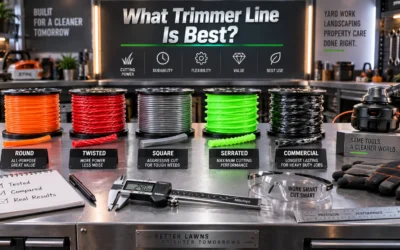
\nTrimmer line comes in several cross-section shapes, and the shape affects both cutting performance and compatibility. The most common shapes are round, square, and twisted. Each has its own advantages and is suited to different tasks.
\nRound line is the most common and versatile option. It cuts smoothly and quietly, making it a good all-around choice for general grass trimming. Round line is widely compatible with most trimmer heads, which is why it is the default choice for many users. However, it is not the most aggressive cutter and may struggle with very thick weeds. Users looking for related component recommendations can explore our dyson v8 cyclone vs bissell featherweight stick breakdown.
\nSquare line has flat edges that act like small blades, providing a more aggressive cut. It is often recommended for heavier weeds and thicker vegetation because the flat edges slice through material more effectively. Square line is generally compatible with the same heads as round line, as long as the diameter matches.
\nTwisted line, sometimes called serrated or star line, has a spiral or ridged profile. The ridges create a sawing action that helps cut through tough, fibrous weeds. Twisted line is a good choice for demanding jobs, but it can be noisier and may not be suitable for all heads. Some trimmer heads are designed specifically for a certain line shape, so check your manual before switching. Before finalizing equipment decisions, refer to our comprehensive bissell crosswave hydrosteam vs shark stainforce comparison.
\nWhile shape affects performance, compatibility is primarily determined by diameter and head design. As long as the diameter matches and the head can accommodate the line, you can usually switch between round, square, and twisted line to suit your cutting needs.
\n\nTrimmer Head Design and Compatibility
\nThe design of your trimmer head plays a major role in which line it can accept. There are several common head types, and each has specific requirements. Understanding your head type is key to choosing compatible line.
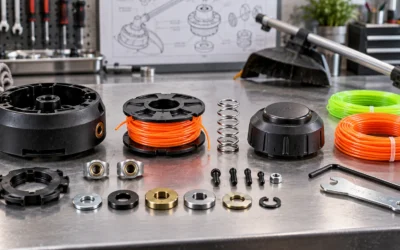
\nBump feed heads are the most common on consumer trimmers. These heads hold a spool of line and release more line when you tap the head on the ground. Bump feed heads typically accept a specific line diameter and a spool designed for that model. You can usually use any brand of line as long as it matches the diameter and fits the spool.
\nFixed-line heads, also called manual feed heads, do not use a spool. Instead, you insert short pieces of line directly into the head. These heads often accept a wider range of line diameters because there is no spool to fill. However, the line must still fit through the eyelets and be thick enough to stay in place.
\nAuto feed heads automatically advance line as needed without you tapping the head. These heads are more complex and may be more sensitive to line diameter and quality. Using the wrong line can cause the auto feed mechanism to malfunction or jam.
\nBecause head designs vary so much, not all heads accept the same line. A line that works perfectly in a bump feed head may not fit a fixed-line head, even on the same brand of trimmer. Always verify your head type and its specifications before purchasing line.
\n\nHow to Find the Right Line for Your Trimmer
\nFinding the right line for your trimmer is straightforward if you know where to look. The first place to check is your trimmer’s manual. The manual will list the recommended line diameter, shape, and sometimes the specific spool or line part number. If you have lost the manual, you can usually find it online by searching for your trimmer’s brand and model number.
\nThe trimmer head itself often has useful information printed on it. Many heads have the recommended line diameter stamped or molded into the plastic. Look for numbers like 0.065, 0.080, or 0.095 on the head or on a sticker near it. This is often the quickest way to find the correct diameter.
\nIf you still have the old line, you can measure its diameter with a caliper or a line gauge. Many hardware stores sell a simple gauge that lets you measure trimmer line by fitting it into notches of various sizes. If you do not have a gauge, you can compare the old line to new line at the store.
\nWhen you know the diameter and shape, you can choose any brand that matches those specifications. Brand is generally not critical for compatibility, as long as the diameter and shape are correct. However, higher-quality line may last longer and feed more smoothly, so it is worth considering reputable brands.
\n\nEverything You Need to Know: Weed Eater String Universal FAQ
\nCan you use a different brand of line in any trimmer?
\nYes, in most cases you can use a different brand of line as long as the diameter and shape match your trimmer’s specifications. Trimmer line is not proprietary to specific brands. The key is to match the physical dimensions of the line to what your trimmer head requires, regardless of the brand name on the package.
\nWhat happens if you use the wrong line diameter?
\nUsing the wrong line diameter can cause jamming, poor feeding, reduced cutting performance, and even damage to your trimmer’s motor. A line that is too thick may not fit through the eyelets, while a line that is too thin may break easily or feed out too quickly. Always use the recommended diameter.
\nIs thicker line always better?
\nNot necessarily. Thicker line is more durable and cuts heavier vegetation, but it requires a more powerful trimmer to spin it effectively. Using thick line on a small electric trimmer can strain the motor and reduce performance. Choose the thickest line your trimmer is designed to handle, but do not exceed the recommended diameter.
\nIn summary, weed eater string is not universal, but finding the right line is not difficult. By checking your manual, reading the markings on your trimmer head, and matching the diameter and shape, you can select a compatible line that works well with your specific trimmer.
\n\nRelated Maintenance and Operating Guides
To keep your equipment running at peak operating efficiency, explore our related technical walkthroughs and maintenance tutorials:
- Consult our detailed breakdown on cordless stick vacuum buyer guide.
- Consult our detailed breakdown on robotic pool cleaner comparison guide.
Technical Standards and Compliance
\nMechanical safety standards, operational tolerances, and protective gear guidelines align with benchmark specifications established by the American National Standards Institute (ANSI).