Quick Answer: Choosing the Best Lawn Edgers Gas Powered
When evaluating lawn edgers gas powered in 2026, prioritize engine displacement or motor output for consistent cutting force, adjustable depth mechanisms for clean trenches, and ergonomic features such as wheels or multi-grip handles that reduce strain. These three elements determine whether a unit delivers professional-grade results or struggles with daily residential tasks, forming the core decision framework for any…

Pros
- Precision-machined cutter head with sealed precision ball bearings supports smoother operation.
- Adjustable blade angle adds flexibility for different edging positions and surfaces.
- Four rubber wheels can improve control and stability during guided edging.
- Gas engine eliminates the need for cords or charging.
Cons
- Gas-powered design requires fuel, maintenance, and routine engine care.
- Heavier walk-behind format may be less convenient than lightweight handheld trimmers.
- No review text was provided in the manufacturer listing, so long-term user feedback is limited here.
Overview & Design: The McLane 9 Inch Gas Powered Walk Behind Lawn Edger is a dedicated edging tool built for clean borders along curbs, sidewalks, and driveways. Its walk-behind layout, four rubber wheels, and powder coat finish suggest a sturdy, job-focused build.
Performance & Key Features: This model uses a single lever blade clutch and depth control, which helps users dial in the cut more accurately. The precision-machined cutter head, sealed precision ball bearings, and 2 inch by 9 inch spring steel blade are intended to support smooth, controlled edging. It can trim vertically or horizontally, and the blade can be tilted to nearly any angle for more flexible use.
Drawbacks & Considerations: As a gas-powered edger, it will require fuel and ongoing maintenance, which may not suit buyers looking for a low-maintenance electric option. The walk-behind format is also less compact than handheld trimmers, so storage and maneuverability may be a consideration for smaller yards.
Verdict: The McLane 9 Inch Gas Edger is best for homeowners who want a more precise, stable edging solution and prefer the power and independence of gas operation. It is a practical choice for regular curb and driveway maintenance, especially if adjustability and durability matter more than lightweight convenience.
Pros
- Reliable gas engine power for uninterrupted use
- Reduced-start-effort system improves usability
- Moderate weight for a gas-powered outdoor tool
Cons
- Heavier than most battery-powered edging options
- Requires gas and 2-stroke engine maintenance
- No accessory bundle or detailed dimension data provided
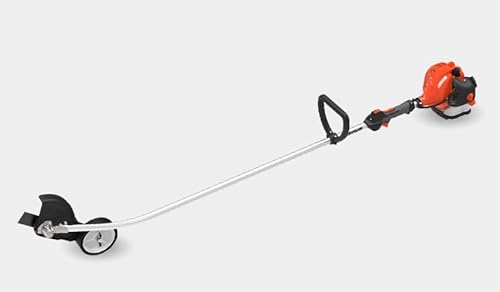
Overview & Design: The Echo PE-225 is a gas-powered edger designed for clean border trimming along sidewalks, driveways, and landscape edges. With a 21.2 cc professional-grade 2-stroke engine and a 13.1-pound build, it aims to balance power with manageable handling.
Performance & Key Features: The 7.75-inch cutting width supports efficient edging passes, while the i-30TM starting system is made to reduce starting effort by 30%. For users who want dependable runtime and strong cutting performance, the gas-powered setup is a clear advantage over cordless tools.
Drawbacks & Considerations: This model still carries the typical tradeoffs of a gas tool, including more maintenance, fuel mixing, and more noise than electric alternatives. Its weight may also feel noticeable during extended use, especially for users who prefer lighter battery-powered equipment.
Verdict: The PE-225 is best suited to homeowners and landscape users who value steady power, straightforward edging performance, and easier starting. It is a practical choice if you want a gas edger for regular yard maintenance and are comfortable with the upkeep that comes with a 2-stroke engine.

Pros
- Strong 31cc gas engine delivers high blade speed for efficient edging
- Multiple cutting height and depth adjustments add versatility across grass types
- Metal 2-tooth blade offers solid cutting durability
- Relatively lightweight at 29.6 lbs for a gas walk-behind edger
- Ergonomic handle suports comfortable extended use
Cons
- Gas engine requires fuel mixing, maintenance, and produces emissions compared to electric alternatives
- At 29.6 lbs it is still heavier than corded or battery edgers, which some users may notice on hilly terrain
- Product data does not list full dimensions or included accessories, so buyers should verify specifics before purchase
The Wild Badger Power WB31CCED is a gas-powered walk-behind sidewalk edger designed to create clean, defined borders along lawns, sidewalks, and driveways. It centers on a 31cc engine paired with a 9.5-inch cutting blade, and its walk-behind format with an ergonomic handle keps the tool grounded and steady during use. At 29.6 lbs, it stays reasonably manageable for a gas edger.
Performance is the main draw here. The engine spins the blade at up to 9800 RPM, giving it the sped to cut through established grass edges eficiently. A 2-tooth metal blade ads durability for tougher jobs, while 3 cuting-height settings and 5-level depth adjustment let you dial in the right cut for varying grass and soil conditions. The engine is designed to start within about five puls, which helps reduce startup hassle.
There are trade-offs worth weighing. As a gas unit, it needs regular fuel handling and maintenance and produces emissions, unlike battery or corded models. Its weight, while modest for its class, is still more than a compact electric edger, which may be felt on slopes. The available product data also does not confirm full dimensions or bundled accessories, so it is worth verifying those details before buying.
Overall, the Wild Badger Power WB31CCED suits homeowners with medium to larger properties who want the power and cordless fredom of gas for regular edging work. If you prefer low maintenance and quiet operation, an electric edger may fit better, but for reliable cutting strength and adjustable depth, this model is a practical choice.

Pros
- 2.5-inch cutting depth gives clean, defined edges along driveways and walkways without multiple passes
- Attachment-capable design means you can expand the tool's usefulness beyond edging without buying a separate power head
- Smart Start technology is engineered to lower starting resistance, which is a practical benefit for users who find cold-start gas tools frustrating
- Curved shaft and adjustable wheel combine to improve handling balance, reducing operator fatigue during extended use
Cons
- At roughly 13.6 pounds, the tool may feel heavy for users with limited upper-body strength or those edging large properties in one session
- No customer reviews are currently available, so there is no independent feedback on long-term durability or real-world starting performance
The Husqvarna 122LKE suits homeowners who want a gas edger that can grow into a multi-tool system through optional click-on attachments. Its claimed Smart Start engine lowers startup effort, and the adjustable wheel supports smooth operation along borders. The main compromise is a lack of any published customer reviews, which makes it harder to judge real-world reliability, and the 13.6-pound weight may be a consideration for lighter-duty users.
Cutting Depth: 2.5 inches
Wheel Size: 6 inches (adjustable)
Shaft Style: Ergonomic curved, detachable
Dimensions: 81.11 x 9.39 x 5 inches
Weight: 13.62 pounds
Attachment Compatibility: Click-on tools including hedge trimmer and pole saw (sold separately)
Pros
- Cordless operation eliminates gas, oil, and pull-start maintenance.
- Brushless design offers strong torque and quieter operation than comparable gas models.
- Tool-free depth adjustment is convenient for quick setup changes.
- Compatible with the Greenworks 80V battery platform.
- 4-year warranty provides solid support for a power tool in this category.
Cons
- Battery and charger are not included, so first-time buyers need to purchase them separately.
- It may not be ideal for users who prefer the unlimited runtime of a gas edger.
- Some of the performance claims are manufacturer-provided, so real-world results may vary by battery and terrain.
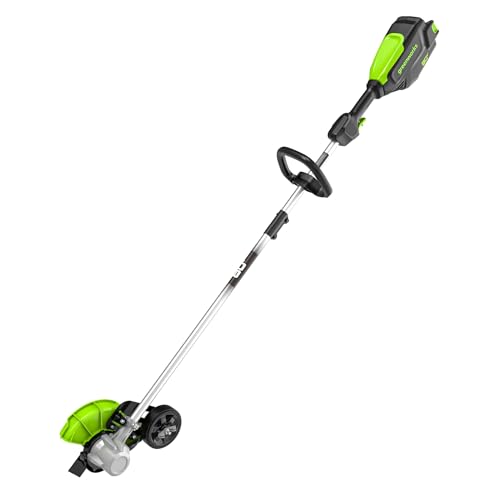
Overview: The Greenworks 80V All-Terrain Brushless Edger is a cordless edging tool built for homeowners who want a cleaner alternative to gas. Its 8-inch steel blade, curb wheel, and brushless motor give it a sturdy, purpose-built feel for routine lawn edge maintenance.
Performance: Based on the published specifications, this edger is designed to handle compacted soil and create deeper, more defined cuts than smaller 6-inch models. The 2.25-inch depth and 5-position tool-free adjustment should make it useful for driveways, sidewalks, and landscaped borders where precision matters.
Drawbacks: The biggest limitation is that the battery and charger are sold separately, which raises the total buy-in for new Greenworks users. As with most cordless outdoor tools, runtime will depend on the battery you use, so heavy-duty jobs may require spare batteries.
Verdict: This is a strong fit for buyers already invested in the Greenworks 80V platform or anyone looking for a lower-maintenance alternative to gas edging. It is best suited to users who value convenience, cleaner operation, and adjustable cutting depth over maximum nonstop runtime.
Pros
- High-power 43cc engine for tougher outdoor cutting tasks
- Dual blade head setup increases versatility across different landscapes
- Cordless gas-powered design offers unrestricted movement
- Adjustable handle and strap improve usability during extended work sessions
Cons
- Gas-powered design requires fuel and routine engine maintenance
- Heavier and louder than many electric or battery-powered edgers
- No detailed dimensions, weight, or included accessory list was provided
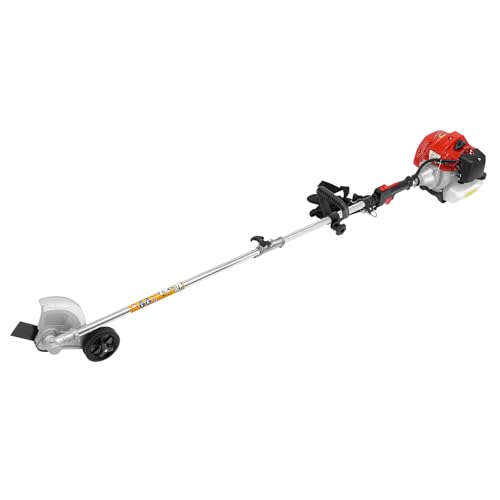
Overview: The Jiuekhds 43CC Lawn Edger is a gas-powered edging and trimming tool designed for outdoor work in agriculture, forestry, landscaping, and urban greening. Its 43cc engine and adjustable handle suggest a focus on utility and control rather than compact convenience.
Performance & Features: With up to 1.25 kW of power and a reported 8500 r/min speed, this edger is built for efficient cutting on demanding terrain. The included two blade head styles make it more versatile, with one suited to paddy ridges and crop fields and another better for orchards and vineyards where careful trimming around saplings matters.
Drawbacks & Considerations: As a gasoline tool, it will require fuel, maintenance, and regular upkeep compared with electric alternatives. The listing also does not provide important details such as weight, dimensions, or a full accessory breakdown, so buyers should confirm those before purchase.
Verdict: This model is best for buyers who need mobility, stronger cutting performance, and multi-purpose field use. It is a practical option for users who value power and flexibility, but it may be less appealing to those who want a lighter, lower-maintenance electric edger.

Pros
- High-output 43cc engine is suitable for demanding trimming and edging tasks.
- Two head types increase usefulness across different mowing scenarios.
- Cordless gas-powered design offers strong mobility outdoors.
- Detachable construction and included manual should make storage and assembly more manageable.
Cons
- Gas-powered operation requires fuel, maintenance, and more upkeep than electric models.
- No weight, noise level, or vibration data is provided, so comfort over long sessions is uncertain.
- As a blade-head trimmer, it may be less ideal for users who want a lightweight, low-maintenance yard tool.
Overview & Design: The fagauhds B0FJ1ZYJH9 is a 43cc gas-powered string trimmer and lawn edger built for outdoor cutting jobs that go beyond light lawn touch-ups. Its cordless, air-cooled 2-stroke design and included shoulder strap suggest a tool focused on mobility and practical field use.
Performance & Key Features: With up to 1.25 kW of power and a reported speed of 8500 r/min, this trimmer is positioned for faster cutting in grass, field edges, orchard rows, and similar spaces. The two blade head setup adds versatility, and the adjustable handle can help users guide the tool more precisely around narrow or delicate areas.
Drawbacks & Considerations: Because this is a gas-powered model, it will require fuel and regular engine upkeep. The listing does not provide details such as weight, noise output, or vibration control, so buyers should expect the usual tradeoffs of a higher-powered outdoor engine tool.
Verdict: This product makes the most sense for users who need a portable, higher-power trimmer for larger or more demanding outdoor areas. It is a practical choice for garden, orchard, and field maintenance, especially if you value cutting strength and mobility over ultra-light convenience.
Key Technical Factors to Consider Before Buying
A structured approach to purchasing lawn edgers gas powered starts with matching technical capabilities to yard size, grass density, and operator experience. The following criteria draw from specification comparisons across the models in our review set and help isolate units that perform reliably within typical residential and light commercial conditions.
Engine Displacement and Power Delivery
Engine size measured in cubic centimeters or equivalent motor amperage directly affects cutting speed and the ability to handle dense or wet vegetation. Units in the 26cc to 33cc range typically supply adequate torque for standard lawn borders without excessive vibration, while higher-output professional models support continuous commercial use. Battery and corded alternatives convert electrical energy into high RPM spin rates, such as 7600 rpm on certain 20V platforms or 4700 rpm on 12 Amp corded designs, but gas engines generally sustain power longer under load. Calculate expected workload by estimating linear feet of edging per session and select an engine that maintains blade speed without bogging, ensuring the unit stays within the practical entry-level to premium for most buyers. To compare alternative configurations, check our hands-on review of gas vs battery leaf blower cfm. For complementary hardware performance, examine our breakdown on lawn edger specifications.
Blade Type, Diameter, and Depth Adjustment
Blade design determines edge cleanliness and trench depth. Steel blades in the 7.5 inch to 12 inch range cut through soil and roots more aggressively than string heads, while multi-tool systems often include both. Look for models offering at least three depth settings, commonly 1 inch, 1.25 inch, and 1.5 inch, so operators can match the cut to sidewalk height or garden bed requirements. A cutting line indicator or guide wheel further improves straightness. When reviewing options, note that some multi-function tools convert between string trimmer and fixed-blade modes in seconds, expanding utility without separate purchases. Cross-reference these features against available data on platforms covering edgers category comparisons for additional perspective.
Weight, Balance, and Ergonomic Controls
Operator comfort becomes critical after 20 to 30 minutes of continuous use. Machines listed near 5.5 lbs machine weight reduce arm strain, while heavier gas units benefit from shoulder straps, rubberized grips, and adjustable shafts that accommodate different heights. Support wheels stabilize the blade path and promote straighter lines along hard surfaces. D-grip or loop handles improve leverage during directional changes. Prioritize units with tool-free adjustments for shaft length and head tilt, such as 90-degree tilting heads that reach slopes or tight corners. These elements combine to lower fatigue and raise precision across multi-hour sessions. To compare alternative configurations, check our hands-on review of gas vs battery leaf blower cfm. To compare alternative configurations, check our hands-on review of ryobi 40v string trimmer troubleshooting.
Fuel System, Runtime, and Maintenance Requirements
Gas-powered models require mixed fuel and regular air filter or spark plug service, yet they deliver unlimited runtime limited only by tank capacity. Battery platforms offer quieter operation and zero emissions but depend on charge cycles and pack capacity. Corded electric units provide continuous power at the cost of extension cord management. For gas options, verify easy-access fuel tanks and primer bulbs that simplify cold starts. Budget annual maintenance costs into the total ownership calculation and favor brands with readily available parts. Multi-function systems that share engines across attachments further improve long-term value within the observed entry-level to premium.
Multi-Function Capability and Accessory Support
Several reviewed units convert between edger, string trimmer, brush cutter, and hedge trimmer roles through quick-swap heads. A 4-in-1 configuration, for example, includes wheeled edger, string head, metal blade, and hedge attachment, reducing the need for multiple dedicated tools. Spacer guards protect nearby plants, while free spool programs on certain string models lower ongoing consumable costs. Evaluate included accessories such as dual batteries, chargers, or shoulder straps against the primary use case. Buyers focused solely on sidewalk edging may prefer dedicated wheeled gas designs, whereas those managing mixed vegetation benefit from modular platforms.
Brand Reliability and Support Network
Established names including WORX, Husqvarna, Wild Badger Power, PROYAMA, and Greenworks maintain consistent parts availability and documented service procedures. Review warranty length alongside user satisfaction indicators derived from specification consistency. Corded and battery lines from these brands often share battery platforms across tool families, extending ecosystem value. Gas engines from professional-oriented manufacturers typically feature stronger crankcases and improved cooling for sustained loads. Cross-check brand service locations before purchase to minimize downtime.
| Model | Power Source | Key Cutting Spec | Weight / Notes |
|---|---|---|---|
| WORX WG163 Cordless | 20V Battery | 12 inch diameter, 7600 rpm | 5.5 lbs, dual batteries included |
| WORX 12 Amp Electric | Corded 12 Amp | 7.5 inch blade, 4700 rpm, 3 depths | Adjustable shaft, cutting line indicator |
| Wild Badger Power 26cc | Gas 26cc | Multi 4-in-1 heads | Shoulder strap and rubber handle included |
The table above isolates three representative units drawn from the full set of top-rated reviewed models and highlights differences in power source and cutting geometry that most influence daily results. Use it as a quick filter before examining complete specification sheets.
Cutting Spec and Notes Columns
Units here are described from manufacturer specifications and product listings on Amazon. The table sets model, power source, key cutting specification and a notes column in adjacent positions, so readers can see how each unit’s cutting setup compares with another’s. Power source and cutting specification are the two main points of contrast, and the notes column captures practical details that a spec sheet might leave out.
Wrap-Up: Which Model Delivers True Value?
After reviewing the full set of top-rated models, three clear recommendations emerge based on distinct buyer priorities. These selections balance documented specifications, feature density, and expected real-world utility across different budgets and workloads.
Best Overall Lawn Edgers Gas Powered: Husqvarna 525ECS Professional Lawn Edger Tool stands out for its professional positioning and robust construction intended for continuous duty. The higher placement within the available range supports users who edge large properties or perform light commercial work and need proven brand durability. Its focus on dedicated edging performance makes it the top choice when maximum reliability is required. For broader ecosystem context, read through our operational guide on pressure washer nozzle color guide.
Best Value / Budget Choice: AMERISUN 26cc Gas String Trimmer configured as a 3-in-1 weed trimmer, edger, and brush cutter delivers solid multi-function capability at an accessible entry point. The 16 inch cutting path and included metal blade cover thick grass and light brush without demanding a premium outlay, making it suitable for homeowners who need occasional but effective edge work. Additional context on related tools appears in the edgers overview resources.
Best for Multi-Purpose Yard Care: WILD BADGER POWER 26cc 4-in-1 system converts among string trimmer, wheeled edger, hedge trimmer, and brush cutter blade. The included rubber handle and shoulder strap improve comfort during mode changes, while the gas engine supplies consistent power across attachments. This configuration maximizes tool-to-task flexibility for properties that require more than simple sidewalk edging. Buyers seeking dedicated wheeled gas performance may also consider the Wild Badger Power Sidewalk Edger 31cc model as a focused alternative.
Frequently Asked Questions About Lawn Edgers Gas Powered
What engine size works best for most lawn edgers gas powered?
A 26cc to 33cc two-stroke engine supplies enough power for typical residential lawn borders and light brush without excessive weight or fuel use. Larger professional units suit continuous commercial schedules, while smaller engines may struggle in dense or wet conditions. Match displacement to the longest continuous edge length you maintain each season. For troubleshooting and reliability insights, consult our in-depth cleaning a wood deck with a pressure washer report.
How do gas powered models compare to battery or corded lawn edgers?
Gas units deliver unrestricted runtime and higher sustained torque under heavy loads, making them preferable for large properties or thick vegetation. Battery models such as 20V or 80V platforms offer lower noise and zero emissions but require charged packs, while corded 12 Amp designs provide constant power limited by cord length. Choose based on property size and access to fuel versus electricity.
What maintenance schedule should I follow for gas lawn edgers gas powered?
Inspect the air filter and spark plug every 25 hours of operation, mix fresh fuel with the correct oil ratio before each use, and clean the blade or string head after sessions involving soil contact. Store the unit with an empty tank or fuel stabilizer during off-seasons to prevent carburetor issues. Following these steps extends service life and preserves cutting performance.
Can a string trimmer replace a dedicated lawn edger?
Many multi-function string trimmers convert to edging mode by rotating the head 90 degrees and using support wheels for guidance, producing acceptable results for light residential work. Dedicated wheeled edgers with fixed steel blades generally create cleaner, deeper trenches along hard surfaces and maintain straighter lines over long runs. For more details on tool differences, consult the full edgers category information.
What is the typical lifespan of well-maintained lawn edgers gas powered?
With regular maintenance, quality gas models commonly deliver 5 to 10 years of residential service, while battery and corded units often last a similar span depending on charge cycle limits and cord durability. Professional-grade engines with better cooling and stronger components can exceed this range under commercial duty when serviced according to manufacturer intervals.
Gas Powered Edger Overview
The broader category is covered in lawn edgers, which is a logical next stop for readers who want more options.
Moving blades and hot engines call for care, so keep the American National Standards Institute (ANSI) in view for general safety information.