Quick Answer: Roborock Saros 10R vs Dreame X60 Max Ultra, Which Should You Buy in 2026?
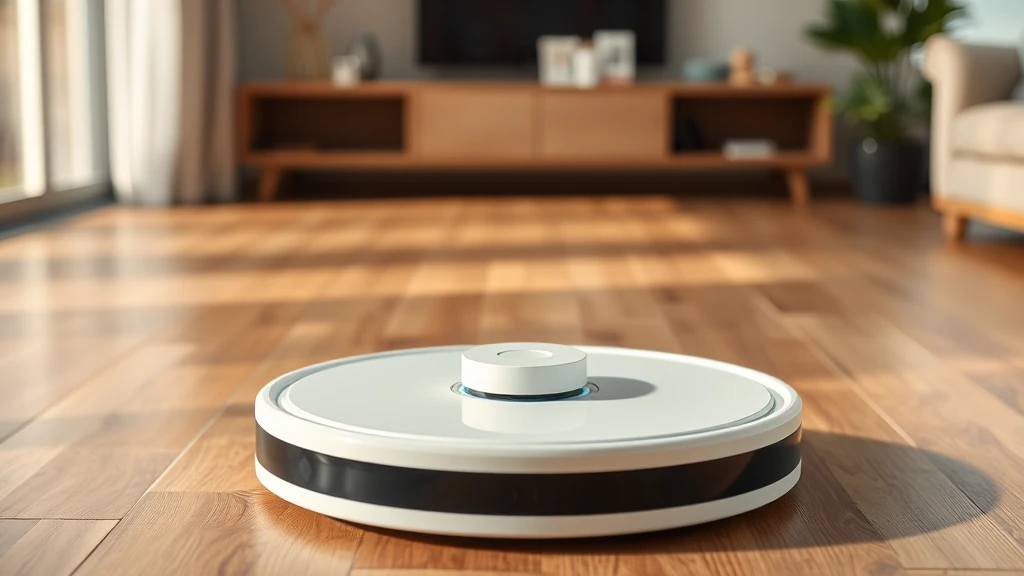
Buy the Roborock Saros 10R if you want the stronger value: it costs $899.99, or $715.00 less than the $1,614.99 Dreame X60 Max Ultra. The Dreame is the specification leader, with 35,000 Pa suction, dual AI cameras, proactive illumination, and 280+ obstacle-avoidance capabilities. The Saros counters with a 3.14-inch body, zero-tangling design, FlexiArm edge cleaning, and a highly automated dock. For most homes, the Saros is the easier recommendation; choose the Dreame for maximum stated power and detection hardware.

Pros
- 3.14-inch slim profile listed for reaching under low furniture
- 22,000 Pa suction rating per manufacturer specifications
- Zero-tangle main brush and side brush design per listing
- Dock offers hot-water mop washing and 60-day dust collection
- Built-in RGB camera with two-way video and one-click pet search
Cons
- Claimed suction and dock features are manufacturer specifications

Pros
- Listed 3.13-inch slim body for reaching under sofas and beds
- Manufacturer-stated 35,000Pa suction with upgraded DuoBrush
- Dual AI cameras with proactive illumination for obstacle detection
- MopExtend RoboSwing and SideReach for corners and edges
- Listed 212°F hot-water mop washing with 100-day dust disposal
Cons
- Listed weight of 52 pounds and 18 x 18 x 26 inch dimensions
- Wi-Fi support limited to 2.4GHz, for US use only
Winner by Category
| Category | Winner | Evidence |
|---|---|---|
| Suction power | Dreame X60 Max Ultra | The Dreame is rated at 35,000 Pa, compared with 22,000 Pa for the Roborock. |
| Mopping | Dreame X60 Max Ultra | manufacturer specifications specifically lists mop self-cleaning and a self-emptying and refilling system. |
| Obstacle avoidance/Navigation | Dreame X60 Max Ultra | Its listed 280+ obstacle-avoidance capability, dual AI cameras, and proactive illumination give it the clearer hardware advantage on paper. |
| Self-empty dock | Tie | Both products include self-emptying. The Dreame also lists self-refilling, while the Roborock lists hot-air drying. |
| Pet hair | Roborock Saros 10R | The Saros lists a zero-tangling design. The supplied research also warns that the Saros split brushroll design can struggle with pet hair, so this is a cautious win rather than an unconditional one. |
| App & smart features | Roborock Saros 10R | The Saros uses the StarSight Autonomous System 2.0 and the supplied owner comparison describes the Roborock app as easier to use. The specific app evidence is from a related Roborock-versus-Dreame comparison, not a dedicated X60 test. |
| Noise | No clear winner | manufacturer specifications does not provide a measured noise figure for either model. |
| Price & value | Roborock Saros 10R | At $899.99, the Saros costs $715.00 less than the $1,614.99 Dreame. |
Specifications Side-by-Side
| Specification | Roborock Saros 10R | Dreame X60 Max Ultra |
|---|---|---|
| Model | Roborock Saros 10R Robot Vacuum and Mop | Dreame X60 Max Ultra Complete Robot Vacuum and Mop |
| Brand | Roborock | Dreame |
| Listed price | $899.99 | $1,614.99 |
| Amazon rating | 4.8/5 | 4.4/5 |
| Maximum stated suction | 22,000 Pa | 35,000 Pa |
| Robot height | 3.14 inches | 3.13 inches (7.95 cm) |
| Low-furniture access | Ultra-slim body designed to pass under beds, sofas, cabinets, and coffee tables | Ultra-thin body designed to pass under sofas and beds |
| Navigation system | StarSight Autonomous System 2.0; no raised LDS unit | Dual AI cameras with proactive illumination |
| Obstacle avoidance | AI obstacle avoidance is listed in the product information | 280+ obstacle avoidance |
| Brush and hair design | Zero-tangling design | manufacturer specifications does not specify a brush or anti-tangle design |
| Edge and corner cleaning | FlexiArm Riser Technology and corner-and-edge cleaning | manufacturer specifications does not specify an equivalent edge-cleaning mechanism |
| Dock functions | Self-emptying and hot-air drying | Self-emptying, self-refilling, and mop self-cleaning |
| Color | Black | White |
These are flagship-style robot vacuum and mop systems, but they take different routes to that goal. The Saros 10R emphasizes a compact chassis, automated brush management, and Roborock’s StarSight navigation platform. The X60 Max Ultra emphasizes headline suction, camera-based perception, and a broad obstacle-detection claim. The most important practical difference is not the fraction of an inch between their heights; it is whether you value the Saros’s lower purchase price or the Dreame’s more ambitious specification sheet.
Performance
Cleaning & Suction
On stated suction power, the Dreame X60 Max Ultra wins decisively. Its maximum figure is 35,000 Pa, while the Roborock Saros 10R is listed at 22,000 Pa. That gives the Dreame a 13,000 Pa advantage on the manufacturers’ stated figures, although suction ratings alone do not establish how much debris either robot will collect in a particular home. Brush design, airflow, floor type, cleaning passes, and software settings also affect results, and the supplied research does not provide directly comparable pickup measurements for these two exact models.
The Saros should not be dismissed as underpowered. A 22,000 Pa rating is still a high specification for a robot vacuum, and the manufacturer information positions it for carpet and floor cleaning. Its FlexiArm Riser Technology is also intended to support corner and edge coverage. The X60 has the more impressive number, but buyers should treat that as a specification advantage rather than a guarantee that it will remove exactly 59 percent more dirt or hair; no such comparative test result is supplied. When planning workspace deployment, consider the engineering criteria outlined in our why robot vacuum keeps getting lost lidar fix guide.
Mopping
The X60 Max Ultra has the stronger documented mopping package in manufacturer specifications. Its dock is described as supporting mop self-cleaning, and the complete system includes self-emptying and refilling. Those functions reduce the amount of hands-on work after a mopping run. The Saros 10R is also marketed as a robot vacuum and mop with an automated dock, but the provided Saros listing specifically calls out self-emptying and hot-air drying rather than giving a separate mop-washing claim.
That distinction matters for households that mop frequently or have sticky kitchen floors. A dock that cleans the mop system can be more useful than a robot that merely carries a damp pad around the home. However, the manufacturer listing does not provide stain-removal scores, mop pressure, water temperature, pad rotation speed, or a controlled head-to-head result for the Saros 10R and X60 Max Ultra. The Dreame therefore wins on documented dock-supported mopping functions, not on an invented floor-cleaning score. For additional operational safety benchmarks, see our published testing notes on roborock qrevo s pro vs dreame l10s pro ultra heat.
Navigation & Obstacle Avoidance
The Dreame X60 Max Ultra has the clearer obstacle-avoidance specification: 280+ obstacles, dual AI cameras, and proactive illumination. In theory, cameras supported by active lighting can help the robot identify objects in challenging areas and adapt its cleaning behavior. The listing says the system detects obstacles, adapts cleaning modes, and navigates with precision.
The Saros 10R takes a different approach. Its StarSight Autonomous System 2.0 eliminates the need for a raised LDS unit, which allows the robot to maintain its 3.14-inch ultra-slim profile. That is a meaningful navigation benefit when low furniture is the main problem: there is no tall top-mounted sensor housing to prevent access. The Saros also lists AI obstacle avoidance. The practical choice is therefore context-dependent: Dreame has the stronger stated detection hardware, while Roborock has a particularly compelling low-clearance design. To compare alternative configurations, check our hands-on review of why is my robot vacuum not dispensing water.
Pet Hair
The Saros 10R gets the cautious pet-hair win because its product name and supplied feature data explicitly emphasize a zero-tangling design. That should appeal to owners who do not want to cut hair from the main brush as often. Its 22,000 Pa suction also gives it a strong on-paper cleaning specification for rugs and hard floors.
There is an important qualification. The supplied 2026 research says the Saros 10R shares a common downside with another robot: its split brushroll design struggles with pet hair. That means “zero-tangling” should not be read as “perfect pet-hair pickup.” The available evidence does not provide a directly comparable pet-hair test for the X60 Max Ultra, and it does not specify the Dreame’s brush design. Heavy-shedding homes should plan on inspecting either robot’s brush and dock regularly. Users looking for related component recommendations can explore our can robot vacuums cross high thresholds breakdown.
Dock & Maintenance
Both robots are designed to reduce daily maintenance through self-emptying docks. That is the core convenience advantage over a basic robot vacuum: after a cleaning cycle, the owner does not need to empty the onboard dustbin every time. The Saros 10R adds hot-air drying, while the X60 Max Ultra lists mop self-cleaning and self-refilling. Neither product’s manufacturer specifications gives a dustbag capacity, water-tank capacity, drying time, or maximum number of days between bag changes.
For mopping-heavy homes, the Dreame’s explicitly stated mop self-cleaning and self-refilling functions make its dock look more complete. For owners concerned about damp pads, the Saros’s hot-air drying is a notable feature. These are not mutually exclusive benefits, but the source information does not confirm that both models perform the same complete set of dock tasks. Buyers should verify the included dock configuration and replacement-part availability before purchase.
No consumables prices are provided for either model, so there is no defensible way to calculate a yearly maintenance cost. Expect both systems to require consumables and routine care, but do not use an assumed bag, filter, brush, or mop-pad replacement schedule to justify one purchase over the other. The supplied research mentions a change in brush-related maintenance frequency for a related comparison, but that evidence does not establish a schedule for these exact products.
App & Smart Features
Roborock’s smart-cleaning story centers on StarSight Autonomous System 2.0. The manufacturer information says this system removes the need for a raised LDS unit, enabling the low 3.14-inch body. That is more than an app feature: it directly changes where the robot can physically clean. The research also describes the Roborock app as better and easier to use in a related Roborock-versus-Dreame owner comparison, although that discussion concerned a different Dreame model rather than the X60 Max Ultra.
Dreame’s X60 Max Ultra uses dual AI cameras and proactive illumination. Its listing says the robot can see and understand the home, detect obstacles, adapt cleaning modes, and navigate with precision. The 280+ obstacle-avoidance claim gives the Dreame the more specific smart-perception headline. Camera-based systems can be attractive to buyers who want the robot to identify objects around the home, but manufacturer specifications does not state whether the X60 offers phone-based video monitoring, voice-assistant compatibility, or a particular mapping feature.
In short, choose Roborock if a mature, straightforward control experience and low-profile hardware matter most. Choose Dreame if its camera-based detection and proactive lighting are the smart features you specifically want. The evidence supplied here does not support a complete app-score comparison, so neither brand should be declared universally better for every connected-home setup.
Price & Value Analysis
The Roborock Saros 10R is listed at $899.99, while the Dreame X60 Max Ultra is listed at $1,614.99. The difference is $715.00, making the Dreame approximately 79 percent more expensive than the Saros based on the listed prices. The product data also shows a higher Amazon rating for the Saros, 4.8/5 versus 4.4/5 for the Dreame, though ratings are not a substitute for a controlled performance test.
The Saros 10R is worth it when you want a premium robot with a very slim 3.14-inch design, 22,000 Pa suction, zero-tangling positioning, edge-cleaning hardware, self-emptying, and hot-air drying without spending more than $1,000. It is particularly compelling for homes with low furniture and for buyers who would rather keep $715.00 than pay for the Dreame’s higher specification ceiling.
The X60 Max Ultra is worth the premium when the maximum stated suction, dual AI cameras, proactive illumination, 280+ obstacle avoidance, self-refilling, and mop self-cleaning are the features you will actively use. It is not the value choice on the supplied prices. Its case depends on wanting the more ambitious detection and dock specification enough to justify the additional $715.00.
Which Should You Buy?
Choose Roborock Saros 10R if…
- You want the better price and do not need to spend $1,614.99 on a robot vacuum.
- You need a robot that can reach beneath low furniture, where its 3.14-inch profile is a major advantage.
- You prefer the higher supplied Amazon rating of 4.8/5.
- You want 22,000 Pa suction, a zero-tangling design, and FlexiArm corner-and-edge cleaning.
- You value self-emptying with hot-air drying and want to keep $715.00 available for other home purchases.
- You prefer the Roborock app based on the supplied owner feedback, while recognizing that the app comparison cited a related model.
Choose Dreame X60 Max Ultra if…
- You want the highest stated suction figure: 35,000 Pa versus 22,000 Pa.
- You specifically want dual AI cameras and proactive illumination for object detection and navigation.
- You value the listed 280+ obstacle-avoidance capability.
- You want a dock that explicitly lists self-emptying, self-refilling, and mop self-cleaning.
- You are comfortable paying $1,614.99 for the broader specification package.
- You want the slightly slimmer listed height of 3.13 inches, while understanding that the 0.01-inch difference is unlikely to decide the purchase by itself.
Consider a different model if…
- You need independently measured noise, pet-hair, mopping, or navigation results before buying; manufacturer specifications does not provide complete head-to-head testing for these exact models.
- You are shopping mainly by annual consumables cost; replacement-bag, filter, brush, and mop-pad prices are not supplied.
- You have especially heavy pet-hair buildup and expect a brush to require no attention; the supplied research cautions that the Saros split brushroll can struggle with pet hair, and the X60 brush design is not specified here.
- You need a compact dock as well as a compact robot; the manufacturer information gives robot heights but not dock dimensions.
- You want a lower-cost full-service robot and are willing to give up some flagship specifications; the supplied research references less expensive robot-vacuum options, but it does not establish a direct value ranking for this pair.
- For more options at every price point, see our full guide to Best Robot Vacuums.
Everything You Need to Know: Roborock Saros 10r Vs Dreame X60 Max Ultra FAQ
Is the Dreame X60 Max Ultra stronger than the Roborock Saros 10R?
On the stated specifications, yes. The X60 Max Ultra lists 35,000 Pa suction, compared with 22,000 Pa for the Saros 10R. It also lists dual AI cameras, proactive illumination, and 280+ obstacle avoidance. Those figures establish a hardware and specification advantage, but manufacturer specifications does not include a controlled test proving that the Dreame cleans proportionally better on every floor.
Which robot is better for low furniture?
Both are designed for low-clearance areas, but the Saros 10R has the clearest documented reason for its slim body. It measures 3.14 inches and uses StarSight Autonomous System 2.0 without a raised LDS unit. The X60 Max Ultra is listed at 3.13 inches and is described as Dreame’s thinnest robot, so it is also a strong option. The 0.01-inch height difference is too small to be a meaningful decision by itself.
Do both docks empty the robot automatically?
Yes. The product data lists self-emptying for both the Roborock Saros 10R and the Dreame X60 Max Ultra. The Dreame additionally lists self-refilling and mop self-cleaning. The Saros listing specifically includes hot-air drying. manufacturer specifications does not provide bin capacity, water capacity, drying duration, or a precise replacement schedule.
Is the Roborock Saros 10R the better value in 2026?
For most buyers, yes. Its listed price is $899.99, which is $715.00 below the Dreame’s $1,614.99 price, while its product data still includes 22,000 Pa suction, a 3.14-inch profile, zero-tangling design, FlexiArm cleaning, self-emptying, and hot-air drying. The Dreame is the better fit only when its 35,000 Pa rating, camera system, 280+ obstacle avoidance, and expanded dock functions justify the premium for your home.
Related Comparisons
- Best Robot Vacuums and Mops
- Robot Vacuums for Pet Hair
- Robot Vacuums for Hardwood Floors
Household Appliance Safety Reading
Robot vacuums are household appliances, so general information about electrical safety makes a helpful companion to your research. The International Electrotechnical Commission (IEC) covers that subject at a broad level. It offers no verdict on these two machines.