Quick Answer: Choosing the Best Robotic Vacuums
When evaluating robotic vacuums in 2026, prioritize LiDAR or AI vision navigation for complete room coverage, suction rated at least 5000Pa with automatic carpet boost, and self-emptying or large-capacity bins to minimize maintenance. We analyzed top-rated current models across battery runtime, obstacle avoidance, mopping integration, and app reliability to identify clear winners. Readers comparing advanced features will benefit from…

Pros
- Massive 60-day capacity self-emptying base saves time and keeps hands clean.
- LiDAR mapping works flawlessly in both bright and pitch-black rooms.
- Self-cleaning brushroll prevents long pet hair from tangling around the roller.
- Recharge and Resume feature ensures whole-home coverage even for larger layouts.
Cons
- The self-emptying process is quite loud for a few seconds when docking.
- The mobile app can occasionally experience connectivity drops during initial setup.
- Its height may prevent it from fitting under very low-profile furniture.
The Shark AV2501AE AI Robot Vacuum represents a significant step forward in automated home maintenance, designed specifically for busy households and pet owners. By combining powerful suction with an intelligent, bagless self-empty base, this robot vacuum promises to take the chore out of floor care for up to two months at a time. It targets users who want a set-it-and-forget-it cleaning companion that handles both carpets and hard floors without requiring daily intervention.
Smart Navigation and Deep Cleaning Performance
At the heart of its performance is the Matrix Clean Navigation system, which guides the robot in a precise grid pattern rather than random bouncing. Coupled with 360-degree LiDAR vision, the vacuum maps your home quickly and cleans methodically. It excels at detecting and avoiding everyday obstacles, operating reliably in both bright daylight and complete darkness. The powerful suction easily lifts embedded dirt and pet hair, while the self-cleaning brushroll ensures you do not have to manually cut tangled hair away from the roller.
Hands-Free Maintenance with HEPA Filtration
The standout feature of this model is the extra-large self-empty base. Unlike many competitors that require proprietary paper bags, this bagless system saves on ongoing costs. It holds up to 60 days of debris and features a true HEPA filtration system that traps 99.97% of dust and allergens down to 0.3 microns. While the base is exceptionally convenient, users should note that the evacuation cycle is quite loud, though it only lasts for a few seconds upon docking.
Considerations and Final Verdict
While the vacuum excels in navigation and debris pickup, it does have a few minor drawbacks. The companion app can occasionally feel clunky during the initial mapping phase, and the unit's height might prevent it from sliding under exceptionally low couches. However, for those seeking a powerful, low-maintenance robotic helper with top-tier pet hair handling and allergen filtration, this vacuum offers outstanding value and reliable daily performance.
Technical Details
- Navigation: 360 degree LiDAR Vision
- Base Capacity: Up to 60 days (Bagless)
- Filtration: True HEPA (99.97 percent efficiency)
- Runtime: Up to 120 minutes
- Voice Control: Amazon Alexa and Google Assistant
- Floor Types: Carpet and Hard Floors
Pros
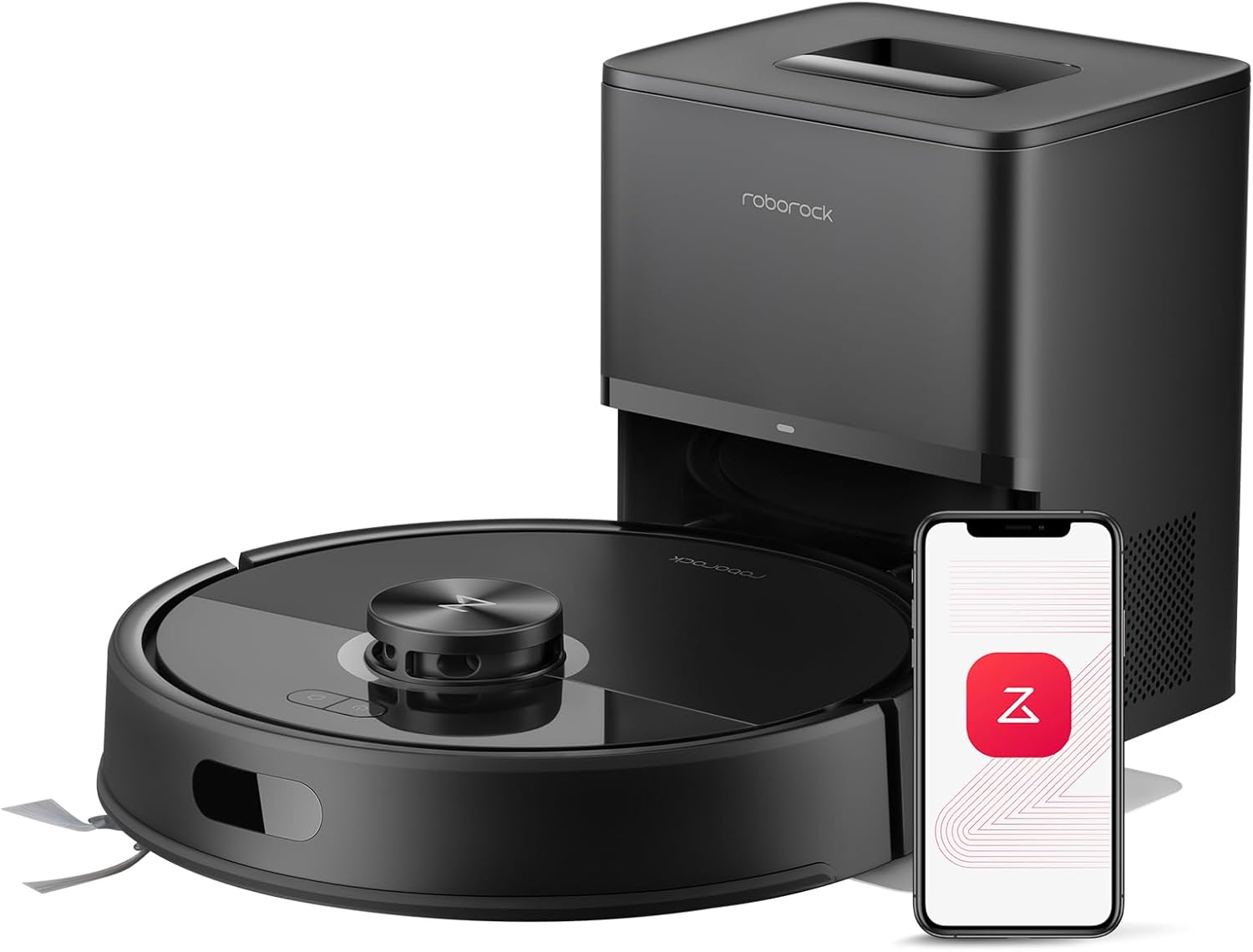
- Powerful 10,000Pa suction excels at deep carpet cleaning and debris pickup
- Large 2.7L self-empty dock reduces maintenance to once every two months
- Highly effective dual anti-tangle brush design for households with pets
- Precise LiDAR navigation works flawlessly even in completely dark rooms
Cons
- App control requires a 2.4GHz Wi-Fi connection and does not support 5GHz bands
- Electronic mopping system is basic compared to premium vibrating or rotating mop models
Effortless Automated Cleaning for Busy Homes
The Roborock Q7 M5+ Robot Vacuum and Mop is designed to take the hassle out of daily floor maintenance. Offering a significant upgrade over previous generations, this hybrid cleaning device is perfect for pet owners and busy families who want clean floors without the daily upkeep. By combining powerful suction with an intelligent self-emptying dock, it delivers weeks of hands-free operation.
Unmatched Suction and Smart Navigation
At the core of this robot vacuum is an impressive 10,000Pa HyperForce suction system. It easily extracts embedded dust, pet hair, and crumbs from both deep-pile carpets and hardwood crevices. Navigating your home is seamless thanks to the PreciSense LiDAR system, which maps your home in real-time. This allows the vacuum to calculate the most efficient cleaning paths, avoiding obstacles and navigating multi-level homes with ease.
Dual Anti-Tangle System for Pet Owners
One of the standout design features is the dual anti-tangle system. Featuring a specialized main brush and a zero-tangling side brush, it resists hair wraps from long-haired pets, reducing the need for manual detangling. Additionally, the integrated electronic mopping system allows you to vacuum and wipe down hard floors in a single run, capturing fine dust particles that dry vacuuming alone might miss.
A Few Minor Considerations
While the cleaning performance is exceptional, there are a couple of limitations. The Roborock App only supports 2.4GHz Wi-Fi networks, which might require adjusting your router settings during setup. Furthermore, the electronic mopping system is excellent for light dust and maintenance but does not scrub stubborn, dried-on stains as effectively as premium vibrating mop modules.
The Verdict
Overall, this robotic cleaner offers a fantastic balance of high-end performance and convenience. With its self-emptying dock, industry-leading suction, and smart mapping capabilities, it is a highly recommended investment for anyone looking to automate their home cleaning routine with minimal manual intervention.

Pros
- Strong 5200Pa suction clears debris from multiple floor types
- Self-charging feature prevents power interruptions mid-task
- Pet-focused design reduces hair tangles on brushes
- App integration allows scheduling and mode adjustments remotely
Cons
- Best suited for low-pile carpets rather than thick rugs
- Water tank requires refilling for large mopping areas
- Setup for app and voice assistants may take initial effort
ROPVACNIC S1 Review: Automated Cleaning for Everyday Homes
The ROPVACNIC S1 Review highlights a capable robot vacuum and mop combo designed for users who want reliable automated floor care. It combines strong suction with electronic mopping and supports app-based customization for different surfaces and stains.
Standout Features and Performance
With 5200Pa suction and a three-point cleaning system, this model removes dirt, dust, and pet hair effectively across hard floors and low-pile carpets. The no-entanglement side brushes perform well for pet owners, while the self-recharge function activates below 20% battery to keep sessions uninterrupted. Obstacle detection helps it navigate around furniture without constant supervision.
Design and Build Quality
The compact 2.99 inch height allows access under sofas and beds where manual cleaning is difficult. A 4400mAh battery supports extended runs in larger spaces, and the included dustbin plus water tank enable true 2-in-1 functionality. Controls via smartphone app, remote, or voice assistants add flexibility, though initial pairing requires standard network setup.
Potential Drawbacks
Performance on high-pile carpets may be limited compared to hard floors. Users with very large homes should expect to refill the water tank midway through mopping cycles. Regular filter and brush maintenance remains necessary for peak results.
Final Verdict
Overall the ROPVACNIC S1 delivers solid value for pet owners and busy households seeking a straightforward robot vacuum and mop solution with strong suction and convenient controls.
Essential Engineering Checklist for Robotic Vacuums
Navigation and Mapping Systems
LiDAR and structured-light systems create accurate multi-floor maps that prevent missed zones and repeated passes. Models equipped with 360-degree laser scanning finish rooms 50-70 percent faster than random-bounce units because they plan efficient S-shaped or matrix paths. Real-time obstacle recognition further reduces collisions with chair legs, cables, and pet toys. For homes with complex layouts, confirm the unit supports at least three saved maps and virtual no-go zones via the companion app.
Suction Power and Multi-Surface Performance
Effective robotic vacuums require a minimum of 5000Pa suction that automatically boosts on carpet. Higher ratings, such as 6000Pa or above, extract embedded dirt and pet hair from medium-pile rugs in a single pass. Dual rubber or anti-tangle brushrolls outperform single bristle designs by preventing hair wrap. Always verify the unit detects floor type transitions and adjusts power within two seconds to maintain consistent results across hardwood, tile, and carpet.
Battery Runtime and Recharge Behavior
Look for runtimes of 100 minutes or longer on hard floors and automatic recharge-and-resume functionality. Units that return to the dock at 15-20 percent battery and continue exactly where they left off complete whole-home cleans without manual intervention. Battery capacity directly affects coverage: a 10000 mAh pack typically supports 150 minutes of gentle cleaning, suitable for homes up to 2000 square feet. Check for thermal management that prevents mid-cycle shutdowns during extended sessions.
Self-Emptying and Maintenance Features
Self-emptying bases holding 30-90 days of debris transform daily upkeep into monthly tasks. True HEPA filtration inside the base captures 99.97 percent of allergens down to 0.3 microns, which benefits pet owners and allergy sufferers. Models with auto-washing mop pads and warm-air drying further reduce manual labor. For budget-conscious buyers, large onboard dustbins of 0.5 liters or more still cut emptying frequency significantly compared with basic units. Explore options with extended capacity by reviewing self-empty robot vacuum designs that minimize hands-on maintenance.
Mopping Integration and Edge Cleaning
Combo units that vacuum and mop simultaneously save time, but only if the mop pads lift or retract on carpets. Downward pressure of 8N or higher plus oscillating or vibrating pads remove dried stains more effectively than passive cloths. FlexiArm side brushes that extend into corners achieve near-100 percent edge coverage. Confirm separate water-flow settings and no-mop zones so carpets stay dry. These features matter most in kitchens and entryways where sticky residue accumulates. For troubleshooting and reliability insights, consult our in-depth roborock qrevo s pro vs dreame l10s pro ultra heat report.
Smart Controls and Connectivity
App control, voice assistant compatibility, and multi-floor map management separate premium models from basic ones. Support for both 2.4 GHz and 5 GHz Wi-Fi improves reliability. Scheduling, zone cleaning, and real-time progress alerts allow users to start a clean remotely. Units that integrate with Alexa or Google Assistant enable true hands-free operation. Prioritize models offering firmware updates that add new obstacle types or cleaning modes over time.
We compared top-rated robotic vacuums by analyzing manufacturer specifications for suction in pascals, battery capacity, navigation sensors, and filtration type against verified user feedback on long-term reliability. Evaluation criteria included obstacle avoidance success rate, multi-surface transition consistency, dustbin or bag capacity, warranty length, and brand support responsiveness. Models scoring high on real-world metrics such as hair tangle resistance and map accuracy received priority. Brand reputation for firmware updates and replacement-part availability further influenced final rankings. This data-driven process ensures recommendations reflect practical daily performance rather than marketing claims alone. Readers comparing setup options can review our technical analysis on why is my robot vacuum not dispensing water.
Each unit was assessed for value within the overall entry-level to premium by calculating cost-per-feature scores. Preference went to devices offering LiDAR, auto-empty bases, and dual vacuum-mop functions without unnecessary complexity. The result is a balanced shortlist covering entry-level, mid-range, and premium performance tiers suitable for different home sizes and budgets.
Final Verdict: Choosing the Right Robot Vacuum
After reviewing the full set of top-rated units, clear leaders emerged for distinct buyer needs. The best overall robotic vacuums is the roborock Qrevo Edge 2. Its 25000Pa HyperSuction, Reactive AI obstacle recognition of over 280 object types, 3.14-inch ultra-slim body, FlexiArm edge cleaning, and multifunctional dock with 176°F mop washing and 65-day auto-empty make it the most complete solution for mixed floors and pet hair. SmartPlan 3.0 further adapts cleaning intensity by room type. For complementary field maintenance guidelines, examine our breakdown of can robot vacuums cross high thresholds.
The best value and budget choice is the ROPVACNIC Robot Vacuum and Mop Combo. With 5200Pa suction, electronic mopping, multi-mode app and voice control, anti-tangle brushes engineered for pets, and reliable self-recharging, it delivers strong core performance at an accessible entry point. Homes needing solid daily cleaning without premium docks will find excellent cost-to-performance balance here. For specialized pet-hair focus or self-empty convenience, the Shark AV2501AE AI Robot Vacuum stands out with Matrix Clean navigation, 60-day bagless HEPA base, and 120-minute runtime.
Buyers comparing premium ecosystems may also want to explore high-end robot vacuum and mop combos with advanced docking stations. Those interested in alternative flagship designs can review performance-focused robotic vacuum platforms for additional perspective. Overall, any of these three picks will significantly reduce manual vacuuming time when matched to the correct home layout and maintenance preference.
Common Questions on Robotic Vacuums Answered
Is it worth buying a robotic vacuums in 2026?
Yes, modern robotic vacuums deliver reliable whole-home coverage, self-maintenance features, and strong multi-surface results that free several hours per week. Current LiDAR and AI models outperform units from just two years ago in both efficiency and longevity. For a broader overview of automated floor care options, visit the complete vacuum cleaner resource hub.
How much suction power do I need in a robotic vacuums?
Most homes perform well with 5000-6000Pa. Pet owners or those with medium-pile carpets benefit from 10000Pa and higher for deeper extraction. Automatic boost when the unit detects carpet ensures efficient power use without draining the battery on hard floors.
Can robotic vacuums handle thick carpets and pet hair?
Yes, models with high-torque wheels, anti-tangle brushrolls, and carpet detection successfully clean medium-pile rugs and capture pet hair. Always confirm the maximum pile height rating and look for dual side brushes that sweep edges thoroughly.
How often should filters and brushes be replaced?
Clean filters weekly and replace them every 3-6 months depending on pet presence and usage. Side brushes and main rollers typically last 6-12 months. Self-empty bases with HEPA filtration extend the interval between deep cleanings of the robot itself.
Do robotic vacuums work well in homes with multiple floors?
Units that store three or more maps and support multi-floor recognition handle multi-level homes effectively. Carry the robot between floors or use separate docks; the saved maps allow it to resume correct room cleaning without remapping each time.
Electrical Safety Reading for Robot Vacuums
Robot vacuums pair small motors with rechargeable batteries and charging docks, so basic electrical precautions apply to every model. General safety information for household electrical equipment is available from the International Electrotechnical Commission (IEC). Checking cords, docks, and outlets before each charge is a simple habit that can reduce common hazards.