Quick Answer: RTX 5080 vs RTX 4080 Super, Which Should You Buy in 2026?
Buy the ASUS TUF Gaming GeForce RTX™ 5080 16GB GDDR7 OC Edition if you are building a new high-end gaming PC and want the faster, newer platform with Blackwell architecture, GDDR7 memory, and DLSS 4. It is also $260.48 cheaper than the listed RTX 4080 Super. However, an existing RTX 4080 Super is not an obvious upgrade target: the RTX 5080 is roughly 13 to 15% faster in reported testing, while both cards retain 16GB of memory.

Pros
- 16GB GDDR7 memory is well suited to demanding modern workloads.
- SFF-Ready positioning helps it fit compact enthusiast systems better than many large flagship cards.
- Dual BIOS adds flexibility for users who want different performance or noise profiles.
- Cooling design includes Axial-tech fans, a vapor chamber, and a phase-change thermal pad.
Cons
- The 2.5-slot cooler still needs meaningful case clearance, so it will not suit every ultra-compact build.
- Its high-end feature set may be more than casual gamers or lighter workloads actually need.
- The manufacturer listing does not include detailed dimensions, power requirements, or bundled accessories.
Overview: ASUS The SFF-Ready Prime GeForce RTX 5080 OC Edition is a high-end desktop graphics card based on NVIDIA Blackwell. It pairs 16GB of GDDR7 memory with a 2.5-slot cooler, giving it a premium, performance-focused design that is still aimed at small-form-factor builds.
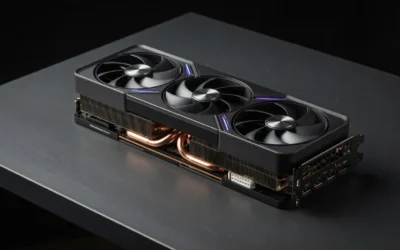
Performance and features: The card supports DLSS 4, PCIe 5.0, HDMI 2.1, and DisplayPort 2.1, which makes it suitable for modern gaming setups and multi-display use. ASUS also uses Axial-tech fans, a vapor chamber, and a phase-change GPU thermal pad to help move heat away from the GPU and support stable performance under load.
Drawbacks and considerations: Although the card is labeled SFF-Ready, its 2.5-slot cooler still requires enough case clearance, so it will not fit every compact chassis. The manufacturer listing also does not list power draw, dimensions, or bundled adapters, so buyers should verify system compatibility before purchasing.
Verdict: This model is best for enthusiasts who want a compact-friendly RTX 5080 option with advanced cooling and modern display support. It is a strong fit for high-end gaming or creator systems, but it may be more than many mainstream users need.

Pros
- Features 16GB of 23 Gbps GDDR6X video memory on a 256-bit bus
- Delivers a manufacturer-rated boost clock up to 2625 MHz
- Equipped with dual HDMI 2.1a and dual DisplayPort 1.4a video outputs
Cons
- Substantial 5.1-pound weight may require dedicated bracket support
Winner by Category
| Category | Winner | Evidence |
|---|---|---|
| Power / compute | RTX 5080 | The Blackwell card has 10,752 CUDA cores compared with 10,240 on the RTX 4080 Super, plus 336 fifth-generation Tensor Cores versus 320 fourth-generation Tensor Cores. |
| Gaming performance | RTX 5080 | Independent comparisons report an average lead of about 13 to 15% for the RTX 5080 across tested games and resolutions. |
| Ray tracing and AI features | RTX 5080 | It supports DLSS 4 and uses the newer Blackwell platform. The RTX 4080 Super supports DLSS 3 and full ray tracing, but it is based on Ada Lovelace. |
| Navigation / ease of use | RTX 5080 | Both ASUS TUF cards use Axial-tech cooling fans, but the RTX 5080 model adds a three-fan 3.6-slot design, a protective PCB coating, and a phase-change GPU thermal pad. |
| Handling / physical practicality | RTX 4080 Super | The RTX 5080 is a large 3.6-slot card, while RTX 4080 Super reference-class cards are described as dual-slot, although board-partner dimensions vary. |
| Runtime / efficiency | RTX 4080 Super | The RTX 4080 Super is reported with a 320W TGP. Comparable power data for this specific ASUS RTX 5080 listing is not provided, so its efficiency is not awarded on a measured basis. |
| Noise | Tie | The listings identify the cooling hardware but do not provide standardized noise measurements for either ASUS card. |
| Price & value | RTX 5080 | The listed RTX 5080 costs $1,509.51, while the RTX 4080 Super costs $1,769.99. The newer card is $260.48 less expensive in these listings. |
Specifications Side-by-Side
| Specification | ASUS TUF RTX 5080 OC | ASUS TUF RTX 4080 Super OC |
|---|---|---|
| GPU generation | NVIDIA Blackwell | NVIDIA Ada Lovelace |
| Memory capacity | 16GB | 16GB |
| Memory type | GDDR7 | GDDR6X |
| Reported memory bandwidth | 960 GB/s | 717 GB/s |
| Memory bus | 256-bit | 256-bit |
| CUDA cores | 10,752 | 10,240 |
| Tensor cores | 336, fifth generation | 320, fourth generation |
| Ray-tracing cores | 84 | 80 |
| Boost clock | Approximately 3.14GHz | 2,640MHz OC mode; 2,610MHz default mode |
| Ray tracing / upscaling | Full ray tracing and DLSS 4 | Full ray tracing and DLSS 3 |
| Cooling design | Three Axial-tech fans; 3.6-slot design; large fin array | Axial-tech fans scaled for 23% more airflow |
| Power rating | Not provided for this specific listing | 320W TGP |
| Interface information | Not provided in the product listing | PCIe 4.0; HDMI 2.1a; DisplayPort 1.4a |
| Warranty information | Not provided in the product listing | 3-year warranty |
| Amazon rating | 4.1/5 | 4.0/5 |
| Listed price | $1,509.51 | $1,769.99 |
Performance
Core Performance
The RTX 5080 is the faster gaming GPU in this matchup, but the scale of the upgrade is more evolutionary than transformational. GamersNexus testing placed the RTX 5080 at roughly 15% ahead of the RTX 4080 and RTX 4080 Super across its test suite. Another comparison reported average frame rates around 13% higher for the RTX 5080. Those figures point in the same direction: the newer card wins, but it does not make the RTX 4080 Super feel obsolete.
At high resolutions, the RTX 5080 benefits from its substantially higher reported memory bandwidth. Comparison data lists 960 GB/s for the RTX 5080 and 717 GB/s for the RTX 4080 Super, with both cards using a 256-bit memory bus. This gives the newer card more data throughput for demanding workloads, although no complete game-by-game frame-rate table is available for these exact ASUS models.
Both cards have 16GB of VRAM, so the RTX 5080 does not provide a larger memory buffer for especially demanding games, texture packs, or AI workloads. The capacity remains a useful high-end baseline in 2026, but it is an important limitation for buyers expecting the newer model to solve every memory-related constraint. The RTX 5080’s advantage comes from its architecture, bandwidth, core design, and software features rather than from having more VRAM. For broader ecosystem context, read through our operational guide on how to clean gpu dust.
Handling & Ergonomics
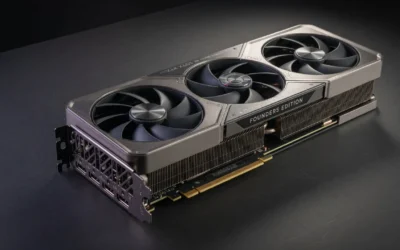
These are not small, minimalist cards. The ASUS TUF RTX 5080 uses a 3.6-slot construction with a massive fin array and three Axial-tech fans. That cooling arrangement is designed to move air through a substantial heatsink, but it also means you should check available expansion-slot clearance before buying. A 3.6-slot board can affect neighboring PCIe slots and may be a poor fit for compact cases.
The ASUS TUF RTX 4080 Super also uses an enlarged Axial-tech fan design, with the product data claiming 23% more airflow. RTX 4080 Super reference-class cards are described as dual-slot, while actual ASUS board-partner designs can differ. Because exact length, height, and weight are not listed for either card, case compatibility should be confirmed from the retailer’s current specification sheet rather than guessed from the GPU name. For troubleshooting and reliability insights, consult our in-depth vertical gpu mount airflow report.
For installation, both models should be treated as high-end components that need careful support and clear airflow. The RTX 5080 adds a protective PCB coating intended to help protect against short circuits caused by moisture, dust, or debris. Its military-grade components and phase-change GPU thermal pad are also positioned as durability and long-term thermal features, though no independent lifespan or temperature measurements are listed.
Runtime / Fuel & Maintenance
Graphics cards do not have a runtime rating in the same sense as a battery-powered appliance. Their practical operating cost depends on the system’s power draw, local electricity price, gaming hours, and workload. The RTX 4080 Super has a reported 320W TGP. A power figure for this particular ASUS RTX 5080 listing is not included, so it would be misleading to promise a specific electricity saving or penalty for the newer card. Readers comparing setup options can review our technical analysis on weak psu cause gpu stutter.
Maintenance is mainly preventative: keep the case filters and GPU heatsink free of dust, maintain unobstructed intake and exhaust airflow, and monitor the card if temperatures or fan behavior change. The ASUS RTX 5080’s phase-change thermal pad is described as outlasting traditional thermal paste under heavy load. That is a product feature, not a quantified service interval, so owners should not interpret it as a guarantee that the card will never need attention.
Best Use Cases
The RTX 5080 is best suited to a new enthusiast gaming build, especially when the buyer wants the newest NVIDIA feature set and a clear performance lead without paying the higher listed price of the older card. It is also the more forward-looking choice for users who specifically want DLSS 4 and Blackwell’s newer AI hardware. For complementary field maintenance guidelines, examine our breakdown of black screen gpu drivers.
The RTX 4080 Super makes the most sense when found at a substantially lower price than the listing used for this comparison, or when an owner already has one and is considering an upgrade. Its 16GB of GDDR6X memory, DLSS 3 support, full ray tracing, and 320W TGP still describe a powerful high-end platform. The problem is not that it is slow; it is that the listed price makes it more expensive than the faster RTX 5080.
Maintenance & Running Costs
Neither product requires a routine consumables schedule such as filters, brushes, blades, or cleaning solution. The main maintenance task is dust control. Dust can restrict the fin array and fans, so a clean case environment is particularly important for the RTX 5080’s 3.6-slot heatsink and for the RTX 4080 Super’s enlarged Axial-tech cooling system. The available product data does not specify replacement fan, heatsink, or thermal-pad costs.
The RTX 5080 listing highlights a phase-change GPU thermal pad, which is intended to provide durable thermal contact and longevity under heavy load. The RTX 4080 Super listing does not identify a phase-change pad, but it does specify a 3-year warranty. Warranty coverage can reduce repair risk for the older card, although the exact terms, exclusions, and regional conditions should be checked before purchase.
Electricity cost is harder to compare precisely because a 320W TGP is reported for the RTX 4080 Super but there is no equivalent figure for the ASUS RTX 5080 product listing. TGP is also not the same as measured wall draw for an entire PC. For a fair ownership comparison, buyers should use the exact card’s published power specification and their own expected hours of gaming rather than relying on the generation name.
Features & Usability
The RTX 5080’s headline usability feature is access to DLSS 4 alongside the Blackwell architecture. The card also combines a three-fan Axial-tech cooler, a large fin array, a protective PCB coating, military-grade components, and a phase-change thermal pad. These features make it the more modern package, even though the card still has the same 16GB memory capacity as its predecessor.
The RTX 4080 Super offers DLSS 3, full ray tracing, an ultra-efficient Ada Lovelace architecture, fourth-generation Tensor Cores, and third-generation RT Cores. ASUS lists an OC mode of 2,640MHz and a default mode of 2,610MHz for this model. Its Axial-tech fans are scaled up for 23% more airflow, and the listing includes HDMI 2.1a, DisplayPort 1.4a, PCIe 4.0, and a 3-year warranty.
For day-to-day use, both cards benefit from NVIDIA’s broad software ecosystem and support modern ray-traced gaming features. The RTX 5080 is preferable if DLSS 4 is a deciding factor. The RTX 4080 Super remains usable for buyers who already own compatible hardware, but buying it new at $1,769.99 is difficult to justify when the listed RTX 5080 costs less.
One practical point is that feature support does not automatically equal a particular frame rate. Upscaling and frame-generation technologies can improve displayed smoothness, but results vary by game, resolution, settings, and the underlying render rate. Separate 16GB-versus-8GB testing shows this principle clearly: frame generation adds memory demands, and the amount of benefit depends heavily on the workload. That evidence supports choosing adequate VRAM, but it is not a direct RTX 5080 versus RTX 4080 Super benchmark.
Price & Value Analysis
The ASUS TUF RTX 5080 is listed at $1,509.51, while the ASUS TUF RTX 4080 Super is listed at $1,769.99. The difference is $260.48 in favor of the RTX 5080. In other words, the RTX 4080 Super is not merely slower in the comparison; it is also the more expensive product in the current listings.
At these prices, the RTX 5080 is the straightforward value winner. Its reported 13 to 15% performance advantage, newer Blackwell architecture, GDDR7 memory, higher reported bandwidth, and DLSS 4 support arrive at a lower purchase price. The value argument would be even stronger for a buyer starting a new build, because there is no existing RTX 4080 Super investment to recover.
The RTX 4080 Super becomes worth considering only under different market conditions: a meaningful discount, a used deal with trustworthy condition, or a specific bundle and warranty advantage. A discounted or used RTX 4080 Super is a reasonable option because it can trade blows with the RTX 5080 in several titles and resolutions. That is a sensible position, but it does not describe this $1,769.99 listing.
Owners of an RTX 4080 Super should also calculate the upgrade cost differently from a new buyer. Selling the existing card, moving it to another system, or simply continuing to use it changes the financial equation. A roughly 13 to 15% average improvement may be visible at high refresh rates or in demanding ray-traced workloads, but it is not automatically enough to warrant replacing a still-capable 16GB GPU.
Which Should You Buy?
Choose RTX 5080 if…
- You are building a new high-end gaming PC in 2026.
- You want the faster card, with reported average gains of roughly 13 to 15% over the RTX 4080 Super class.
- You want Blackwell architecture, GDDR7 memory, and DLSS 4.
- You prefer the listed $1,509.51 price over the RTX 4080 Super’s $1,769.99 price.
- You value the ASUS TUF model’s three Axial-tech fans, 3.6-slot heatsink, protective PCB coating, and phase-change GPU thermal pad.
- Your case has enough clearance for a large 3.6-slot graphics card.
Choose RTX 4080 Super if…
- You find it substantially below the current $1,769.99 listing price.
- You are buying used and can verify the card’s condition, warranty status, and included accessories.
- You already own one and do not need DLSS 4 or the additional performance of the RTX 5080.
- You specifically prefer its listed 320W TGP or its documented 3-year warranty.
- You want a proven 16GB GDDR6X, Ada Lovelace platform with DLSS 3 and full ray tracing.
Consider a different model if…
- Your budget cannot comfortably accommodate either card at the listed prices.
- Your case cannot accept a large high-end card, particularly the RTX 5080’s 3.6-slot design.
- You need more than 16GB of VRAM for large AI models, professional workloads, or unusually demanding content-creation projects.
- Your main goal is maximum value at 1440p rather than high-end or enthusiast-class performance.
- You need independently verified noise, temperature, power-draw, or dimensions data before making a purchase.
- For more options at every price point, see our full guide to Best Graphics Cards.
Buyer FAQs: Rtx 5080 Vs Rtx 4080 Super Solved
Is the RTX 5080 much faster than the RTX 4080 Super?
It is faster, but the upgrade is not enormous. Reported comparisons cite approximately 13% higher average frame rates in one comparison and roughly a 15% average lead across another test suite. Actual gains vary by game, resolution, ray tracing settings, and whether upscaling or frame generation is enabled.
Does the RTX 5080 have more VRAM than the RTX 4080 Super?
No. Both cards have 16GB of graphics memory. The RTX 5080 uses newer GDDR7, while the RTX 4080 Super uses GDDR6X. The newer card therefore improves the memory technology and reported bandwidth, but it does not increase the available capacity.
Is the RTX 4080 Super still good for gaming in 2026?
Yes. The RTX 4080 Super remains a high-end 16GB card with Ada Lovelace architecture, DLSS 3, full ray tracing, and third-generation RT Cores. It can still be a reasonable purchase when discounted or bought used. At the listed $1,769.99 price, however, it offers weaker value than the faster RTX 5080 listed at $1,509.51.
Should RTX 4080 Super owners upgrade to the RTX 5080?
Usually not purely for frame rate. The RTX 5080 is about 13 to 15% faster in the cited comparisons and adds Blackwell, GDDR7, and DLSS 4, but both cards have 16GB of VRAM. Upgrade if those newer features or a particular demanding workload matter to you; otherwise, keeping the RTX 4080 Super is the more economical choice.
Related Comparisons
- GPU Comparisons: Graphics Cards Compared
- Best Graphics Cards for Gaming
- RTX 5070 vs RX 9070 Comparison
High End GPU Background Notes
High end graphics cards draw considerable power, so the power supply and airflow matter as much as the chip. For broad background on electrical and electronic practice, American National Standards Institute (ANSI) is a useful starting point.