Quick Answer: The Standard Chainsaw Chain Sharpening Angle
The most common sharpening angle for chainsaw chains is 30 degrees, which works well for general-purpose cutting on most consumer and professional chainsaws. However, the correct angle for your specific chain depends on its type and manufacturer specifications, typically ranging from 25 to 35 degrees. Always consult your chainsaw manual or the chain manufacturer’s documentation for the exact recommended angle, as using an incorrect angle reduces cutting efficiency, increases kickback risk, and causes premature chain wear.
Understanding Chainsaw Chain Sharpening Angles
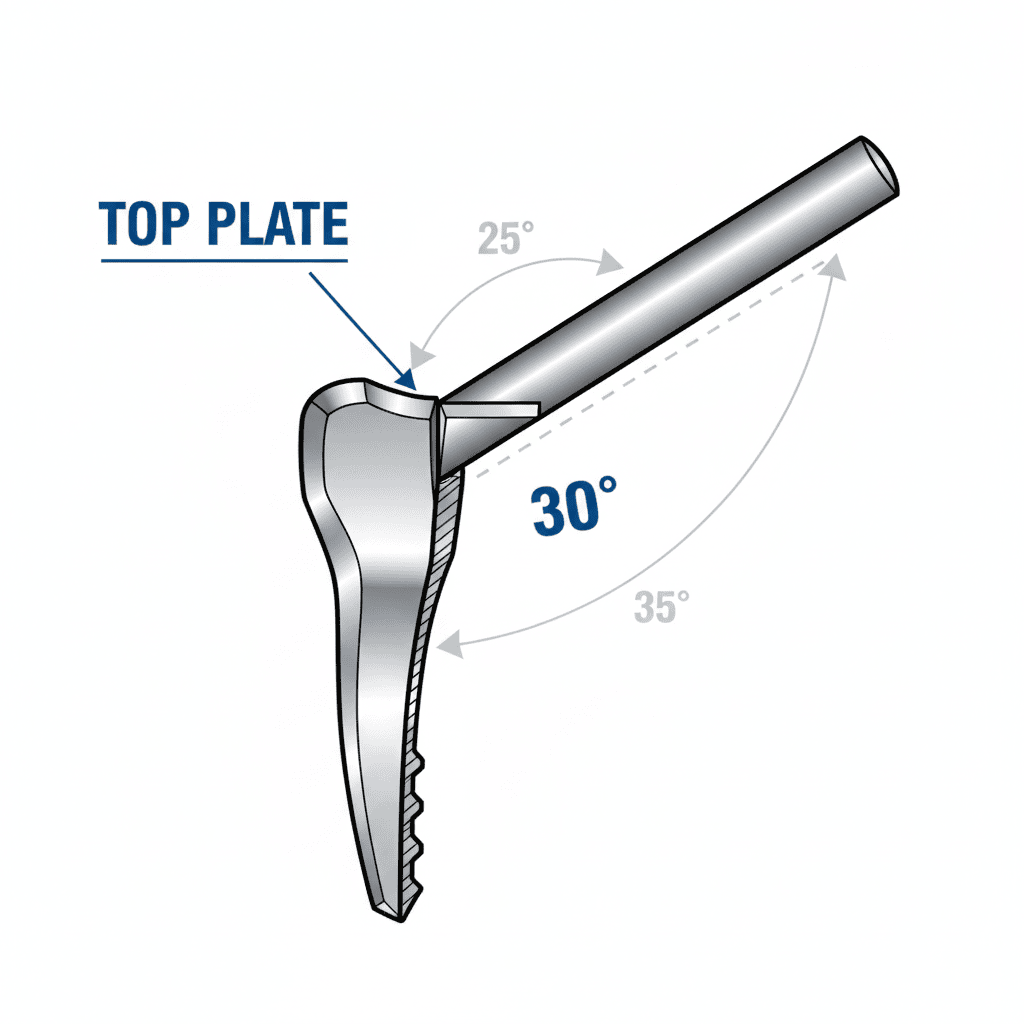
The sharpening angle refers to the angle between the file and the top plate of each tooth (cutter) on your chainsaw chain. This angle is critical because it determines how aggressively the chain cuts and how well it performs under different conditions.
When you file the chain at the correct angle, you create a sharp, efficient cutting edge that:
- Produces smooth, efficient cuts with minimal effort
- Reduces strain on the engine and reduces fuel consumption
- Minimizes heat buildup and chain stretching
- Decreases the risk of dangerous kickback
- Extends the life of the chain
An incorrectly sharpened chain—whether too steep or too shallow—will pull to one side, require excessive pressure to cut, produce sawdust instead of chips, and pose greater safety hazards to the operator.
Factors That Determine Your Chainsaw Chain’s Sharpening Angle
Several variables affect the specific sharpening angle your chain requires:
1. Chain Type: Full Chisel vs. Semi-Chisel
Full chisel chains have square-cornered teeth and are designed for fast cutting in clean wood. These chains typically use a 30-degree angle and require frequent sharpening (after 5-10 tanks of fuel). They are preferred by professionals and arborists.
Semi-chisel chains have slightly rounded tooth corners and are more forgiving, cutting slower but staying sharp longer. These chains often use a 25 to 30-degree angle and are better suited for occasional users and dirty or frozen wood that can quickly dull a full chisel chain.
2. Chainsaw Brand and Model
Different manufacturers design chains with slightly different geometries. Your chainsaw’s owner manual should specify the recommended sharpening angle. For example:
- Stihl chains typically call for 30 to 35 degrees depending on the model
- Husqvarna chains often use 30 degrees for standard cutting
- Echo chains may specify 25 to 30 degrees
Never assume all chains use the same angle—always verify with your manual or the chain manufacturer.
3. Cutting Application
The type of work you perform can influence angle selection within the manufacturer’s recommended range:
- Hardwood cutting: A slightly steeper angle (closer to 35 degrees) can improve efficiency in dense wood
- Softwood cutting: A shallower angle (closer to 25 degrees) may work better
- General-purpose work: Stay with the manufacturer’s standard 30-degree recommendation
How to Identify and Measure Your Chain’s Sharpening Angle
Before you begin sharpening, you need to determine the correct angle for your specific chain:
Step 1: Locate Your Manual
Your chainsaw’s owner manual is the most reliable source. Look for a section on chain maintenance or sharpening. The manual will include the exact angle and the correct file size for your chain.
Step 2: Check the Chain Manufacturer’s Documentation
If you don’t have the manual, search for the chain brand and model online. Major manufacturers like Stihl, Husqvarna, and Oregon provide detailed specifications on their websites.
Step 3: Use a Sharpening Guide
A file guide or sharpening guide is an inexpensive tool that clamps onto your chain and holds your file at the correct angle automatically. These guides typically have markings for different angles (25°, 30°, 35°) and remove guesswork from the sharpening process. Using a guide is the most reliable way to maintain consistent angles across all teeth.
Step 4: Verify with a Protractor (Optional)
For precise angle verification, you can use a digital protractor or angle finder to measure the top plate of a tooth. Place the protractor against the top plate and adjust until you reach the desired angle. This is helpful if you’re unsure whether your file guide is calibrated correctly.
Step-by-Step Guide to Sharpening at the Correct Angle
What You’ll Need
- Correct file size for your chain (specified in your manual)
- File guide or sharpening jig
- Depth gauge tool (to check and adjust raker height)
- Flat file for depth gauges
- Vice or sharpening stand to secure your chainsaw
- Safety glasses and gloves
Sharpening Process
1. Secure Your Chainsaw Clamp your chainsaw firmly in a vice or sharpening stand. Ensure the chain is immobile—it should not rotate freely. If you’re working outside, place the saw on a stable, level surface.
2. Attach Your File Guide Clamp your file guide onto the chain according to the manufacturer’s instructions. The guide should position your file at the correct angle (typically 30 degrees). Make sure the guide is level with the bar and chain.
3. File Each Tooth Begin with the first tooth and work systematically around the chain:
- Place your file into the guide and against the first tooth
- Push the file forward with moderate, even pressure—do not pull backward
- Use 4 to 6 strokes per tooth, depending on the tooth’s dullness
- Lift the file on the return stroke (don’t drag it backward)
- Move to the next tooth, maintaining the same number of strokes for consistency
Consistent stroke count ensures all teeth are sharpened evenly, which prevents the chain from pulling to one side.
4. Check Depth Gauges Depth gauges (rakers) control how much wood each tooth removes. If they’re too high, the chain won’t bite; too low, and it will cut aggressively. After sharpening, use a depth gauge tool to measure and adjust these if needed.
5. Test Your Work Once sharpened, test the chain on a log. A properly sharpened chain should cut straight and produce large wood chips (not sawdust). If it pulls to one side, one side of the chain may need additional sharpening.
Common Mistakes to Avoid When Sharpening at the Correct Angle
1. Sharpening Freehand Without a Guide
Attempting to hold the correct angle by eye is nearly impossible. Even a few degrees of deviation significantly affects cutting performance. Always use a file guide.
2. Using the Wrong File Size
Each chain size requires a specific file diameter. Using a file that’s too large or too small will not cut properly and can damage the tooth. Check your manual for the correct size.
3. Applying Too Much Pressure
Press firmly but don’t force the file. Excessive pressure dulls the file quickly and can gouge the tooth. Let the file do the work.
4. Inconsistent Stroke Count
Sharpening some teeth more than others causes uneven cutting and chain pulling. Count your strokes and use the same number for every tooth.
5. Neglecting Depth Gauges
Many operators sharpen the cutting teeth but ignore depth gauges. Worn or too-high depth gauges prevent the chain from cutting efficiently, regardless of how sharp the teeth are.
6. Ignoring Manufacturer Specifications
Using the “standard” 30-degree angle on a chain designed for 35 degrees will underperform. Always follow your specific chain’s recommendations.
Safety Tips for Chainsaw Sharpening
Wear Appropriate Safety Gear
- Safety glasses to protect from metal shavings
- Work gloves to protect your hands from sharp teeth
- Steel-toed boots (recommended when handling heavy equipment)
Secure the Chainsaw Properly
Never attempt to sharpen a chainsaw held between your legs or resting on your lap. Always use a vice, sharpening stand, or dedicated clamp.
Ensure the Engine Is Off
Turn off the engine and remove the spark plug wire to prevent accidental starting. Never sharpen a running chainsaw.
Work in Good Lighting
Poor visibility increases the risk of slipping with the file or missing important details. Set up in a well-lit area or use a work lamp.
How Often Should You Sharpen Your Chainsaw Chain?
Sharpening frequency depends on how often you use your chainsaw and what you cut:
- Frequent use on clean wood: Every 5 to 10 tanks of fuel (for full chisel chains)
- Occasional use: Once per season or before extended work
- Cutting dirty or frozen wood: More frequently, as debris dulls the chain faster
- Professional use: Often daily or every few tanks
A sharp chain is easier on your engine, produces cleaner cuts, and is safer to operate. If your saw requires excessive pressure or produces sawdust instead of chips, it’s time to sharpen, regardless of how long it’s been.
Frequently Asked Questions
Q: Can I use a 35-degree angle on a chain designed for 30 degrees?
Using a steeper angle than recommended can initially improve cutting speed in hard wood, but it dulls the chain faster and increases the risk of kickback. Stick to your manufacturer’s specification for safety and efficiency.
Q: What’s the difference between sharpening angle and filing angle?
These terms are used interchangeably and refer to the same thing—the angle between your file and the top plate of the tooth. Both describe how you position your file during sharpening.
Q: Can I use an angle grinder to sharpen my chainsaw chain?
Angle grinders can be used but require significant skill to maintain the correct angle and avoid overheating the tooth, which weakens the metal. Hand filing with a guide is safer and more practical for most users.
Q: How do I know if my chain is damaged vs. simply dull?
A dull chain produces sawdust, requires excessive pressure, and pulls to one side. A damaged chain may have broken teeth, cracks, or bent links. If you see visible damage, replace the chain rather than attempting to sharpen it.
Q: Does the brand of file matter?
Quality matters more than brand. Use a file that matches your chain’s specified diameter and material. Cheap files dull quickly and provide inconsistent results. Mid-range files from reputable manufacturers are a good balance of cost and performance.