Quick Answer: What Are The Best Leaf Blowers
The best leaf blowers in 2026 are the Ego Power+ 650 CFM (LB6504) for overall performance, the Husqvarna 350iB for best weight-to-power balance, and the Stihl BRA 600 backpack for maximum runtime. For raw power, gas backpacks like the Husqvarna 360BT still lead, but modern 56V–60V cordless models now match or exceed 15 Newtons of blowing force with zero emissions.
Pros
- Produces up to a rated 765 CFM of blowing power
- Variable-speed trigger offers customizable air delivery
- Includes a 56V 5.0Ah battery and matching charger
Cons
- High-output operation can significantly reduce runtime per charge
- 5.0Ah battery adds noticeable weight for single-handed work
Pros
- M18 FUEL system utilizes dual battery power for high output
- Cordless design offers unrestricted portability across large areas
- Integrates with the Milwaukee M18 tool ecosystem
Cons
- Tool only; requires two M18 batteries and a charger sold separately
- Dual batteries increase overall handheld carrying weight
Pros
- Offers up to a manufacturer-rated 700 CFM air volume
- Brushless motor ensures efficient power delivery
- Includes a 4.0Ah battery and rapid charger
Cons
- The 60V battery pack adds weight during extended handheld use
Why Leaf Blower Selection Matters More Than You Think
Choosing the wrong leaf blower doesn’t just waste money—it creates fatigue, leaves debris behind, and can damage surfaces or disturb wildlife. The physics of leaf removal are straightforward: you need sufficient air volume (CFM) to lift debris and enough air velocity (MPH) to move it. But the practical application depends on your yard size, terrain type, debris density, and how long you can comfortably operate the tool.
This guide breaks down exactly how leaf blowers work, what the specifications actually mean in real-world conditions, and how to diagnose which type fits your specific situation. We’ll cover the diagnostic matrix for selecting between handheld, backpack, and wheeled units, plus maintenance intervals that keep your blower running for years.
The Physics of Leaf Blowing: CFM vs. MPH Explained
Most shoppers fixate on MPH, but that metric alone is misleading. Here’s what each specification actually measures and why the combination matters:
CFM (Cubic Feet Per Minute) — Air Volume
CFM measures the total volume of air the blower moves per minute. Think of it as the “width” of the air stream. A blower with 600 CFM pushes a wider column of air than one with 300 CFM, which means it can lift more leaves simultaneously and move heavier, matted debris. For wet or dense leaf piles, CFM is the dominant factor.
MPH (Miles Per Hour) — Air Velocity
MPH measures how fast the air exits the nozzle. This determines the “penetration force”—the ability to dislodge leaves stuck to wet grass, push debris out of gravel, or move material uphill. High MPH without sufficient CFM creates a narrow, fast stream that scatters leaves rather than moving them in a controlled direction.
Newtons — The Unified Force Measurement
Professional testers at Pro Tool Reviews and Consumer Reports measure blowing force in Newtons, which combines CFM and MPH into a single force value. This is the most accurate predictor of real-world performance:
| Blower Class | Typical Newtons | Best For |
|---|---|---|
| Entry Cordless (20V) | 5–8 N | Light dry leaves, small patios |
| Mid-Range Cordless (40V–56V) | 10–15 N | Medium yards, mixed debris |
| High-Performance Cordless (56V–60V) | 15–20+ N | Large yards, wet/matted leaves |
| Gas Handheld | 12–15 N | Medium yards, no battery concerns |
| Gas Backpack | 18–25+ N | Large properties, commercial use |
The Husqvarna 350iB, for example, exceeds 20 Newtons while weighing under 10 pounds—matching the output of many gas handhelds without the emissions or maintenance. The DeWalt DCBL772 (60V FlexVolt) hits 17 Newtons, beating gas handhelds, though at 91 dB it’s louder than most competitors.
Leaf Blower Types: Diagnostic Selection Matrix
Use this decision matrix to identify which blower type matches your specific conditions. Answer each question honestly—overbuying creates unnecessary weight and cost, while underbuying leaves you making multiple passes.
Step 1: Measure Your Yard
Small (under 1/4 acre): Handheld cordless, 20V–40V battery platform. Run time of 20–30 minutes on high is sufficient. The Ego Power+ 615 CFM (LB6151) with its 2.5Ah battery covers this range comfortably.
Medium (1/4 to 1/2 acre): Handheld cordless, 56V battery, or gas handheld. You need 30+ minutes on high or the ability to swap batteries. The Ego Power+ 650 CFM (LB6504) delivers approximately 27 minutes on high with its included battery.
Large (1/2 to 1 acre): Backpack blower, either cordless (Stihl BRA 600) or gas (Husqvarna 360BT). Weight distribution across your shoulders reduces fatigue during 45+ minute sessions.
Commercial or 1+ acres: Gas backpack with 20+ Newtons, or wheeled blower for flat terrain. Runtime and sustained power are non-negotiable.
Step 2: Assess Debris Type
Dry, loose leaves on hard surfaces: Any blower with 300+ CFM works. Even budget corded models handle this. The WORX Trivac WG512 at 600 CFM also vacuums and mulches at 16:1 ratio.
Dry leaves on grass: You need 400+ CFM and 100+ MPH to lift blades from turf. Most mid-range cordless blowers handle this.
Wet or matted leaves: This is where specifications matter most. You need 550+ CFM and 120+ MPH, or approximately 15+ Newtons. The Ego 650 CFM and Husqvarna 350iB excel here because their air volume gets under compressed leaf layers.
Gravel, mulch, or mixed debris: Use variable speed control to avoid displacing substrate. High MPH on full power will scatter gravel. Backpack blowers with adjustable tubes give you the most control.
Step 3: Consider Physical Limitations
Weight sensitivity: Handheld blowers range from 6 to 12 pounds. The Husqvarna 350iB at under 10 pounds with battery is the lightest option exceeding 20 Newtons. Backpack models distribute weight across shoulders and hips, making them feel lighter during extended use despite higher total weight.
Noise restrictions: Many municipalities enforce 65–70 dB limits. Corded and cordless electric blowers typically operate at 55–70 dB. Gas blowers range from 70–80+ dB. The DeWalt DCBL772 at 91 dB exceeds most residential noise ordinances.
Existing battery ecosystem: If you already own Ego, DeWalt, Makita, or Greenworks tools, buying within that platform saves $100–$200 on batteries and chargers. Ego’s 56V platform alone supports 100+ tools.
Top Leaf Blowers of 2026: Detailed Breakdown
Best Overall: Ego Power+ 650 CFM (LB6504)
The Ego LB6504 dominates because it solves the primary weakness of cordless blowers: sustained power under load. At 650 CFM and 180 MPH, it generates enough force to lift wet, matted leaves that cheaper blowers simply push around. The air intake is shielded by the battery, preventing the common problem of loose clothing being sucked into the intake vent.
Runtime: Approximately 27 minutes on high, significantly longer at reduced speeds. For most medium yards, this covers a complete cleanup session without battery swaps.
Trade-offs: It’s heavier than budget models, and the 56V battery system, while extensive, requires investment if you’re starting from scratch. The price point sits above mid-range options.
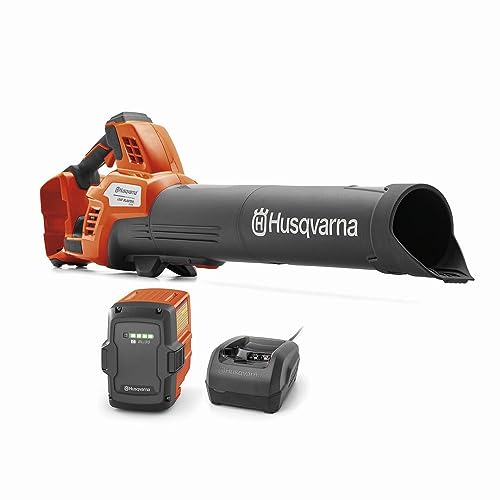
Best Weight-to-Power Ratio: Husqvarna 350iB
At under 10 pounds with battery, the 350iB exceeds 20 Newtons of blowing force—matching or beating many gas handhelds. This matters during 30+ minute sessions where every additional ounce compounds fatigue in your wrist, forearm, and shoulder.
Best for: Users who prioritize comfort during extended use. If you have arthritis, shoulder issues, or simply dislike heavy tools, this is the performance pick. The Husqvarna battery ecosystem also includes trimmers, chainsaws, and mowers.
Trade-offs: Runtime is shorter than the Ego 650 CFM at equivalent power levels. The Husqvarna battery platform is smaller than Ego’s 100+ tool lineup.
Best for Large Properties: Stihl BRA 600 (Backpack Cordless)
The Stihl BRA 600 bridges the gap between cordless convenience and backpack-level runtime. Stihl’s battery backpack system distributes weight across your torso, reducing arm fatigue during 45–60 minute sessions. Air volume and force approach gas backpack territory without emissions or pull-start frustration.
Best for: Properties over half an acre, professional landscapers transitioning from gas, or anyone who finds handheld blowers fatiguing. The tube-mounted controls allow speed adjustments without breaking your grip.
Trade-offs: Higher upfront cost than any handheld. Requires Stihl’s proprietary battery system, which has fewer cross-compatible tools than Ego or DeWalt.
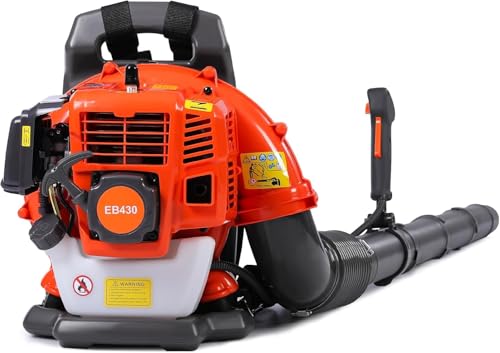
Best Gas Backpack: Husqvarna 360BT
For users who need maximum sustained power without battery limitations, the 360BT remains the benchmark. Gas backpacks still deliver the highest Newtons (18–25+) and can run for hours with fuel stops rather than battery swaps. The harness system is designed for all-day commercial use.
Best for: Commercial landscapers, properties over 1 acre, or users in areas without reliable charging access. If you’re already maintaining gas equipment like chainsaws and other outdoor tools, adding a gas blower to your fleet keeps your maintenance routine consistent.
Trade-offs: Two-stroke engine noise (75–80+ dB), fuel mixing, spark plug and air filter maintenance, and emissions. Weight ranges from 20–25 pounds fully fueled.
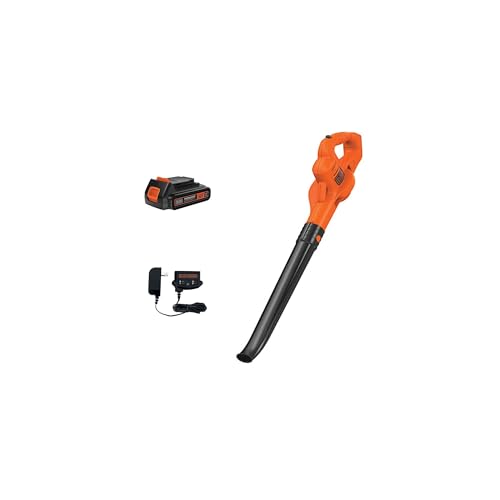
Best Budget Option: Greenworks 40V Cordless
Greenworks offers the most accessible entry point into cordless leaf blowing. Their 40V platform provides adequate power for small to medium yards with dry leaf conditions. The battery system is cross-compatible with Greenworks mowers, trimmers, and chainsaws.
Best for: Budget-conscious buyers with small yards (under 1/4 acre) and primarily dry debris. If your leaves are dry and your surfaces are hard (driveways, patios, sidewalks), you don’t need premium specifications.
Trade-offs: Insufficient power for wet or matted leaves. Shorter runtime on high. Build quality is acceptable but not commercial-grade.
Understanding Battery Platforms: Why Ecosystem Matters
A leaf blower doesn’t exist in isolation. The battery you buy today powers tomorrow’s trimmer, chainsaw, and mower. Platform lock-in is real, so evaluate the full ecosystem before committing:
| Platform | Voltage | Tool Count | Strengths |
|---|---|---|---|
| Ego | 56V | 100+ | Largest ecosystem, strong blower lineup |
| DeWalt | 20V/60V FlexVolt | 200+ | Massive tool count, Pro-grade durability |
| Makita | 18V/40V XGT | 300+ | Most tools overall, Pro-focused design |
| Greenworks | 24V/40V/80V | 75+ | Best value, strong outdoor focus |
| Husqvarna | 36V/40V | 30+ | Premium outdoor tools, excellent ergonomics |
| Stihl | 36V | 25+ | Commercial-grade, excellent backpack options |
If you’re starting fresh, Ego offers the best balance of blower performance and ecosystem breadth. If you already own DeWalt or Makita tools, staying within that platform saves significant money. For a deeper dive into battery-powered options, see our complete cordless leaf blower guide.
Gas vs. Electric: The 2026 Reality Check
The gas-versus-electric debate has shifted dramatically. In 2026, the performance gap has narrowed to the point where most residential users will never notice the difference:
Where electric wins: Noise (55–70 dB vs. 70–80+ dB), zero emissions, no fuel mixing, no pull-start, lower maintenance, instant on/off, and increasingly competitive runtime. For yards under 1/2 acre, cordless electric is the superior choice for most homeowners.
Where gas still leads: Sustained runtime for commercial use (hours vs. 20–45 minutes), maximum raw power for the largest properties, and availability in areas without reliable electrical access. Gas backpacks remain the most powerful leaf blowers you can buy.
The hybrid approach: Many professionals now use cordless for daily residential work and gas for large commercial properties. This reduces fuel costs and maintenance while maintaining maximum capability when needed. Our gas vs. electric comparison covers this in detail.
Handheld vs. Backpack: When Weight Distribution Matters
The choice between handheld and backpack isn’t just about power—it’s about how your body handles sustained use:
Handheld Blowers
Weight: 6–12 pounds, held in one hand with the other on the trigger. This creates asymmetric loading on your shoulder, wrist, and forearm. After 15–20 minutes, most users feel fatigue in their dominant arm.
Best for: Quick cleanup sessions under 20 minutes, small yards, and users who prioritize simplicity. The maneuverability of handhelds makes them ideal for tight spaces, garden beds, and around obstacles.
Backpack Blowers
Weight: 15–25 pounds, distributed across both shoulders and your lower back via a harness. The tube is held with one hand, but the weight rests on your torso. This allows 45–60+ minute sessions with significantly less fatigue.
Best for: Properties over 1/2 acre, commercial work, and users with wrist or shoulder limitations. The harness system also positions the air intake away from your body, reducing the risk of clothing being sucked into the blower. For a full comparison, see our backpack vs. handheld guide.
Maintenance Intervals: Keeping Your Blower Running
Leaf blowers are mechanically simple, but neglecting basic maintenance shortens their lifespan significantly. Follow these intervals:
Cordless Electric Blowers
| Task | Interval | Why It Matters |
|---|---|---|
| Clear intake screen of debris | After each use | Blocked intake reduces CFM by 20–40% |
| Inspect nozzle for cracks | Monthly | Cracks disrupt airflow pattern |
| Clean battery contacts | Every 3 months | Corrosion causes intermittent power loss |
| Check trigger mechanism | Every 6 months | Sticky triggers indicate debris buildup |
| Store battery at 40–60% charge | Winter storage | Full charge degrades lithium cells faster |
Gas Blowers
| Task | Interval | Why It Matters |
|---|---|---|
| Replace spark plug | Every 100 hours or annually | Fouled plugs cause hard starting and misfires |
| Clean/replace air filter | Every 25–50 hours | Clogged filters starve engine of air, reducing power |
| Drain or stabilize fuel | Before 30-day storage | Stale fuel gums carburetor jets |
| Inspect fuel lines | Annually | Cracked lines cause leaks and air ingestion |
| Clean exhaust screen | Every 50 hours | Blocked screens cause overheating |
| Check fan impeller | Annually | Worn impellers reduce air output |
For comprehensive maintenance procedures across all outdoor power equipment, reference our chainsaw and outdoor tool maintenance guide.
Practical Yard Applications: Beyond Fall Leaves
Leaf blowers are year-round tools when you understand their full utility:
Spring and Summer Uses
Grass clipping removal: After mowing, blow clippings off driveways, sidewalks, and patios. A quick 5-minute pass prevents clippings from staining concrete or tracking into your home.
Garage and workshop cleaning: Blowers excel at moving sawdust, dirt, and light debris from garage floors. Use low speed to avoid scattering small items.
Drying vehicles: After washing your car, a leaf blower on low speed removes water from mirrors, grilles, and trim where towels can’t reach, preventing water spots.
Fall and Winter Uses
Leaf removal from garden beds: The precision of a handheld blower makes it ideal for clearing leaves from mulched beds without disturbing the mulch layer. Use low speed and work from the edges inward.
Snow dusting removal: Light snowfalls (under 1 inch) on cars, walkways, and outdoor furniture respond well to blower removal. Use warm air if your blower has a heat function, or simply use the air volume to displace light powder.
Gravel path maintenance: Variable-speed blowers can clear leaves from gravel without displacing the stone. Start at the lowest speed and increase only as needed.
Noise Regulations and Wildlife Considerations
Leaf blower noise is increasingly regulated. Many municipalities enforce limits between 65–70 dB at 50 feet. Before purchasing, check your local OSHA equipment safety regulations and municipal noise ordinances. Electric blowers typically operate at 55–70 dB, well within most residential limits. Gas blowers at 75–80+ dB may violate local ordinances.
Beyond regulations, leaf blowers can disturb wildlife. The high-velocity air stream can harm insect pollinators, and the noise distresses birds and small mammals. Avoid using blowers near active nests, during dawn chorus hours, or in areas with known wildlife activity. Consider raking sensitive areas by hand when practical.
Final Recommendations by Use Case
Small yard, dry leaves, tight budget: Greenworks 40V cordless. Adequate power, affordable, and part of a growing tool ecosystem.
Medium yard, all conditions: Ego Power+ 650 CFM (LB6504). The best balance of power, runtime, and ecosystem breadth for most homeowners.
Medium yard, weight-sensitive users: Husqvarna 350iB. Under 10 pounds with 20+ Newtons of force. Ideal for users with joint issues or extended session needs.
Large property, maximum runtime: Stihl BRA 600 backpack cordless. Backpack weight distribution plus cordless convenience for 45–60 minute sessions.
Commercial or 1+ acre properties: Husqvarna 360BT gas backpack. Maximum sustained power, hours of runtime, and proven commercial durability.
Multi-tool ecosystem builders: Match your blower to your existing battery platform. If you own DeWalt tools, the DCBL772 (60V FlexVolt) is the strongest handheld option. Makita users should evaluate the 40V XGT GBU01, which exceeds gas handheld performance while integrating with Makita’s extensive Pro tool lineup.
Frequently Asked Questions
What is the most powerful handheld leaf blower in 2026?
The Ego Power+ 880 CFM leads handheld models in raw air volume. For combined force (Newtons), the DeWalt DCBL772 (60V FlexVolt) at 17 Newtons and the Husqvarna 350iB at 20+ Newtons are the top performers. Gas handhelds like the Stihl BG 86 C-E produce approximately 15 Newtons but require fuel mixing and produce emissions.
How long do cordless leaf blower batteries last?
Runtime depends on power setting and battery capacity. At maximum power, expect 15–30 minutes depending on the model. At reduced speeds, runtime extends to 45–90 minutes. The Ego 650 CFM delivers approximately 27 minutes on high. Husqvarna’s Leaf Blaster 350iB was tested at over 37 minutes. Carrying a spare battery effectively doubles your session time.
Are cordless leaf blowers as powerful as gas?
For residential use, yes. Modern 56V–60V cordless blowers match or exceed gas handhelds in blowing force (Newtons). Gas backpacks still lead in maximum raw power and sustained runtime. The performance gap has narrowed to the point where most homeowners will not notice a difference in real-world leaf removal.
What CFM is good for a leaf blower?
For dry leaves on hard surfaces, 300+ CFM is sufficient. For dry leaves on grass, 400+ CFM is recommended. For wet or matted leaves, 550+ CFM is necessary. For commercial or large-property work, 600+ CFM provides the best results. Remember that CFM works in combination with MPH—evaluate both specifications together.
Should I buy a backpack or handheld leaf blower?
Choose handheld for yards under 1/4 acre and sessions under 20 minutes. Choose backpack for yards over 1/2 acre, sessions over 30 minutes, or if you experience wrist or shoulder fatigue with handhelds. Backpack models distribute weight across your torso, reducing localized strain. See our backpack vs. handheld comparison for detailed guidance.
For practical maintenance advice and setup requirements, check our guide on electric leaf blower.
What is the quietest leaf blower?
Corded electric blowers are typically the quietest at 55–65 dB. Cordless electric models range from 60–70 dB. Gas blowers operate at 70–80+ dB. If noise is a primary concern, prioritize corded or cordless electric and check your local noise ordinances before purchasing.