Direct Answer: What Is a Cultivator Tiller?
A cultivator tiller is a gardening or agricultural tool used to break up, aerate, and mix soil, preparing it for planting by incorporating amendments like compost or fertilizer and controlling weeds. It uses rotating tines or blades to churn the earth, loosening compacted ground so roots can grow more easily.

Pros
- Manufacturer-stated 15 Amp corded power
- 18-inch size listed in the title
- Six steel tines per the listing
- Adjustable wheels included in the listing
Cons
- Corded design limits range to nearby outlets
- Power and tilling claims are unverified

Pros
- 13.5 Amp corded electric power stated
- 16-inch size listed in the title
- Steel tines per the listing
- Model SUJ-TJ604E identified
Cons
- Corded design limits range to nearby outlets
- Power and performance claims are unverified
Pros
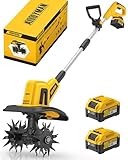
- Two 4.0Ah batteries and charger listed
- 360 RPM speed per the manufacturer
- 9-inch tilling width stated
- 6.6-inch tilling depth stated
Cons
- RPM, width and depth figures are unverified claims

Pros
- Foldable handle listed for portable storage
- 10 Amp corded electric power per the listing
- Four steel tines and adjustable wheels listed
Cons
- Corded design requires nearby outlet access
- Power and tilling claims are unverified
In everyday language, the terms “cultivator” and “tiller” are often used interchangeably to describe a single machine that combines both functions. While some sources draw technical distinctions between the two, a “cultivator tiller” generally refers to any soil-working implement, from a small handheld electric unit to a large rear-tine gas machine, that prepares and maintains garden beds.
Understanding the Cultivator Tiller: Definition and Core Purpose
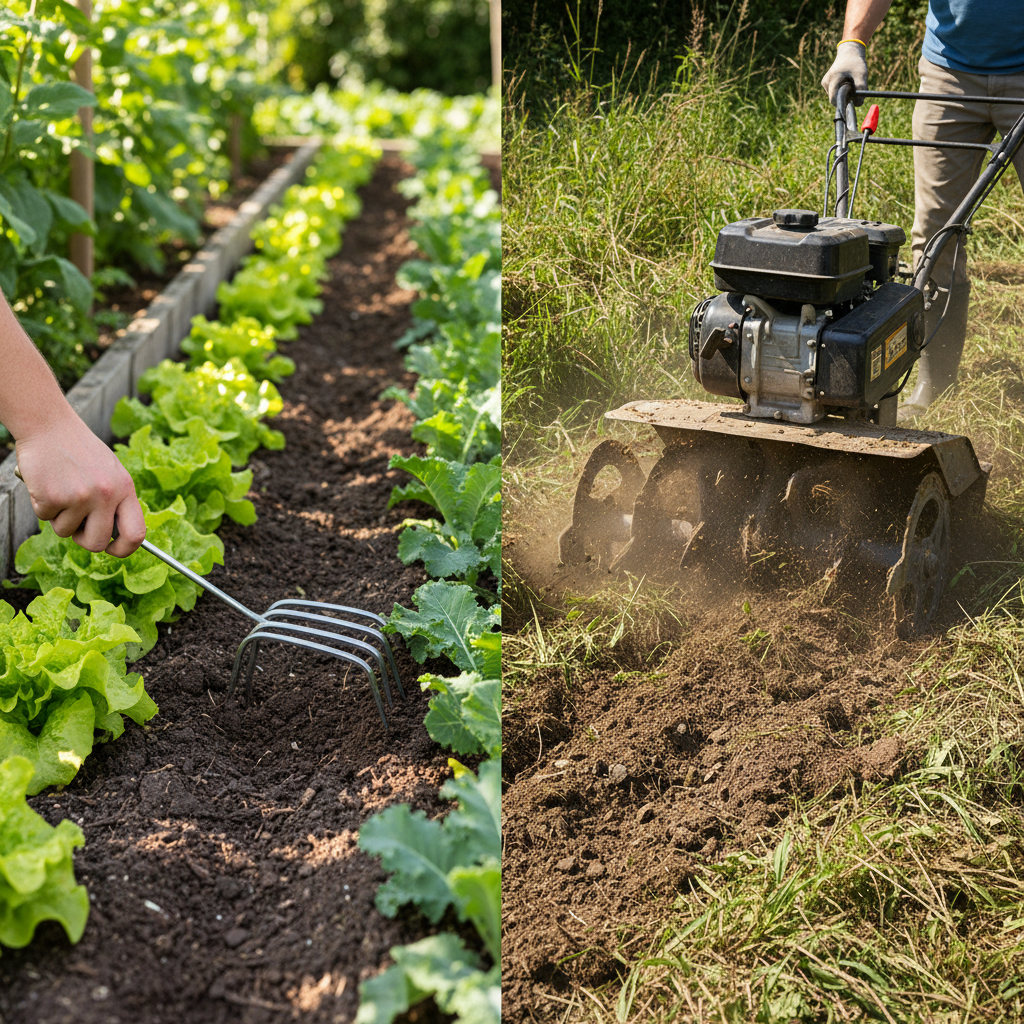
To fully understand what a cultivator tiller is, it helps to look at the two words that make up the term. Each describes a slightly different job, but together they cover the full range of soil preparation tasks a gardener or farmer might need to perform.
What Is a Cultivator?
A cultivator is a tool designed to loosen and aerate soil in an established garden bed. Its primary job is maintenance: breaking up the top few inches of soil, uprooting young weeds, and mixing in small amounts of compost or fertilizer without disturbing the soil structure too deeply. Cultivators are typically lighter, narrower, and less powerful than tillers, and they are ideal for working between rows of plants or around existing flowers and vegetables.
What Is a Tiller?
A tiller is a more robust machine built for initial ground preparation. It is designed to break new ground, cut through sod, and turn over compacted or heavy soil to a greater depth. Tillers use larger, more aggressive tines and are commonly used to create a brand-new garden bed from an area that has never been planted before. They are also used to work in large quantities of organic matter, such as a thick layer of compost or manure, before the growing season begins.
Why the Two Terms Are Combined
The combined term “cultivator tiller” exists because most modern machines can do both jobs. A single tool with adjustable depth settings can function as a cultivator when set shallow for weeding and light aeration, and as a tiller when set deeper to break new ground. This versatility is why manufacturers, retailers, and gardeners often use the terms interchangeably, the machine is one unit that covers the entire soil-preparation spectrum.
How a Cultivator Tiller Works: Key Functions Explained
A cultivator tiller performs several distinct but related functions, all driven by the same core mechanism: a set of rotating tines that dig into the soil. Understanding these functions helps clarify why the tool is so valuable in both home gardens and commercial agriculture.
Breaking Up Compacted Soil
Soil becomes compacted over time due to foot traffic, rain, heavy equipment, and natural settling. Compacted soil has fewer air pockets, which makes it difficult for water to penetrate and for plant roots to expand. A cultivator tiller solves this problem by mechanically breaking apart the compacted layers. The rotating tines slice into the ground, fracture dense clumps, and reduce the soil to a loose, crumbly texture that is ideal for planting.
Aerating the Soil
Healthy soil needs oxygen. Beneficial microorganisms, earthworms, and plant roots all require air to thrive. When a cultivator tiller churns the soil, it creates space for air to circulate throughout the root zone. This improved soil aeration promotes healthier root development, encourages beneficial microbial activity, and helps prevent problems like waterlogging and root rot. To evaluate matched hardware tolerances, consult our detailed overview of marshall stanmore iii vs harman kardon onyx studio 8.
Mixing in Soil Amendments
Before planting, most gardeners need to add amendments such as compost, aged manure, peat moss, lime, or granular fertilizer. Simply spreading these materials on the surface is not enough, they need to be worked into the soil so plant roots can reach them. A cultivator tiller mixes amendments evenly through the top layer of soil, ensuring that nutrients are distributed consistently and that organic matter is incorporated where it can do the most good.
Controlling Weeds
Weeds compete with your plants for water, nutrients, and sunlight. One of the most effective ways to manage them is to disrupt them before they become established. Running a cultivator tiller through a garden bed uproots young weeds and buries their seeds below the depth where they can germinate. This mechanical weed control is a key reason many gardeners use the tool regularly throughout the growing season, not just at planting time. When planning workspace deployment, consider the engineering criteria outlined in our dyson v8 cyclone vs bissell featherweight stick guide.
Preparing Garden Beds
The end result of all these functions is a properly prepared garden bed. A bed that has been cultivated and tilled has a smooth, loose surface that is easy to plant in, drains well, and gives seeds and transplants the best possible start. Whether you are planting a vegetable patch, a flower border, or a new lawn, a cultivator tiller is often the fastest way to get the soil ready.
Cultivator vs. Tiller: Clarifying the Terminology
One of the most common questions gardeners ask is whether a cultivator and a tiller are the same thing. The honest answer is that the terms overlap significantly, but there are some traditional distinctions worth understanding. For additional operational safety benchmarks, see our published testing notes on bissell crosswave hydrosteam vs shark stainforce.
In strict technical terms, a cultivator is a lighter tool for shallow, ongoing soil maintenance, while a tiller is a heavier machine for deep, initial ground breaking. However, because most modern machines can handle both tasks, the combined term “cultivator tiller” has become the standard way to describe them.
| Feature | Cultivator | Tiller |
|---|---|---|
| Primary purpose | Maintaining existing beds, light soil loosening, weeding | Breaking new ground, deep soil preparation |
| Typical working depth | Shallow, roughly 2 to 5 inches | Deeper, roughly 6 to 10 inches or more |
| Tine width | Narrower, suited to working between rows | Wider, covering more ground per pass |
| Power source | Often manual, corded electric, or small battery units | Often gas-powered or heavy-duty electric |
| Best used for | Weeding, mixing compost into the topsoil, aerating beds | Creating new beds, tilling sod, turning heavy soil |
| Weight | Light and maneuverable | Heavy, often self-propelled |
It is worth noting that these are general guidelines rather than hard rules. Many manufacturers label a single machine as a “cultivator tiller” precisely because it can be adjusted to perform both roles. A front-tine machine with adjustable depth, for example, can be set shallow to act as a cultivator or deeper to act as a tiller, giving the home gardener one versatile tool instead of two.
Key Factors to Consider When Understanding a Cultivator Tiller
If you are learning about cultivator tillers with an eye toward buying one, several specifications determine how well a particular model will suit your needs. Understanding these factors will help you match the tool to the job.
Power Source
Cultivator tillers come in three main power configurations:
- Manual: Hand-push cultivators with rotating tines or simple claw designs. These are inexpensive, quiet, and great for small beds, but they require physical effort and are only suitable for loose, well-maintained soil.
- Electric (corded or battery): Lightweight and easy to start, electric cultivator tillers are ideal for small to medium gardens. Corded models offer unlimited runtime but are limited by extension cord reach, while battery models are portable but limited by battery life.
- Gas-powered: The most powerful option, gas cultivator tillers are built for larger gardens and tougher soil conditions. They offer the greatest depth and tilling width but are heavier, noisier, and require more maintenance.
Tine Width and Design
The tines are the rotating metal blades that do the actual digging. Tine width determines how much ground you cover with each pass: narrower tines (around 8 to 10 inches) are better for working between established plants, while wider tines (13 inches and up) cover more area quickly, which is preferable for open beds. Tine design also matters, curved, hardened steel tines handle rocky or tough soil better than lighter-duty designs.
Working Depth and Adjustability
Depth adjustment is one of the most important features on a cultivator tiller. A machine with adjustable depth settings can be set shallow (2 to 3 inches) for weeding and cultivating around existing plants, or deeper (6 to 8 inches or more) for breaking new ground and incorporating amendments. If you plan to use the tool for both maintenance and new bed preparation, look for a model with easy, tool-free depth adjustment.
Weight and Maneuverability
Heavier machines dig deeper and are more stable, but they are harder to maneuver, especially in tight spaces or on slopes. Lighter machines are easier to control but may bounce or struggle in hard soil. Consider the size of your garden and your physical comfort level. Many front-tine models are designed to be lifted and guided by the operator, while rear-tine models are self-propelled and better suited to large areas and heavy soil.
Soil Type and Garden Size
Your specific conditions should drive your choice. For small raised beds with soft, loose soil, a lightweight electric cultivator is often more than enough. For a large vegetable plot with heavy clay soil or an area covered in sod, a gas-powered rear-tine tiller is the more practical option. Matching the machine to the task prevents both frustration and unnecessary expense.
Common Questions on What Is A Cultivator Tiller Answered
Is a cultivator the same as a tiller?
Not exactly, though the terms are often used interchangeably. A cultivator is traditionally a lighter tool for shallow, ongoing soil maintenance such as weeding and light aeration, while a tiller is a heavier machine for deep, initial ground breaking. The combined term “cultivator tiller” is commonly used because most modern machines can perform both functions with adjustable depth settings.
Can I use a cultivator tiller to break new ground?
It depends on the machine. A lightweight cultivator is designed for established beds and will struggle with sod, dense clay, or rocky ground. A full-size tiller, especially a rear-tine gas model, is built specifically for breaking new ground. If you need to create a brand-new garden bed, choose a machine rated for that task rather than a small maintenance-focused cultivator.
How deep does a cultivator tiller work?
Working depth varies by model. Small electric cultivators typically work 2 to 5 inches deep, which is enough for weeding, aeration, and mixing surface amendments. Larger gas-powered tillers can reach 6 to 10 inches or more, making them suitable for deep soil preparation and turning over heavy ground. Most quality machines offer adjustable depth settings so you can match the working depth to the task at hand.
Do I need a cultivator or a tiller for my garden?
Consider what your soil needs. If you already have an established garden bed and simply want to loosen the topsoil, mix in compost, and control weeds, a cultivator is the right tool. If you are starting a new bed from scratch, breaking up compacted ground, or turning under sod, you need a tiller. For most home gardeners, a single adjustable cultivator tiller is a practical compromise that handles both jobs.
Related Maintenance and Operating Guides
To keep your equipment running at peak operating efficiency, explore our related technical walkthroughs and maintenance tutorials:
- Consult our detailed breakdown on cordless stick vacuum buyer guide.
- Consult our detailed breakdown on robotic pool cleaner comparison guide.
Tiller Safety Background
A cultivator tiller turns soil with rotating tines, so keep hands and feet well clear while it runs. Stop the engine before clearing rocks or roots. Broad safety reading on powered garden tools is at American National Standards Institute (ANSI).