Quick Answer
For most homeowners, the best leaf blower is a battery-powered handheld model with enough airflow for everyday leaves and light debris. Wet, matted leaves need more airflow, and large properties are better served by backpack units. Pick the power source that fits your yard size, noise limits, and existing battery platform.

Pros
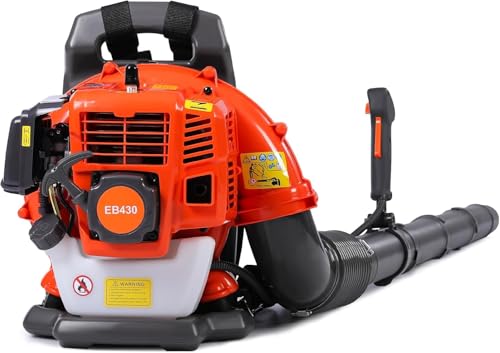
- Features a high-output Strato-Charged engine
- AutoTune carburetor provides automated fuel management
- Padded harness with waist belt and ventilated back pad
- LowVib technology helps minimize operator vibration
- Integrated service port enables quick maintenance access
Cons
- Gas engine requires routine upkeep and fuel mixing
- Bulkier footprint compared to smaller handheld units

Pros
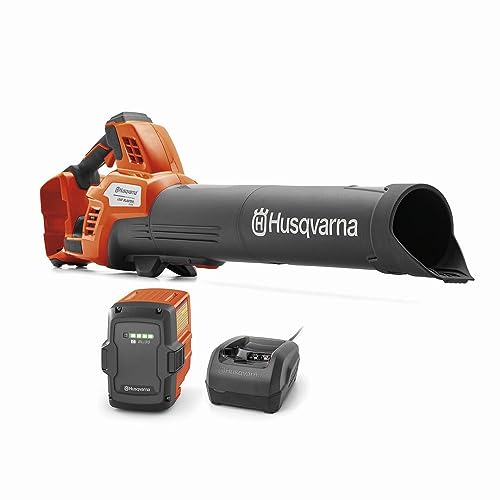
- Cordless mobility without battery runtime limitations
- Sturdy construction suited for tough yard and property clearing
- Standard handheld configuration
Cons
- Gas engine requires manual fuel mixing and regular maintenance
- Weighs 11 pounds, which is heavier than most cordless alternatives

Pros
- Handheld design offers portable maneuverability
- Recognized Stihl BG 56 platform for property care
Cons
- Product specifications and airspeed ratings are not provided
- Gas engine requires fuel mixing and engine maintenance
How to Use This Guide
Choosing a leaf blower is a physics problem before it is a shopping problem. Air volume (measured in cubic feet per minute, CFM) determines how much leaf mass you can move; air speed (measured in miles per hour, mph) determines whether that air stream can break the static adhesion holding a wet leaf to turf. Neither number alone tells you if a blower will work in your yard. This guide breaks down the exact mechanics, gives you a diagnostic matrix to match a blower to your property, and covers maintenance intervals that keep performance from degrading season after season.
The Physics: CFM, MPH, and Newtons Explained
CFM vs. MPH: The Two Numbers That Matter
Manufacturers advertise both CFM and MPH, and both are technically true, but they measure different things. CFM (cubic feet per minute) is the volume of air the impeller moves. MPH (miles per hour) is the velocity of that air at the nozzle. A blower rated 400 CFM at 90 mph and one rated 600 CFM at 130 mph are not comparable by either number alone , you need the combination. To evaluate matched hardware tolerances, consult our detailed overview of how to choose leaf blower.
The useful metric is air power, calculated as:
Air Power (watts) = CFM × MPH × 0.000142
For example, a blower rated 650 CFM at 130 mph produces roughly 12 watts of air power. A budget blower rated 350 CFM at 90 mph produces roughly 4.5 watts, less than half the work capacity. This is why a $60 “200 mph” blower from a big-box store feels weak in practice despite the impressive speed figure: it moves very little air.
Newtons: The Force That Actually Moves Leaves
Newtons measure thrust, the actual pushing force the blower exerts. This is the number that matters most for wet, matted leaves. A leaf sitting on wet grass is held by surface tension and vacuum adhesion; you need enough force to break that seal and lift the leaf into the airstream. Professional-grade handheld blowers produce 12 to 16 Newtons; backpack units reach 20 to 25+ Newtons. If your yard has heavy, damp leaf cover, look for Newtons ratings rather than CFM alone.
Why Axial vs. Turbine Design Changes Everything
Most modern battery blowers use an axial fan design, an impeller that draws air straight through the housing and accelerates it in line with the tube. This produces higher CFM at lower pressure, ideal for moving large volumes of dry leaves across flat surfaces. Turbine designs (common in some corded models) spin faster and produce higher MPH but lower CFM, better for dislodging debris from cracks and hard surfaces. For leaf cleanup specifically, axial designs win.
Blower Type Comparison: Corded, Cordless, and Gas
Each power source has a distinct performance envelope. The right choice depends on your property size, noise tolerance, and how often you use the tool.
| Factor | Corded Electric | Battery (Cordless) | Gas (2-Stroke) |
|---|---|---|---|
| Typical CFM Range | 350 to 700 | 300 to 760 | 400 to 900+ |
| Typical MPH Range | 100 to 250 | 100 to 180 | 150 to 250+ |
| Weight (with battery/fuel) | 4 to 6 lbs | 7 to 10 lbs | 9 to 13 lbs |
| Noise Level | 65 to 75 dB | 60 to 72 dB | 75 to 95 dB |
| Runtime / Range | Unlimited (100 ft cord) | 15 to 45 min per charge | 30 to 90 min per tank |
| Maintenance | None | Battery care | Carb, spark plug, fuel mix |
| Best Property Size | Under 1/4 acre | 1/4 to 1/2 acre | 1/2 acre and above |
For a deeper breakdown of the tradeoffs between these platforms, see our gas or electric leaf blower comparison.
Diagnostic Matrix: Match Your Yard to the Right Blower
Use this matrix to identify your property profile and the minimum specifications you need. If you fall between two categories, choose the higher rating, underpowered blowers cause fatigue because you make multiple passes over the same area.
| Yard Profile | Leaf Type | Minimum CFM | Minimum Newtons | Recommended Type |
|---|---|---|---|---|
| Small patio / urban lot | Dry, light (maple, birch) | 300 to 400 | 6 to 8 N | Corded or compact battery |
| Suburban lawn, moderate trees | Mixed dry/damp | 450 to 550 | 10 to 12 N | Battery handheld, 40V-56V |
| Large lawn, heavy oak/elm cover | Damp, matted | 600 to 700 | 14 to 16 N | Battery handheld (high-capacity) or backpack |
| 1+ acre, dense tree line | Wet, heavy, layered | 700+ | 18+ N | Backpack gas or high-voltage battery backpack |
| Hilly or sloped property | Variable | 650+ | 15+ N | Backpack (weight distribution critical) |
Step-by-Step: Diagnosing Your Property
Step 1: Walk your property and count mature trees over 15 feet tall. Each large deciduous tree drops roughly 1,000 to 1,500 pounds of leaves per season. Five or more trees on a quarter-acre lot means you need at least 550 CFM.
Step 2: Test leaf moisture. Grab a handful of leaves from the ground. If they clump together and leave moisture on your palm, you are dealing with wet-leaf conditions that require 15+ Newtons of thrust and axial designs with high CFM.
Step 3: Measure your longest blow path. If you need to move leaves more than 80 feet from a power outlet, corded models become impractical due to cord drag and voltage drop over long extension cords.
Step 4: Assess noise sensitivity. If you have close neighbors or local noise ordinances (many municipalities restrict blowers above 65 to 70 dB before 8 AM or after 8 PM), prioritize battery models rated under 65 dB.
Top-Rated Models by Category
The following categories reflect consensus across professional testing sources and real-world landscaper feedback. Specifications are manufacturer-rated; actual performance varies with battery charge level, ambient temperature, and nozzle attachment.
Best Overall: High-Performance Battery Handheld
The Ego Power+ LB6504 (650 CFM, 180 mph) has emerged as the consensus top pick across multiple independent testing outlets for its combination of raw power, runtime (approximately 27 minutes on high with a 5.0Ah battery), and ergonomic balance. The offset air intake allows you to rest the blower against your leg during extended use, reducing forearm fatigue. For properties with moderate-to-heavy leaf cover, this is the benchmark.
Best Value: Cordless Mid-Range
The Ego Power+ 615 CFM model (LB6154) delivers nearly identical performance to the 650 CFM version at a lower price point, making it the best value for homeowners who do not need maximum CFM. For corded users with small properties, the Toro PowerJet F700 (700 CFM, 225 mph) offers exceptional power at roughly 5.5 lbs with no battery cost, ideal if you have an outlet within 100 feet of your work area.
Best for Large Properties: Backpack Blow
Backpack blowers shift weight from your arms to your shoulders and hips, allowing sustained use on large properties. The Husqvarna 350iB battery backpack delivers over 1,100 CFM on turbo with 37+ minutes of runtime on high, while gas options like the Echo PB-8010 and RedMax EBZ8500 remain the standard for commercial crews needing all-day runtime and maximum thrust (20+ Newtons). For a detailed comparison of form factors, see our backpack vs handheld blowers guide.
Best Budget: Under $100
Budget battery blowers in the 300 to 400 CFM range (often sold as “20V” or “24V” kits with batteries) are adequate for small patios and light leaf loads but will struggle with damp leaves or areas under 500 CFM. If your budget is under $100 and you have a small property, a corded model like the Toro F700 or a refurbished name-brand battery unit will outperform a new no-name 300 CFM cordless blower.
Battery Platform Considerations
If you already own cordless outdoor power equipment, staying within one battery platform (Ego 56V, Ryobi 40V, Greenworks 60V/80V, DeWalt 20V/60V, etc.) saves significant money. A bare-tool blower costs 40 to 60% less than a kit with battery and charger. However, verify that your existing battery has sufficient amp-hour (Ah) rating: a 2.5Ah battery on a 650 CFM blower will deliver roughly half the runtime of a 5.0Ah pack and may trigger thermal shutdown under sustained turbo use.
For a full breakdown of cordless options across platforms, see our cordless leaf blowers guide.
Maintenance Intervals: Keeping Performance Consistent
Leaf blower performance degrades predictably without maintenance. Air filters clog, impellers accumulate debris, and batteries lose capacity. Follow these intervals to keep your blower at rated output.
| Component | Interval | Action |
|---|---|---|
| Air filter (gas) | Every 10 to 15 hours of use | Clean with compressed air or replace if torn/oiled |
| Spark plug (gas) | Annually or every 100 hours | Replace with OEM-spec plug; check gap |
| Fuel system (gas) | Every season / before storage | Drain stale fuel; run stabilizer; check carb diaphragms |
| Impeller / fan housing | Every 20 hours | Inspect for debris buildup; clear with soft brush |
| Battery contacts | Monthly during season | Clean with dry cloth; check for corrosion |
| Battery storage | Off-season | Store at 40 to 60% charge in cool (50 to 70°F) location |
| Nozzle / tube | Every use | Check for cracks; ensure secure attachment |
| Vibration dampeners (backpack) | Annually | Inspect straps and mounts for wear |
For general outdoor power equipment maintenance techniques that apply to blowers, chainsaws, and trimmers, see our chainsaw and outdoor tool maintenance resource.
Noise, Safety, and Local Regulations
Leaf blower noise is measured in decibels (dB), and the scale is logarithmic, a 3 dB increase represents a doubling of sound pressure. Gas blowers typically operate at 75 to 95 dB at the operator’s ear; battery models range from 60 to 72 dB. Many municipalities have enacted noise ordinances restricting blower use by time of day, decibel level, or engine type. California, for example, has statewide restrictions on gas-powered blowers in many jurisdictions, and similar rules exist in parts of Colorado, Massachusetts, and New York.
Always wear hearing protection when operating blowers above 80 dB, eye protection for debris, and closed-toe shoes. For workplace use, consult OSHA equipment safety regulations regarding noise exposure limits and personal protective equipment requirements.
Buyer FAQs: What Is Leaf Blower Solved
Is a more powerful blower always better?
No. An oversized blower is heavier, noisier, and drains batteries faster. Match CFM and Newtons to your leaf load, a 400 CFM blower is ideal for a small patio, while a 700+ CFM unit is necessary for heavy oak cover. Oversizing causes fatigue without improving results on light jobs.
How long do leaf blower batteries last?
Modern lithium-ion batteries retain 80% of original capacity after 500 to 800 full charge cycles with proper care. Avoid storing batteries fully charged or fully depleted for extended periods, and keep them away from extreme heat (above 90°F accelerates degradation).
Can I use a leaf blower on wet leaves?
Yes, but you need higher CFM (600+) and thrust (15+ Newtons) than dry-leaf conditions require. Wet leaves are heavier and adhere to surfaces through surface tension. For heavily saturated leaves, a gas backpack blower or high-voltage battery backpack is the most effective option. Alternatively, wait 24 to 48 hours after rain for leaves to dry partially.
What is the difference between a leaf blower and a leaf vacuum?
A leaf blower uses an impeller to accelerate air outward through a nozzle. A leaf vacuum reverses the airflow, drawing leaves into a collection bag through the same impeller. Vacuums typically produce 1/3 to 1/2 the CFM of blower mode because the impeller must also mulch and move debris into the bag. Most modern battery blowers include a vacuum attachment, but blower mode is more efficient for moving leaves into piles.
Our Final Editorial Take on What Is Leaf Blower
The best leaf blower is the one that matches your property’s leaf volume, moisture conditions, and noise constraints without overspending on unused capacity. For most suburban homeowners, a battery-powered axial blower rated 500 to 650 CFM with a 56V-class battery delivers the optimal balance of power, runtime, and ergonomics. Large properties with heavy, wet leaf cover should step up to a backpack unit rated 700+ CFM and 18+ Newtons. Small properties and budget-conscious buyers get the best value from corded models, which eliminate battery cost and weight entirely.
Whatever you choose, maintain it on the intervals listed above, respect local noise ordinances, and match your technique to the physics: high CFM for moving volume, high MPH for breaking adhesion, and steady overlapping passes rather than frantic single-pass attempts.
Key Factors in Blower Choice
The best choice weighs power source, noise, weight and runtime against the yard you actually maintain. Holding a model in a store can reveal grip comfort that a spec sheet misses. Safety context for outdoor power gear is available at American National Standards Institute (ANSI).