Quick Answer: What Is Cfm For Leaf Blowers
CFM means cubic feet per minute: the volume of air a leaf blower moves each minute. Handheld cordless models range 300–700 CFM; backpack and commercial units reach 700–1,200+ CFM. For most residential yards, 450–650 CFM clears leaves efficiently. CFM determines how much debris you move; MPH determines how hard it hits. Match CFM to yard size and debris load.
Pros
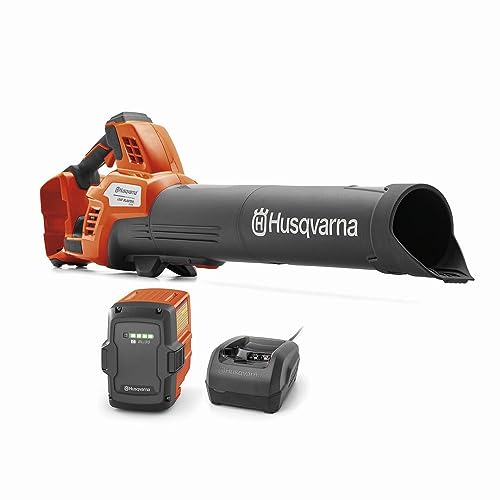
- Produces up to a rated 765 CFM of blowing power
- Variable-speed trigger offers customizable air delivery
- Includes a 56V 5.0Ah battery and matching charger
Cons
- High-output operation can significantly reduce runtime per charge
- 5.0Ah battery adds noticeable weight for single-handed work
Pros
- M18 FUEL system utilizes dual battery power for high output
- Cordless design offers unrestricted portability across large areas
- Integrates with the Milwaukee M18 tool ecosystem
Cons
- Tool only; requires two M18 batteries and a charger sold separately
- Dual batteries increase overall handheld carrying weight
Pros
- Offers up to a manufacturer-rated 700 CFM air volume
- Brushless motor ensures efficient power delivery
- Includes a 4.0Ah battery and rapid charger
Cons
- The 60V battery pack adds weight during extended handheld use
What CFM Actually Measures: The Physics in Plain Terms
CFM is a volumetric flow rate. One cubic foot is a box roughly 12 inches on every side. A blower rated at 500 CFM is moving 500 of those boxes of air out of the nozzle every minute — about 8.3 cubic feet every second. That volume is what sweeps leaves, pine needles, grass clippings, and gravel off a surface.
The physics is simple: air leaving the nozzle at speed creates a moving column. That column exerts pressure on debris, and the debris travels with the air. The wider the column (higher CFM), the more surface area you clear in one pass. The faster the air (higher MPH), the more force each cubic foot delivers to stubborn, wet, or heavy material.
CFM, MPH, and Air Velocity: How They Relate
CFM and MPH are linked by the nozzle’s cross-sectional area. Air velocity equals CFM divided by the nozzle’s exit area (in square feet), multiplied by 60. A blower producing 500 CFM through a 2-inch round nozzle will exit far faster than the same 500 CFM through a 4-inch round nozzle. This is why narrowing a tube raises MPH without changing CFM — the same air volume is forced through a smaller opening.
| Nozzle Opening | Effect on MPH | Effect on CFM | Best Use |
|---|---|---|---|
| Round, narrow (1.5–2 in) | High — concentrated jet | Unchanged | Wet leaves, gravel, packed debris, cracks in pavement |
| Round, wide (3–4 in) | Lower — broad flow | Unchanged | Dry leaves, grass clippings, large flat areas |
| Flattened / concentrator nozzle | Highest MPH at the tip | Unchanged | Dislodging stuck material, gutter clearing |
| Variable-speed trigger (partial throttle) | Drops sharply | Drops proportionally | Detail work near flower beds, mulch, and gutters |
Key takeaway: CFM is fixed by the motor and impeller design. MPH is a function of how you direct that CFM. When a manufacturer advertises both numbers, they are describing the same air — one number says how much, the other says how fast.
CFM Ranges by Blower Class: What the Numbers Mean in Practice
Not all blowers are built for the same job. The CFM rating tells you which class you are looking at before you ever pull the trigger.
| Blower Class | Typical CFM | Typical MPH | Weight Range | Real-World Application |
|---|---|---|---|---|
| Light handheld (cordless, compact) | 250–400 | 120–160 | 4–6 lb | Patios, driveways, garage floors, light dry leaves |
| Mid-range handheld (cordless) | 400–600 | 150–190 | 6–8 lb | Suburban yards up to 1/4 acre, mixed dry leaves and grass |
| High-power handheld | 600–750 | 170–200+ | 7–9 lb | Yards with mature trees, moderate leaf drop, some wet debris |
| Backpack (battery or gas) | 600–1,000 | 150–250 | 12–20 lb | Half-acre-plus properties, long sessions, professional use |
| Commercial backpack / tube axial | 900–1,200+ | 200–300+ | 18–25 lb | Landscaping routes, municipal work, heavy wet leaf drop |
For context on how these classes compare side by side, our backpack vs handheld blowers breakdown covers torque, runtime, and fatigue trade-offs in detail.
How to Choose the Right CFM for Your Yard: A Sizing Matrix
CFM requirements scale with three variables: total area, debris volume, and debris condition. Use this matrix to narrow your target range before comparing specific models.
| Yard Size | Debris Type | Recommended CFM | Recommended MPH | Notes |
|---|---|---|---|---|
| Under 1/4 acre (patios, small lawn) | Dry leaves, grass clippings | 350–500 | 130–170 | Lightweight handheld is sufficient; noise limits matter in dense neighborhoods |
| 1/4 to 1/2 acre | Mixed dry leaves, some wet patches | 450–650 | 150–190 | The sweet spot for most homeowners; variable speed is valuable |
| 1/2 to 1 acre | Heavy leaf drop, oak/maple, pine | 600–800 | 170–210 | Backpack models reduce fatigue over 45+ minute sessions |
| 1 acre or more | Dense, wet, or layered debris | 800–1,200+ | 200–250+ | Commercial-grade backpack or tube axial; consider a second battery or gas |
| Any size — gutter clearing | Compacted wet debris | 500+ with concentrator nozzle | 190+ effective | Use a narrow nozzle attachment; CFM alone will not dislodge packed material |
If you are still deciding between power sources, our gas or electric leaf blower comparison covers how CFM ratings hold up under real runtime conditions for each type.
Reading Manufacturer CFM Claims: What the Fine Print Means
Advertised CFM is measured under specific test conditions, and those conditions matter. A blower rated at 700 CFM on the box may deliver noticeably less in your hands if the rating assumes a specific nozzle, full throttle, and a fresh battery.
Three Things to Check Before Trusting a CFM Number
- Nozzle specification. Some ratings are measured with a concentrator nozzle attached, others with a wide-mouth tube. A CFM figure measured at the nozzle tip is not directly comparable to one measured at the impeller housing. Look for the phrase “measured at nozzle” in the spec sheet.
- Battery state. Cordless blowers lose airflow as battery voltage drops. A 600 CFM rating on a fresh 5.0Ah pack may fall to 450–500 CFM at 20% charge. Runtime charts published by manufacturers usually reflect this curve — use them rather than the peak number alone.
- Throttle position. Peak CFM is almost always at full throttle. If you plan to work at partial throttle for noise or precision reasons, expect proportionally lower volume. Variable-speed triggers are useful, but they do not create air — they only meter it.
For a deeper look at how these ratings translate to real-world performance across brands, see our guide to the cordless leaf blowers currently on the market.
Diagnostic Matrix: Troubleshooting Low Airflow
If your blower feels weaker than its CFM rating suggests, the cause is almost always mechanical or maintenance-related rather than a defective motor. Work through this matrix in order.
| Symptom | Likely Cause | Diagnostic Test | Fix |
|---|---|---|---|
| Airflow drops noticeably after 10–15 minutes | Battery voltage sag under load | Check battery charge level; try a second fully charged pack | Use a higher-capacity battery (5.0Ah or 8.0Ah) for sustained work |
| Motor runs but airflow is weak at full throttle | Clogged air intake or debris in the impeller housing | Power off, remove the tube, inspect the intake screen and impeller for packed leaves or twigs | Clear debris with a brush; never use a metal tool on the impeller |
| High-pitched whine, low volume | Cracked or loose tube, or worn impeller blades | Inspect tube joints and impeller for chips, cracks, or warping | Replace the tube or impeller; check the manufacturer’s parts diagram |
| Airflow is strong but leaves will not move | Wrong nozzle for the debris type | Compare nozzle opening to debris weight; wet leaves need a narrower tip | Switch to a concentrator or round narrow nozzle |
| Performance degrades every session | Dirty air filter (gas models) or blocked vents (cordless) | Inspect the filter and all intake vents for dust and grass buildup |
Maintenance Intervals to Protect CFM Output
Airflow loss is almost always gradual, which is why it goes unnoticed until performance drops sharply. Scheduled maintenance keeps the blower at its rated CFM for years.
| Component | Interval | Action | Why It Matters |
|---|---|---|---|
| Air intake screen / vents | Every use | Brush off leaves, grass, and dust before storage | Blocked vents starve the impeller and cut CFM immediately |
| Impeller housing | Every 5–10 hours of use | Remove the tube and clear packed debris from inside the housing | Debris inside the housing creates turbulence and reduces output |
| Air filter (gas models) | Every 10–15 hours, or per manual | Clean with compressed air; replace if torn or oil-soaked | A clogged filter richens the mixture and reduces engine power |
| Spark plug (gas models) | Annually or every 100 hours | Check gap, replace if fouled or worn | Weak spark causes incomplete combustion and power loss |
| Fuel system (gas models) | Every season, or after 30 days of storage | Drain old fuel, run stabilizer, inspect the fuel filter | Stale fuel clogs the carburetor and drops output |
| Battery contacts and vents | Monthly during season | Wipe contacts with a dry cloth; keep vents clear | Corroded contacts increase resistance and reduce runtime |
| Tube and nozzle joints | Every use | Check for cracks, warping, and loose locks | A leaking joint bleeds pressure before it reaches the debris |
For general small-engine and outdoor power equipment upkeep principles that apply across blowers, trimmers, and saws, our chainsaw and outdoor tool maintenance guide covers the same inspection discipline in a different context.
CFM, Noise, and Safety: What Regulations Require
Higher CFM almost always means higher noise output. Many municipalities restrict leaf blower use by decibel level and time of day. Before purchasing a high-CFM model, check your local ordinances — a 1,000 CFM commercial backpack blower may exceed residential noise limits even if it clears your yard in half the time.
At the federal level, equipment manufacturers must meet emissions and safety standards set by the OSHA equipment safety regulations for powered hand tools, including proper guarding, label accuracy, and operator protection requirements. Always wear eye protection and hearing protection when operating any blower above 80 dB, and never point the nozzle at people, pets, or windows.
For further specifications and verified tests, explore our breakdown of stihl leaf blowers bg 50.
Quick-Reference: Matching CFM to the Job in Front of You
- Dry leaves on a flat driveway or patio. Use a mid-range handheld (400–550 CFM) with a wide nozzle. You do not need maximum MPH for light, dry material — volume does the work.
- Wet leaves or heavy oak/maple debris. Step up to 600+ CFM and switch to a narrow or concentrator nozzle. Wet material weighs more and needs both volume and velocity.
- Gravel, mulch, or pine bark displacement. Use the highest MPH setting with a narrow nozzle and work at a shallow angle to the surface. High CFM at a steep angle will scatter material further than intended.
- Gutter clearing. Use a concentrator attachment on a 500+ CFM blower. Work from a stable ladder, clear one section at a time, and avoid overreaching.
- Large property with heavy seasonal drop. A backpack blower in the 700–1,000 CFM range with a second battery or fuel supply will finish the job without the fatigue of a heavy handheld.
CFM is the single most useful number on a leaf blower’s spec sheet because it tells you how much work the machine can do per pass. Match it to your yard size and debris type, verify the test conditions behind the rating, and maintain the intake and impeller system on schedule — and the blower will deliver its rated airflow season after season.