Quick Answer: What Is Mulcher Lawn Mower?
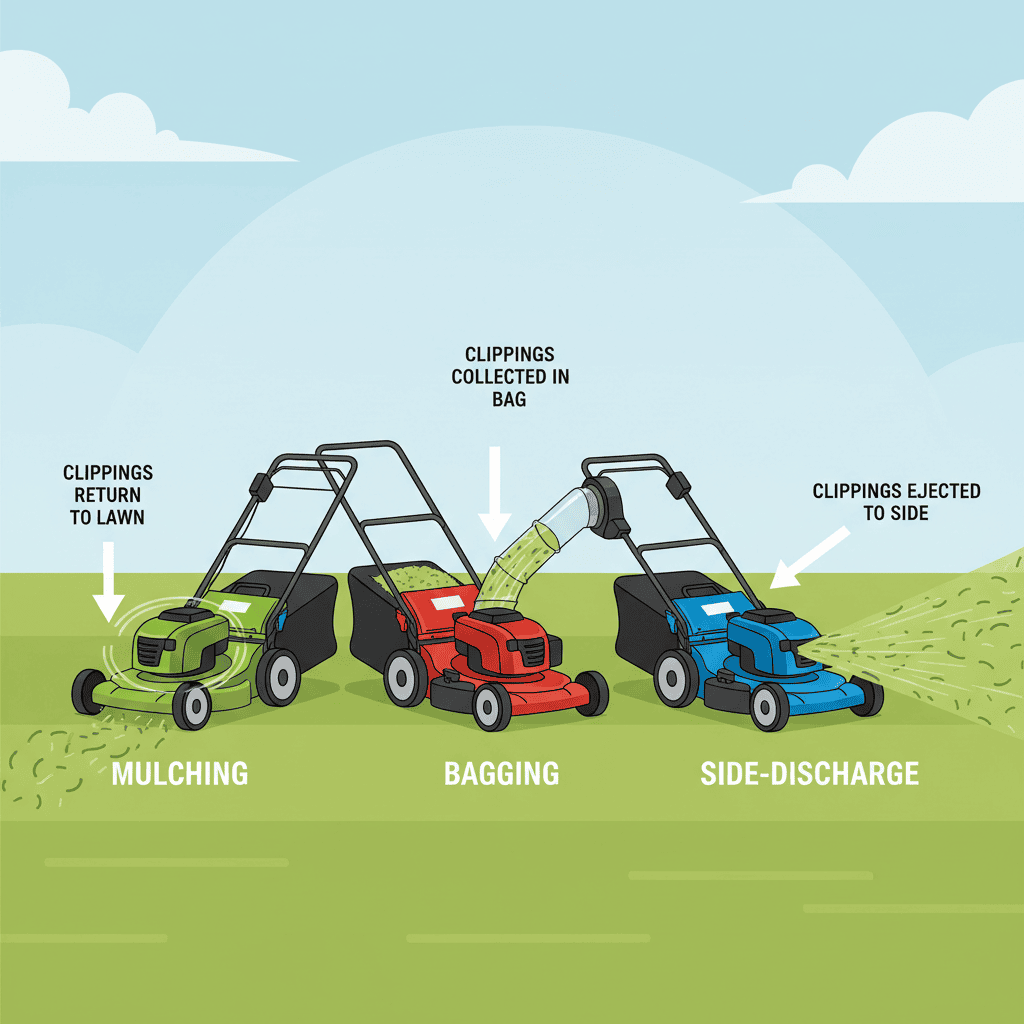
A mulcher lawn mower, also called a mulching mower or lawn mower mulcher, is a grass-cutting machine designed to finely chop grass clippings and spread them back onto your lawn rather than collecting them in a bag or discharging them to the side. Unlike traditional bagging mowers that collect clippings or side-discharge mowers that eject them to one side, mulching mowers recirculate cut grass within a sealed deck until it reaches an optimal fineness before dropping it back onto the turf.
Pros
- Brushless motor offers better efficiency, power, and durability with less upkeep than brushed alternatives.
- Includes two 5Ah batteries, dual-port charger, collection bag, and mulching plug for complete out-of-box readiness.
- Versatile five height settings and 2-in-1 operation support both bagging and mulching needs.
- Onboard LED charge gauge and full WEN 20V Max series compatibility enhance usability and expandability.
- Collapsible handle and 19-inch deck promote easy storage and maneuverability in smaller spaces.
Cons
- Actual runtime ranges from only 30 to 68 minutes depending on grass conditions and cutting height, limiting continuous use.
- Maximum coverage of roughly 10,300 square feet (about 1/4 acre) per charge may require recharging for larger properties.
- Push-style design without self-propulsion features demands more physical effort on uneven or sloped terrain.
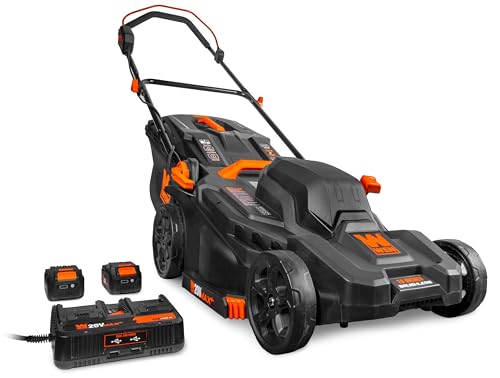
The WEN 20839 20V Max 2-in-1 19-Inch Cordless Brushless Lawn Mower and Mulcher stands out as a versatile walk-behind solution for residential yards. Its compact 19-inch deck pairs with a collapsible handle for simple upright storage, while the included 13-gallon collection bag, mulching plug, and dual 5Ah batteries create a ready-to-use package backed by a two-year warranty.
Performance centers on the efficient brushless motor that delivers consistent power and reduced maintenance. The 2-in-1 design switches easily between mowing and mulching across five height settings from 1.5 to 3.2 inches. With two 5Ah lithium-ion batteries featuring LED gauges and full compatibility across the WEN 20V Max series, it handles up to 10,300 square feet (roughly 1/4 acre) per charge, with runtime spanning 30 to 68 minutes based on grass conditions and height.
Key considerations include the variable runtime that can drop to 30 minutes under demanding conditions and the roughly 1/4-acre limit that may necessitate mid-job recharges for bigger lawns. As a manual-push model, it also requires more effort than self-propelled options on hills or thick turf.
Overall, the WEN 20839 delivers strong value for owners of small to medium lawns seeking cordless convenience, dual-function flexibility, and expandable battery compatibility without the hassle of gas engines.
Pros
- Consistent power from 144cc 4-cycle engine handles dense turf and slopes reliably without frequent restarts.
- High-rear wheel design improves traction and reduces pushing effort on bumpy or rugged yards.
- Versatile 2-in-1 cutting options adapt quickly to dry mulching or wet grass discharge needs.
- Tool-free dual-lever height control offers precise 6-position range for optimal lawn health year-round.
- Quick assembly and 2-year warranty provide strong support for residential homeowners.
Cons
- Manual push design without self-propulsion can cause fatigue on larger yards or steeper slopes.
- Gas engine requires fuel oil and regular maintenance unlike corded or battery alternatives.
- 2-in-1 system lacks rear bagging option for users who prefer collecting all clippings.
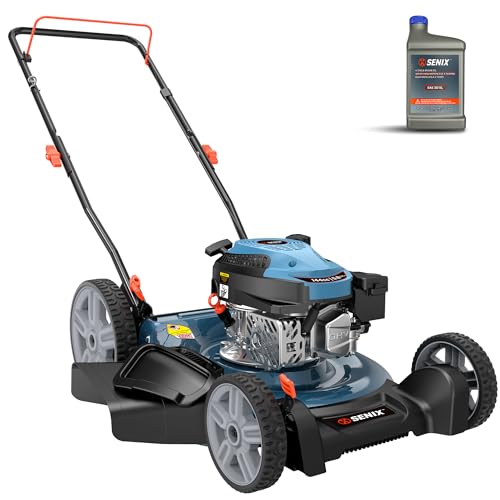
The SENIX 21-Inch Gas Lawn Mower is a sturdy push walk-behind model built for residential yards and gardens. Its solid construction centers on a 21-inch cutting deck paired with oversized wheels that create an immediate impression of stability and practicality for everyday home use up to half an acre.
In performance the 144cc 4-cycle engine delivers steady torque that manages thick grass weeds and gentle slopes without stalling. The 2-in-1 mulching and side discharge system lets users return nutrients to the soil or clear tall wet clippings efficiently while the dual-lever 6-position height adjustment from 1.25 to 3.75 inches allows fast tool-free changes. Large 11-inch rear wheels further ease movement over uneven ground for smoother operation.
Considerations include the pure push operation which demands more physical effort on expansive or hilly properties. The gas design also involves fuel storage oil changes and basic maintenance plus the absence of a bagging option may not suit those wanting to collect every clipping.
This mower is best for homeowners who need dependable gas power and cutting versatility for medium residential lawns and are comfortable with traditional upkeep. It delivers solid everyday value when those factors align with yard needs.
Pros
- Dual 20V batteries provide doubled power for better overall performance.
- Brushless motor offers higher efficiency with quiet and durable operation.
- Lightweight 30 lb bare design with easy-start button eases pushing and handling.
- Supports both bagging and mulching with a generous 11 gal rear bag and mulch plug.
- Six height settings from 0.98 to 2.95 inches enable versatile cutting control.
Cons
- 17-inch cutting deck means more passes are needed to cover larger lawns compared to wider models.
- Push-only design without self-propulsion can require extra effort on slopes or bigger properties.
- Exact battery runtime is not specified in the available details, so users may need to plan for charging during extended sessions.
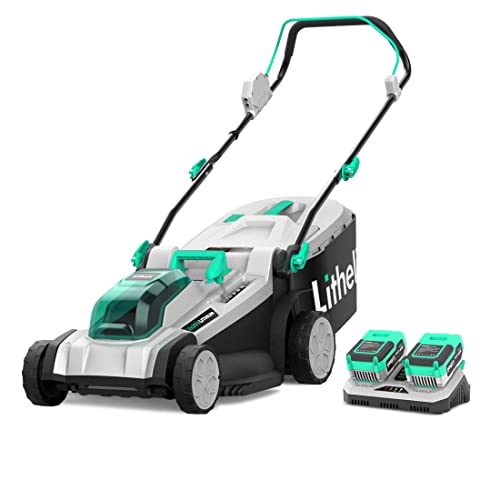
The Litheli Cordless Lawn Mower 17 Inch is a walk-behind electric mower built for residential use. It features a lightweight 30 lb bare construction, dual 20V 4.0Ah Li-ion batteries, and a brushless motor. The design prioritizes easy pushing with an easy-start button and eliminates gas, oil, and emissions for a cleaner immediate impression.
In real-world cutting, the upgraded brushless motor provides 40% higher efficiency than traditional models for quiet, stable power. The 17-inch durable deck works with both the mulch plug and 11 gal rear bag, while six height settings from 0.98 to 2.95 inches allow flexible adjustments. Dual batteries support doubled performance so users can tackle more of the yard faster.
Potential drawbacks include the 17-inch width, which may need extra passes on expansive lawns, and the manual push style that lacks self-propulsion for effortless operation on uneven ground. Battery runtime specifics are not detailed, so users should manage power carefully for full coverage. Customer service is available within 24 hours for any issues.
This mower suits homeowners with small to medium yards who want a lightweight, low-maintenance cordless option with bagging and mulching flexibility. Those seeking wider decks or self-propelled models may prefer alternatives, but the dual-battery brushless setup delivers solid value for efficient emission-free mowing.
The core function of a mulcher lawn mower is grass recycling. When you mow with a mulching mower, the clippings remain on your lawn where they naturally decompose and return nutrients, particularly nitrogen, back into the soil. This closed-loop system transforms what would otherwise be yard waste into a soil amendment that enhances lawn health and reduces the need for chemical fertilizers.
How Mulcher Lawn Mowers Differ from Standard Mowers
The primary difference between a mulcher lawn mower and other mowing methods lies in what happens to grass clippings:
- Mulching Mowers: Clippings are finely chopped and redistributed onto the lawn
- Bagging Mowers: Clippings are collected in a bag attached to the mower
- Side-Discharge Mowers: Clippings are ejected out the side of the mower deck
Standard mowers require you to either empty collection bags frequently or rake up side-discharged clippings. Mulching mowers eliminate these tasks by keeping clippings on the lawn where they belong. Many modern mowers are convertible, allowing you to switch between mulching, bagging, and side-discharge modes depending on your lawn conditions and preferences.
How Mulching Technology Works
Understanding the mechanics of mulching technology helps explain why this mowing method is effective for lawn health and soil enrichment.
Blade Design and Deck Structure
Mulching mowers use specially designed blades with a curved or lifted edge that creates a unique cutting action. These mulching blades are engineered to:
- Lift grass upward as the blade rotates
- Create multiple cutting passes within the sealed deck
- Generate a circulation pattern that keeps clippings suspended
- Reduce clippings to a fine, uniform size
The mulching deck is a sealed chamber with no side discharge opening. This enclosed design is critical to the mulching process, it allows clippings to circulate multiple times, being cut and re-cut until they reach the desired fineness. The deck also features baffles and air channels that optimize circulation patterns.
The Mulching Process
When you engage the mulching function on a lawn mower mulcher, the following sequence occurs:
- Blades cut grass at the mower’s set height
- Clippings are lifted by the blade’s curved edge into the sealed deck
- Air circulation created by blade rotation suspends clippings in the deck
- Clippings circulate and are cut multiple times by the spinning blades
- Once clippings reach optimal fineness, they fall through the deck onto the lawn
- Fine clippings settle into the grass canopy where they decompose
This process happens continuously as you mow, meaning clippings are processed in real-time rather than collected for later disposal.
Key Benefits of Using a Mulcher Lawn Mower
Soil Enrichment and Nutrient Return
The primary benefit of mulching is nutrient return. Grass clippings contain valuable organic matter and nutrients that your lawn needs to thrive. When clippings decompose on your lawn, they release nitrogen and other essential nutrients back into the soil, reducing your need for synthetic fertilizers. This natural nutrient cycling creates a more sustainable lawn care approach. When planning workspace deployment, consider the engineering criteria outlined in our marshall stanmore iii vs harman kardon onyx studio 8 guide.
Fine mulch clippings decompose relatively quickly due to their small size, making nutrients available to grass roots within weeks rather than months. This continuous nutrient return supports stronger, greener grass growth throughout the growing season.
Reduced Lawn Maintenance Time
Mulching eliminates several time-consuming lawn maintenance tasks: For additional operational safety benchmarks, see our published testing notes on dyson v8 cyclone vs bissell featherweight stick.
- No need to empty collection bags during mowing
- No need to rake up side-discharged clippings
- No need to transport clippings to a compost bin or yard waste facility
- Fewer trips to empty or dispose of grass waste
For homeowners with larger lawns, this time savings can be substantial. You can mow continuously without stopping to empty bags, making the entire mowing process more efficient.
Environmental and Cost Benefits
Mulching supports environmental sustainability by: To compare alternative configurations, check our hands-on review of bissell crosswave hydrosteam vs shark stainforce.
- Reducing yard waste sent to landfills
- Decreasing reliance on chemical fertilizers
- Lowering carbon emissions from waste transport
- Reducing water usage through improved soil moisture retention
Over time, the reduced need for fertilizer purchases translates to cost savings for homeowners. Additionally, healthier soil from mulch decomposition creates a more resilient lawn that requires fewer inputs to maintain.
Improved Lawn Health
Regular mulching contributes to overall lawn health by building soil organic matter, improving soil structure, and supporting beneficial microbial activity. Lawns that receive mulched clippings consistently tend to develop deeper root systems and greater drought tolerance compared to lawns where clippings are removed.
Mulcher Lawn Mower vs. Bagging and Side-Discharge Mowers
| Mowing Method | Clipping Destination | Maintenance Required | Best For |
|---|---|---|---|
| Mulching | Redistributed onto lawn | Low, no bagging or raking | Regular maintenance mowing; healthy lawns; nutrient cycling |
| Bagging | Collected in attached bag | High, frequent bag emptying | Wet grass; thick thatch; disease management; cleanup mowing |
| Side-Discharge | Ejected to mower’s side | Medium, raking or sweeping needed | Tall, overgrown grass; quick cleanup; areas without mulching capability |
When to Choose Mulching Over Other Methods
Mulching is the optimal choice when:
- Your lawn is healthy and free of disease
- Grass is at normal height (not overgrown)
- Soil moisture is adequate
- You mow on a regular schedule (weekly or biweekly)
- You want to reduce fertilizer inputs
- You prefer minimal post-mowing cleanup
Bagging becomes more appropriate when your lawn is wet, when thatch buildup is excessive, when you’re dealing with disease management, or when you’re doing a cleanup mowing after extended growth periods. Side-discharge works well for tall, overgrown grass that would overwhelm a mulching deck.
Important Factors to Consider Before Using a Lawn Mower Mulcher
Lawn Conditions Best Suited for Mulching
Mulching works best under specific lawn conditions. Your lawn should be:
- Healthy: Free from fungal diseases and pest damage
- Moderately moist: Not soaking wet, but not drought-stressed
- Regularly maintained: Mowed on a consistent schedule
- At normal height: Not overgrown or excessively tall
- Free of heavy thatch: Excessive dead grass layer can interfere with mulching
If your lawn has significant thatch buildup, you may need to dethatch before mulching becomes effective. Similarly, if your lawn is diseased, bagging clippings prevents disease spores from spreading.
Grass Types and Mulching Compatibility
Most grass types work well with mulching, including:
- Cool-season grasses (Kentucky bluegrass, perennial ryegrass, tall fescue)
- Warm-season grasses (Bermuda grass, Zoysia grass, St. Augustine grass)
- Mixed lawn compositions
Fine-bladed grasses and dense turf varieties benefit most from mulching because their structure allows fine clippings to settle into the canopy easily. Coarser grasses may require slightly more frequent mowing to keep clipping size manageable.
When to Avoid Mulching
Do not use mulching mode when:
- Grass is wet or soaking, wet clippings clump and don’t mulch effectively
- Lawn is severely overgrown, clippings will be too large and won’t decompose quickly
- Active fungal disease is present, mulching spreads disease spores
- Heavy thatch layer exists, clippings won’t reach soil
- You’re mowing after extended periods without cutting, bag or side-discharge instead
- Leaves are falling heavily, switch to bagging to manage leaf cleanup
Recognizing when mulching is inappropriate prevents lawn problems and ensures your mower operates efficiently.
Tips for Effective Mulching
Optimal Mowing Frequency
The “one-third rule” is fundamental to successful mulching: never remove more than one-third of the grass blade length in a single mowing. This means:
- If your desired grass height is 2.5 inches, mow when grass reaches approximately 3.75 inches
- Mow weekly during active growing season rather than waiting two or three weeks
- More frequent mowing produces smaller clippings that decompose faster
- Smaller clippings are less visible and settle into the lawn more effectively
Frequent, light mowing is far more effective for mulching than infrequent, heavy cutting. This schedule also reduces stress on your mower and produces a neater appearance.
Ideal Grass Height for Mulching
Maintain grass height between 2.5 and 3.5 inches for optimal mulching results. This height range:
- Allows adequate leaf surface for photosynthesis
- Produces clippings of ideal size for decomposition
- Supports deeper root development
- Shades soil and reduces moisture loss
- Helps prevent weed germination
Taller grass (3 to 3.5 inches) is preferable during hot, dry periods as it provides better heat and drought protection. Shorter grass (2.5 inches) works well during cooler, moist seasons.
Mower Maintenance for Mulching Performance
Proper maintenance ensures your mulcher lawn mower operates efficiently:
- Keep blades sharp: Dull blades tear grass rather than cutting cleanly, reducing mulching effectiveness. Sharpen blades every 20-25 hours of mowing
- Clean the deck regularly: Grass buildup in the mulching deck reduces circulation and cutting efficiency. Clean after each mowing if grass is wet or dense
- Check blade condition: Bent or damaged blades prevent proper mulching. Replace blades that are warped or cracked
- Verify deck sealing: Ensure the mulching deck remains properly sealed with no gaps that allow clippings to escape prematurely
- Maintain proper blade height: Set cutting height according to your lawn’s needs and grass type
- Change oil regularly: Clean oil ensures engine efficiency and longevity
Sharp blades are essential for mulching success. Dull blades create ragged cuts that decompose slowly and can make your lawn appear unhealthy.
Adjusting to Wet or Dense Grass
If you encounter wet or unusually dense grass:
- Reduce mowing speed to allow more processing time in the deck
- Make two passes over heavily vegetated areas
- Mow when grass is drier if possible, morning dew is acceptable, but avoid rain-soaked grass
- Consider switching to bagging mode temporarily if clumping occurs
Everything You Need to Know: Mulcher Lawn Mower FAQ
Q: Do mulched grass clippings cause thatch buildup?
A: No. Mulched clippings are fine, small pieces that decompose quickly and don’t accumulate as thatch. Thatch is composed of dead grass stems and roots that don’t decompose. Fine mulch clippings actually help prevent thatch by introducing organic matter that supports beneficial microorganisms that break down dead plant material.
Q: How long does it take for mulched clippings to decompose?
A: Fine mulched clippings typically begin decomposing within days and are largely broken down within 2-4 weeks, depending on temperature, moisture, and soil microbial activity. Warmer temperatures accelerate decomposition. The small size of mulched clippings (compared to whole clippings) is key to rapid decomposition.
Q: Can I use a mulcher lawn mower on wet grass?
A: Mulching on wet grass is not recommended. Wet clippings clump together instead of circulating properly in the deck, reducing mulching effectiveness and potentially clogging the mower. Wait until grass dries, morning dew is acceptable, but avoid mowing immediately after rain or irrigation.
Q: Will mulching reduce my need for fertilizer?
A: Yes, mulching can significantly reduce fertilizer requirements. Mulched clippings return nitrogen and other nutrients to your soil. Many lawn care professionals recommend reducing fertilizer applications by 25-50% when implementing a regular mulching program. However, soil testing can help determine your specific lawn’s nutrient needs.
Q: What’s the difference between a mulcher and a mulching blade?
A: A mulcher is a complete mowing system with a sealed deck designed for mulching. A mulching blade is a specialized blade designed to cut and recirculate clippings. Some mowers can be converted to mulching mode by installing mulching blades and a mulching kit, while dedicated mulchers have integrated mulching systems from the factory.
Related Maintenance and Operating Guides
To keep your equipment running at peak operating efficiency, explore our related technical walkthroughs and maintenance tutorials:
- Consult our detailed breakdown on heavy-duty chainsaw buyer guide.
Mulching Mower Safety Background
Mulching mowers recirculate clippings under the deck, which can keep debris moving in unexpected ways. Background on protecting yourself and others around cutting equipment can be explored through American National Standards Institute (ANSI).