What Is a Mulching Plug? Direct Answer
A mulching plug is a removable cover or insert that blocks the side discharge chute of a lawn mower, redirecting grass clippings back into the mower deck instead of ejecting them. This forces clippings to be repeatedly cut into smaller pieces before eventually falling back onto the lawn as fine mulch. The clippings decompose quickly, returning nitrogen and organic matter to the soil while reducing the need for bagging or raking.

Pros
- Broad compatibility across Troy-Bilt MTD Craftsman Cub Cadet and related brands
- Matches multiple equivalent part numbers including 687-02516A and 68702516 for flexible replacement
- Specifically engineered for 21" push walk-behind mowers ensuring targeted fit
- Hinged construction supports convenient mulch mode operation
Cons
- Compatibility restricted to the specific models and years listed requiring prior verification
- As an aftermarket part slight variations from original equipment may occur
- No additional installation tools or detailed dimensions included in the package
The yewposy Hinged Mulch Plug 987-02516A is a specialized replacement component built for 21 inch push walk behind mowers. It features a hinged design that promotes straightforward handling and appears as a practical aftermarket solution based on the listed OEM cross references.
This mulch plug performs by enabling effective grass mulching when installed on compatible equipment. It aligns with part numbers such as 987-02516A 687-02516A and 98702516 while covering Troy-Bilt models like TB110 TB130 and TB250 along with MTD Craftsman Cub Cadet and Yard Machines variants for real world lawn maintenance tasks.
Drawbacks to consider include the need to confirm exact model and year matches from the provided lists as the part is not universal. Being aftermarket it may present minor differences in fit or finish compared to factory originals and lacks supplementary details like material specifications.
This product delivers the most value to homeowners and DIY users who own listed 21 inch Troy-Bilt MTD or Craftsman push mowers and seek an affordable way to restore mulching capability. Verify compatibility first for best results.
What Does a Mulching Plug Do?
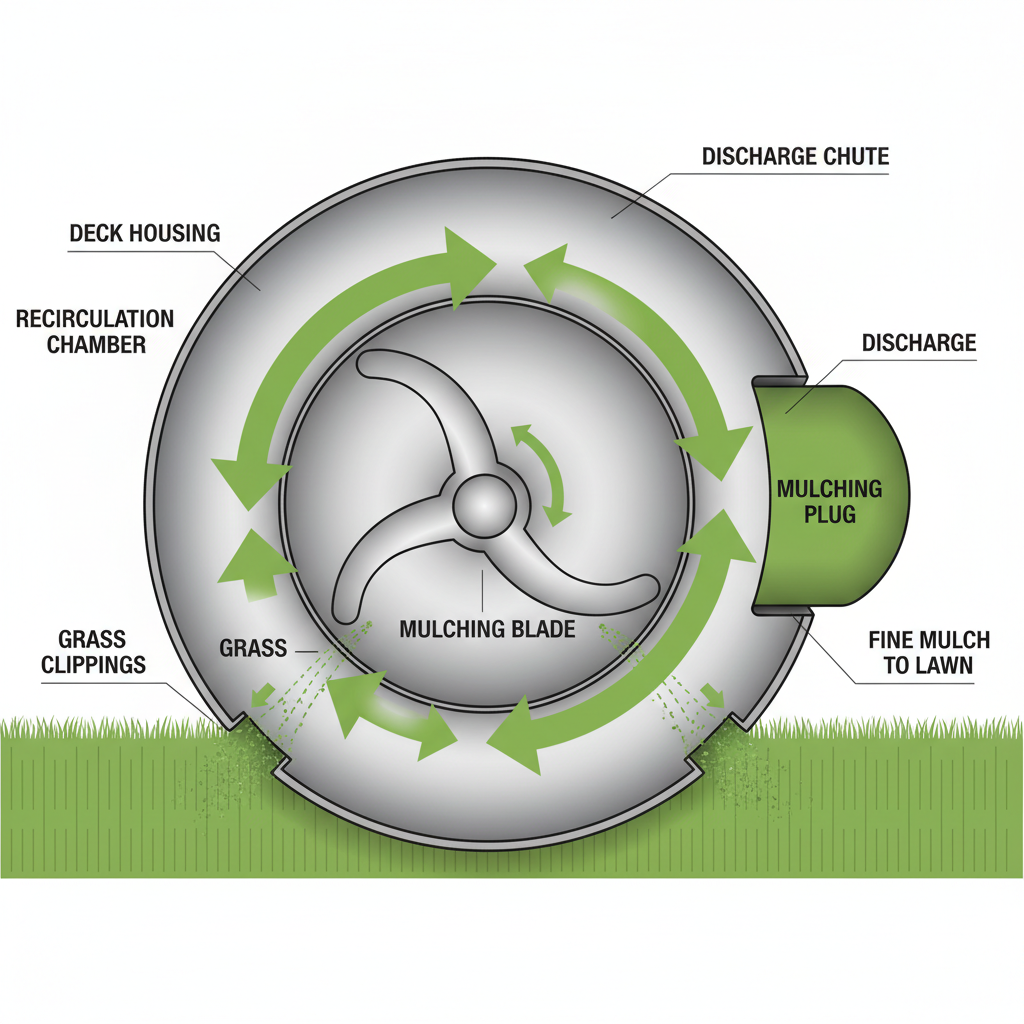
A mulching plug fundamentally changes how your mower processes grass clippings. Instead of ejecting clippings out the side of the deck (side discharge) or collecting them in a bag (bagging mode), the plug seals the discharge opening and recirculates clippings within the mower deck.
The physical structure is simple: a solid plate or curved insert that fits snugly into the discharge chute. When installed, it creates an enclosed system where the mower blade continues cutting clippings as they’re churned back into the deck. This recycling process breaks clippings into progressively smaller pieces until they’re fine enough to settle on the lawn without creating visible windrows or clumps.
The result is that finely mulched clippings distribute evenly across your grass, blend with the turf, and begin decomposing immediately. You eliminate the three-step process of mowing, collecting, and disposing of clippings, or the aesthetic issue of visible discharge rows.
How the Mulching Process Works
The mechanics of mulching depend on blade design and deck airflow. Here’s what happens:
- Blade Circulation: With a mulching plug installed, grass clippings are pulled up by the rotating blade, cut, and then pushed back down into the deck instead of toward the discharge opening. The blade strikes them again, cutting them finer.
- Airflow Redirection: The plug alters airflow patterns within the deck. Instead of air carrying clippings outward, it circulates them upward repeatedly. This extended contact with the blade results in multiple cutting passes on each clipping.
- Progressive Size Reduction: With each pass through the blade zone, clippings become progressively smaller. After 3 to 5 passes, they’re reduced to 1/4-inch pieces or smaller, small enough to filter down through the grass canopy and decompose rapidly.
- Settling: As the mower moves forward, fine clippings eventually settle onto the lawn below the blade, distributed evenly across the mowing path.
This process is most effective when grass is dry and blade speed is high. Wet grass tends to clump and stick rather than circulate cleanly; slow blade speeds may not generate enough cutting passes for adequate mulching.
Benefits of Using a Mulching Plug
Grass clippings are approximately 3 to 4% nitrogen by weight. When left on the lawn as mulch, they decompose and return that nitrogen directly to the soil, reducing or eliminating the need for nitrogen fertilizer. Over a mowing season, this nutrient recycling can provide a meaningful portion of your lawn’s nitrogen requirements. Mulch also adds organic matter, improving soil structure, water retention, and microbial activity.
Fine mulch acts as a soil blanket, reducing evaporation and helping the lawn retain moisture during hot or dry periods. This can mean less frequent watering and improved drought tolerance, particularly in warm climates.
Mulching eliminates bagging, raking, and clipping disposal. You mow once and you’re done, no secondary steps. Over a season, this saves hours of work and eliminates the physical strain of handling grass clippings.
Grass clippings account for a significant portion of yard waste in landfills. Mulching keeps clippings on the lawn where they belong, reducing waste and eliminating transportation and disposal emissions.
Cleaner Lawn Appearance
When done correctly, mulched clippings are fine enough to be invisible. You avoid the windrows and clumpy appearance of side discharge mowing, and you eliminate the scalped look that can occur with bagging.
Mulching Plugs vs. Other Mowing Options
Mulching vs. Side Discharge
Side discharge ejects clippings to the edge of your mowing path, creating visible rows that must be cleaned up, raked, or mowed over again. Mulching returns clippings to the lawn evenly and invisibly. Side discharge is faster and requires less blade speed, but leaves a messier result and removes nutrients from the lawn.
Mulching vs. Bagging
Bagging collects clippings in a chute and container, which you empty and dispose of. This removes all nutrients from the lawn and creates disposal work. Mulching keeps nutrients on-site, saves time, and is gentler on the turf. Bagging is useful only when clippings are wet, excessively thick, or you’re dealing with leaves or debris you don’t want on the lawn.
Switching Between Modes
Most mowers designed for mulching allow you to install or remove the plug as needed. Some feature a flip or lever to switch between modes without removing hardware. A few premium mowers have internal gates that can be adjusted. The ability to switch gives you flexibility: mulch in normal conditions, switch to side discharge or bagging when wet grass or heavy growth demands it.
Types of Mowers and Mulching Compatibility
Factory Mulching Mowers
Many modern rotary mowers (push and zero-turn) come with factory mulching kits or offer them as optional equipment. These are engineered with blade geometry and deck design optimized for mulching. If your mower was manufactured in the last 10 to 15 years, check your manual or the manufacturer’s website to see if a mulching plug is available for your model.
Aftermarket Mulching Plugs
For older mowers or models without factory kits, aftermarket mulching plugs are available from aftermarket manufacturers. Compatibility varies widely; you’ll need the exact mower model to find a match. Aftermarket plugs are often less refined than factory kits and may not perform as well, but they can work on mowers not originally designed for mulching.
Mower Types That Don’t Support Mulching
Bagging-only mowers and those with discharge chutes that can’t be blocked aren’t suitable for mulching. Riding mowers with side-discharge-only designs may not mulch effectively. Always check your mower’s manual before purchasing a mulching kit.
When to Use a Mulching Plug
Ideal Conditions for Mulching
- Dry Grass: Mulching works best when grass is dry. Wet clippings stick together and clog rather than circulate.
- Regular Mowing Schedule: Mow when grass is 1 to 2 inches above your target cutting height. Short clippings mulch well; long clippings from infrequent mowing may not break down fast enough.
- Normal Grass Growth: Mulching is ideal for typical growth rates. During peak growing season (spring/early summer), if growth is very heavy, side discharge or bagging may be more practical.
- Healthy Turf: Mulching works best on lawns without heavy disease or weed pressure. If you’re trying to prevent disease spread or manage weeds, bagging clippings is safer.
When to Avoid Mulching
- Wet grass or immediately after rain
- Excessively overgrown lawns where clippings are long and thick
- During fall leaf drop (switch to bagging or use a leaf mulcher)
- If disease or fungal issues are present in the turf
- Lawns with heavy thatch buildup (mulching can worsen thatch)
How to Install and Maintain a Mulching Plug
Installation
Most mulching plugs install in minutes. Consult your mower manual for exact steps, but generally:
- Ensure the mower is off and cool.
- Remove the discharge chute or open the side panel to access the plug area.
- Insert the plug into the discharge opening, ensuring it seats fully and securely.
- Close the panel or reattach any hardware.
- Start the mower and listen for any unusual sounds; the pitch should change slightly with the deck sealed.
Maintenance
Keep the mulching plug clean. After mowing, inspect the deck for clipping buildup and hose it out if necessary. A clogged deck reduces mulching effectiveness. Check that the plug fits snugly; if it becomes loose over time, tighten fasteners or replace it.
Tips for Successful Mulching
- Keep Blades Sharp: Dull blades tear rather than cut cleanly, reducing mulching effectiveness. Sharpen blades every 20 to 50 hours of use.
- Maintain Proper Blade Height: Set your mower to cut at the highest setting recommended for your grass type. Taller grass produces longer clippings that mulch better.
- Mow Frequently: The “one-third rule”, never remove more than one-third of the blade, ensures clippings are short and mulch well.
- Monitor Deck Condition: Over time, mulching decks can wear or accumulate deposits. Clean regularly and replace the plug if it cracks or warps.
- Test Your Settings: Start with one or two passes to see how fine clippings are distributed. Adjust mower speed or blade setting if needed.
Everything You Need to Know: Mulching Plug FAQ
Do all lawn mowers have mulching plugs?
No. Many older mowers and bagging-only models don’t support mulching. However, most modern rotary mowers (push and riding) offer mulching kits as optional equipment or factory upgrades. Check your mower’s manual or contact the manufacturer to confirm compatibility.
Can I mulch if my lawn has thick thatch?
Mulching can worsen thatch because clippings add organic material on top of the soil. If your lawn has heavy thatch (more than 1/2 inch), dethatch first, then switch to mulching for ongoing maintenance. For typical lawns, mulching actually helps prevent thatch buildup over time.
Will mulching make my lawn look messy?
Not if done correctly. Fine mulch from a sharp blade and proper deck design blends invisibly into the turf. If you see clumps or windrows, your clippings are too long or the blade is dull, sharpen the blade and mow more frequently.
How often should I mulch vs. bag clippings?
Mulch on every regular mowing under normal conditions (dry grass, reasonable growth). Switch to bagging only when necessary: very wet grass, heavy growth, disease management, or fall leaves. For most homeowners, mulching 90% of the season and bagging 10% is typical.
Conclusion
A mulching plug is a simple, often overlooked piece of equipment that transforms lawn care. By recycling clippings into nutrient-rich mulch, you improve soil health, save time, reduce waste, and maintain a cleaner lawn, all with a single attachment. If your mower supports mulching, enabling it is one of the easiest wins in lawn maintenance. Start with dry grass, keep your blade sharp, and mow on schedule, and you’ll see the benefits immediately.
Related Maintenance and Operating Guides
To keep your equipment running at peak operating efficiency, explore our related technical walkthroughs and maintenance tutorials:
- Consult our detailed breakdown on marshall stanmore iii vs harman kardon onyx studio 8.
- Consult our detailed breakdown on dyson v8 cyclone vs bissell featherweight stick.
- Consult our detailed breakdown on bissell crosswave hydrosteam vs shark stainforce.
- Consult our detailed breakdown on cordless stick vacuum buyer guide.
- Consult our detailed breakdown on robotic pool cleaner comparison guide.
Technical Standards and Compliance
Mechanical safety standards, operational tolerances, and protective gear guidelines align with benchmark specifications established by the American National Standards Institute (ANSI).