What Is a Reciprocating Saw Used For?
A reciprocating saw is a handheld power tool that cuts through various materials using a push-and-pull motion of a blade. It is primarily used for demolition, remodeling, pruning, cutting pipes and metal, and general construction tasks where quick, aggressive cutting is needed. The tool’s linear blade motion makes it ideal for flush cuts, plunge cuts, and rough demolition work that other saws cannot handle efficiently.
What Is a Reciprocating Saw?
A reciprocating saw, often called a “sawzall” (a brand name that became genericized), is a handheld power tool featuring a blade that moves back and forth in a linear motion. Unlike rotary saws that spin continuously, reciprocating saws use an electric motor to drive the blade in rapid push-and-pull strokes, typically ranging from 1,000 to 3,000 strokes per minute depending on the tool model.
The tool consists of:
- Motor: Powered by electricity (corded or battery), driving the blade mechanism
- Blade: Replaceable and available in various sizes and tooth configurations for different materials
- Handle and Guard: Ergonomic grip with a protective guard around the blade
- Cutting Shoe: An adjustable base plate that supports the tool against the work surface
Reciprocating saws can cut through wood, metal, plastic, drywall, tile, masonry, PVC pipe, and fiberglass. The specific blade type determines what material the saw can tackle effectively. This versatility is one reason the tool has become standard equipment on demolition sites, remodeling projects, and in professional construction toolkits.
How Does a Reciprocating Saw Work?
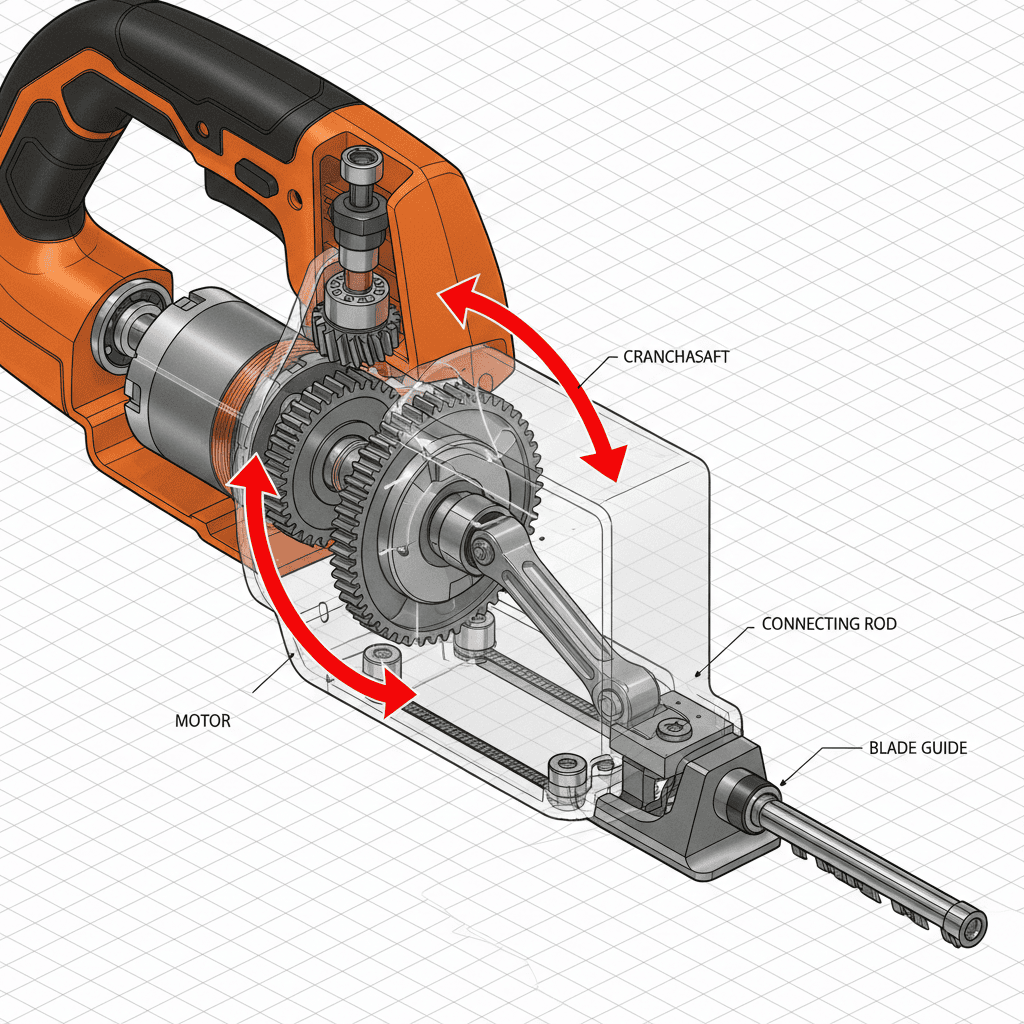
The reciprocating saw operates through a simple but powerful mechanism. An electric motor drives a crankshaft or cam that converts rotational motion into linear (back-and-forth) motion. This linear motion is transmitted to the blade, which extends from the front of the tool and moves rapidly in and out.
Key aspects of the cutting action:
- Push-and-Pull Motion: The blade moves forward on the cutting stroke (pushing into the material) and retracts on the return stroke. This aggressive motion removes material quickly.
- Stroke Length: Most reciprocating saws have stroke lengths between 0.75 and 1.125 inches, affecting how much material is removed per stroke.
- Stroke Speed: Variable speed controls allow operators to adjust the rate from slow (for fine cuts in metal) to fast (for rough demolition in wood or drywall).
- Blade Stability: The cutting shoe (base plate) holds the tool steady against the work surface, preventing the saw from jumping or binding.
This push-and-pull design differs fundamentally from rotary tools like circular saws or jigsaws. The linear motion creates a more aggressive, violent cutting action ideal for demolition and rough cutting tasks where speed matters more than precision.
Primary Uses of a Reciprocating Saw
Demolition Work
Reciprocating saws excel at demolition, making them essential on job sites where walls, structures, or fixtures must be torn down quickly. The aggressive blade motion cuts through framing lumber, nails, and embedded fasteners. Contractors use reciprocating saws to:
- Cut through wall studs and framing during gut renovations
- Remove wall sections to create doorways or openings
- Cut support beams and joists during structural demolition
- Break apart concrete-embedded materials
The tool’s ability to cut flush against surfaces and make plunge cuts (cutting into the middle of a surface without starting at an edge) makes it ideal when precision cuts matter less than speed and breaking material apart.
Remodeling and Construction
In remodeling projects, reciprocating saws handle tasks that other tools struggle with:
- Cutting door and window openings: Quick, rough cuts to frame new openings in walls
- Removing old fixtures: Cutting away old cabinets, shelving, and built-in structures
- Plumbing and electrical work: Cutting access holes through walls and floors for pipes and wiring
- Trimming and fitting: Making rough cuts on materials that will later be finished with precision tools
Reciprocating saws are particularly valuable during the rough-in phase of construction when speed and versatility trump precision.
General Construction Tasks
Beyond demolition and remodeling, reciprocating saws are used for:
- Cutting metal studs and framing in steel-frame construction
- Trimming fascia, soffit, and siding during exterior work
- Cutting holes in decking and subflooring
- Breaking up concrete and pavement (with appropriate blades)
- Cutting composite and synthetic materials
Specific Applications of a Reciprocating Saw
Pruning and Yard Work
While less common than power saws designed specifically for pruning, reciprocating saws can handle medium-duty yard work. Operators use them to:
- Cut thick tree branches (up to 4-6 inches in diameter with the right blade)
- Trim shrubs and hedges
- Cut fallen tree limbs for firewood or removal
- Remove small trees and saplings
For pruning applications, users choose blades with fewer teeth (coarse blades) to cut through wood quickly. However, dedicated pruning saws or chainsaws are more ergonomic and efficient for sustained yard work.
Pipe and Tubing Cutting
Reciprocating saws are standard tools for plumbers and HVAC technicians. They quickly cut:
- PVC and plastic pipe: Smooth cuts without cracking the material
- Copper tubing: Clean cuts for water lines and refrigerant tubing
- Steel pipe: With metal-cutting blades, thick steel pipe and schedule fittings
- Cast iron pipe: Common in old plumbing systems
The tool’s ability to cut at any angle and reach into tight spaces makes it superior to manual pipe cutters or hacksaws for many plumbing jobs.
Metal Cutting
With appropriate metal-cutting blades (typically 18 to 24 teeth per inch), reciprocating saws cut:
- Steel framing and metal studs
- Aluminum extrusions and channels
- Sheet metal and metal roof material
- Rebar and reinforcing steel
- Metal conduit and electrical tubing
Metal cutting requires slower blade speeds and adequate cooling to prevent blade dulling. Operators often use cutting fluid to extend blade life when working with metal.
Drywall and Masonry Cutting
Reciprocating saws cut drywall quickly for:
- Creating electrical outlet and fixture openings
- Fitting drywall around obstacles
- Rough cutting for later finishing
With masonry blades, reciprocating saws can cut:
- Brick and concrete blocks
- Stone and tile (with diamond blades)
- Concrete surfaces and hardened mortar joints
These applications generate significant dust, so proper ventilation and dust collection are important safety considerations.
Reciprocating Saw vs. Similar Cutting Tools
Reciprocating Saw vs. Jigsaw
Jigsaws use an up-and-down blade motion (like a reciprocating saw’s vertical equivalent) and excel at precise, curved cuts in wood, metal, and plastic. Jigsaws are better for:
- Intricate curved patterns
- Detailed cutting work
- Scrollwork and decorative cuts
- Fine-detail demolition
Reciprocating saws are better for:
- Straight, aggressive cuts
- Cutting at any angle, including flush to surfaces
- Plunge cuts into the middle of materials
- Rough demolition and fast material removal
- Cutting thick materials quickly
Reciprocating saws are more aggressive and less precise; jigsaws are more controlled and detailed.
Reciprocating Saw vs. Circular Saw
Circular saws rotate a round blade in a continuous circle, making straight crosscuts and rip cuts efficiently in wood. Circular saws excel at:
- Fast, straight cuts in lumber
- Rip cuts along the length of boards
- Precise crosscutting
- Repetitive, production-style cutting
- Cutting sheet goods like plywood
Reciprocating saws are better for:
- Cutting at unusual angles
- Flush cuts against surfaces
- Cutting embedded materials (nails, fasteners)
- Cutting multiple material types in one task
- Demolition and destructive work
Circular saws are faster for production cutting of uniform materials; reciprocating saws are more versatile for mixed materials and difficult angles.
Reciprocating Saw vs. Bandsaw
Bandsaws are stationary shop tools that excel at precise curved and straight cuts in thick wood, metal, and exotic materials. Reciprocating saws cannot match a bandsaw’s precision or cutting quality in a shop setting. However, reciprocating saws are:
- Portable and field-ready
- Suitable for rough cutting on job sites
- Capable of demolition and aggressive cutting
- Much less expensive
Reciprocating saws and bandsaws serve different purposes; they are not direct competitors.
Choosing the Right Reciprocating Saw for Your Task
When selecting a reciprocating saw, consider:
- Corded vs. Cordless: Corded saws offer unlimited runtime but less mobility; battery-powered saws provide freedom of movement with limited charge time.
- Power (Amps or Voltage): Higher amperage or voltage delivers more cutting power for dense materials; lower power suits lighter tasks.
- Stroke Length and Speed: Longer strokes and adjustable speeds offer versatility; fixed-speed models work for specific applications.
- Size and Weight: Lighter, compact saws suit overhead work and confined spaces; heavier models are typically more powerful.
- Blade Compatibility: Ensure the saw accepts standard or universal blade types for your intended applications.
Frequently Asked Questions
Can you use a reciprocating saw to cut wood?
Yes. Reciprocating saws cut wood effectively, including hardwoods, softwoods, and engineered wood products. For woodworking and precision cuts, other saws (circular saws, table saws, or jigsaws) produce cleaner results. Reciprocating saws are best for rough cuts, demolition, and situations where precision is less important than speed.
What blade should I use to cut metal with a reciprocating saw?
Use a metal-cutting blade with 18 to 24 teeth per inch (TPI). Blades with fewer teeth remove material faster but produce rougher cuts. Use cutting fluid or lubricant to cool the blade and extend its life. Run the saw at a slower speed when cutting metal to prevent blade dulling and overheating.
Is a reciprocating saw good for demolition work?
Yes. Reciprocating saws are ideal for demolition. The aggressive blade motion and ability to cut through nails, fasteners, and mixed materials make them essential on demolition sites. The tool can make plunge cuts and flush cuts that are difficult or impossible with other saws, speeding up teardown work significantly.
Can a reciprocating saw cut concrete?
Yes, with a concrete or masonry blade. Reciprocating saws with appropriate blades can cut concrete, concrete blocks, brick, and stone. Concrete cutting is dusty and hard on blades, so use proper dust collection, wear respiratory protection, and expect blade wear. For extensive concrete cutting, dedicated concrete saws are more efficient.