Quick Answer
The best cordless vacuum depends on your floors, pets, and cleaning routine. For mostly hard floors and quick cleanups, a lightweight stick model is usually enough. Homes with pets or carpets benefit from stronger suction and a brushroll that clears hair. Compare battery run time, filter type, and bin size before you choose.

Pros
- Exceptional suction power that rivals many corded upright vacuums.
- Real-time battery countdown on the LCD screen eliminates low-battery anxiety.
- Highly effective de-tangling technology prevents hair-wrap maintenance.
- Point-and-shoot hygienic bin emptying mechanism keeps your hands clean.
Cons
- At 6.6 pounds, the unit can feel slightly heavy during extended overhead cleaning.
- The compact 0.2-gallon dustbin requires more frequent emptying during whole-house sessions.
- Does not include the laser dust-illumination feature found on higher-tier models.
The Dyson V11 Origin Cordless Vacuum is engineered for homeowners who need heavy-duty cleaning power without the restriction of a cord. Specifically optimized for homes with pets, this versatile stick vacuum bridges the gap between lightweight convenience and deep-cleaning performance. If you struggle with stubborn pet hair on carpets or fine dust on hard floors, this vacuum is designed to handle those challenges daily.
Standout Features and Real-World Performance
At the heart of this machine is the Dyson Hyperdymium motor, which delivers 185 air watts of suction power. In real-world testing, this translates to effortless debris pickup on both thick rugs and hardwood floors. The de-tangling Motorbar cleaner head uses specialized hair removal vanes to automatically clear wrapped pet hair from the brush bar as you vacuum, eliminating the tedious chore of cutting hair away manually. Additionally, the specialized Hair screw tool uses an anti-tangle conical brush bar to lift pet hair off upholstery and stairs without clogging.
Design, Build Quality, and Usability
Dyson's engineering shines in the V11's user-centric design. The integrated LCD screen provides real-time feedback, showing your selected power mode, maintenance alerts, and a countdown of the remaining battery life to the very second. This feature eliminates battery anxiety entirely. Converting the unit into a handheld vacuum takes just one click, making it easy to transition from high ceilings to tight car interiors. The whole-machine filtration system is another highlight, capturing 99.99 percent of microscopic particles and expelling cleaner air back into your living space.
Considerations and Drawbacks
While the performance is top-tier, there are a couple of trade-offs to consider. Weighing in at 6.6 pounds, the vacuum can feel a bit heavy during prolonged overhead dusting. Additionally, the 0.2-gallon bin capacity is relatively compact, meaning you will need to empty it more frequently during large-scale deep cleans. It also lacks the advanced laser illumination found on some of Dyson's more expensive models.
The Verdict
The Dyson V11 Origin Cordless Vacuum is an exceptional cleaning tool that delivers on its promise of powerful, hassle-free deep cleaning. With its intelligent battery management, specialized pet tools, and robust filtration, it is a highly recommended investment for pet owners and busy households seeking a premium cordless vacuum experience.

Pros
- Lightweight and ergonomic design at only 5.6 pounds makes it easy to clean high-up spots.
- Excellent hair de-tangling performance with both the Motorbar and Hair screw tools.
- Advanced sealed filtration system is great for households with allergy sufferers.
- Converts quickly to handheld mode for maximum versatility.
Cons
- Run time is limited to about 5 minutes when using the intensive Max power mode.
- Requires a full charge before first use, and bin capacity is relatively small compared to larger upright vacuums.
If you are looking for a powerful yet lightweight cleaning solution, our Dyson V8 Plus Cordless Vacuum review highlights why this machine remains a top choice for busy households. Engineered specifically to tackle dirt, dust, and stubborn pet hair, this cordless stick vacuum offers the perfect balance of portability and deep-cleaning performance. It is an excellent match for pet owners and anyone dealing with long hair, thanks to its specialized anti-tangle technology.
Standout Performance and De-Tangling Technology
The defining feature of this vacuum is its Motorbar cleaner head, which uses polycarbonate hair removal vanes to automatically clear wrapped hair from the brush bar while you vacuum. Combined with the specialized Hair screw tool, which features an anti-tangle conical brush bar, this vacuum makes quick work of pet beds, stairs, and car upholstery. You get up to 40 minutes of fade-free power in everyday mode, though switching to Max mode for stubborn spots will reduce battery life significantly.
Ergonomic Design and Whole-Machine Filtration
Weighing only 5.6 pounds, the vacuum is exceptionally easy to maneuver. It quickly converts to a handheld unit with a single click, allowing you to reach tight spaces and high corners effortlessly. Allergy sufferers will also appreciate the advanced, whole-machine filtration system. By capturing 99.99% of microscopic particles as small as 0.3 microns, it ensures that dust and pet dander stay sealed inside the machine, expelling fresher air into your home.
The Verdict
While the compact bin capacity and the short 5-minute run time on Max mode are minor trade-offs, the overall performance, lightweight build, and hassle-free hair removal make it a standout appliance. If you want a reliable, high-performance cordless vacuum that simplifies pet hair cleanup, this model is a highly recommended investment for your home cleaning routine.

Pros
- Motorbar head listed to clean all floor types
- Three cleaning modes with power trigger control
- Handheld conversion for cars, stairs and upholstery
- Crevice tool and two extra accessories listed as included
- 2-year limited warranty with lifetime Dyson support
Cons
- Up to 60-minute runtime is a manufacturer claim
- No customer reviews are supplied in the listing data
Why ‘Best’ Is Subjective and How to Define It for Your Needs
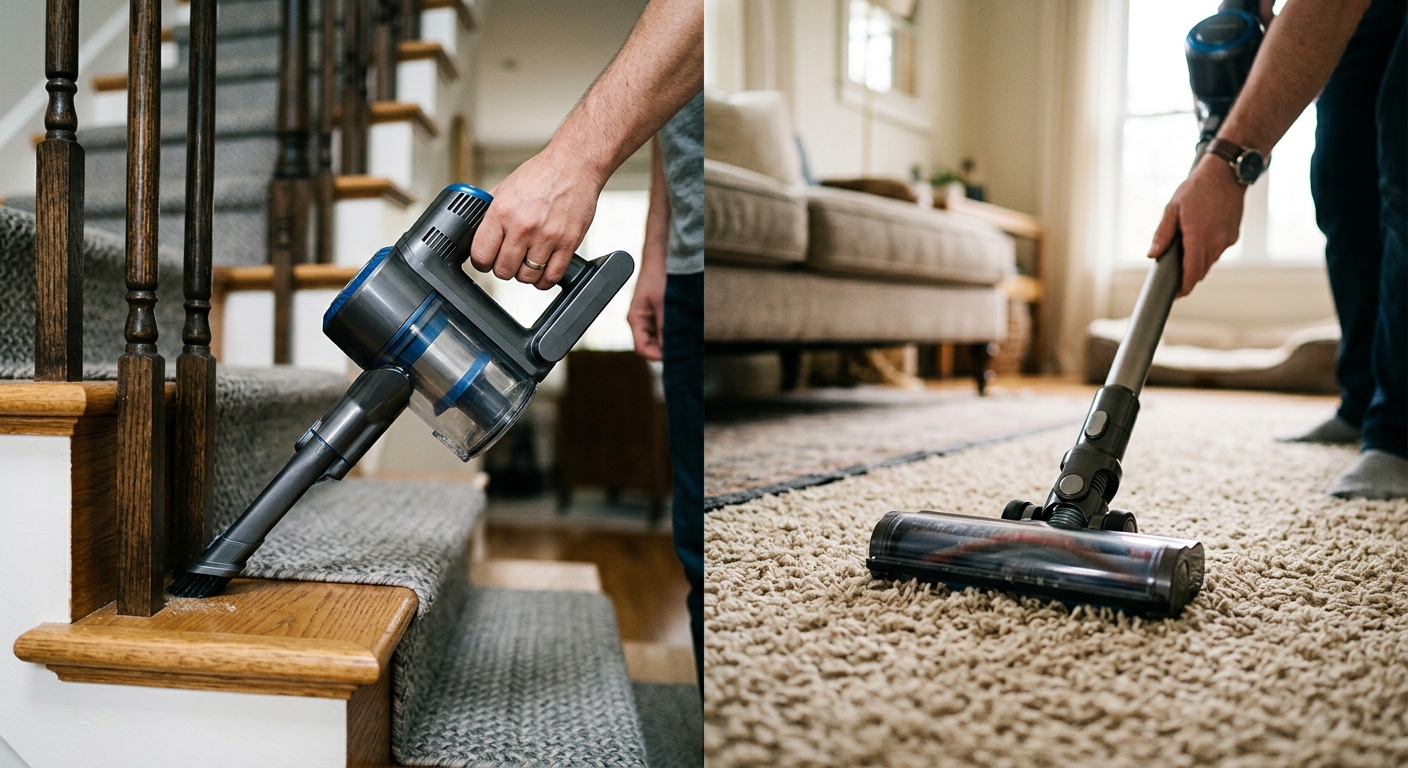
Before you can compare specifications, you must define what “best” means for your situation. A vacuum that excels in one category may fall short in another. Start by asking yourself these clarifying questions:
- What does ‘best’ mean to you? Is it the most powerful suction, the longest battery runtime, the lightest weight for easy carrying, or the best value for your money?
- What are your primary cleaning tasks? Are you cleaning the entire home in one session, tackling specific rooms, dealing with heavy pet hair, cleaning stairs and upholstery, or maintaining car interiors?
- What types of floors do you have most? Hardwood, tile, laminate, and vinyl require different brush roll designs than wall-to-wall carpet or area rugs.
- What is your realistic budget? Prices can range from under $100 for basic models to over $700 for premium, feature-rich systems. Setting a budget helps narrow the field significantly.
Key Performance Factors to Compare When Evaluating Models
Once you have a clearer idea of your needs, you can use these technical specifications and features to compare models objectively.
Suction Power and Cleaning Performance
Suction is the core function of any vacuum. It’s often measured in Air Watts (AW) or Pascals (Pa). Higher numbers generally indicate stronger suction, which is crucial for deep-cleaning carpets and picking up fine debris. However, raw power isn’t everything; the design of the brush roll and how well the vacuum maintains suction as the dustbin fills are equally important.
Battery Life and Runtime
Cordless vacuums are defined by their battery. Runtime is typically advertised in minutes, but this can be misleading. Manufacturers often state the runtime on the lowest power setting. You need to know the runtime on the maximum or ‘Boost’ mode, as this is the setting you’ll use for deep cleaning carpets or stubborn dirt. Consider the size of your home and whether you can clean it all in one charge or if you need a model with a swappable battery.
Weight, Ergonomics, and Maneuverability
A vacuum’s weight and balance affect how easy it is to use, especially for extended periods, for cleaning overhead, or for users with mobility concerns. Look for models with comfortable handles, swivel steering for navigating around furniture, and a design that feels balanced when held. The weight of the handheld unit versus the entire stick is also a key distinction.
Filtration and Allergen Control
If you suffer from allergies or asthma, the filtration system is critical. A vacuum with a sealed system and a HEPA (High-Efficiency Particulate Air) filter will capture 99.97% of particles as small as 0.3 microns, preventing dust and allergens from being exhausted back into the air. Check if the filters are washable or require replacement.
Attachments and Specialized Features
The right tools can transform a vacuum’s versatility. Common and useful attachments include:
- Motorized brush rolls: Essential for agitating and lifting dirt from carpets and for removing pet hair from upholstery.
- Crevice tools: For cleaning along baseboards, in tight corners, and between car seats.
- Soft dusting brushes: For delicate surfaces like shelves, blinds, and keyboards.
- Wet/dry functionality: Some models can vacuum and mop simultaneously, which is excellent for hard floors.
Step-by-Step Guide to Choosing the Right Cordless Vacuum
- Create a Shortlist: Match your defined needs (from Section 1) with the key factors (from Section 2). For example, if you have a large, carpeted home with pets, prioritize high suction, a strong motorized brush, and long runtime on max mode.
- Research and Compare: Use expert reviews from trusted publications, aggregated user feedback on retailer sites, and official manufacturer specifications. Look for consistent praise or criticism regarding performance, battery life, and durability.
- Check Warranty and Support: Investigate the manufacturer’s warranty (typically 1-2 years) and the availability and cost of replacement parts, especially batteries and filters. A longer warranty can indicate better build quality.
- Make a Final Decision: Ask yourself: Does this model’s strengths align with my top priorities? Can I see it working in my specific home environment? If possible, consider purchasing from a retailer with a good return policy to test it yourself.
Buyer FAQs: Best Cordless Vacuum Solved
What is the most important factor in a cordless vacuum?
The most important factor is alignment with your primary use case. For deep carpet cleaning, suction power and a motorized brush roll are paramount. For quick clean-ups in a small home, battery runtime and lightweight design might be more critical. For allergy sufferers, a sealed HEPA filtration system is non-negotiable. Start with your main need.
How long should the battery last on a cordless vacuum?
Runtime varies widely. For a small apartment, 20-30 minutes on a standard setting may suffice. For a larger home, look for models offering 40-60 minutes on standard mode. Always check the runtime on the maximum power setting, as this is often much shorter (e.g., 10-15 minutes) and is the mode used for the most demanding cleaning tasks. Before finalizing equipment decisions, refer to our comprehensive can robot vacuums cross high thresholds comparison.
Are cordless vacuums as powerful as corded ones?
Top-tier cordless vacuums now rival or even exceed the suction power of many corded upright vacuums, especially on their maximum settings. However, their runtime is limited by battery capacity. For continuous, heavy-duty cleaning without pausing to recharge, a corded model may still have an advantage. For most daily and weekly cleaning tasks, a modern cordless vacuum offers more than sufficient power.
What brands are known for reliable cordless vacuums?
Several brands are consistently recognized in the cordless vacuum market for innovation and performance. These include Dyson, known for powerful suction and cyclone technology; Shark, which often offers strong features at a competitive price; Tineco, which specializes in smart, wet/dry vacuums; LG CordZero, noted for its interchangeable battery system; and Samsung Jet, which focuses on lightweight design and filtration. The “best” brand depends on which model best fits your specific criteria. For broader ecosystem context, read through our operational guide on robot vacuum not connecting to wifi.
Related Maintenance and Operating Guides
To keep your equipment running at peak operating efficiency, explore our related technical walkthroughs and maintenance tutorials:
- Consult our detailed breakdown on robotic pool cleaner comparison guide.
Battery Safety for Cordless Vacuums
Many cordless models use rechargeable batteries, so store and charge them away from heat and stop using any pack that is damaged. Follow the charging guidance in the manual each time. Readers who want a broader look at electrical products can start with International Electrotechnical Commission (IEC).