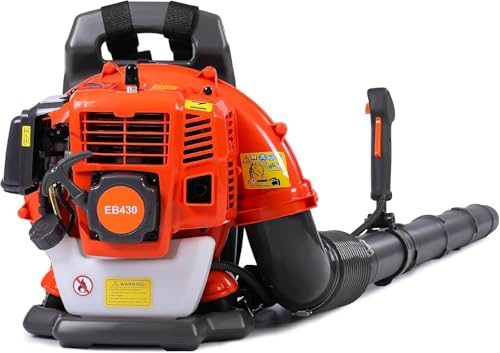
Quick Answer
There is no single best-rated leaf blower for every yard. Look for enough CFM for your yard size and enough MPH to move wet debris, then choose cordless, gas, or walk-behind based on how much area you clear. Ratings only help when they match your property and leaf type.

Pros
- Features a high-output Strato-Charged engine
- AutoTune carburetor provides automated fuel management
- Padded harness with waist belt and ventilated back pad
- LowVib technology helps minimize operator vibration
- Integrated service port enables quick maintenance access
Cons
- Gas engine requires routine upkeep and fuel mixing
- Bulkier footprint compared to smaller handheld units

Pros
- Cordless mobility without battery runtime limitations
- Sturdy construction suited for tough yard and property clearing
- Standard handheld configuration
Cons
- Gas engine requires manual fuel mixing and regular maintenance
- Weighs 11 pounds, which is heavier than most cordless alternatives

Pros
- Handheld design offers portable maneuverability
- Recognized Stihl BG 56 platform for property care
Cons
- Product specifications and airspeed ratings are not provided
- Gas engine requires fuel mixing and engine maintenance
Understanding Leaf Blower Performance Metrics: CFM vs MPH
When evaluating the best-rated leaf blower, two specifications dominate every technical discussion: Cubic Feet per Minute (CFM) and Miles Per Hour (MPH). Understanding the physics behind these measurements is essential for selecting the right tool for your specific yard conditions.
CFM: Volume of Air Movement
CFM measures the total volume of air a blower can move in one minute. Think of CFM as the “width” of the air stream, a higher CFM rating means the blower can cover a larger surface area with each pass. For practical yard applications: Readers comparing setup options can review our technical analysis on how to choose leaf blower.
- 150-250 CFM: Light-duty tasks like clearing grass clippings from sidewalks or dust from garages
- 250-450 CFM: Medium-duty residential use for wet leaves, acorns, and moderate debris accumulation
- 450-700+ CFM: Heavy-duty commercial or large-property applications requiring movement of deep leaf piles and wet organic material
MPH: Velocity of Air Stream
MPH measures the speed at which air exits the nozzle. Higher MPH creates a concentrated, forceful stream ideal for dislodging stuck debris or moving heavy objects. However, high MPH without adequate CFM results in a narrow air stream that covers less ground. The optimal balance for most residential applications falls between 150-200 MPH combined with 300-500 CFM.
Leaf Blower Types: Diagnostic Selection Matrix
Consumer Reports testing reveals that weight, balance, and ergonomics significantly impact user fatigue and maneuverability. The average handheld blower weighs 8 pounds, though some models reach 20 pounds. Your property characteristics should dictate which type you choose.
Handheld Battery-Powered Blowers
Best for: Small to medium yards under 1/4 acre with moderate tree coverage
Technical specifications to evaluate:
- Battery voltage (40V-80V for residential use)
- Amp-hour rating determining runtime (2.5Ah provides approximately 20-30 minutes at full throttle)
- Noise output (typically 60-65 dB, significantly quieter than gas alternatives)
- Weight distribution and handle ergonomics
The cordless leaf blowers category has evolved dramatically, with the EGO Power+ LB6504 achieving Wirecutter’s top recommendation due to its 30-minute runtime, intuitive controls, and precise airstream control.
Gas-Powered Backpack Blowers
Best for: Large properties exceeding 1/4 acre, hilly terrain, or properties with extensive tree coverage
Diagnostic indicators you need a backpack blower:
- Property exceeds 5,000 square feet of lawn area
- More than 5 mature trees producing significant leaf fall
- Sloped or uneven terrain requiring extended walking distances
- Need for continuous operation exceeding 30 minutes
- Presence of wet leaves, acorns, or heavy organic debris
Consumer Reports engineer Jonathan Tuczynski notes that backpack blowers become essential assets for yards requiring extensive walking, as the weight distribution across the shoulders and back reduces arm fatigue compared to handheld models. The backpack vs handheld blowers comparison provides detailed analysis of when each type excels.
Corded Electric Blowers
Best for: Small, flat areas near power outlets with light debris requirements
Limitations to consider:
- Cord length restricts operational radius (typically 50-100 feet)
- Extension cord gauge requirements increase with distance (12-gauge recommended for runs over 50 feet)
- Continuous power eliminates runtime concerns but creates tripping hazards
- Lower CFM ratings typically range from 150-350 CFM
Performance Testing Methodology: How Experts Rate Leaf Blowers
Consumer Reports employs a standardized testing protocol that measures air velocity by directing airflow through a vertical tube and calculating how high the blower can lift two dimpled batting cage balls. This method provides consistent, repeatable measurements across different models.
CNET Air-Cannon Testing Results
CNET developed a custom air-cannon rig to measure real-world performance. Their 2026 testing revealed:
Top performer: Greenworks 80V blower achieved 461.5 inches in normal mode and 485.75 inches in turbo mode, the longest distance recorded in their testing history.
TechGearLab Distance-Based CFM Analysis
TechGearLab measures airflow at two critical distances: 5 inches and 30 inches from the nozzle. This dual-distance testing reveals how effectively each blower maintains air velocity over distance. The Husqvarna 350BT demonstrated the most consistent performance, maintaining 500 CFM at the 30-inch measurement point.
Key diagnostic insight: Models showing significant CFM drop-off between 5-inch and 30-inch measurements indicate poor air stream cohesion, resulting in reduced effectiveness for real-world leaf clearing where debris sits 12-24 inches from the nozzle during normal operation.
Top-Rated Leaf Blowers: Detailed Technical Breakdown
1. EGO Power+ LB6504 (650 CFM)
Specifications:
- Airflow: 650 CFM maximum
- Battery: 56V 5.0Ah lithium-ion
- Runtime: Approximately 30 minutes at full throttle
- Weight: 12.5 pounds with battery
- Noise level: 64 dB
Practical applications: Ideal for medium to large residential properties with moderate to heavy leaf accumulation. The variable speed trigger provides precise control for delicate areas like flower beds, while turbo mode handles deep leaf piles on driveways and sidewalks.
Diagnostic advantage: The brushless motor maintains consistent torque throughout the battery discharge cycle, preventing the power fade common in brushed motor designs. This ensures the last minute of operation delivers the same performance as the first.
2. Husqvarna 350BT Backpack Blower
Specifications:
- Airflow: 500 CFM at 30-inch distance
- Engine: 50.2cc 2-cycle gas engine
- Air speed: 180 MPH
- Weight: 22.5 pounds
- Fuel capacity: 42.27 oz
Practical applications: Designed for properties exceeding 1/4 acre with extensive tree coverage. The harness system distributes weight across shoulders and hips, enabling 2-4 hour operation periods without significant fatigue.
Diagnostic advantage: The X-Torq engine technology reduces emissions by up to 75% while maintaining power output, addressing environmental concerns associated with traditional 2-cycle engines. The air purge system eliminates air from the fuel system, ensuring reliable starting even after extended storage periods.
3. Greenworks 80V Brushless Blower
Specifications:
- Airflow: 580 CFM maximum
- Battery: 80V 2.5Ah lithium-ion
- Runtime: 20-30 minutes depending on speed setting
- Weight: 11.5 pounds with battery
- Noise level: 58 dB
Practical applications: Excels in noise-sensitive environments like residential neighborhoods with strict HOA regulations. The 80V platform provides gas-equivalent power without emissions, noise, or fuel storage concerns.
Diagnostic advantage: CNET’s air-cannon testing confirmed this model’s superior air stream cohesion, maintaining velocity over greater distances than competing models. This translates to effective leaf clearing from 18-24 inches away from the nozzle, reducing the need to position the blower directly over debris.
Gas vs Electric: Decision Framework
The gas or electric leaf blower comparison requires analyzing your specific operational requirements against each technology’s strengths and limitations.
When Gas Power Is Necessary
- Properties exceeding 1/2 acre requiring continuous operation
- Commercial landscaping operations with daily use requirements
- Remote locations without electrical access
- Heavy-duty applications involving wet leaves, acorns, or small branches
- Need for unlimited runtime without battery recharge delays
When Electric/Battery Power Excels
- Residential properties under 1/4 acre
- Noise-restricted neighborhoods or early morning/late evening operation
- Users sensitive to exhaust fumes or 2-cycle oil mixing requirements
- Storage limitations preventing safe gasoline storage
- Intermittent use patterns where fuel stabilization becomes problematic
Maintenance Intervals and Diagnostic Procedures
Proper maintenance directly impacts blower performance and longevity. The chainsaw and outdoor tool maintenance principles apply to leaf blower care, emphasizing regular inspection and preventive service.
Gas-Powered Blower Maintenance Schedule
Before each use:
- Inspect air filter for debris accumulation
- Verify fuel mixture ratio (typically 50:1 for modern 2-cycle engines)
- Check spark plug condition and gap (0.025-0.030 inches typical)
- Inspect fuel lines for cracks or deterioration
Every 25 hours of operation:
- Replace or clean air filter (foam filters can be washed with soap and water)
- Inspect and clean spark arrestor screen in muffler
- Lubricate throttle cable and pivot points
- Check fan impeller for damage or debris buildup
Annual service:
- Replace spark plug regardless of condition
- Rebuild carburetor if starting difficulties persist after basic maintenance
- Replace fuel lines and filter as preventive measure
- Inspect clutch and drive system for wear
Battery-Powered Blower Maintenance Schedule
Before each use:
- Inspect intake and exhaust vents for debris blockage
- Verify battery charge level and contact cleanliness
- Check for unusual motor sounds indicating bearing wear
Monthly (during active use season):
- Clean battery contacts with isopropyl alcohol
- Inspect housing for cracks or damage
- Verify all fasteners are secure
Storage preparation:
- Charge battery to 40-60% for optimal long-term storage
- Store in climate-controlled environment (50-70°F ideal)
- Remove battery from blower to prevent parasitic drain
OSHA Compliance and Safety Considerations
Commercial operators must comply with OSHA equipment safety regulations regarding noise exposure, personal protective equipment, and operational procedures. Key requirements include:
- Hearing protection when noise levels exceed 85 dB (most gas blowers exceed this threshold)
- Eye protection rated to ANSI Z87.1 standards
- Respiratory protection in dusty conditions or when operating near exhaust
- Proper fuel handling and storage procedures
- Training documentation for commercial operators
Diagnostic Troubleshooting Matrix
Gas Blower Performance Issues
Symptom: Reduced air output despite full throttle
- Inspect air filter, a clogged filter restricts airflow to the engine, reducing combustion efficiency
- Check spark plug condition, fouled plugs cause incomplete combustion and power loss
- Verify fuel quality, stale fuel (older than 30 days) degrades and causes carburetor deposits
- Inspect fan impeller, damaged or debris-laden impellers reduce air movement efficiency
Symptom: Difficulty starting or inconsistent operation
- Verify fuel mixture ratio, incorrect ratios cause either lean (too much air) or rich (too much fuel) conditions
- Check spark plug gap, wider gaps require more voltage and may cause misfires
- Inspect fuel lines for air leaks, cracked lines introduce air into the fuel system
- Clean or rebuild carburetor, varnish deposits from stale fuel block internal passages
Battery Blower Performance Issues
Symptom: Reduced runtime or power fade during operation
- Test battery with multimeter, cells below 3.5V per cell indicate degradation
- Verify charger functionality, faulty chargers may not fully charge battery packs
- Check ambient temperature, lithium-ion batteries lose capacity below 40°F
- Inspect motor brushes (if applicable), worn brushes reduce motor efficiency
Symptom: Motor runs but no air output
- Inspect impeller for damage or disconnection from motor shaft
- Verify intake and exhaust paths are clear of obstructions
- Check for housing cracks allowing air bypass
- Inspect motor mounting hardware for looseness causing misalignment
Property Sizing Guide: Matching Blower to Yard Characteristics
Use this diagnostic framework to determine the optimal blower type and specifications for your property:
Small Yard (Under 2,500 sq ft)
Characteristics: Minimal tree coverage, primarily grass areas, limited leaf accumulation
Recommended specifications:
- Type: Handheld battery or corded electric
- CFM range: 150-300
- Runtime requirement: 15-20 minutes adequate
- Weight preference: Under 8 pounds for extended comfort
Medium Yard (2,500-5,000 sq ft)
Characteristics: Moderate tree coverage, mixed terrain, seasonal leaf accumulation requiring 20-40 minute sessions
Recommended specifications:
- Type: High-capacity handheld battery or light backpack
- CFM range: 300-500
- Runtime requirement: 25-35 minutes
- Weight preference: 10-15 pounds acceptable for battery models
Large Yard (Over 5,000 sq ft)
Characteristics: Extensive tree coverage, sloped terrain, heavy leaf accumulation requiring 45+ minute sessions
Recommended specifications:
- Type: Gas backpack or commercial-grade battery backpack
- CFM range: 500-700+
- Runtime requirement: 60+ minutes or unlimited (gas)
- Weight preference: 20-25 pounds distributed across harness system
Final Recommendation: Selecting Your Best-Rated Leaf Blower
The best-rated leaf blower for your specific application depends on three primary factors: property size, debris type, and operational frequency. Based on comprehensive testing data from Consumer Reports, Wirecutter, CNET, and TechGearLab:
For most residential users: The EGO Power+ LB6504 provides the optimal balance of power, runtime, and ease of use. Its 650 CFM output handles 90% of residential leaf clearing tasks, while the 30-minute runtime accommodates most medium-sized yard maintenance sessions.
For large properties or commercial use: The Husqvarna 350BT backpack blower delivers consistent 500 CFM performance with unlimited runtime, making it the preferred choice for properties exceeding 1/4 acre or professional landscaping operations.
For noise-sensitive environments: The Greenworks 80V blower achieves the highest air-cannon test scores while maintaining the quietest operation profile, making it ideal for early morning use or neighborhoods with strict noise ordinances.
Remember that the highest-rated blower on paper may not be the best choice for your specific situation. Consider your property characteristics, physical capabilities, storage constraints, and maintenance preferences when making your final selection.
Reading Leaf Blower Review Scores
Review scores can help shortlist models, but they reflect each reviewer’s priorities, from noise to comfort to raw power. Read several sources and check return policies before committing. A broader look at yard machine safety is available from American National Standards Institute (ANSI).