Most Toro lawn mowers require high-quality detergent oil with an API service classification of SF, SG, SH, SJ, or higher. For general operation in temperatures above 40°F (4°C), SAE 30 is the industry standard. If you operate your mower in varying temperatures or colder climates, 10W-30 is a versatile, multi-viscosity alternative. Because Toro utilizes engines from various manufacturers, including Briggs & Stratton, Kohler, Kawasaki, and proprietary Toro engines, you should always consult your specific owner’s manual to confirm the exact viscosity and fill capacity for your machine.
Quick-Reference: Toro Oil Type by Mower Category
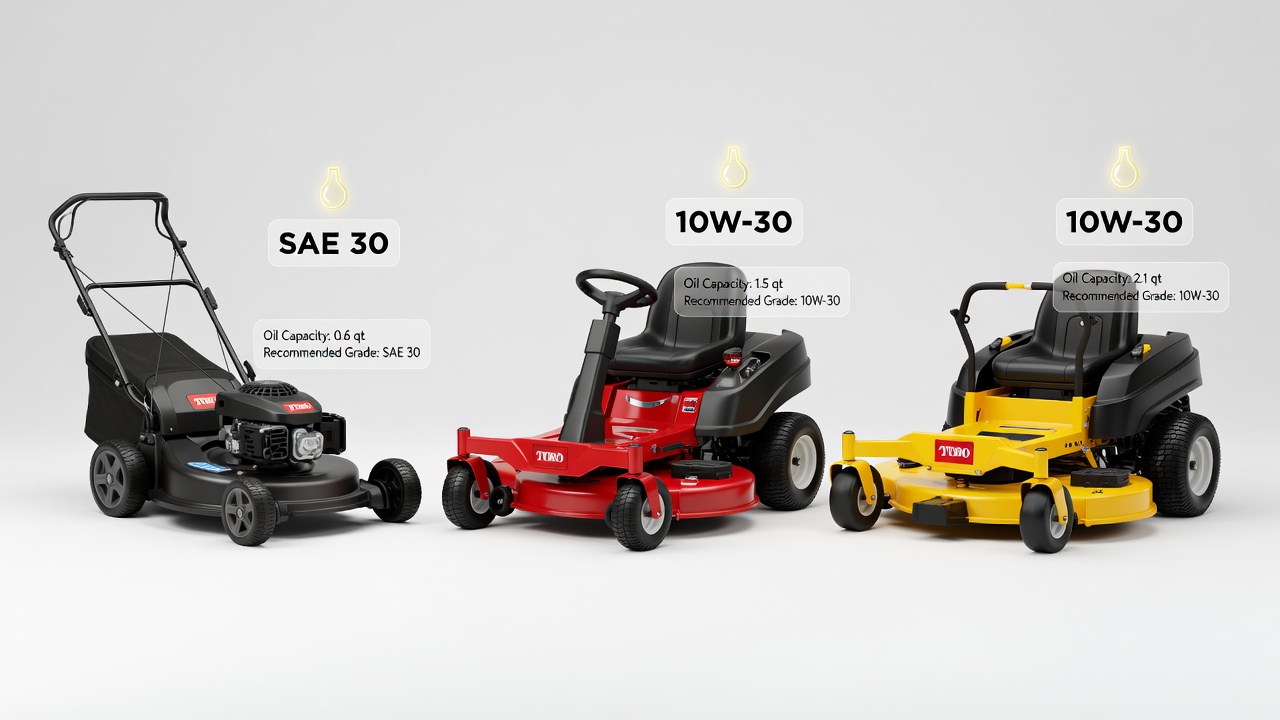
While specific engine requirements vary, the following table provides a general guideline for common Toro mower categories. Always verify these figures against the dipstick or manual provided with your specific model.
| Mower Category | Recommended Oil Grade | Typical Capacity |
|---|---|---|
| Walk-Behind Mower | SAE 30 or 10W-30 | 0.47 – 0.6 qt |
| Riding Mower | SAE 30 or 10W-30 | 1.5 – 2.0 qt |
| Zero-Turn Mower | SAE 30 or 10W-30 | 1.5 – 2.0 qt |
Oil Viscosity by Temperature: Choosing the Right Grade
Choosing the correct viscosity ensures proper lubrication during startup and under load. SAE 30 is a straight-weight oil designed for consistent warm-weather performance. If you live in an area with fluctuating temperatures, 10W-30 is often recommended because it flows more easily during cold starts while maintaining protection as the engine heats up. For extreme cold-weather operation, 5W-30 may be specified by some engine manufacturers to prevent engine strain.
Oil Requirements by Engine Brand
Toro does not manufacture every engine found on their mowers. Identifying the engine brand—typically found on a label on the engine shroud—is the most reliable way to determine oil specifications.
Briggs & Stratton Engines
Many Toro walk-behind mowers feature Briggs & Stratton powerplants. These engines generally accept SAE 30 for temperatures above 40°F and 10W-30 for a wider temperature range. Always ensure the oil meets the API SF or higher rating.
Kohler and Kawasaki Engines
Common in Toro riding and zero-turn mowers, Kohler and Kawasaki engines have specific requirements. These engines often have larger oil capacities and may require synthetic or synthetic-blend oils depending on the model year and specific series. Refer to the engine-specific manual for the exact oil volume.
How to Find Your Toro Mower’s Engine Brand and Model Number
To find the correct maintenance information, locate the model and serial number plate on your mower deck or frame. Additionally, look for the engine identification label located directly on the engine housing. You can use these numbers on the official Toro support website to download the specific owner’s manual for your machine, which will contain the definitive oil capacity and type.
How to Check and Change the Oil on a Toro Lawn Mower
Regular oil changes are critical for engine longevity. To change your oil: 1. Run the engine for a few minutes to warm the oil, which helps it drain more effectively. 2. Turn off the engine and disconnect the spark plug wire for safety. 3. Locate the drain plug or oil tube, place a catch pan underneath, and remove the plug. 4. Once drained, replace the plug, add the recommended amount of new oil, and check the level using the dipstick. Never overfill the reservoir, as this can cause smoking and potential engine damage.
Toro Oil Change Interval: How Often to Change Mower Oil
New engines often require an initial oil change after the first 5 hours of operation to remove any metallic break-in debris. Following the break-in period, walk-behind mowers typically require an oil change every 50 hours or once per season, whichever comes first. Riding and zero-turn mowers generally have longer intervals, often around 100 hours, but you should consult your manual for the specific service schedule.
What Happens If You Use the Wrong Oil in a Toro Mower?
Using the wrong oil can lead to increased friction, overheating, and premature engine wear. Non-detergent oil can cause sludge buildup inside the engine, while oil with an incorrect viscosity may fail to provide an adequate lubricating film at operating temperatures. Always use oil that meets the API classification specified by the engine manufacturer to ensure the additives are compatible with your specific engine components.