Mechanical safety standards, operational tolerances, and protective gear guidelines align with benchmark specifications established by the American National Standards Institute (ANSI).
For more hands-on benchmarks and buying recommendations, consult our guides on heavy-duty chainsaw buyer guide, as well as high-CFM commercial leaf blower guide, as well as durable ride-on lawn tractor guide.

Pros
- Large-size design named in product title
- Sharpening and balancing functions listed
- Listed as a new upgraded version

Pros
- Adjustable 15-to-45-degree range in title
- Sharpening and balancing functions listed
Pros
- Includes replacement gaskets and a 98079-55846 spark plug
- Matches Honda HRR216 and HRS216 lawn mower models
- Designed around the 16100-Z8B-901 carburetor specification
Cons
- Restricted to select Honda GCV160 mower applications
- Installation requires basic mechanical tools and skills
Pre-Start Safety Checks
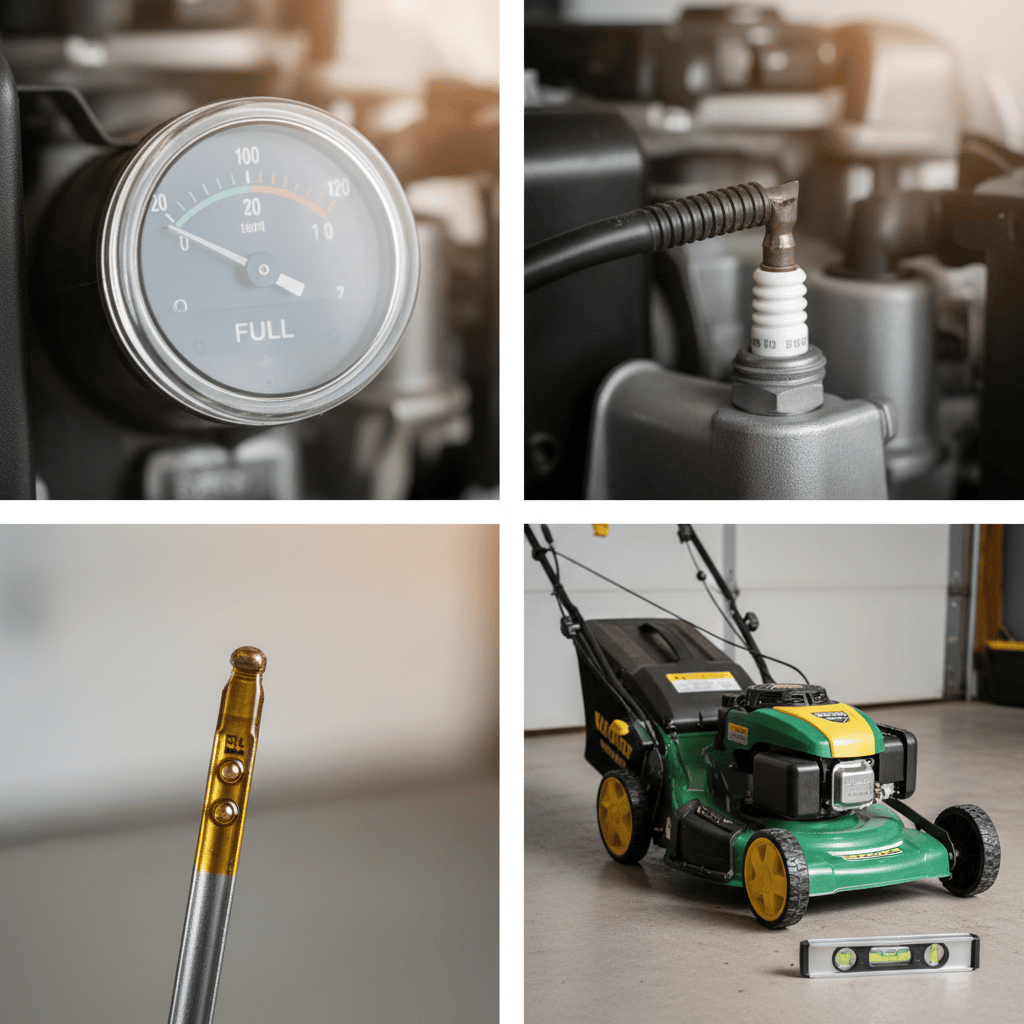
Before attempting to start your Toro mower, perform these essential checks to ensure safe operation and prevent damage to the engine.
- Check fuel level: Toro push mowers typically use regular unleaded gasoline (check your manual for exact requirements). Riding mowers and some commercial models may require fuel mixture with 2-cycle oil if they have 2-stroke engines. Never start a mower on an empty tank.
- Verify oil level: Most Toro mowers use SAE 30 oil or 10W-30 synthetic blend for 4-stroke engines. Use the dipstick (usually located on the side of the engine) to check oil level with the mower on level ground. Top off if needed, but do not overfill.
- Confirm spark plug wire connection: The rubber boot on the spark plug wire must be fully seated on the spark plug terminal. A loose connection is a common reason mowers fail to start. Gently tug the wire to ensure it’s secure.
- Place mower on level ground: Starting on an incline can cause fuel to slosh away from the carburetor and prevent the engine from receiving adequate fuel.
- Clear the cutting deck: Remove any grass clippings, twigs, or debris from under the deck. A clogged discharge or chute restricts airflow and can prevent starting in some cases.
Understanding Toro Choke Systems
The choke is a valve that restricts airflow to the carburetor, enriching the fuel mixture for cold starts. Understanding your choke type is critical to successful starting.
Manual Choke Systems (Older Models)
Older Toro push mowers and riding mowers feature a manual choke lever or cable. The lever typically has three positions:
- Full/Cold: Maximum choke restriction; use for a cold engine that hasn’t run recently.
- Half: Partial choke; use for a warm engine or mild temperatures.
- Run/Open: No choke restriction; use once the engine is running or for warm starts.
For a cold start with a manual choke, move the lever fully to the cold position before pulling the starter rope. Once the engine fires and settles into a steady rhythm (typically 10-15 seconds), gradually move the choke lever toward the run position.
Automatic Choke Systems (Modern Models)
Most Toro mowers manufactured after 2010 feature automatic choke technology. These systems use a bimetal spring or electronic sensor to adjust choke position based on engine temperature. With an automatic choke, you simply pull the starter rope without manual adjustment. The system handles enrichment automatically, making starting more intuitive for users.
Starting a Toro Push Mower
Toro push mowers are the most common residential models. Follow these steps based on whether your mower has a manual or automatic choke.
Cold Start (First Start of the Season or After Extended Storage)
- Confirm fuel is present and oil level is adequate (see pre-start checks above).
- Locate the choke lever on the side or top of the engine.
- If your mower has a manual choke, move the lever fully to the Cold position. If your mower has an automatic choke, no manual adjustment is needed.
- Squeeze and hold the safety bar (the lever on the mower handle) firmly against the handle.
- Locate the starter rope handle, usually near the top rear of the engine.
- Pull the rope with a smooth, firm motion—do not jerk it abruptly. Use your full arm motion, not just your wrist. The rope typically extends 18-24 inches before resistance increases.
- Release the rope and allow it to rewind. The engine should fire within 1-3 pulls if conditions are correct.
- Once the engine starts, release the safety bar slightly (do not let go completely) and allow the engine to idle for 5-10 seconds.
- If your mower has a manual choke, gradually move the choke lever toward the Run position as the engine stabilizes. Move it slowly to avoid stalling.
- Release the safety bar completely. The mower is now ready to mow.
Warm Start (Engine Recently Ran)
- If your mower has a manual choke, move the lever to the Run or Half position (no choke enrichment needed).
- Squeeze the safety bar and pull the starter rope 1-2 times with moderate force.
- The engine should start immediately. If it doesn’t, move the choke lever back to Cold and try again.
Starting a Toro Riding Mower or Zero-Turn Model
Riding mowers and zero-turn models use key ignition and electric starters, making the process different from push mowers.
- Check fuel and oil levels using the same procedure as push mowers.
- Sit on the mower seat and ensure you are centered and secure. Most Toro riding mowers have a seat switch that disables the starter if you’re not seated.
- Insert the ignition key into the switch.
- Locate the blade clutch (a lever or button on the seat frame or console). Disengage it by pulling the lever or pressing the button fully. The blade must be disengaged before starting to prevent the blades from spinning unexpectedly.
- If your model has a manual choke (typically on the dash or engine), move it to the Cold position for a cold start. Many modern Toro riding mowers have automatic choke systems and require no manual adjustment.
- Turn the key to the Start position (usually past the On position). The engine will crank and fire within 2-3 seconds. Release the key once the engine starts; it will return to the On position automatically.
- Allow the engine to idle for 10-15 seconds to warm up.
- If your mower has a manual choke, gradually move it toward the Run position as the engine idles.
- Engage the blade clutch when you are ready to mow. On most Toro models, this means moving the lever to the engaged position or pressing the button.
Blade Clutch Importance
Never start a riding mower with the blade clutch engaged. The clutch connects the engine to the blade spindles. If engaged during start-up, the blades will spin at full speed immediately, posing a serious safety hazard. Always disengage the blade clutch before inserting the key or turning the ignition.
Troubleshooting Common Starting Issues
If your Toro mower fails to start after following the correct procedure, work through these troubleshooting steps. To evaluate matched hardware tolerances, consult our detailed overview of marshall stanmore iii vs harman kardon onyx studio 8.
Engine Cranks but Won’t Fire
If the engine turns over but doesn’t ignite:
- Check spark plug wire: Remove and reinstall the spark plug wire to ensure a solid connection.
- Inspect spark plug: Remove the spark plug (use a spark plug socket and ratchet). If it’s fouled, black, wet, or heavily carbon-covered, replace it. Toro typically recommends Champion or NGK spark plugs specific to your model.
- Verify fuel delivery: Turn the fuel valve (if your model has one) to the On position. Remove the fuel line and check for fuel flow. If no fuel flows, the fuel filter may be clogged or the carburetor may be blocked.
- Check for a flooded engine: A flooded engine occurs when excess fuel fills the combustion chamber. Symptoms include strong fuel smell and wet spark plug. To clear a flood, remove the spark plug wire, turn the key to Start for 10-15 seconds (without firing), then wait 5 minutes before reconnecting and trying again.
No Cranking Sound (Electric Starter on Riding Mowers)
If the electric starter doesn’t engage: When planning workspace deployment, consider the engineering criteria outlined in our dyson v8 cyclone vs bissell featherweight stick guide.
- Verify seat switch: Ensure you are fully seated. Some Toro models will not engage the starter if the seat switch is tripped.
- Check battery: Listen for a clicking sound when turning the key to Start. Clicking indicates low battery voltage. The battery may need charging or replacement.
- Inspect battery terminals: Remove the battery cover and ensure both terminals are tight and corrosion-free. Corroded terminals (white or blue-green deposits) can be cleaned with a wire brush.
Engine Starts But Stalls Immediately
If the engine fires but dies within seconds:
- Adjust choke position: For manual choke systems, the choke may be too far open. Move it back toward the Cold position and try again.
- Allow more warm-up time: Some engines, especially after storage, need 20-30 seconds of idle time before they stabilize.
- Clean carburetor: If the mower sat unused for more than a few months, fuel residue may clog the carburetor. Drain old fuel, add fresh fuel with carburetor cleaner additive, and try starting again. For severe clogs, carburetor removal and cleaning may be necessary.
Starter Rope Won’t Pull or Is Extremely Hard to Pull
If the rope is locked or very difficult: For additional operational safety benchmarks, see our published testing notes on bissell crosswave hydrosteam vs shark stainforce.
- Check for hydro-lock: Excess oil or fuel in the combustion chamber can lock the piston. Turn the key to Start on a riding mower (or pull the starter rope once gently on a push mower) to expel excess fluid, then wait and try again.
- Inspect starter assembly: The recoil spring or starter gear may be damaged. If the rope won’t budge after checking for hydro-lock, contact a Toro dealer.
Seasonal Startup Considerations
Spring Startup After Winter Storage
Mowers stored over winter often have degraded fuel and dry internal components. Follow these steps:
- Drain old fuel: If the mower sat for more than 2-3 months, drain the fuel tank and carburetor. Use a fuel siphon or drain plug. Pour fresh, high-quality gasoline into the tank.
- Add fuel stabilizer or carburetor cleaner: Fresh fuel with a fuel additive helps dissolve residue from old fuel and may eliminate starting difficulties.
- Replace the spark plug: Cold-started engines work better with a fresh spark plug, especially after winter storage.
- Check oil: Change the oil if the mower is due for service (typically yearly). Fresh oil ensures better engine performance.
- Inspect the air filter: Replace a clogged air filter. A dirty filter restricts airflow and makes cold starts much harder.
Cold Weather Starting (Below 40°F)
In very cold conditions, your Toro mower may be harder to start:
- Use winter-grade oil (10W-30 or synthetic) if your mower was filled with heavier oil. Thicker oil in cold temperatures restricts engine rotation.
- Pull the starter rope more deliberately. Cold oil increases resistance, so expect the rope to feel stiffer.
- Use gasoline with a higher octane rating (91-93) in cold weather; it ignites more easily at low temperatures.
- If your mower has a manual choke, leave it in the Cold position longer (15-20 seconds of idling) before moving it to Run.
End-of-Season Storage
Prepare your Toro mower for storage to ensure easier starting next season:
- Fill the fuel tank completely to prevent water condensation inside.
- Add fuel stabilizer to the tank; the additive prevents fuel degradation over months of storage.
- Run the mower for 5-10 minutes after adding stabilizer so the additive flows through the carburetor.
- Cover the mower to protect it from dust and moisture.
- Store in a cool, dry location away from direct sunlight.
When to Contact a Toro Dealer
If your mower still won’t start after working through the troubleshooting steps above, professional service may be required. Contact a Toro dealer if:
- The spark plug is properly connected and new, but the engine won’t fire.
- Fresh fuel and a clean carburetor don’t resolve starting issues.
- The starter rope is locked or extremely difficult to pull (risk of damage).
- The battery on a riding mower is fully charged but the starter won’t engage.
- Your mower is under warranty; attempting repairs yourself may void coverage.
Toro dealers have diagnostic equipment to identify issues like ignition system faults, valve problems, or compression loss that require professional repair.
Common Questions on How To Start A Lawn Mower Toro Answered
What fuel should I use in my Toro lawn mower?
Most Toro push mowers and riding mowers with 4-stroke engines use regular unleaded gasoline (87 octane minimum). Some commercial Toro models and older 2-stroke models require a fuel mixture with 2-cycle engine oil (typically a 50:1 ratio). Check your mower’s manual or the fuel filler cap for specific requirements. Always use fresh fuel; gasoline older than 30 days begins to degrade and can cause starting problems.
Can I start a Toro mower if the oil level is low?
While a mower may start with low oil, operating it with insufficient oil will damage the engine. Oil provides lubrication to internal components; running dry causes bearing wear and seized pistons. Check oil before every use. If oil is below the minimum line on the dipstick, add the recommended grade (typically SAE 30 or 10W-30) until the level reaches the full mark. Never overfill; excess oil can cause smoking and poor performance.
What does it mean if my Toro mower engine is flooded?
A flooded engine has too much fuel in the combustion chamber, preventing spark ignition. Signs include a strong fuel smell, difficulty starting despite proper choke position, and a wet spark plug. To clear a flooded engine, remove the spark plug wire, turn the key to Start for 10-15 seconds to blow excess fuel out, then wait 5 minutes. Reconnect the spark plug wire and try starting again with the choke in the Run position. Repeated flooding may indicate a carburetor problem requiring professional cleaning.
Why should the blade clutch be disengaged before starting a riding mower?
The blade clutch connects engine power to the blade spindles. If engaged during start-up, the blades spin at full speed the moment the engine fires, creating an extreme safety hazard. Always disengage the blade clutch before inserting the key. This is a critical safety practice on all Toro riding mowers and zero-turn models.