
Direct Answer: Typical Riding Lawn Mower Weight
Riding lawn mowers typically weigh between 300-600 lbs for standard residential models. Smaller residential mowers with 38-42 inch decks average 300-400 lbs, while mid-size models with 42-48 inch decks weigh 400-500 lbs. Larger commercial and zero-turn radius mowers can exceed 1000 lbs. Weight varies significantly based on deck width, engine type (gas vs. electric), frame construction, and transmission system.

Pros
- Powerful 80V brushless motor delivers 32HP gas-equivalent performance with quiet fume-free operation and no engine maintenance.
- Complete kit includes four 6.0Ah batteries and 600W charger for substantial runtime up to 1.5 acres.
- SmartCut technology and 42-inch heavy-duty steel deck ensure consistent cuts without bogging in tough conditions.
- Versatile towing up to 350 lbs and optional cargo hauling plus comfort features like high-back seat and LED lights.
- Strong 4-year limited warranty and full compatibility with the Greenworks 80V tool ecosystem.
Cons
- Rear utility cargo bed for 200 lb hauling is sold separately and not included in the kit.
- Runtime of up to 1.5 acres varies with conditions and may require recharging or battery swaps on larger properties.
- As a fully cordless model continuous operation depends on battery levels unlike gas engines with unlimited runtime.
The Greenworks 80V 42" CrossoverT Cordless Riding Lawn Tractor is a ready-to-mow zero-emission tractor designed for homeowners managing medium to large lawns. It features a reinforced 42-inch stamped steel deck of 12-gauge construction along with premium comfort elements such as a high-back padded seat with foldable armrests. The overall build emphasizes durability and user convenience right out of the box with the included battery and charger set.
Performance centers on the 80V TruBrushless motor that provides 32HP gas-equivalent power with instant torque and quiet fume-free operation. SmartCut technology senses grass conditions and automatically adjusts power to maintain a consistent cut even in tall thick or wet areas. The four 6.0Ah batteries support runtime for up to 1.5 acres depending on conditions while dual LED headlights and a 7-position deck height range from 1.5" to 4.5" add practicality. Front and rear attachments further allow towing up to 350 lbs for added yard utility.
Key considerations include that the rear utility storage bin capable of hauling 200 lbs is sold separately so full cargo functionality requires an extra purchase. Runtime remains condition-dependent and may fall short for properties significantly larger than 1.5 acres without using the 600W charger or swapping batteries. The cordless design prioritizes ease and low maintenance but trades off the continuous runtime of traditional gas models.
This tractor delivers strong value for eco-conscious owners of residential properties who want gas-like power without the emissions noise or upkeep. It suits those who already use or plan to expand into the Greenworks 80V family of tools and who appreciate the 4-year limited warranty. Users with exceptionally large or commercial-scale lawns should evaluate battery logistics carefully before purchase.

Pros
- Delivers strong 21 horsepower equivalent power comparable to gas riding mowers.
- Provides up to 1.5 acres of runtime on a full charge with the six included batteries.
- Features low-maintenance dual brushless motors without belts for greater durability.
- Offers versatile 12-position cutting height adjustment from 1.5 to 4.5 inches.
- Includes digital controls for blade settings, drive speeds, and cruise control.
Cons
- Limited to 1.5 acres of cutting per charge without purchasing additional batteries for bigger lawns.
- Requires recharging time for the six 56V batteries after each use session.
- Relies solely on battery power with no hybrid or gas backup option for extended operation.
The EGO Power+ TR4204 is a cordless electric riding lawn mower built as a modern tractor alternative for residential use. It features a robust 42-inch stamped steel deck and arrives ready to go with six 56V 6.0Ah batteries plus a charger, creating an immediate impression of convenience and solid construction free from gas engine complexity.
Performance shines through its equivalent 21 horsepower output and top speed of 6 MPH, allowing efficient coverage of up to 1.5 acres on a single charge. Dual brushless cutting motors operate without belts for added durability and less upkeep, while the digital display lets users select three blade settings, three drive speeds, and cruise control. The 12 adjustable heights ranging from 1.5 to 4.5 inches combined with anti-scalp wheels deliver precise results across varied terrain.
Drawbacks center on battery dependency, as larger properties beyond 1.5 acres require extra batteries and recharging intervals can interrupt workflow. The fully electric design eliminates fuel storage needs but demands access to power sources between sessions.
This mower suits homeowners with medium to large yards who value quiet, emission-free operation and reduced maintenance. Those seeking expandable battery capacity for bigger areas will find the EGO Power+ TR4204 a strong long-term investment in cordless lawn care.
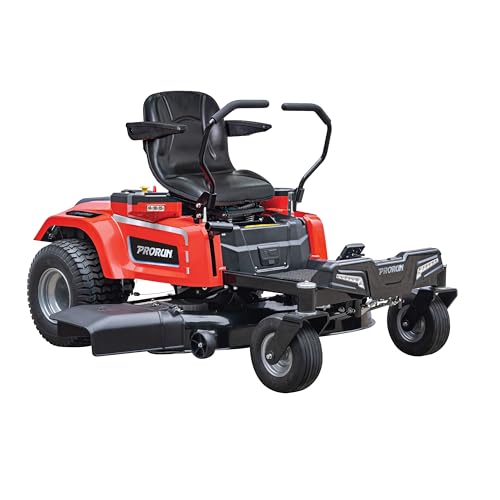
Pros
- High-efficiency brushless motors maximize power output and durability over traditional motors
- Up to 2 acres runtime with three included 10.0 Ah batteries supports substantial mowing sessions
- Zero-emission operation with gas-equivalent 20 HP power for quieter environmentally friendly use
- Six-port auto-switchover battery system provides flexible extended runtime options
- Durable 42-inch steel deck plus included mulch and towing kits add immediate functionality
Cons
- Runtime is limited to approximately 70 minutes or 2 acres which may require recharging for larger properties
- Fully battery-dependent design means performance relies on charge levels and spare battery availability
- 42-inch deck size may require more passes on expansive lawns compared to wider commercial models
The PRORUN PZT60V42 is a fully electric 60V zero-turn riding lawn mower built for residential and light commercial use. Its primary design centers on a robust 42-inch 14-gauge stamped steel twin blade deck powered by direct-drive brushless motors, giving an immediate impression of solid construction and modern battery-focused engineering. The mower arrives complete with three 10.0 Ah batteries, a charger, mulch kit, and towing kit for ready-to-work versatility.
In performance terms, four high-efficiency brushless motors deliver power equivalent to a 20 HP gas engine while producing zero emissions. The system supports up to 2.0 acres or 70 minutes of runtime, and six battery ports with auto switchover intelligently manage all PRORUN 60V battery sizes for continuous operation. A washout port on the steel deck further simplifies post-mow maintenance during real-world sessions.
Potential drawbacks include the finite 70-minute runtime window which can limit coverage on larger properties without spare batteries or recharge breaks. As a fully electric model, it also depends entirely on battery charge levels rather than continuous fuel refills, and the 42-inch deck width may demand extra passes compared with wider traditional options.
Overall the PRORUN PZT60V42 offers strong value for homeowners and small-property managers who want gas-like cutting power without emissions or noise. Those with medium-sized lawns seeking quiet efficient zero-turn performance and included accessories will benefit most from this electric mower.

Pros
- Strong 24HP FR730 engine power for demanding cutting conditions
- Wide 54-inch FAB deck reduces total mowing time
- Zero turn design delivers excellent maneuverability
- Fabricated deck supports durable everyday operation
Cons
- Sparse details beyond engine and deck leave other features unspecified
- Gas-powered FR730 engine needs regular fuel and maintenance
- Large 54-inch deck size may feel oversized on compact properties
The Husqvarna Z254F is a zero turn mower from the established Husqvarna brand in the riding lawn mowers category. It centers on a solid build that pairs a 24HP 726cc FR730 engine with a 54-inch FAB deck for straightforward residential grass care.
Performance stems directly from the listed specifications. The FR730 engine delivers the horsepower needed for steady operation across typical lawns while the wide FAB deck completes passes efficiently. Zero turn handling improves control in real yard layouts based on the model design.
Considerations arise from the limited data available. Secondary elements such as comfort features fuel capacity or extras receive no mention and the gas engine format involves routine upkeep. The large deck suits open areas better than confined spaces.
The Husqvarna Z254F provides the most value for owners of medium or large properties who want reliable engine power and a broad cutting width. Users with smaller lots or those seeking extensive accessory options should weigh the core specs carefully before purchase.
Typical Weight Range for Riding Lawn Mowers
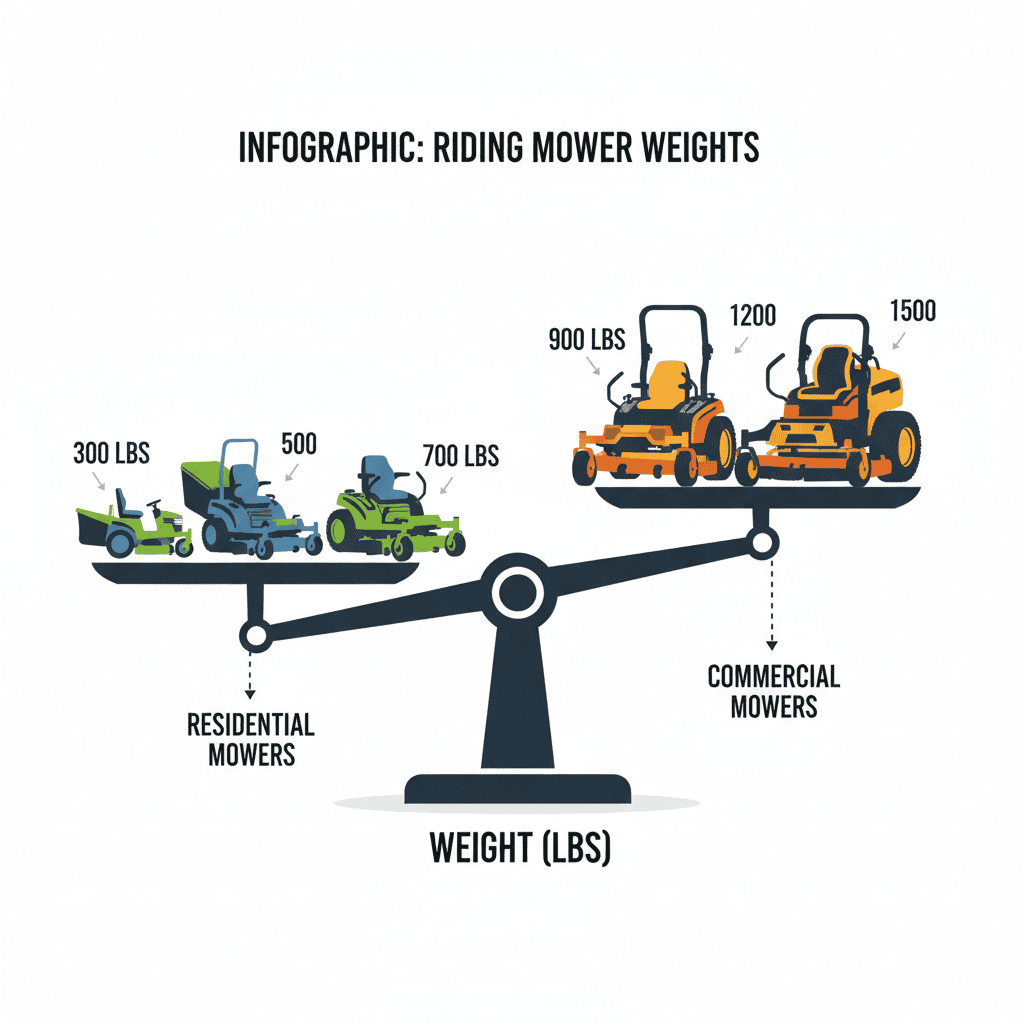
Understanding the weight range for different mower categories helps you assess whether a particular model meets your transportation, storage, and operational needs.
Residential Riding Mowers
Standard residential riding mowers represent the most common category for homeowners. These mowers are designed for typical suburban and residential lawn sizes.
- Compact residential models (38-42 inch decks): 300-400 lbs
- Mid-size residential models (42-48 inch decks): 400-500 lbs
- Full-size residential models (48-54 inch decks): 500-700 lbs
Most homeowners opt for the mid-size category, which offers a balance between cutting efficiency and maneuverability. These models weigh enough to provide stable operation on varied terrain but remain manageable for most property owners to transport and store.
Zero-Turn Radius Mowers
Zero-turn radius (ZTR) mowers feature independent wheel controls that allow sharp 180-degree turns. This enhanced maneuverability comes with additional weight due to more sophisticated hydraulic systems and reinforced frames.
- Compact zero-turn models (42-48 inch decks): 500-700 lbs
- Standard zero-turn models (48-54 inch decks): 700-900 lbs
- Professional zero-turn models (54-60 inch decks): 900-1200 lbs
The hydraulic transmission system required for zero-turn operation adds significant weight compared to standard belt-drive residential mowers. This is one reason why ZTR mowers are typically heavier than traditional riding mowers of similar deck size. For troubleshooting and reliability insights, consult our in-depth z890 vs x870e motherboard report.
Commercial and Professional Mowers
Commercial-grade riding mowers are built for extended use, higher deck widths, and more demanding applications. They feature reinforced construction and heavier-duty components.
- Commercial models (54-72 inch decks): 1000-1500+ lbs
- Large-frame commercial models (72+ inch decks): 1500-2500+ lbs
Commercial mowers sacrifice some maneuverability for durability and cutting capacity. The increased weight reflects heavier gauge steel frames, larger engines, and commercial-grade transmissions designed to handle daily operation across multiple properties. Readers comparing setup options can review our technical analysis on marshall stanmore iii vs harman kardon onyx studio 8.
How Deck Size Affects Riding Mower Weight
Deck width is one of the most significant factors determining riding mower weight. The cutting deck (the housing that contains the blades) directly impacts total mass, and larger decks require more substantial frame construction to support them.
Weight Progression by Deck Width
| Deck Width | Typical Weight Range | Best For |
|---|---|---|
| 38 inches | 300-350 lbs | Small residential properties, narrow gates |
| 42 inches | 350-425 lbs | Standard residential lawns |
| 48 inches | 425-550 lbs | Medium to large residential properties |
| 54 inches | 550-750 lbs | Large residential and small commercial properties |
| 60 inches | 750-1000 lbs | Commercial properties and large acreage |
| 72+ inches | 1200+ lbs | Large commercial and landscape operations |
The relationship between deck width and weight is not perfectly linear. Larger decks require proportionally heavier frames and components because they experience greater stress during operation. A mower with a 48-inch deck weighs roughly 50% more than a 42-inch model, even though the deck is only 14% wider, because the entire frame structure must be reinforced accordingly. For complementary field maintenance guidelines, examine our breakdown of dyson v8 cyclone vs bissell featherweight stick.
Why Deck Width Matters for Your Needs
Selecting the appropriate deck width involves balancing cutting efficiency with practical constraints like storage space, transportation capability, and gate width. A deck that is too large becomes difficult to maneuver through narrow passages, store in a standard garage, or transport on a trailer. Conversely, a deck that is too small requires more passes to cover your lawn, reducing efficiency and increasing wear on the mower.
For properties under one acre, deck widths of 42-48 inches provide optimal efficiency without excessive weight. Properties between one and three acres benefit from 48-54 inch decks, while larger commercial applications generally require 60+ inch decks despite the significant weight increase.
Weight Differences: Gas vs. Electric Riding Mowers
Power source significantly influences riding mower weight distribution and total mass. Gas-powered and electric mowers have different weight profiles based on their engine and power storage systems. To evaluate matched hardware tolerances, consult our detailed overview of bissell crosswave hydrosteam vs shark stainforce.
Gasoline-Powered Riding Mowers
Traditional gasoline engines have been the standard for riding mowers for decades. A typical small gasoline engine (5-10 horsepower) weighs 40-80 lbs, while larger commercial engines can weigh 150+ lbs. The fuel tank adds another 20-40 lbs when filled. Most residential gas-powered riding mowers fall into the 400-550 lb range.
Gas mowers benefit from established repair infrastructure, widely available replacement parts, and multi-year reliability records. However, they produce emissions and require regular maintenance including oil changes, spark plug replacement, and seasonal fuel stabilization.
Battery-Powered Electric Riding Mowers
Modern lithium-ion battery technology has enabled viable electric riding mowers. A typical battery pack weighs 80-150 lbs depending on capacity and chemistry. Conversely, electric motors are significantly lighter than gasoline engines, a comparable electric motor might weigh only 20-40 lbs.
Battery-powered residential riding mowers typically weigh 350-500 lbs, which can be comparable to or slightly lighter than equivalent gas models, depending on battery capacity. The weight distribution differs, however, with batteries mounted low on the frame for stability, while gas engines sit higher.
Electric mowers offer reduced maintenance (no oil changes or spark plugs), lower noise, zero direct emissions, and lower operating costs. Trade-offs include runtime limitations on larger properties, charging time requirements, and higher initial purchase prices. Battery replacement costs, typically $500-1500, also factor into long-term ownership calculations.
Comparison Summary
- Gas mowers: 400-550 lbs (residential); established technology, lower upfront cost, higher maintenance
- Electric mowers: 350-500 lbs (residential); lower maintenance, lower noise, limited runtime on larger properties
- Weight advantage: Minimal; electric motors are lighter but batteries add comparable mass to fuel tanks and engines combined
Factors That Impact Riding Mower Weight
Beyond deck size and engine type, several other factors influence total mower weight and how that weight is distributed across the frame.
Frame Construction and Materials
Mower frames are constructed from either steel or cast iron. Steel frames are lighter and more flexible, while cast iron provides greater durability and impact resistance. Most residential mowers use welded steel construction, which balances weight and strength effectively. Commercial mowers often employ cast iron components in high-stress areas, adding 50-150 lbs compared to all-steel frames.
The gauge (thickness) of the steel also affects weight. A 12-gauge steel frame weighs significantly more than a 14-gauge frame but provides better resistance to bending and warping. Premium residential and commercial mowers typically use thicker gauge steel, contributing to their increased weight.
Transmission and Drive Systems
Belt-drive transmission: The simplest and lightest option, using belts and pulleys to transfer engine power to the wheels. Most residential mowers employ this system, keeping weight down. A belt-drive system adds approximately 50-100 lbs to the total mower weight.
Hydrostatic transmission: Uses pressurized fluid to transfer power, offering smooth acceleration and variable speed control. These systems are heavier (100-150 lbs additional) but provide superior control and are standard on zero-turn radius mowers.
Mechanical transmission: Traditional gear-based systems, less common in modern mowers but still found on some commercial models. Weight varies but generally adds 80-120 lbs.
Seat, Controls, and Accessories
Quality seating, armrests, and control mechanisms add 30-60 lbs to a mower. Premium seats with suspension systems add more weight than basic designs. Built-in baggers, mulching systems, and other integrated accessories can add 40-80 lbs. Optional attachments like trailers, spreaders, or snow plows add significant additional weight separate from the mower’s base specification.
Wheel Size and Tires
Larger tires suitable for varied terrain weigh more than standard tires. All-terrain tires with thicker sidewalls and more aggressive treads can add 20-40 lbs compared to standard lawn mower tires. This is one reason commercial and professional mowers weigh more, they generally feature larger, heavier-duty wheels designed for extended use on varied surfaces.
Why Riding Mower Weight Matters
Understanding mower weight has practical implications for multiple aspects of ownership and operation.
Transportation and Trailering
Transporting a riding mower requires adequate vehicle capacity and proper securing equipment. A 500 lb residential mower requires a trailer rated for at least 1000 lbs (with safety margin) and a vehicle capable of safely towing that weight. Heavier commercial mowers (1200+ lbs) require commercial-grade trailers and vehicles with higher towing capacity. Attempting to transport a mower on an undersized trailer creates safety risks and may void insurance coverage.
Storage and Facility Requirements
Mower weight affects whether your storage space can accommodate it safely. A 500 lb mower exerts significant force on flooring materials. Standard residential flooring (such as plywood decking in a garage) is typically rated for 40 lbs per square foot; a 500 lb mower concentrated on approximately 10-15 square feet of contact area exceeds this rating. Concrete flooring is preferred, as it safely supports these weights indefinitely.
For elevated storage (such as lofts or upper-level decking), weight capacity becomes a critical safety consideration. Attempting to store a 1200 lb commercial mower on flooring rated for lighter loads creates collapse hazards.
Maneuverability and Handling
Heavier mowers are more difficult to maneuver in tight spaces and require more operator strength for certain adjustments. However, increased weight also improves stability on sloped terrain and reduces wheel slippage on wet grass. There is an optimal weight range for each deck size and application, too light and the mower struggles to maintain traction; too heavy and it becomes difficult to handle and may cause soil compaction damage to your lawn.
Soil Compaction and Lawn Health
Repeated mowing compacts soil, particularly when grass is wet or when heavy mowers traverse the same paths. While some soil firming is inevitable with any mower, excessive compaction restricts water infiltration, reduces root development, and degrades lawn health. For properties with clay or already-compacted soil, lighter mowers (300-400 lbs) are preferable. Sand-based lawns tolerate heavier mowers better due to superior drainage.
Professional landscapers often use multiple mower sizes for this reason, lighter mowers for delicate residential lawns with clay soil, and heavier mowers for commercial properties where throughput matters more than lawn health impact.
How to Determine Your Mower’s Weight
If you need to know the exact weight of a specific riding mower model, several reliable sources provide this information.
Manufacturer Specifications
The most accurate weight information comes directly from manufacturers. Owner’s manuals and spec sheets list exact dry weight (without fuel) and sometimes wet weight (with fuel and fluid). Manufacturer websites typically include complete specifications including weight for every model and year. If you have the mower model number, this is your most reliable source.
Dealer Information
Local lawn mower dealers have spec sheets for every model they sell and can provide accurate weight information. They can also advise on whether a particular model suits your specific property and equipment needs. Dealers often have mowers on display that you can inspect and potentially test.
Online Specification Databases
Various lawn care websites and equipment databases aggregate manufacturer specifications. Sites specializing in lawn equipment often include weight alongside other specifications. These are reliable when they source information directly from manufacturers but may be outdated if not regularly updated.
Weighing Your Mower
If you own a mower and need to know its current weight (particularly important before transporting), vehicle scales at truck stops, agricultural cooperatives, or landfills can weigh your mower on a trailer. This provides actual weight including any added accessories or modifications to the original specification.
Common Questions on How Much Does A Riding Lawn Mower Weigh Answered
What is the lightest riding lawn mower available?
The lightest riding mowers are compact electric models with 38-42 inch decks, which typically weigh 300-350 lbs. Lightweight gas-powered compact mowers in the same size range weigh similarly. These lighter options sacrifice some cutting capacity and durability compared to standard residential models but offer easier handling and storage for smaller properties.
Can one person operate a 500 lb riding mower safely?
Yes, 500 lb riding mowers are designed for single-operator use. However, one person cannot manually move or transport a 500 lb mower without mechanical assistance like a trailer or moving equipment. For manual movement (such as positioning in storage), lighter models under 400 lbs are significantly easier to handle. Most manufacturers design riding mowers with the assumption that the operator will use a trailer for transportation rather than attempting to push or manually move the mower.
How much heavier is a zero-turn mower than a standard riding mower?
Zero-turn radius mowers typically weigh 100-200 lbs more than standard riding mowers of the same deck size. A 48-inch standard riding mower might weigh 450 lbs, while a 48-inch zero-turn mower of comparable quality weighs 550-650 lbs. This weight difference reflects the additional hydraulic system components required for independent wheel control and the reinforced frame needed to support those systems safely.
Does a heavier mower cut better than a lighter one?
Not necessarily. Mower cutting quality depends more on blade sharpness, engine horsepower, deck design, and cutting height adjustment than on total weight. However, increased weight can improve traction on slopes and reduce wheel slippage in wet conditions. For most residential applications, weight within the standard range for deck size (400-500 lbs for 42-48 inch decks) provides optimal cutting performance and maneuverability balance. Excessive weight diminishes maneuverability and lawn care benefits without significant cutting improvements.
Safety Background for Riding Mowers
Before lifting or loading a riding mower, it helps to review general safety background for outdoor power equipment, which is available from American National Standards Institute (ANSI).
The machine’s weight also affects how it handles slopes and ramps, so take each trip slowly and keep the deck level.