Direct Answer: Choosing Your Best Zero-Turn Mower
There is no universally “best” zero-turn mower because the right choice depends entirely on your lawn size, budget, terrain type, and frequency of use. However, the best zero-turn mower for your situation should have a cutting width matched to your property (42-60 inches for residential, 50-72+ inches for commercial), appropriate horsepower (15-25 HP for most residential properties), a transmission type suited to your terrain (hydrostatic for easier control on varied ground), and reliable dealer support in your area. The selection process requires evaluating these factors systematically rather than choosing based on brand popularity alone.
Understanding Zero-Turn Mower Basics
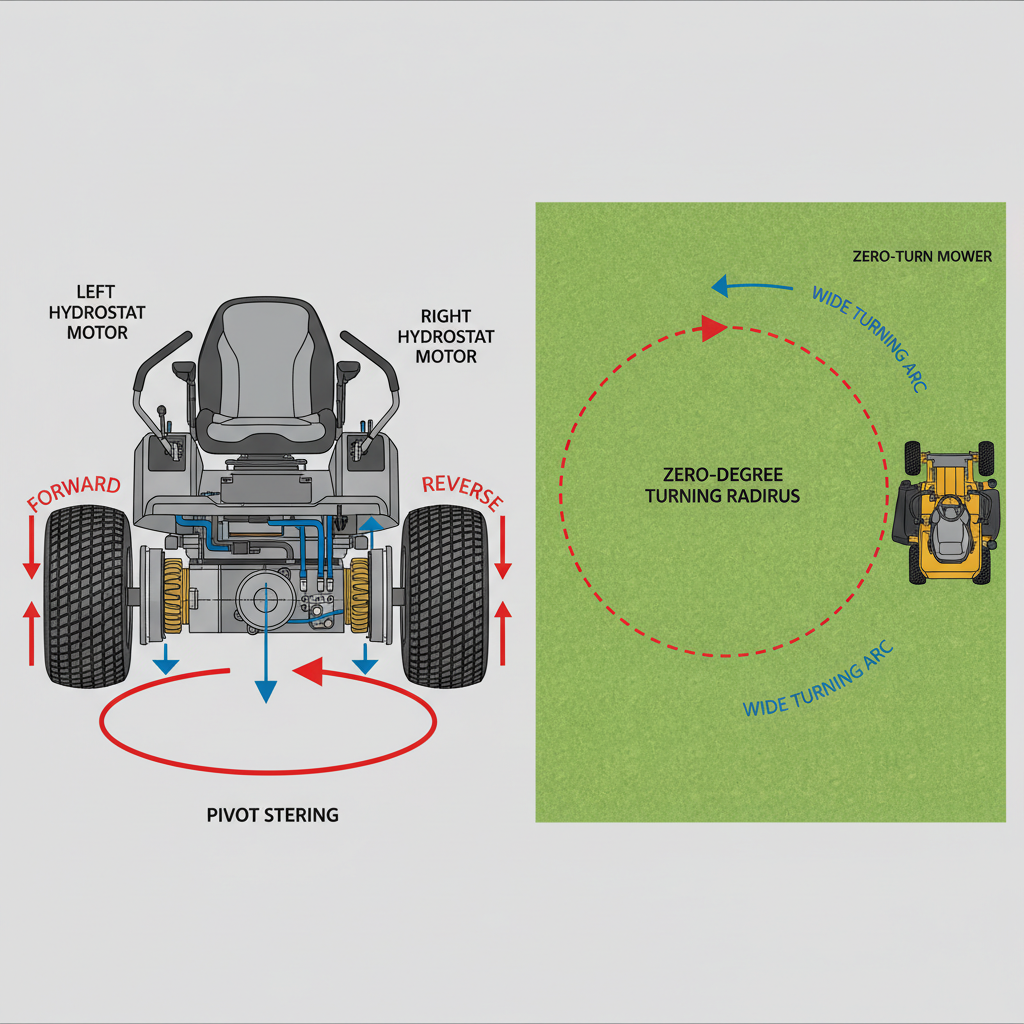
A zero-turn radius mower uses independent hydrostat motors on each rear wheel, allowing the operator to control each wheel’s speed and direction separately. This steering mechanism enables the mower to pivot on its center point, completing tight 180-degree turns without forward or backward movement. This differs fundamentally from traditional riding mowers that use a steering wheel connected to front wheels, requiring wider turning radiuses and more passes over the same ground.
The primary advantages of zero-turn mowers include:
- Time efficiency: Reduced turning and repositioning saves 20-40% mowing time on properties with landscaping obstacles
- Maneuverability: Navigate around trees, flowerbeds, and hardscaping with minimal yard damage
- Operator comfort: Lower steering effort compared to traditional riding mowers reduces fatigue on larger properties
- Cut quality consistency: The ability to follow precise patterns improves overall lawn appearance
Zero-turn mowers are available in residential and commercial categories, with commercial models featuring reinforced decks, larger fuel tanks, and heavier-duty components designed for 40+ hours of weekly operation.
Key Decision Factors for Your Zero-Turn Mower Selection
1. Lawn Size and Cutting Width
Your property’s mowing area directly determines the ideal cutting width. Measure your total lawn in square feet (length × width for rectangular properties, or use satellite imagery for irregular shapes).
- Small properties (under 0.5 acres): 42-46 inch cutting width; consider whether a zero-turn provides real advantage over a walk-behind or compact riding mower
- Medium properties (0.5-2 acres): 48-54 inch cutting width; zero-turn efficiency becomes significant, saving 30+ minutes per week
- Large properties (2-5 acres): 54-60 inch cutting width; zero-turn mower becomes essential for time efficiency
- Very large properties (5+ acres): 60-72+ inch commercial-grade decks; commercial models become cost-justified through time savings
2. Terrain Type and Slope Capability
Terrain significantly affects mower performance and safety. Zero-turn mowers handle flat ground exceptionally well, but hilly or uneven terrain requires specific features: Readers comparing setup options can review our technical analysis on z890 vs x870e motherboard.
- Flat properties: Standard residential models with 15-18 HP perform adequately
- Gentle slopes (under 10%): Look for models with enhanced traction and wider wheelbases; 18-20 HP recommended
- Moderate slopes (10-15%): Choose commercial-grade models with reinforced frames and 20-25 HP minimum; consider models with larger tires for improved traction
- Steep terrain (over 15%): Zero-turn mowers become unsafe; traditional riding mowers or walk-behind equipment is more appropriate
3. Budget Constraints
Zero-turn mower pricing typically ranges from $3,000-$5,000 for residential models to $6,000-$15,000+ for commercial-grade equipment. Determine your actual budget by calculating the cost per hour of use over expected equipment lifespan (typically 7-10 years for residential, 5-7 years for commercial with heavy use).
4. Frequency and Intensity of Use
Residential homeowners (1-2 mowings weekly during growing season) can use standard residential-grade zero-turn mowers with hydrostatic transmissions and deck sizes of 48-54 inches. These models require less maintenance and offer good value. For complementary field maintenance guidelines, examine our breakdown of marshall stanmore iii vs harman kardon onyx studio 8.
Commercial landscapers (40+ hours weekly) require commercial-grade construction with reinforced frames, larger fuel tanks (8+ gallons), and heavier-duty components. Commercial models justify higher upfront costs through durability and minimal downtime.
5. Cutting Width and Deck Design
Cutting width affects both mowing time and maneuverability. Wider decks (54-60 inches) reduce mowing time but are less maneuverable around obstacles. Consider: To evaluate matched hardware tolerances, consult our detailed overview of dyson v8 cyclone vs bissell featherweight stick.
- Deck material (stamped steel vs. fabricated steel; fabricated decks are more durable)
- Blade configuration (single vs. dual blades; dual blades provide superior cutting quality and consistency)
- Height adjustment range (should accommodate 1.5-4+ inches for seasonal mowing preferences)
- Mulching capability (if you prefer grass recycling over bagging)
Transmission Types and Performance Trade-offs
Hydrostatic transmissions are the standard in residential and commercial zero-turn mowers. They offer:
- Smooth, infinitely variable speed control without gear shifting
- Easy operation requiring minimal operator skill
- Excellent responsiveness on varied terrain
- Higher maintenance costs over time (pump and motor replacement can be expensive)
Mechanical transmissions appear on some budget models but are less common in modern zero-turn mowers. They typically offer:
- Lower upfront cost
- Simpler mechanical repair
- Less responsive control and higher operator fatigue
- Poor performance on uneven terrain
For most buyers, hydrostatic transmission is the better choice despite higher maintenance costs.
Residential vs. Commercial Zero-Turn Mowers: Which Fits Your Needs?
Construction and Durability Differences
Residential models typically feature:
- Lighter-gauge stamped steel decks (less durable but adequate for seasonal use)
- 15-20 HP engines sized for 50-60 hour yearly operation
- Standard suspension and frame geometry optimized for comfort
- Simpler controls and features
- Warranty periods of 2-3 years
Commercial models typically feature:
- Heavier fabricated steel decks designed for continuous use
- 20-28 HP engines rated for 1,000+ annual operating hours
- Reinforced frames and suspension for rough terrain
- Advanced operator controls and adjustability
- Warranty periods of 3-5 years with professional service requirements
- Larger fuel tanks (8-12 gallons) reducing refueling frequency
Warranty and Service Considerations
Residential mowers typically come with 2-3 year warranties covering defects but excluding normal wear. Commercial warranties extend to 3-5 years but often require documented maintenance performed by authorized dealers. Service availability directly impacts ownership satisfaction, before purchasing, verify that authorized dealers exist within reasonable distance and maintain parts inventory for your chosen brand.
When Residential Buyers Should Consider Commercial-Grade Equipment
A residential property owner might justify commercial equipment if:
- Property exceeds 3 acres and mowing is performed weekly
- Terrain includes persistent slopes or rough ground requiring durability
- The buyer intends to keep the mower longer than 10 years
- Local dealer support is strong and parts are readily available
Evaluating Engine Horsepower and Fuel Efficiency
Horsepower selection balances cutting performance with fuel economy. Recommended horsepower ranges:
- 0.5-1 acre properties: 14-16 HP sufficient for standard residential use
- 1-3 acre properties: 16-20 HP provides adequate power for varied grass conditions and terrain
- 3-5 acre properties: 20-24 HP ensures reliable performance in thick grass and reduces mowing time
- 5+ acre properties: 24-28 HP commercial engines with enhanced cooling systems
Fuel efficiency varies based on engine type (single vs. dual cylinders), load, and operating conditions. Most zero-turn mowers consume 0.5-1.5 gallons per hour. Calculate fuel costs by multiplying expected annual mowing hours by consumption rate and current fuel prices. For example, a property requiring 60 annual mowing hours with a 1-gallon-per-hour consumption rate at $3.50 per gallon costs $210 yearly in fuel.
Step-by-Step Selection Process
Step 1: Measure Your Mowing Area
Calculate precise lawn size by measuring length and width, or use online satellite measurement tools (Google Maps or similar services allow distance measurement). This determines the cutting width and hourly mowing time needed.
Step 2: Assess Terrain and Obstacles
Walk your property and note slope percentages, ground consistency (clay, sandy, wet areas), and permanent obstacles (trees, landscaping beds, hardscaping). Photograph areas with challenging conditions to discuss with dealers.
Step 3: Determine Budget and Usage Intensity
Establish maximum purchase price and calculate cost per mowing hour. Factor in fuel, maintenance (oil changes every 50 hours, blade sharpening, filter replacement), and potential repairs. Commercial-grade equipment costs more upfront but may offer better value for heavy use.
Step 4: Research Brands and Dealer Availability
Identify 3-4 major brands with authorized dealers in your area. Check online reviews on consumer sites and landscaper forums, focusing on reliability, dealer service quality, and parts availability. Visit dealer showrooms to compare models and ask about trade-in programs.
Step 5: Test-Operate Before Purchase
Request demonstration or loaner units to operate on your own property. Evaluate ease of operation, comfort during extended use, cutting quality, and maneuverability around obstacles. This real-world testing is invaluable for identifying comfort issues or performance concerns.
Step 6: Confirm Warranty and Service Options
Review warranty terms, understand what is and isn’t covered, and confirm maintenance requirements. Ask about extended warranty options and parts availability. A strong local dealer relationship often justifies purchasing a particular brand.
Understanding Total Cost of Ownership
Purchase price represents only a fraction of actual ownership cost. Calculate total cost of ownership over expected equipment life:
- Purchase price: $4,000-$8,000 (residential)
- Fuel (60 hours annually, 1 gal/hour, $3.50/gal): $210 per year × 8 years = $1,680
- Maintenance (oil, filters, blade sharpening, seasonal service): $200-$400 annually
- Repairs: Budget $300-$600 over equipment lifetime
- Storage and registration: $100-$200 annually in some areas
- Total 8-year ownership cost: $7,000-$10,000
Commercial equipment costs more upfront but depreciates differently and may retain resale value better if properly maintained.
Everything You Need to Know: Best Zero-turn Lawn Mower FAQ
Q: How often should I service a zero-turn mower to maintain warranty coverage?
Most manufacturers require documented maintenance per the owner’s manual, typically oil changes every 50-100 operating hours, air filter replacement annually, and professional seasonal service. Residential mowers usually need service annually before the mowing season. Commercial mowers used heavily may require service every 100-150 hours. Skipping maintenance voids warranty coverage and accelerates wear. Keep all service records with the equipment and provide them if reselling.
Q: Can I use a zero-turn mower on slopes, and what’s the maximum safe angle?
Zero-turn mowers are generally safe on slopes up to 10-12 degrees (approximately 18-20% grade) depending on the model and turf conditions. Slopes exceeding 15 degrees become hazardous due to stability concerns and potential rollover risk. On steep terrain, the mower’s weight distribution and large rear wheels provide some advantage over traditional riding mowers, but always follow manufacturer guidelines. Test any slope on your property with your dealer before purchase, and never mow across slopes, always mow up and down the slope direction.
Q: What’s the difference between a zero-turn mower’s turning radius and the advertised “zero-turn” capability?
True zero-turn radius means the mower can pivot in place on its center point with zero forward/backward movement, enabling 180-degree turns without advancing the mower’s position. However, most manufacturers specify a “turning radius” (e.g., 8-10 feet) that represents the smallest circle the mower can trace in a complete turn. Some residential models approach but don’t achieve perfect zero-turn capability due to frame geometry and operator control limitations. Verify whether your target model offers true zero-turn performance or if it has minimal but measurable turning radius.
Q: Should I buy a used zero-turn mower to save money, and what should I inspect?
Used zero-turn mowers can offer good value if properly maintained, typically costing 40-50% less than new equipment. Before purchasing, check engine compression and fuel system condition, inspect deck for cracks or significant rust, test transmission responsiveness and smoothness, verify blade sharpness and deck leveling, and confirm service history documentation. Request an on-property demonstration before purchase. Avoid machines with unknown service histories, significant corrosion, or transmission hesitation. A pre-purchase inspection by an authorized dealer (typically $50-$100) can identify mechanical issues and provide confidence in the purchase.
Key Takeaways for Your Purchase Decision
- The best zero-turn mower matches your specific lawn size, budget, terrain, and usage frequency, not brand popularity
- Measure your mowing area, assess terrain conditions, and determine budget before comparing models
- Residential models (42-54 inch decks, 15-20 HP) suffice for most homeowners; commercial models justify cost only for heavy use or challenging terrain
- Hydrostatic transmissions offer superior control and responsiveness compared to mechanical alternatives
- Factor total cost of ownership (fuel, maintenance, repairs) over 7-10 years, not just purchase price
- Test-operate equipment on your property before committing, and prioritize dealer availability and service quality
- Warranty coverage requires documented maintenance, understand requirements before purchase

Pros
- Brushless motor system delivers gas-equivalent power without emissions or excessive noise
- High-capacity battery kit enables cutting coverage of up to 4.4 acres per charge set
- Durable 10-gauge steel deck and constant high blade tip speed handle dense grass effectively
- Premium seating and lighting features support comfortable extended operation
- 4-year warranty provides strong protection for the investment
Cons
- Runtime tops out around 4.4 acres depending on conditions, requiring recharges for bigger properties
- Electric design depends on charging infrastructure and battery management rather than simple refueling
- Height adjustment is noted only basically without extensive position details in available specs
The Greenworks 60V MaximusZ Zero Turn Riding Lawn Mower is a commercial-grade electric machine built for large lawns. Its primary construction centers on a heavy-duty 60-inch 10-gauge fabricated steel deck that prioritizes durability and airflow, paired with premium comfort elements including an adjustable suspension seat with lumbar support and foldable armrests for a solid first impression of quality and user focus.
Performance shines through an intelligent brushless motor system offering power equivalent to a 31HP gas engine with zero emissions. Three high-torque brushless hub motors sustain a constant 17,900 FPM blade speed, while SmartCut Technology auto-adapts to prevent bogging in thick or wet grass. The complete kit supplies (2) 20.0Ah suitcase batteries plus (4) 8.0Ah batteries and a 1.5kW fast charger for up to 4.4 acres of cutting. Additional capabilities include a 4-in-1 deck for mulching, bagging, rear and side discharge, 300 lb towing capacity with front/rear hitch, dual LED headlights, and an LCD display.
Drawbacks and considerations include the practical need to recharge the battery set after maximum runtime, which can interrupt work on properties exceeding 4.4 acres. Being fully electric means reliance on power sources for recharging instead of fuel, and height adjustment is referenced only in basic terms without more granular position data in the specifications.
In verdict, the Greenworks 60V MaximusZ delivers the most value to homeowners and professionals managing medium-to-large properties who want quiet, emission-free commercial power, versatile cutting options, and the security of a 4-year warranty in a comfortable zero-turn package.

Pros
- Strong stated cutting capacity for large properties, with up to 4 acres per charge.
- Zero-turn design supports fast, precise mowing around obstacles.
- Uses battery power instead of gas, reducing maintenance-related chores and emissions.
- Includes six high-capacity batteries and a charger, so it is ready for use out of the box.
Cons
- Heavy at 720 pounds, which may make transport, storage, or maneuvering by hand difficult.
- Large dimensions require substantial garage or shed space.
- The high upfront cost may put it out of reach for buyers with smaller lawns or limited budgets.
Overview & Design: The EGO Power+ ZT5207L is a 52-inch electric riding lawn mower with a zero-turn radius, built for users who need efficient coverage on larger properties. Its black finish, substantial frame, and 720-pound weight reflect a serious, full-size riding mower designed for demanding residential mowing.
Performance & Key Features: EGO says Peak Power+ technology combines up to six 56V ARC Lithium batteries, and the mower is rated at a 25 HP-equivalent output. The 52-inch deck and zero-turn steering should help reduce mowing time and improve control around landscaping, while the included six 56V 12.0Ah batteries are stated to support up to 4 acres per charge.
Drawbacks & Considerations: This model is large and heavy, so it will not suit every storage space or every user. Its premium positioning also means buyers should be confident they need this much capacity, since smaller yards may not justify the size, weight, or cost.
Verdict: The ZT5207L is best for homeowners with expansive lawns who want battery-powered convenience and zero-turn efficiency in one machine. It is a compelling option if you value gas-like performance, broad deck coverage, and compatibility with EGO's 56V battery ecosystem.
Pros
- Robust 26HP Kohler engine provides ample power for demanding mowing tasks and thick vegetation
- Large 60-inch fabricated steel deck enables faster coverage of extensive lawn areas
- Durable 3-blade fabricated construction enhances deck longevity and resistance to wear
- Zero-turn capability offers precise control and reduced mowing time in complex layouts
Cons
- Large 60-inch deck and overall zero-turn size demand significant storage space and may not suit smaller properties
- Base specifications lack details on accessories such as mulching kits or baggers, which may need separate purchase
- High-powered engine setup could increase fuel use during long sessions relative to lower-horsepower models
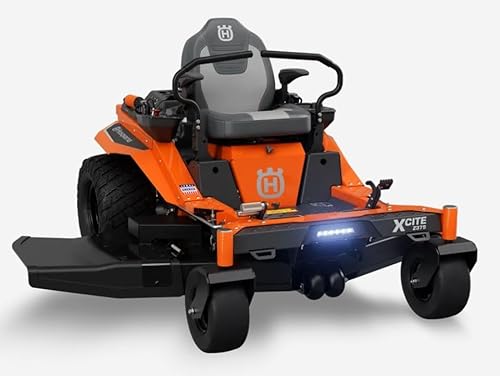
The Husqvarna Xcite Z375 is a zero-turn riding lawn mower engineered for large-scale residential and light commercial mowing. It combines a solid fabricated steel build with a capable Kohler power plant, creating an immediate impression of durability and purposeful design suited to expansive properties.
Performance centers on the 26HP 747cc Kohler V-Twin engine that supplies strong, consistent power for thick grass and varied terrain, paired with the 60-inch 3-blade fabricated steel deck. This setup delivers a wide, clean cut that covers ground efficiently and maintains quality across long sessions.
Considerations include the substantial footprint of the 60-inch deck and zero-turn frame, which requires ample storage and may feel oversized for compact yards. Available data also omits specifics on add-ons or comfort options, so buyers should confirm full feature sets independently.
The Husqvarna Xcite Z375 delivers the most value for owners of large lawns or light commercial operators who prioritize raw cutting power, deck durability, and zero-turn efficiency over compact size or extensive accessory packages.

Pros
- Offers quiet, emission-free electric operation with power matching traditional 22 HP gas mowers.
- Includes four high-capacity 56V 10.0Ah batteries for up to 2 acres of runtime right out of the box.
- Customizable LCD interface and multiple driving modes enhance user control and ride comfort.
- Versatile 10-position cutting height and 3-in-1 deck options provide flexible lawn finishing.
- Fast two-hour full recharge capability supports productive multi-session mowing days.
Cons
- Maximum single-charge coverage is limited to about 2 acres without purchasing additional batteries for bigger properties.
- Requires access to a power outlet for recharging, which may interrupt workflow on very large or remote lawns.
- Battery management and storage add extra steps compared to simple gas-powered alternatives.
The EGO Power+ ZT4204L is a premium electric zero-turn riding lawn mower built for homeowners seeking a clean alternative to gas models. It features a robust 42-inch stamped steel deck and includes four 56V 10.0Ah ARC Lithium batteries plus a charger, delivering an immediate impression of high-quality engineering focused on power and convenience.
In real-world use, this mower matches the performance of a 22 horsepower gas unit while reaching speeds up to 8 MPH. The zero-turn radius combined with three selectable driving modes via the LCD interface allows smooth navigation and efficient cutting of up to 2 acres per charge. Users can fine-tune the cut across 10 height positions from 1.5 to 4.5 inches and choose between mulching, bagging, or side discharge for complete lawn care flexibility. Full recharges take roughly two hours with the included Z6 charger.
Potential drawbacks include the 2-acre limit on the stock battery set, meaning larger properties will need extra batteries for uninterrupted operation. As a fully electric system, it also depends on regular charging access rather than quick refueling, and battery handling requires more attention than traditional gas mowers.
Overall, the EGO Power+ ZT4204L is an excellent choice for environmentally conscious homeowners with lawns up to a few acres who value quiet operation, low maintenance, and precise control. Those with extensive grounds should plan for additional battery capacity to maximize its benefits.

Pros
- Gas-equivalent power from electric Peak Power system with no emissions or fuel needs
- Long runtime covering up to 3 acres per charge with included high-capacity batteries
- Highly maneuverable 52-inch zero-turn deck with customizable blade speeds from 2300 to 3200 RPM
- User-friendly digital interface and app integration for real-time customization and monitoring
- Strong warranty coverage up to 5 years on mower and batteries with registration
Cons
- Runtime limited to approximately 3 acres per full charge, requiring recharges for larger properties
- Depends on multiple large 56V batteries which must be managed and recharged using the included charger
- No independent customer reviews available yet to confirm long-term real-world reliability
The EGO POWER+ Z6 Zero Turn Riding Lawn Mower model ZT5216L is a premium electric zero-turn rider built for efficient large-area mowing. It features a robust 52-inch 10-gauge fabricated steel deck, wide frame for slope stability, and durable IPX5-rated weather-resistant construction that creates an immediate impression of professional-grade quality without the noise or fumes of gas models.
In performance, Peak Power technology draws from up to six included 56V 10.0Ah ARC Lithium batteries to deliver power equal to a 27-horsepower gas engine while covering up to 3.0 acres per charge. The dual-blade system offers adjustable speeds from 2300 to 3200 RPM and 10 cutting heights between 1.5 and 4.5 inches. Three driving modes support speeds up to 8 MPH, and the color digital screen plus EGO Connect app allow full customization of speed, cruise control, and battery monitoring for real-world efficiency on varied terrain.
Considerations include the finite runtime of about 3 acres before recharging is needed, reliance on managing six batteries with the 880W charger, and the absence of extensive user feedback at launch that leaves long-term durability still to be proven in the field.
Overall, the EGO POWER+ Z6 ZT5216L delivers the most value to homeowners with mid-to-large lawns seeking quiet, powerful electric zero-turn performance, advanced controls, and reduced maintenance. Those with properties exceeding 3 acres or preferring simpler traditional mowers may want to evaluate battery logistics carefully.
Pros
- Powerful 24HP/726cc Kawasaki V-Twin engine for reliable high-output performance
- Wide 61-inch fabricated 3-blade deck for efficient coverage of large areas
- Commercial-grade Hydro Gear ZT-3100 transmission for durable zero-turn handling
- Generous 5-gallon fuel tank and included ROPS for practical all-day use and safety
- 4-year consumer warranty coverage on the complete machine
Cons
- Large 61-inch deck and zero-turn frame require substantial storage space and may feel oversized for small residential yards
- Commercial-oriented components can demand more maintenance knowledge than basic consumer mowers
- No bagging, mulching kit, or additional attachments listed as standard equipment
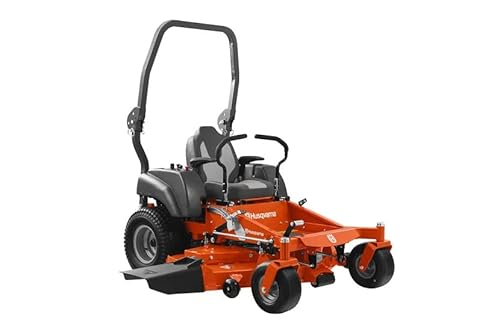
The Husqvarna MZ61 is a robust zero-turn riding lawn mower from the brand's commercial-leaning lineup, pairing a heavy-duty fabricated deck with a ROPS safety structure. Its overall build emphasizes durability and operator protection for demanding outdoor work rather than lightweight residential convenience.
Performance centers on the 24HP/726cc Kawasaki FR730V Series V-Twin engine that supplies ample torque for thick or wet grass, while the 61-inch 3-blade fabricated deck cuts wide swaths efficiently. The Hydro Gear ZT-3100 commercial hydrostatic transmission enables smooth, precise zero-turn steering that reduces time spent trimming edges and navigating landscaping. A 5-gallon fuel tank further supports longer continuous runs on expansive properties.
Potential drawbacks include the mower's substantial size, which can make storage and transport more challenging for users with limited space. The commercial-grade components also mean the machine may require more frequent or specialized maintenance compared to simpler residential models, and no bagging or mulching systems are noted as included.
Overall, the Husqvarna MZ61 delivers the strongest value for owners of large lawns, estates, or light commercial grounds who prioritize cutting speed, engine reliability, and safety features. Smaller-yard users will likely find it oversized for their needs.
Zero-Turn Mowers and Operator Safety
Zero-turn machines steer with independent drive levers, which allows very tight turns but also creates a steep learning curve for new owners. Practicing in an open area before tackling slopes is a sensible habit. General guidance on operating ride-on equipment is available from American National Standards Institute (ANSI).