Direct Answer: There is no single “best” zero turn lawn mower for everyone. The ideal choice depends on your lawn size, budget, terrain type, and whether you need residential or commercial-grade equipment. Top performers like John Deere, Hustler, and Toro excel across different use cases, but selecting the right mower requires comparing cutting deck size (42–72 inches for residential), engine horsepower (15–35 HP), turning radius, transmission type, and warranty terms against your specific requirements.
What Makes a Zero Turn Mower “Best”?
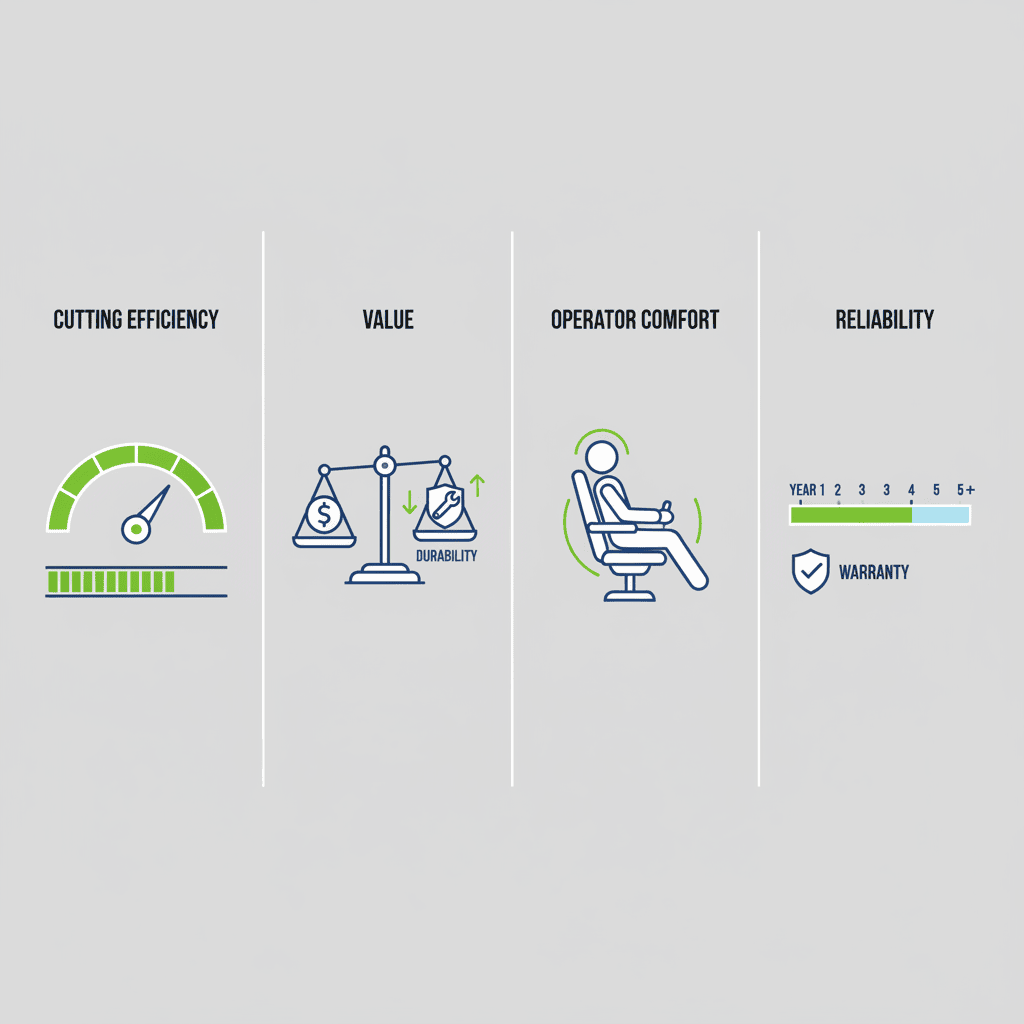
Defining “best” requires understanding what matters most for your lawn care situation. A zero turn mower that excels for a residential property with 2 acres may be unsuitable for a 10-acre estate or a professional landscaping operation. The best mower balances four critical dimensions: performance efficiency (how quickly and evenly it cuts), value for investment (price relative to durability and features), operator comfort (fatigue reduction during extended use), and long-term reliability (warranty, dealer support, and maintenance costs).
Most buyers initially focus on price, but this often leads to poor outcomes. A $3,000 residential mower may require $800 annually in maintenance and suffer transmission failure after 500 hours, while a $5,500 model might operate reliably for 2,000+ hours with predictable maintenance costs. Over a 10-year ownership period, the more expensive mower often delivers better total value.
How Cutting Deck Size Affects Mowing Efficiency
Cutting deck size—the width of grass the mower cuts in a single pass—directly impacts how many passes you need to complete your lawn. A 48-inch deck requires 25% more passes than a 60-inch deck on the same property, translating to longer mowing time and higher fuel consumption. However, larger decks sacrifice maneuverability in tight spaces around trees, gardens, and pathways.
- 42–48 inches: Best for residential properties under 1.5 acres with landscaping obstacles
- 54–60 inches: Ideal for 1.5–4 acre residential lawns with moderate obstacles
- 60–72 inches: Suited for 4+ acre properties or commercial use with open space
Engine Horsepower and Lawn Size Requirements
Engine horsepower determines how quickly the mower deck can rotate blades and how effectively it maintains cutting speed in thick, wet, or unmowed grass. Underpowered engines cause blade slowdown, resulting in uneven cuts and multiple passes over the same area.
- 15–18 HP: Sufficient for residential mowers with 42–48-inch decks on well-maintained lawns
- 20–25 HP: Recommended for 54–60-inch decks serving 2–5 acre properties
- 25–35 HP: Required for 60–72-inch commercial decks or dense turf conditions
Key Specifications to Compare When Choosing a Zero Turn Mower
Beyond deck size and horsepower, several technical specifications determine real-world performance and ownership costs:
Transmission Type: Hydrostatic vs. Mechanical
Hydrostatic transmissions use pressurized fluid to transfer engine power to wheels. They offer infinite speed variation (smooth acceleration without gears), better hill-holding capability, and reduced operator fatigue because speed control requires only lever or pedal input. However, hydrostatic systems are more expensive to repair and can develop leaks over time.
Mechanical transmissions use traditional gearing and cost less initially. They’re generally more durable for heavy-duty use but require more operator skill to maintain smooth speed control and can be uncomfortable on rough terrain.
For most residential users, hydrostatic transmission justifies the cost premium through improved comfort and reliability during the mower’s critical 500–1,000-hour window.
Warranty Coverage and Manufacturer Support
Warranty terms reveal manufacturer confidence in durability. Industry-leading residential mowers typically offer:
- 2–3 years/500 hours full coverage on structural components
- 5–7 years limited warranty on frame and deck
- Powertrain warranties of 2–3 years covering engine and transmission
Commercial-grade mowers often provide shorter warranties (1–2 years) but engineered for 3,000+ operating hours with regular maintenance. Verify that local dealers honor warranties and maintain parts inventory before purchase—a mower from an unknown brand may be impossible to repair if the dealer network vanishes.
Matching Zero Turn Mowers to Your Lawn Size and Terrain
Self-Assessment: Lawn Square Footage
Accurately measuring or estimating your lawn size is the foundation for mower selection. Measure length and width in feet, multiply them, then divide by 43,560 to convert to acres. For irregular properties, use online mapping tools (Google Maps can estimate area).
| Lawn Size (Acres) | Recommended Deck Size | Typical Mowing Time per Week | Engine HP Range |
|---|---|---|---|
| 0.5–1 | 42–48 inches | 45–90 minutes | 15–18 HP |
| 1–2.5 | 48–54 inches | 1.5–2.5 hours | 18–22 HP |
| 2.5–4 | 54–60 inches | 2.5–3.5 hours | 22–25 HP |
| 4+ | 60–72 inches | 3.5–5+ hours | 25–35 HP |
Terrain Challenges and Feature Requirements
Lawn conditions significantly influence which mower features become essential rather than optional:
- Slopes exceeding 15°: Require improved weight distribution, higher ground clearance, and hydrostatic transmission for safe hill-holding. Avoid zero turn mowers on slopes steeper than 20 degrees regardless of specifications—the risk of rollover increases dramatically.
- Wet or clay soils: Demand wider tire footprint and lower ground pressure. Soft turf requires less aggressive tire tread to avoid ruts.
- Uneven terrain: Needs suspension system and comfortable seating to reduce operator fatigue over extended use periods.
- Wooded properties with obstacles: Benefit from smaller deck size (48 inches or less) and tight turning radius (40 inches or better) to navigate around trees efficiently.
Budget vs. Performance: Finding Value in Zero Turn Mowers
Typical Price Ranges by Equipment Class
- Entry-level residential (42–48-inch deck): $2,500–$4,000. Basic features, adequate for 1–2 acres, shorter warranty periods (2 years).
- Mid-range residential (54–60-inch deck): $4,000–$7,000. Enhanced comfort, better warranty (3–5 years), suitable for 2–4 acres.
- Premium residential/light commercial (60–66-inch deck): $7,000–$12,000. Advanced operator features, superior build quality, extended warranty (5–7 years).
- Commercial-grade (60–72-inch deck): $10,000–$20,000+. Engineered for 50+ hours weekly use, maximum durability, minimal warranty but designed for 3,000+ operating hours.
Features That Justify Premium Pricing
Avoid paying for features you won’t use, but recognize which upgrades reduce total ownership costs:
- Suspension seating ($300–$600 premium): Justifiable for lawns exceeding 2 acres (mowing sessions over 2 hours) or rocky terrain. Reduces operator fatigue and back strain significantly.
- Cruise control ($200–$400 premium): Valuable for properties with 2+ acres of open, obstacle-free lawn. Reduces hand/arm fatigue during long straightaways.
- Mulching vs. bagging capability ($400–$800 premium): Mulching reduces fuel costs and disposal time; bagging improves appearance but requires frequent emptying. Choose based on your grass cutting frequency and aesthetic priorities.
- Extended warranty (add $500–$1,500): Often excellent value if offered at purchase; adding coverage years later typically costs more per year.
Hidden Ownership Costs to Factor Into Total Budget
The purchase price represents only 40–60% of total ownership cost over 10 years:
- Annual maintenance: $150–$400 (oil changes, blade sharpening, filter replacement, seasonal inspections)
- Fuel: $200–$600 annually for typical residential use
- Repairs outside warranty: Highly variable; budget $300–$800 annually as property ages past 500 hours
- Storage and shelter: Deterioration accelerates without protection; a $1,500 equipment shed pays dividends in extended mower lifespan
Comfort and Operator Features to Evaluate
Mowing sessions lasting 2+ hours demand comfort features that reduce fatigue and improve control:
Seat Design and Suspension
A basic plastic seat becomes uncomfortable after 90 minutes. Superior seats include padding, lumbar support, and suspension that isolates your body from terrain vibration. For properties exceeding 2 acres, investing in premium seating prevents chronic back pain and increases your likelihood of consistent mowing schedules.
Control Systems and Learning Curve
Zero turn mowers use two primary control systems:
- Dual-lever controls: Each hand controls one rear wheel. Mastering smooth turns requires practice. More fatiguing for extended use because both arms remain active.
- Single-lever or pedal controls: One input controls both wheels (easier to learn), freeing one hand or arm to rest. Increasingly standard on premium models.
Test-operate different control systems before purchasing; what feels intuitive to one person may feel unintuitive to another, affecting your willingness to mow regularly.
Safety and Visibility Features
Essential safety features include automatic blade shutoff when you leave the seat (prevents injury if you fall), rollover protection (required on sloped terrain), and adequate deck height clearance to avoid scalping ground obstacles. High-visibility colors (yellow, orange) reduce accident risk on properties near roadways.
Residential vs. Commercial-Grade Zero Turn Mowers
The boundary between residential and commercial equipment is defined by intended weekly usage hours and acceptable maintenance intervals:
- Residential mowers: Designed for 2–8 hours weekly use. Maintenance intervals typically every 50–100 hours. Expected lifespan: 1,000–1,500 operating hours before major repairs. Comfort features prioritized.
- Commercial-grade mowers: Engineered for 30–50+ hours weekly use. Maintenance intervals every 50 hours or weekly. Expected lifespan: 3,000–5,000+ operating hours before overhaul. Simplicity and durability prioritized over comfort.
Residential users should avoid commercial mowers; their aggressive maintenance demands, uncomfortable seating, and lack of refinements make them unsuitable for occasional use. Conversely, landscapers using residential-grade equipment on commercial properties will face premature failures and expensive downtime.
How to Evaluate Brand Reliability and Support
Not all brands offering similar specifications deliver equal long-term reliability. Assess manufacturer credibility through:
Warranty Terms as Confidence Indicators
Extended full-coverage warranties indicate engineering confidence. Manufacturers don’t offer generous warranties on unreliable products; the risk of warranty claims would exceed profit margins. Conversely, minimal warranties suggest higher anticipated failure rates.
Dealer Network and Parts Availability
A mower is only as valuable as your ability to repair it. Before purchasing, verify:
- At least one authorized dealer within 30 miles of your property
- Dealer maintains parts inventory (not requiring 3-week special orders)
- Dealer reviews on Google, Yelp indicate responsive service and honest pricing
- Manufacturer’s website lists all authorized service locations
Finding Independent Performance Data
Look beyond manufacturer claims to independent sources:
- Consumer Reports: Provides reliability ratings and owner satisfaction data for major brands
- Owner forums and subreddits (r/lawncare): Real users discussing long-term ownership experience, common problems, and maintenance requirements
- Local extension services: Universities provide unbiased equipment assessments for agricultural machinery
- Rental centers: Businesses wouldn’t stock unreliable brands; popularity among rental equipment indicates proven durability under heavy use
Frequently Asked Questions
How many acres can a zero turn mower handle before becoming impractical?
A single operator on a residential zero turn mower can comfortably maintain up to 5–6 acres in a weekly mowing session lasting 4–5 hours. Beyond 6 acres, mowing sessions exceed comfortable fatigue limits unless the property has minimal obstacles and slopes. For estates exceeding 8–10 acres, consider either hiring lawn care services or purchasing a commercial-grade mower if you value the activity.
Should I buy a zero turn mower if my lawn has significant slope?
Zero turn mowers on slopes exceeding 15 degrees present rollover risks and uneven cutting because the mower’s weight distribution shifts on inclines. For sloped terrain, evaluate whether a traditional riding mower (with forward/reverse gears and better weight distribution) or walk-behind push mower would be safer and more effective. If you must use a zero turn on slopes, limit use to 10–15 degree inclines maximum and invest in models specifically rated for slope operation with enhanced stability features.
What’s the difference between a zero turn mower and a traditional riding mower?
Zero turn mowers rotate independently of forward motion, allowing 360-degree turns in place without leaving unmowed grass in the turn radius. Traditional riding mowers require a larger turning radius and leave circular uncut areas during turns. This makes zero turn mowers significantly more time-efficient on properties with trees, gardens, or landscaping requiring frequent direction changes. However, zero turn mowers generally cost $1,000–$3,000 more than comparable riding mowers, justifying the price difference primarily for properties exceeding 1.5 acres with multiple obstacles.
How often should I service a new zero turn mower, and what’s involved?
Follow the manufacturer’s maintenance schedule in your owner’s manual, typically involving oil and filter changes every 50 hours or quarterly (whichever comes first). Annual pre-season inspections should include blade sharpening, belt inspection, deck cleaning, tire pressure checks, and battery testing. Neglecting maintenance voids warranties and accelerates component failure. Expect annual maintenance costs of $150–$400 for a residential mower if you perform simple tasks (oil changes, blade sharpening) yourself, or $400–$800 if you pay a dealer for all services.
Summary: Selecting Your Ideal Zero Turn Mower
The best zero turn lawn mower for your situation requires honest self-assessment across five dimensions: (1) lawn size and layout determining required deck size and turning radius, (2) terrain characteristics (slope, soil type, obstacles) affecting which features become essential, (3) budget constraints balancing initial purchase price against long-term ownership costs, (4) comfort priorities reflecting your mowing session length and physical tolerance, and (5) dealer proximity and support quality ensuring reliable maintenance and repair access.
Avoid the common mistake of prioritizing price over value. The cheapest mower in your size category often delivers the poorest long-term economics because warranty periods expire just as reliability issues emerge. Instead, establish your actual budget ceiling, then invest in the highest-quality model within that range from an established brand with local dealer support. This approach typically yields 5–10 additional years of reliable operation compared to bottom-tier alternatives, making the premium investment economically sound over your ownership period.