Quick Answer: Choosing the Best Time to Mow the Lawn
Quick Answer: Mow your lawn in early morning (after dew dries) or late afternoon when temperatures are moderate. Aim for 2-3 times per week during peak growing season, and always avoid wet grass, extreme heat, and midday sun.
Why Timing Matters for Lawn Health
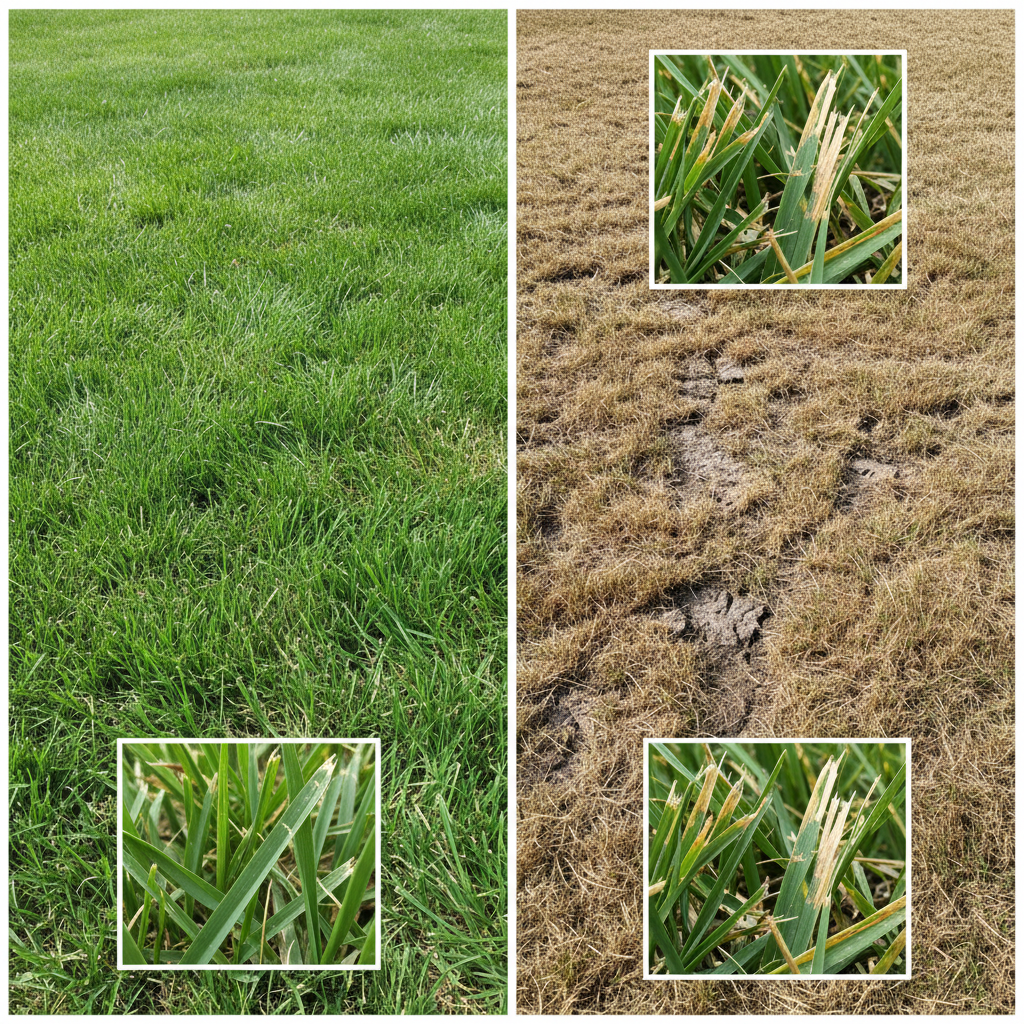
Mowing at the right time isn’t just convenient, it directly impacts how quickly your grass recovers and how healthy it looks. Grass is a living plant that experiences stress when cut, and the conditions under which you mow determine whether your lawn bounces back vigorously or struggles.
When you mow at optimal times, you’re cutting grass when it’s strongest and most resilient. Grass that’s been stressed by heat, moisture, or disease has a harder time healing from the cutting wound. The leaf blade takes several days to recover after mowing, during which the plant redirects energy to healing rather than growth. Cut during stress periods, and your lawn becomes vulnerable to disease, pest damage, and browning.
Moisture content matters enormously. Wet grass blades bend rather than cut cleanly, your mower tears and shreds them instead of slicing through. These ragged wounds don’t seal properly and invite fungal infections like leaf spot disease. Additionally, wet clippings clump together, clogging your mower deck and creating thatch buildup that suffocates the soil.
Best Times to Mow: Morning vs. Evening
Early Morning (8 AM-10 AM)
Early morning is generally the superior choice for most lawns. By mid-morning, dew has evaporated from grass blades, leaving them dry enough for a clean cut. Temperatures are still moderate, so the grass isn’t stressed by heat. The air is typically calmer, which helps your mower operate more efficiently and reduces clipping scatter.
Mowing in early morning also means your freshly cut lawn has the entire day to recover before nightfall. During daylight hours, grass performs photosynthesis and directs energy toward healing the cut wound. This recovery window is crucial for dense, healthy regrowth.
Late Afternoon (4 PM-6 PM)
Late afternoon works well as an alternative, particularly if morning schedules don’t allow. Choose a time when temperatures have started declining from their peak. The grass is dry, and you avoid the stress of midday heat exposure. For additional operational safety benchmarks, see our published testing notes on z890 vs x870e motherboard.
The drawback: your lawn has only a few hours before nightfall to begin recovery. Cool evening temperatures slow the plant’s metabolic processes, meaning less active healing happens overnight. For this reason, late afternoon is acceptable but not ideal compared to morning mowing.
When to Avoid Mowing
Wet grass: Never mow when grass is wet from rain, sprinklers, or heavy dew. Wait at least 2-4 hours after rain for most lawns, or until morning dew fully dries. To compare alternative configurations, check our hands-on review of marshall stanmore iii vs harman kardon onyx studio 8.
Midday heat (10 AM-4 PM): Mowing during peak sun and heat stresses the grass when it’s already vulnerable. Cutting removes leaf surface area that protects against UV damage and heat loss. A freshly mowed lawn is especially susceptible to browning and dormancy during this window.
Evening (after 6 PM): Cutting too late leaves the grass with minimal daylight recovery time. The plant can’t photosynthesize effectively in low light, delaying wound healing and making the lawn vulnerable to overnight fungal growth in cool, damp conditions. Users looking for related component recommendations can explore our dyson v8 cyclone vs bissell featherweight stick breakdown.
How Weather Conditions Affect Mowing Decisions
Wet Grass and Moisture Management
Wet grass is the single most common mowing mistake. When you mow wet turf, you’re fighting physics: wet blades are heavier, floppier, and don’t feed cleanly into the mower deck. The blade tears and crushes the grass rather than cutting it. These damaged wound edges turn brown within hours and create entry points for disease pathogens.
Wet clippings also stick to your mower deck, creating buildup that reduces cutting efficiency and can damage the equipment. They clump on your lawn, creating thatch that blocks water and air from reaching soil, and they decompose more slowly than dry clippings. Before finalizing equipment decisions, refer to our comprehensive bissell crosswave hydrosteam vs shark stainforce comparison.
Solution: Wait until grass is completely dry. Morning dew typically dries by 9-10 AM in most climates. After rain, wait at least 24 hours for heavy soil moisture to decrease, though the grass surface may dry faster.
Extreme Heat
Mowing during heat waves or extreme summer temperatures (above 85°F) stresses cool-season grasses and even challenges warm-season varieties if temperatures exceed 95°F. Here’s why: cutting removes the blade canopy that protects the crown (the growth point where new leaves emerge) from intense UV radiation and heat exposure. A freshly cut lawn loses this protection right when temperatures are peak.
In extreme heat, reduce mowing frequency or shift your schedule entirely. Mow in early morning before heat builds, or skip a week if temperatures are dangerously high. Raise your mowing height by half an inch to retain more leaf blade for protection.
Humidity and Dew
High humidity slows dew evaporation. On humid mornings, plan to mow later (9-10 AM) rather than 8 AM to ensure grass is truly dry. In tropical or subtropical climates with persistent humidity, mowing in late afternoon may be preferable to waiting for elusive morning dryness.
Mowing Frequency and Seasonal Schedules
The One-Third Rule
The foundational principle of healthy mowing is simple: never remove more than one-third of the grass blade length in a single mowing. If your lawn should be 3 inches tall, don’t let it grow to 4.5 inches before mowing. This rule prevents excessive stress and maintains continuous growth.
Following the one-third rule naturally leads to more frequent mowing during active growth periods. During peak growing season, you may need to mow 2-3 times per week. This frequency ensures you’re never cutting away more than one-third of the blade, and it keeps your lawn uniformly dense and attractive.
Spring (Growing Season Begins)
In spring, cool-season grasses (northern climates) experience their first major growth surge. Begin mowing once grass reaches 1 inch above your target height. Start with weekly or twice-weekly mowing in mid-spring, increasing to 2-3 times weekly as growth accelerates.
Spring is when you establish mowing patterns for the year. Set your mower to the appropriate height for your grass type (typically 2.5-3.5 inches for cool-season grasses) and maintain consistency.
Summer (Peak Growth)
Summer demands the most frequent mowing for cool-season grasses, though growth rate varies by region and rainfall. In ideal conditions (regular water, moderate temperatures), mow 2-3 times per week. During heat stress or drought, reduce frequency and raise mowing height by 0.5 inches to help grass retain moisture.
For warm-season grasses (southern climates), summer is the peak season. These grasses grow fastest when temperatures are 80-95°F. Mow 1-2 times weekly, keeping height at 1.5-2.5 inches depending on species.
Fall (Transition and Preparation)
Cool-season grasses experience a second growth flush in fall as temperatures cool. Mow frequency returns to 2-3 times weekly. Continue mowing until growth stops, typically when temperatures drop below 40°F consistently. Don’t scalp your lawn in fall, maintain height to protect the crown over winter.
For warm-season grasses, fall is transition to dormancy. Gradually reduce mowing frequency as growth slows. Perform a final mowing before dormancy begins, cutting slightly shorter to reduce winter disease risk.
Winter (Dormancy)
Cool-season grasses enter dormancy in winter and don’t require mowing once growth stops. Warm-season grasses are fully dormant and brown. Don’t mow dormant grass, it won’t recover from cutting, and you risk damaging crowns and soil structure.
Adapting Mowing Schedules to Different Grass Types and Climates
Cool-Season Grasses (Northern Climates)
Species like fescue, bluegrass, and ryegrass grow most vigorously in spring and fall when temperatures are 60-75°F. These are your peak mowing windows. Summer heat slows growth, and you may reduce frequency or shift to evening mowing to avoid heat stress. Winter dormancy eliminates mowing entirely.
Optimal height: 2.5-3.5 inches. Mow when grass reaches 3.75-5.25 inches.
Warm-Season Grasses (Southern Climates)
Bermuda, zoysia, and buffalo grass grow fastest when temperatures exceed 80°F. Summer is their peak season. These grasses slow or stop growing once temperatures drop below 50°F in fall, entering dormancy. Spring and early summer before extreme heat are the secondary mowing windows.
Optimal height: 1.5-2.5 inches (shorter than cool-season varieties). Mow when grass reaches 2.25-3.75 inches.
Warm-season lawns require mowing adjustments during dormancy (winter). Don’t mow dormant brown grass. In spring, resume mowing once 30-40% of the lawn has greened up, usually late April or May, depending on region.
Arid and Dry Climates
In arid regions, irrigation timing is everything. Mow only when grass is actively growing and receiving adequate water. Mowing drought-stressed or underwatered grass causes permanent damage. If rainfall or irrigation is sporadic, reduce mowing frequency and raise height to retain moisture-protecting leaf blade.
Mow early morning before heat and evaporation spike. Avoid late afternoon when you might disturb water-stressed plants as evening arrives.
Tropical and High-Humidity Climates
Tropical grasses often grow year-round with minimal dormancy. Mowing frequency remains consistent across seasons, though it may increase during rainy season when growth accelerates. The challenge is managing dew and humidity, mow later in the morning (9-10 AM) once dew fully evaporates, or shift to late afternoon when humidity may be slightly lower.
Fungal diseases are more common in humid climates. Ensure your mower blades are sharp to make clean cuts, sterilize equipment between mowings, and avoid mowing when grass is wet.
Common Mowing Timing Mistakes to Avoid
Mowing Wet Grass
This is the most damaging timing mistake. Wet grass tears instead of cuts, develops ragged wound edges that brown quickly, and promotes fungal disease. Wet clippings clog your mower and create thatch. Solution: Always mow dry grass.
Mowing Too Infrequently
Letting grass grow too tall before mowing violates the one-third rule and shocks the plant. It also increases scalping risk (cutting into the brown stem zone), creates uneven regrowth, and weakens the lawn. Mow more frequently during peak growth to maintain consistency.
Mowing Too Frequently
Mowing more than once every 3-4 days stresses the plant by preventing adequate recovery time. Only mow when grass has regrown to the top of your target height range. Unnecessary frequent mowing wastes time and equipment life.
Midday Heat Mowing
Cutting during peak sun and heat removes the canopy protecting the crown. Freshly cut lawns are especially vulnerable to browning, dormancy, and stress. Shift your schedule to early morning or late afternoon.
Not Adjusting for Season or Weather
Using a fixed mowing schedule year-round ignores natural growth cycles and stress periods. Cool-season grasses need different frequency in summer versus spring. Drought and heat waves require schedule adjustments. Pay attention to actual lawn conditions and adjust accordingly.
Scalping (Cutting Too Short)
Setting your mower too low removes more than one-third of the blade, exposing stems and crowns. Scalped lawns brown, thin out, and invite weeds and disease. Use the correct height for your grass type and never cut more than one-third in a single mowing.
Frequently Asked Questions About Best Time To Mow The Lawn
Can I mow my lawn at any time of day if the grass is dry?
Dry grass is necessary but not sufficient. Even dry grass is stressed by extreme heat and midday sun. Early morning (after dew dries) remains superior because temperatures are moderate and the grass has the full day to recover. If you must mow midday, raise your mower height by 0.5 inches to reduce stress.
How long should I wait after rain to mow?
Wait until grass blades are completely dry, typically 2-4 hours after light rain, or 24 hours after heavy rain. Check by running your hand across the grass; if moisture comes off, wait longer. Heavy rain saturates soil, and waiting an extra day also allows soil moisture to decrease, improving mower traction.
Is it better to mow in the morning or evening?
Early morning (8-10 AM) is superior. Dew has evaporated, temperatures are moderate, and the grass has the entire day to recover. Late afternoon is acceptable but provides only a few hours of daylight recovery before nightfall. If you must choose, morning is the better choice for lawn health.
Should I adjust my mowing time during summer heat?
Yes. During extreme heat, avoid midday mowing. Shift to early morning or late afternoon, and consider raising your mower height by 0.5 inches to protect the crown. If temperatures exceed 95°F, consider skipping a mowing cycle to avoid excessive stress. Resume normal frequency when temperatures moderate.
Key Takeaways
- Best time: Early morning after dew dries (8-10 AM) or late afternoon (4-6 PM)
- Frequency: 2-3 times per week during peak growing season; follow the one-third rule
- Avoid: Wet grass, extreme heat, midday sun, and cutting more than one-third of blade length
- Adapt: Adjust timing and frequency based on grass type, season, climate, and current weather conditions
- Basics: Sharp blades, consistent height, and dry conditions create clean cuts and healthy recovery

Pros
- Fully autonomous operation powered by AI vision and RTK GPS navigation for genuine hands-free use.
- High-output 2000W motor that clears heavy and wet debris more effectively than typical handheld models.
- Modular design that supports conversion between leaf blowing, mowing, and snow blowing functions.
- Comprehensive app control with scheduling, no-go zones, and multi-area mapping capabilities.
- Strong performance on steep slopes up to 70 percent for versatile terrain handling.
Cons
- Lawn mower and snow blower modules are sold separately and not included with the leaf blower unit.
- 70-minute runtime may require recharging or multiple sessions for very large properties.
- Full functionality depends on initial app-based mapping and setup of the intelligent control system.
The YARBO Robot Leaf Blower is a fully autonomous cordless electric leaf blower that uses AI vision and RTK GPS for navigation. Its modular design and cordless freedom create an immediate impression of advanced innovation aimed at reducing manual yard work for modern homeowners.
Performance and key features center on the 2000W variable-speed motor that generates strong airflow to clear thick leaf piles and wet debris far more effectively than average handheld units. Real-world utility is enhanced by the 70-minute runtime, ability to handle 70 percent steep slopes, and app-based controls that let users set schedules, define no-go zones, and map up to 100 areas for precise autonomous operation.
Drawbacks and considerations include the fact that lawn mower and snow blower modules must be purchased separately for multi-season use. The 70-minute runtime may also prove limiting on expansive properties, and optimal results rely on careful initial mapping and app setup.
Verdict: This robot leaf blower delivers the most value to tech-oriented homeowners with medium to large yards who want hands-free leaf management and the option to expand into other seasonal tasks. Those seeking a single modular base for year-round care will appreciate its autonomy and power, provided they budget for additional modules as needed.

Pros
- High RAM and storage ceiling for demanding productivity workflows.
- Space-saving SFF design is easier to place in offices, reception areas, or home workspaces.
- Windows 11 Pro is included out of the box.
- Includes wired USB keyboard and mouse for immediate setup.
Cons
- Integrated Radeon 760M graphics are not a replacement for a dedicated GPU in heavy gaming or 3D work.
- WiFi 5 is older than newer WiFi 6 and WiFi 6E standards.
- Only wired keyboard and mouse are listed, so the accessory bundle is basic.
Overview: The HP Desktop PC Elite SFF G9 is a compact small form factor desktop built around an AMD Ryzen 5 8500G processor with Radeon 760M graphics. Its under-9-lb chassis is designed to save desk space while still targeting business, productivity, and general home use.
Performance and features: With up to 128GB DDR5 RAM and up to 4TB SSD storage, this system is positioned for fast boot times, smooth multitasking, and plenty of room for files and apps. Windows 11 Pro is preinstalled, and the port selection includes WiFi 5, Bluetooth 5, 11 USB ports, HDMI, DisplayPort, Ethernet, and audio connections.
Drawbacks to consider: The included graphics are integrated rather than a dedicated GPU, so it is not the best fit for heavy gaming or advanced 3D rendering. WiFi 5 is functional but older than newer wireless standards, and the bundled keyboard and mouse are wired USB models.
Verdict: This HP Elite SFF G9 makes the most sense for users who want a compact, business-ready desktop with strong memory and storage options, Windows 11 Pro, and broad connectivity. It is best suited to professionals, offices, and multitaskers who value space efficiency over high-end graphics power.

Pros
- 30-inch cutting width enables significantly faster mowing sessions compared to standard decks
- Dual blade mulching system produces fine clippings that nourish the lawn without bagging
- Push-button start and battery power provide consistent, low-maintenance operation
- Dual LED headlights and Quick Stow handle add practical convenience for day-to-night use and storage
- Compatible with multiple 60V Max battery sizes for customizable power and runtime
Cons
- Battery and charger are not included, requiring an additional purchase of compatible 60V Max batteries
- Actual runtime and total operating cost depend entirely on the chosen battery capacity and number of packs
- Larger 30-inch deck and frame may feel bulkier for users with very compact storage or tight yard access
The Toro 60V MAX 30 in. eTimeMaster Personal Pace Lawn Mower is a cordless walk-behind model built for efficient yard maintenance. Its durable steel deck and cast aluminum frame create a sturdy impression right out of the box, while the Quick Stow handle offers two storage positions for compact placement in limited spaces. Battery and charger are sold separately, allowing users to select from recommended 60V Max 4.0Ah through 7.5Ah packs based on their needs.
In performance, the 30-inch deck is designed to save up to 40 percent of mowing time by covering more ground per pass. Dual Force Dual Blade Technology shreds grass into fine mulch for a clean finish and improved lawn health. Push-button start ensures reliable ignition every time, dual LED headlights support early or late sessions, and the Personal Pace system adjusts propulsion to match walking speed for reduced effort across medium and large properties.
Key considerations include the absence of a battery and charger in the package, so buyers must factor in extra cost and plan for adequate runtime capacity. The wider deck, while efficient, may require more maneuvering room in tight areas compared with narrower mowers. No customer reviews are yet available to confirm long-term durability under varied conditions.
Overall, this Toro eTimeMaster model delivers strong value for homeowners seeking faster coverage, quality mulching, and low-maintenance battery operation on larger lawns. Those prepared to add compatible 60V Max batteries will appreciate the time savings and convenience features most.

Pros
- Designed specifically for large gardens covering areas up to 2000 m2
- Cut-to-edge technology delivers clean borders without leftover grass
- 120-minute battery life enables relatively quick full-area mowing sessions
- App control via WiFi allows convenient scheduling and monitoring
- Includes full accessory pack with 250 m boundary wire, 340 pegs, and charging station
Cons
- Boundary wire installation requires time and careful planning for irregular garden shapes
- Maximum slope capability of 35 percent may limit use on steeper properties
- Single included battery may need recharging or swapping to complete maximum-area coverage
The WORX Landroid L WR155E is a self-propelled robotic lawnmower aimed at large gardens up to 2000 m2. Presented in orange, it arrives as a complete package with blades, a 20 V battery, charging station, 250 m boundary wire, and 340 pegs for straightforward initial setup and a solid first impression of practical build quality.
Performance focuses on clean, automated cutting. The cut-to-edge function shortens grass right to the perimeter so little rework is needed. With 120 minutes of battery runtime it finishes jobs efficiently, while the chassis manages slopes up to 35 percent and quiet operation keeps noise low. WiFi connectivity and app control let owners schedule sessions and monitor progress remotely.
Considerations include the time required to lay the boundary wire correctly around obstacles and borders. The 35 percent slope limit and single battery mean users with complex or near-maximum-size lawns may need extra planning for full coverage and charging cycles.
The WORX Landroid L WR155E suits homeowners seeking reliable automated mowing for medium-to-large flat or gently sloping gardens. Buyers who value hands-free maintenance and are prepared for the one-time wire installation will gain the most value from this model.
Timing Mowing Around the Day
Early morning and late afternoon are popular windows because the grass tends to be drier and the heat is milder. Mowing wet grass can clump and strain the engine, so waiting for dew to lift helps. For general outdoor safety in hot or humid weather, consult American National Standards Institute (ANSI).