Direct Answer: What Is a Reciprocating Saw Used For?
A reciprocating saw is a powered handheld cutting tool that uses a back-and-forth blade motion to cut through wood, metal, plastic, drywall, and other materials. It’s primarily used for demolition work, but also serves for pruning, cutting pipes, remodeling, and general construction tasks where precision cutting isn’t the priority. The tool excels at rough cutting jobs that require power and speed rather than accuracy.
Primary Uses for Reciprocating Saws
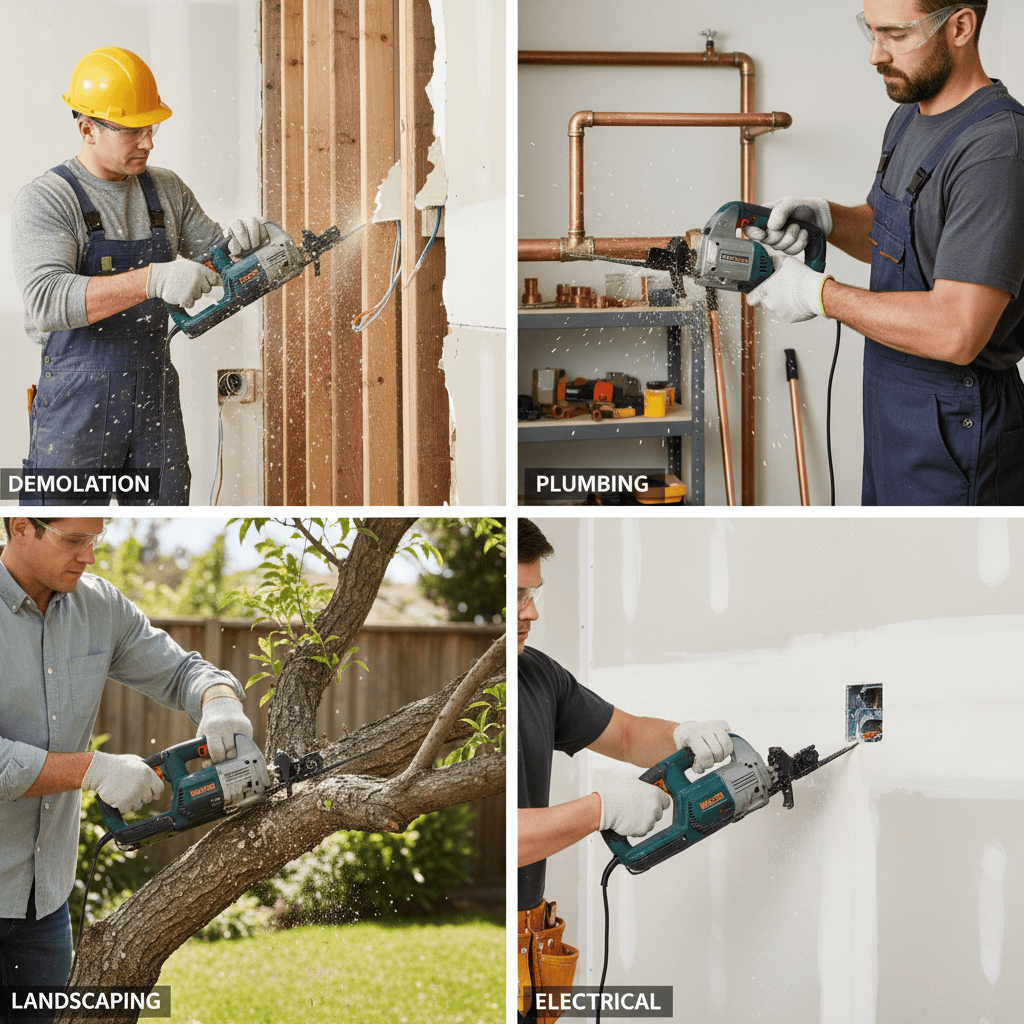
Reciprocating saws earned their reputation as demolition tools because they’re built for aggressive, rapid cutting through tough materials. The back-and-forth blade motion generates significant force, making them ideal for tearing out old framing, cutting through nails embedded in wood, and removing structural elements during renovation projects.
The primary reasons contractors and DIYers choose reciprocating saws include:
- Demolition work – Removing walls, cutting through studs, and breaking down old structures
- Pipe and conduit cutting – Slicing through copper, PVC, and metal pipes quickly
- Pruning and tree trimming – Cutting branches and small tree limbs in tight spaces
- Drywall removal – Cutting openings for windows, doors, and electrical boxes
- Remodeling tasks – Cutting through old cabinetry, flooring, and trim during renovation
- Rough cutting in tight spaces – Where larger saws won’t fit between walls or in confined areas
What sets reciprocating saws apart is their versatility in handling messy, destructive work. Unlike circular saws or miter saws designed for precision cuts, reciprocating saws prioritize raw cutting power and maneuverability over accuracy.
Cutting Different Materials with a Reciprocating Saw
Reciprocating saws can cut through nearly any common building or household material, depending on the blade you install. The key to successful cutting is matching the blade to your material.
Wood Cutting
Reciprocating saws excel at rough wood cutting. They handle solid lumber, dimensional framing lumber, and plywood effectively. For wood, use blades with 6-10 teeth per inch (TPI). Coarser blades cut faster but create rougher edges, while finer blades produce smoother cuts. Wood cutting is where reciprocating saws perform with the most speed and least resistance.
Metal Cutting
Metal cutting requires different blade specifications. For cutting aluminum, copper pipes, and thin steel, use blades with 14-24 TPI. Metal cutting is slower than wood and generates more heat, so take breaks to allow the blade to cool. Bi-metal blades (hardened teeth on flexible backing) are the industry standard for metal work because they resist breaking when hitting hard spots.
Drywall and Concrete
Drywall cuts easily with wood-cutting blades, but cutting through concrete, brick, or stone requires specialized carbide-grit or diamond blades. Standard reciprocating saws can cut drywall quickly, but concrete cutting is slow and requires a tool rated for that work to avoid damage to the motor.
Plastic Piping
PVC and other plastic pipes cut cleanly with fine-toothed blades (18-24 TPI). Plastic cuts smoothly without the heat generation that metal requires, making it one of the easier materials to work with.
Common Job Applications (Professional & DIY)
Professional Contractor Uses
On construction and demolition sites, reciprocating saws are standard tools. Contractors use them for:
- Cutting through wall studs and headers during renovation
- Removing old plumbing and electrical lines
- Trimming door and window frames during installation
- Cutting holes in walls for new outlets and switches
- Rough demolition of interior walls and partitions
- Cutting through nails and fasteners embedded in old wood
The tool’s ability to cut through nailed lumber without destroying the blade is a major advantage on job sites where salvaging materials isn’t a priority.
Homeowner and DIY Applications
DIYers find reciprocating saws useful for home improvement projects that don’t require precision:
- Removing old cabinetry and shelving during kitchen or bathroom remodels
- Cutting tree branches and pruning overgrown vegetation
- Making rough openings for new windows or doors
- Removing old trim and baseboards
- Cutting holes for plumbing or electrical work
- General cleanup and demolition during renovation projects
For homeowners, a reciprocating saw justifies its cost when tackling renovation projects or extensive yard maintenance. It’s less necessary for purely woodworking projects that require clean, precise cuts.
Reciprocating Saw vs. Similar Cutting Tools
Understanding how reciprocating saws compare to other saws helps you choose the right tool for your specific task.
Reciprocating Saw vs. Circular Saw
Circular saws use a rotating blade to make straight cuts with high precision. They’re ideal for ripping lumber, cutting plywood sheets, and making clean crosscuts. Reciprocating saws use a back-and-forth motion and excel at demolition, rough cutting, and cutting in tight spaces where a circular saw won’t fit. Circular saws are faster for straight crosscuts on dimension lumber; reciprocating saws are better for destruction and rough work.
Reciprocating Saw vs. Jigsaw
Jigsaws are precision cutting tools designed for curved cuts and intricate shapes in wood and thin materials. They cut slowly but with excellent accuracy and control. Reciprocating saws cut much faster in a straight line but sacrifice precision and control. Jigsaws are for detailed woodworking; reciprocating saws are for demolition and rough cuts.
Reciprocating Saw vs. Band Saw
Band saws (stationary workshop tools) make continuous, smooth cuts with excellent precision. They’re used for detailed woodworking, resawing lumber, and curved cuts. Reciprocating saws are portable, handheld tools designed for rough, rapid cutting. Band saws are workshop-based precision tools; reciprocating saws are job-site workhorses.
Reciprocating Saw vs. Chainsaws
Chainsaws are specialized for cutting wood and tree limbs. While reciprocating saws can trim branches, chainsaws are faster and more efficient for heavy tree work. Reciprocating saws are more versatile for cutting different materials beyond wood; chainsaws are single-purpose forestry tools.
Key Factors When Using a Reciprocating Saw
Choosing the Right Blade
Blade selection determines cutting speed, finish quality, and tool lifespan. Consider:
- Teeth per inch (TPI) – Coarser blades (6-10 TPI) for fast rough cuts; finer blades (18-24 TPI) for metal and smooth finishes
- Blade material – High-speed steel for wood; bi-metal for metal; carbide-grit for concrete and masonry
- Blade length – Longer blades (8-12 inches) for deep cuts; shorter blades (3-6 inches) for controlled work in tight spaces
- Blade backing – Flexible backing resists breaking; rigid backing improves control
Safety Precautions
Reciprocating saws require proper technique and safety practices:
- Wear eye protection to prevent debris from flying into your eyes
- Use hearing protection; these tools generate significant noise
- Secure your workpiece with clamps to prevent kickback or slipping
- Maintain a firm grip and stable stance to control the tool
- Keep hands and fingers away from the blade path
- Allow the blade to come to a complete stop before setting the tool down
- Inspect blades for damage before use
Cutting Technique Tips
For best results with a reciprocating saw:
- Let the tool do the work – don’t force the blade through material
- Use a steady, controlled speed rather than full power for better blade life
- Keep the shoe (base plate) flat against the material for controlled cuts
- For vertical cuts, start at the top and work downward
- Take breaks when cutting metal to allow the blade to cool
- Support long pieces to prevent binding and twisting
Frequently Asked Questions
Can a reciprocating saw cut through metal studs and hardened fasteners?
Yes. With the right blade—typically a bi-metal blade with 14-24 TPI—reciprocating saws can cut through metal studs, bolts, and nails. The back-and-forth motion and cutting power handle hardened fasteners without breaking the blade like rotary saws might. This capability makes reciprocating saws especially valuable for demolition work where nails are embedded in old wood.
What’s the difference between corded and cordless reciprocating saws?
Corded reciprocating saws provide consistent power without battery limitations, making them ideal for extended demolition and construction work. Cordless models offer portability and convenience for shorter jobs but depend on battery charge. Corded models are typically more powerful; cordless models are lighter and better for overhead or confined-space work where weight matters.
Is a reciprocating saw necessary for a homeowner with basic tools?
It depends on your projects. If you plan renovations, demolition work, pruning, or plumbing/electrical modifications, a reciprocating saw is worth having. For purely woodworking or precision cutting projects, other saws (circular, miter, table saw) are more important. Many homeowners find reciprocating saws most valuable when tackling major renovation or remodeling projects.
How do you maintain a reciprocating saw for long-term use?
Keep blades clean and sharp by replacing them when they become dull. Store the tool in a dry location to prevent rust. Check the chuck or blade-holding mechanism regularly to ensure it holds blades securely. For corded models, inspect the power cord for damage. Cordless models require charging batteries according to manufacturer recommendations. Clean dust and debris from air vents to prevent motor overheating during extended use.