Quick Answer: Leaf Blower Price Ranges
Leaf blower costs vary dramatically by type and power source. Handheld electric blowers start at $30–$150, while backpack models range from $100–$500. Walk-behind blowers cost $300–$2,000+, and commercial tow-behind units run $1,500–$5,000+. The primary price driver is equipment type, followed by power source (electric, cordless battery, or gas), motor power, and brand reputation.
Price Ranges by Leaf Blower Type
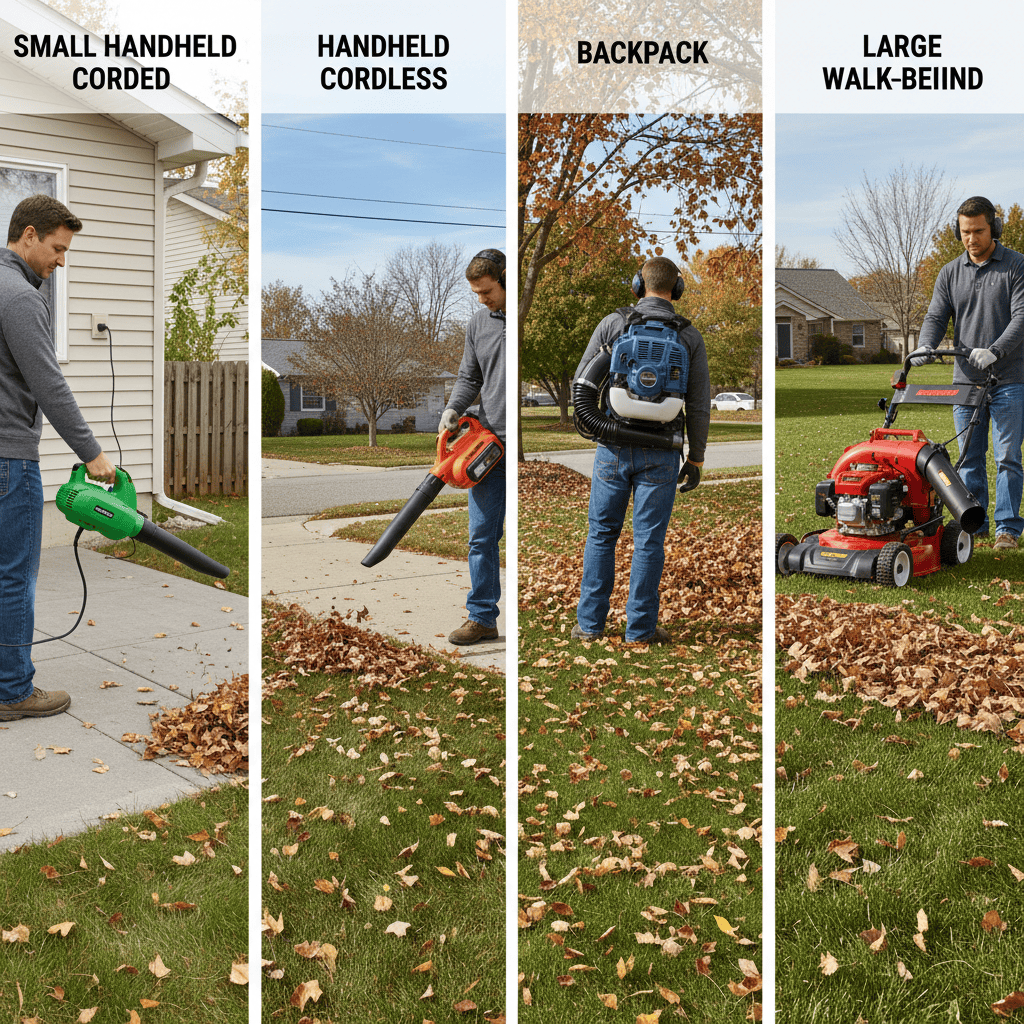
Handheld Electric Leaf Blowers: $30–$150
Corded electric handheld blowers are the most affordable option, ideal for small residential yards. Entry-level models start around $30–$50, while mid-range corded options reach $80–$150. These blowers offer consistent power without fuel costs, though they’re limited by cord length and lack portability on larger properties. They’re lightweight, quiet, and require minimal maintenance—no spark plugs or oil mixing.
Handheld Cordless (Battery-Powered) Leaf Blowers: $80–$200
Battery-powered handheld blowers have become increasingly competitive. Budget models start around $80–$120, while higher-powered cordless options reach $150–$200. Many homeowners already own compatible batteries from drill or saw purchases (DeWalt, Ryobi, Makita ecosystems), reducing the true cost if batteries are already available. Standalone packages with batteries and chargers typically cost $20–$50 more than tool-only versions.
Backpack Leaf Blowers: $100–$500
Backpack blowers distribute weight across your shoulders, making them ideal for larger yards or extended use. Gas-powered backpack models range from $150–$400, while high-performance commercial-grade gas backpacks reach $400–$600. Battery-powered backpack blowers are emerging at $200–$350, offering cleaner operation and lower maintenance. Electric backpack models (with power cords) are rare but typically cost $100–$200.
Walk-Behind Leaf Blowers: $300–$2,000+
Walk-behind blowers are designed for large residential or light commercial properties. Consumer-grade models start around $300–$600, while professional walk-behinds reach $800–$2,000+. Gas-powered models dominate this category due to power requirements. These machines offer significantly higher airflow (measured in CFM—cubic feet per minute) than handheld options, making them efficient for extensive cleanup.
Tow-Behind Leaf Blowers: $1,500–$5,000+
Tow-behind blowers attach to riding mowers or ATVs and are designed for commercial landscapes, estates, and municipal use. Entry-level tow-behinds start around $1,500–$2,500, while professional-grade equipment reaches $4,000–$8,000+. These are investments for landscaping businesses or property managers, not typical homeowner purchases.
Key Factors That Affect Leaf Blower Price
Power Source: Electric vs. Gas vs. Battery
Electric (Corded): The cheapest option upfront ($30–$150). No fuel or battery costs, minimal maintenance. Limitations: cord length restricts range, and tethering reduces mobility.
Gas-Powered: Mid-range pricing for handheld ($100–$200) and higher for backpack/walk-behind ($150–$2,000+). Gas blowers offer unlimited runtime and maximum power but require fuel, oil mixing (two-stroke engines), spark plug maintenance, and seasonal storage. Operating costs run $0.50–$1.50 per hour in fuel.
Cordless Battery: Premium upfront cost ($80–$350+) but lower operating expenses. No fuel or oil needed; runtime depends on battery capacity (typically 20–60 minutes per charge). Ideal if you own compatible batteries from other tools. Replacement batteries cost $60–$150 each.
Motor Power: CFM and MPH
Airflow (CFM—cubic feet per minute) and air speed (MPH—miles per hour) are critical performance metrics that drive price.
- Light-Duty (under 400 CFM): Entry-level handheld electric, $30–$80. Suitable for small yards and light leaf cleanup.
- Mid-Range (400–650 CFM): Most consumer handheld and compact backpack models, $80–$300. Handles typical residential yards efficiently.
- High-Performance (650–1,000 CFM): Premium backpack and entry-level walk-behind, $250–$800. Clears heavy debris and damp leaves.
- Professional (1,000+ CFM): Walk-behind and tow-behind, $800–$5,000+. Commercial-grade power for dense debris and large areas.
Brand Reputation and Warranty
Established brands like Stihl, Echo, Husqvarna, DeWalt, and Makita command premium pricing due to durability, parts availability, and warranty support. A Stihl handheld gas blower may cost 30–50% more than an off-brand equivalent but offers longer lifespan and resale value. Budget brands (often found in big-box retailers) sacrifice durability for lower entry costs.
Build Quality and Materials
Professional-grade blowers use reinforced housing, better vibration dampening, and premium fuel systems. Consumer-grade equipment uses lighter plastics and simpler designs, reducing cost but potentially shortening lifespan.
Comparing Power Sources and Total Cost of Ownership
Initial purchase price tells only part of the story. Consider lifetime costs:
| Power Source | Upfront Cost | Annual Operating Cost | Maintenance | Lifespan | 5-Year Total Cost |
|---|---|---|---|---|---|
| Corded Electric | $30–$150 | $10–$20 | Minimal | 5–8 years | $80–$250 |
| Cordless Battery | $80–$350 | $30–$60 | Battery replacement ($100–$150 every 3–5 years) | 7–10 years | $230–$560 |
| Gas-Powered | $100–$400 | $100–$200 | Spark plugs, air filters, seasonal storage (carburetor cleaning) | 8–12 years | $600–$1,400 |
Electric and battery-powered blowers have lower total cost of ownership over 5 years, while gas blowers justify their operating costs only if you use them extensively (50+ hours annually) or need maximum power.
Budget, Mid-Range, and Professional Tiers Explained
Budget Tier: Under $100
Best for: Small yards (under 0.25 acres), light seasonal use, occasional leaf cleanup.
- Corded electric handheld ($30–$80): Most affordable; limited by cord length.
- Entry-level cordless handheld ($80–$100): Tool-only pricing; requires existing batteries.
Trade-offs: Lower CFM (200–350), shorter runtime, lighter-duty construction, minimal warranty.
Mid-Range Tier: $100–$400
Best for: Typical residential properties (0.25–1 acre), moderate use, mix of handheld and backpack options.
- Quality cordless handheld ($100–$200): Reliable brands with 2–3 year warranties.
- Gas-powered backpack ($150–$300): Higher CFM (400–650), extended runtime, established brands.
- Premium cordless backpack ($200–$350): Battery-powered alternative with lower maintenance.
Trade-offs: Good balance of power, durability, and cost; professional features start appearing.
Professional Tier: $400+
Best for: Large residential properties, light commercial use, contractor/landscaper use.
- High-end backpack blowers ($400–$600): Stihl, Echo, Husqvarna; commercial-grade durability.
- Walk-behind blowers ($300–$2,000+): Designed for properties 1+ acres; unmatched power.
Value: Premium brands offer 3–5 year warranties, superior parts availability, and resale value retention of 40–60%.
Where to Find Leaf Blowers and Price Variations
Retail Channels and Pricing
Big-Box Retailers (Home Depot, Lowe’s, Walmart): Widest selection and competitive pricing on consumer brands. Frequent sales during spring and fall seasons.
Specialty Outdoor Equipment Dealers: Premium brands (Stihl, Echo) with expert guidance and higher prices, offset by better warranty support.
Online Retailers (Amazon, Walmart.com): Price parity with physical stores; verify seller and warranty coverage before purchasing.
Used/Refurbished Markets: Save 30–50% on eBay, Facebook Marketplace, or manufacturer refurbished programs. Risk: unknown maintenance history; verify condition carefully.
Seasonal Pricing Variations
Leaf blower prices fluctuate seasonally. Spring (March–April) and fall (September–October) see peak demand and minimal discounts. Winter and summer offer 10–30% discounts as retailers clear inventory. End-of-season sales (November–December) provide the best deals on remaining stock.
Regional Price Variations
Urban areas with multiple retailers typically have lower prices due to competition. Rural markets may see 10–20% premiums due to limited options and shipping costs. International pricing varies significantly; Canadian and Australian prices run 20–30% higher than US equivalents.
Frequently Asked Questions
What’s the difference between CFM and MPH, and why do they matter?
CFM (cubic feet per minute) measures the volume of air a blower moves, while MPH (miles per hour) measures air velocity/speed. A blower might have high CFM but lower MPH, or vice versa. For wet or compacted leaves, you need both volume and speed; for light leaves, CFM alone may suffice. Professional blowers typically offer 600+ CFM and 150+ MPH, justifying their higher price.
Should I buy a gas-powered or electric leaf blower?
Choose electric (corded or battery) if your property is under 0.5 acres, you value low maintenance and quiet operation, and you don’t mind being tethered to a cord or managing battery runtime. Gas-powered blowers are better for properties over 1 acre, dense debris, or commercial use where unlimited runtime matters. Gas requires more maintenance but offers superior power per dollar for heavy-duty work.
Can I use a leaf blower brand’s battery with another brand’s tools?
No. DeWalt 20V batteries work only with DeWalt 20V tools, Ryobi 18V with Ryobi 18V tools, and so on. Battery ecosystems are proprietary. However, if you already own multiple DeWalt tools, buying a DeWalt leaf blower (tool-only) can be cheaper than purchasing a competing brand with included batteries and charger.
Are professional-grade leaf blowers worth the cost for residential use?
Professional equipment justifies its cost if you have a large property (1+ acres), use the blower 40+ hours annually, or value durability over 10+ years. For typical homeowners using a blower 5–10 hours per year, mid-range consumer equipment offers better value. However, professional brands typically hold resale value better (40–60% retention) than budget brands (20–30% retention).
Cost Comparison Checklist
When comparing leaf blowers across price points, evaluate these factors:
- Airflow (CFM) and Speed (MPH): Higher numbers handle damp and compacted debris better; typically cost $20–$50 more per 100 CFM gain.
- Runtime (for battery models): 30-minute runtimes cost $50–$100 less than 60-minute models; assess your yard size needs.
- Weight: Handheld blowers under 6 lbs reduce fatigue; backpacks over 10 lbs may cause strain during extended use.
- Warranty Coverage: 2-year warranties are standard mid-range; 3–5 years indicates professional-grade durability.
- Brand Parts Availability: Established brands (Stihl, Echo, DeWalt) have parts available at most dealers; obscure brands may require online ordering (7–14 day delays).
- Operating Costs: Calculate 5-year total cost including fuel, maintenance, and battery replacements before deciding.
- Noise Level (decibels): Quieter blowers (under 65 dB) cost 10–20% more but reduce neighbor complaints and hearing fatigue.
Summary: Choosing the Right Leaf Blower for Your Budget
Leaf blower pricing reflects type, power source, and performance capabilities. For most residential properties under 0.5 acres, a cordless handheld blower at $100–$200 offers the best value—balancing upfront cost, convenience, and low maintenance. Mid-range gas-powered backpacks ($150–$300) suit larger properties where extended runtime matters. Professional-grade equipment ($400+) makes sense for 1+ acres or commercial use where durability justifies the investment.
Don’t focus solely on purchase price; calculate total cost of ownership including fuel, maintenance, and battery replacements over your expected usage period. Seasonal sales (November–December and January–February) offer 20–30% discounts, making off-season purchases significantly cheaper than spring or fall buying.