What Does “Good” Mean in a Lawn Mower?
The concept of a “good” lawn mower is not universal; it is entirely dependent on the specific needs of the user and their lawn. A mower that is excellent for a small, flat suburban yard may be completely inadequate for a large, hilly property. Therefore, the first step in finding a good mower is to understand your own conditions.
Key considerations include the size and shape of your lawn, the terrain (flat, sloped, or uneven), and any obstacles like trees or flower beds. Your personal maintenance routine and physical ability also play a crucial role. Some homeowners prefer the simplicity of a push mower, while others may need the power and efficiency of a riding mower or the convenience of a robotic model.
Key Factors to Consider When Choosing a Lawn Mower
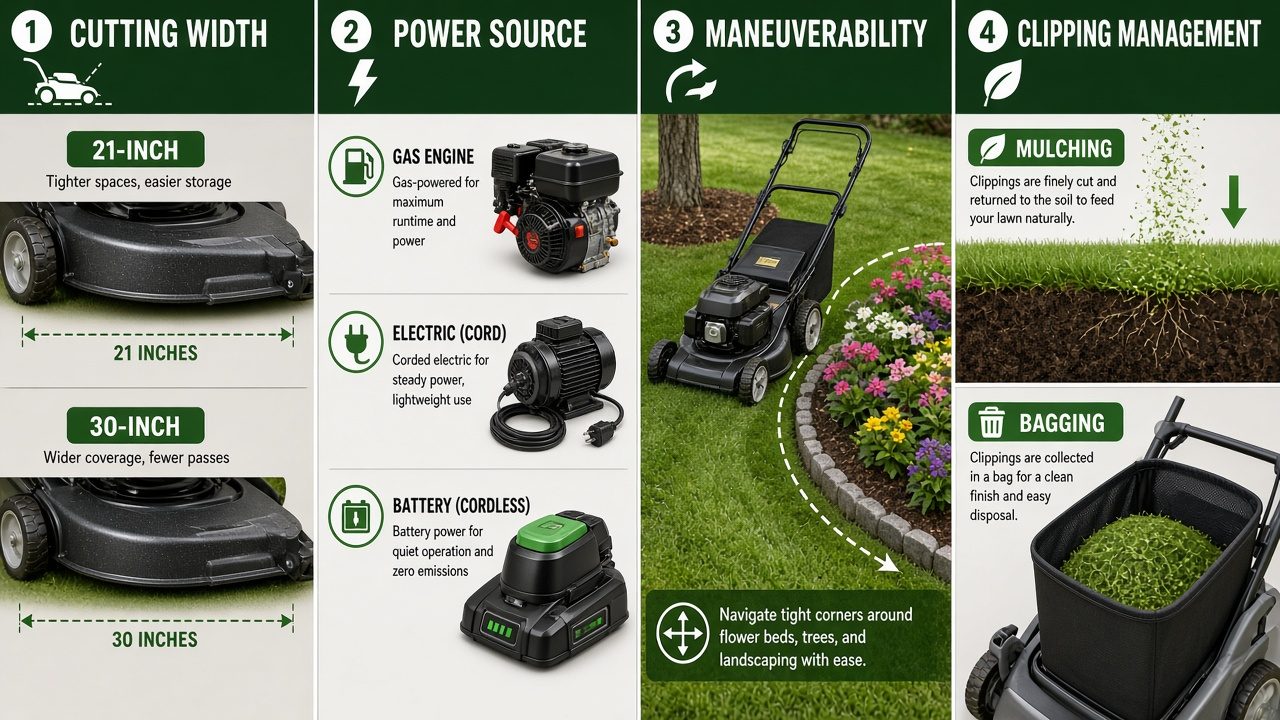
When evaluating lawn mowers, several core factors will determine which model is the best fit for your needs. Understanding these elements will help you make an informed decision.
Cutting Width
The cutting width, or deck width, of a lawn mower determines how much grass is cut in a single pass. A wider cutting width reduces the number of passes needed to mow your lawn, which can significantly decrease mowing time. For example, a mower with a 21-inch deck is suitable for small to medium-sized lawns, while a 30-inch or wider deck is more efficient for larger areas.
Power Source
The power source of a lawn mower affects its performance, maintenance requirements, and environmental impact. The three main types are gas, electric, and battery-powered mowers.
- Gas-powered mowers generally offer more power and longer runtimes, making them suitable for large lawns and tough grass. However, they require more maintenance, such as oil changes and spark plug replacements, and produce emissions.
- Electric mowers are quieter and produce zero direct emissions, but they require a power cord, which can limit mobility and range. They are best for small to medium-sized lawns where an outlet is accessible.
- Battery-powered mowers combine the convenience of cordless operation with lower noise and emissions. Advances in battery technology have improved their runtime and power, making them a viable option for many homeowners. However, battery life may be a concern for very large lawns.
Maneuverability
Maneuverability is crucial, especially if your lawn has obstacles, tight corners, or slopes. Push mowers are lightweight and easy to maneuver, but they require more physical effort. Self-propelled mowers reduce the effort needed to move the mower, making them ideal for larger or sloped lawns. Riding mowers and zero-turn models offer the highest maneuverability for large properties with complex layouts.
Mulching and Bagging Capabilities
Many lawn mowers come with mulching or bagging capabilities, which affect how grass clippings are handled.
- Mulching finely chops grass clippings and returns them to the lawn, where they decompose and provide nutrients. This can reduce the need for fertilizer and improve lawn health.
- Bagging collects grass clippings in a bag, which can be emptied later. This is useful if you prefer a tidy appearance or if clippings are too long to mulch effectively.
Types of Lawn Mowers and Who They Suit Best
Lawn mowers can be categorized into several types, each designed for different lawn conditions and user preferences.
Push Mowers
Push mowers are the most basic and affordable type of lawn mower. They are best suited for small, flat lawns with minimal obstacles. They require the user to push the mower manually, which can be physically demanding for larger areas.
Self-Propelled Mowers
Self-propelled mowers have a drive system that moves the mower forward, reducing the effort required from the user. They are ideal for medium to large lawns, especially those with slopes or uneven terrain. They are available in front-wheel-drive and rear-wheel-drive models, with rear-wheel-drive offering better traction on slopes.
Riding Mowers
Riding mowers are designed for large properties where a push or self-propelled mower would be impractical. They allow the user to sit on the mower while operating it, making mowing large areas faster and less tiring. They are available in standard riding mowers and zero-turn models, which offer greater maneuverability around obstacles.
Robotic Mowers
Robotic mowers are automated devices that mow your lawn without direct human intervention. They are best suited for small to medium-sized lawns with simple layouts. They require a boundary wire to define the mowing area and regular maintenance of the wire and blades. While they offer convenience, they may not be suitable for all lawn types or conditions.
How to Choose the Right Lawn Mower: A Step-by-Step Approach
Finding the right lawn mower involves assessing your lawn and matching it to the appropriate mower type and features. Follow these steps to make an informed decision.
Step 1: Assess Your Lawn Size and Terrain
Measure the size of your lawn and note any slopes, obstacles, or uneven areas. Larger lawns may require a wider cutting width or a riding mower, while smaller lawns can be managed with a push or battery-powered mower.
Step 2: Determine Your Power Source Preference
Consider the trade-offs between gas, electric, and battery-powered mowers. If you have a large lawn and need extended runtime, a gas mower may be best. For smaller lawns and quieter operation, an electric or battery-powered mower could be more suitable.
Step 3: Evaluate Maneuverability Needs
Think about the layout of your lawn and how easy it will be to navigate. If you have many obstacles or tight spaces, a mower with good maneuverability, such as a self-propelled or zero-turn model, may be necessary.
Step 4: Decide on Mulching or Bagging
Determine whether you prefer to mulch or bag grass clippings. Mulching is beneficial for lawn health, while bagging provides a cleaner appearance. Some mowers offer both options, allowing you to switch between them as needed.
Step 5: Consider Maintenance and Physical Effort
Factor in the maintenance requirements of each mower type and the physical effort needed to operate it. Gas mowers require more maintenance, while battery-powered mowers are generally lower maintenance. Self-propelled and riding mowers reduce physical effort compared to push mowers.
Direct Answer: What Is a Good Lawn Mower?
A good lawn mower is one that is tailored to your specific lawn conditions and personal preferences. It should have an appropriate cutting width for your lawn size, a power source that matches your needs, and features like mulching or bagging that align with your maintenance routine. The best mower for you is the one that makes mowing efficient, effective, and manageable for your unique situation.
Frequently Asked Questions
What is the most important factor to consider when choosing a lawn mower?
The most important factor is your lawn size and terrain. These determine the appropriate cutting width, power source, and mower type. A mower that is too small for a large lawn will be inefficient, while a powerful riding mower may be overkill for a small yard.
Are battery-powered mowers as effective as gas mowers?
Battery-powered mowers have improved significantly and can be as effective as gas mowers for many homeowners. They offer quieter operation, lower maintenance, and zero direct emissions. However, for very large lawns or thick grass, gas mowers may still provide more power and longer runtime.
Do I need a self-propelled mower?
A self-propelled mower is beneficial if you have a medium to large lawn, slopes, or physical limitations that make pushing a mower difficult. It reduces the effort required to move the mower, making the task easier and faster.
What are the benefits of mulching grass clippings?
Mulching returns finely chopped grass clippings to the lawn, where they decompose and provide nutrients. This can reduce the need for fertilizer, improve soil health, and promote a greener lawn. It also eliminates the need to bag and dispose of clippings.