Direct Answer: How to Start a Lawn Mower
To start a lawn mower, move it to flat, dry ground and clear the area of debris. Check the fuel level and engine oil, then open the fuel shut-off valve if the mower has one. For a cold engine, set the choke to the closed position and press the primer bulb three to five times if fitted. Pull the starter cord firmly and smoothly (or turn the key for a riding mower). Once the engine starts, gradually open the choke and reduce the throttle to a normal running setting. If the mower does not start, check the spark plug connection, fuel freshness, and safety interlocks before retrying.
Understanding How a Lawn Mower Engine Starts
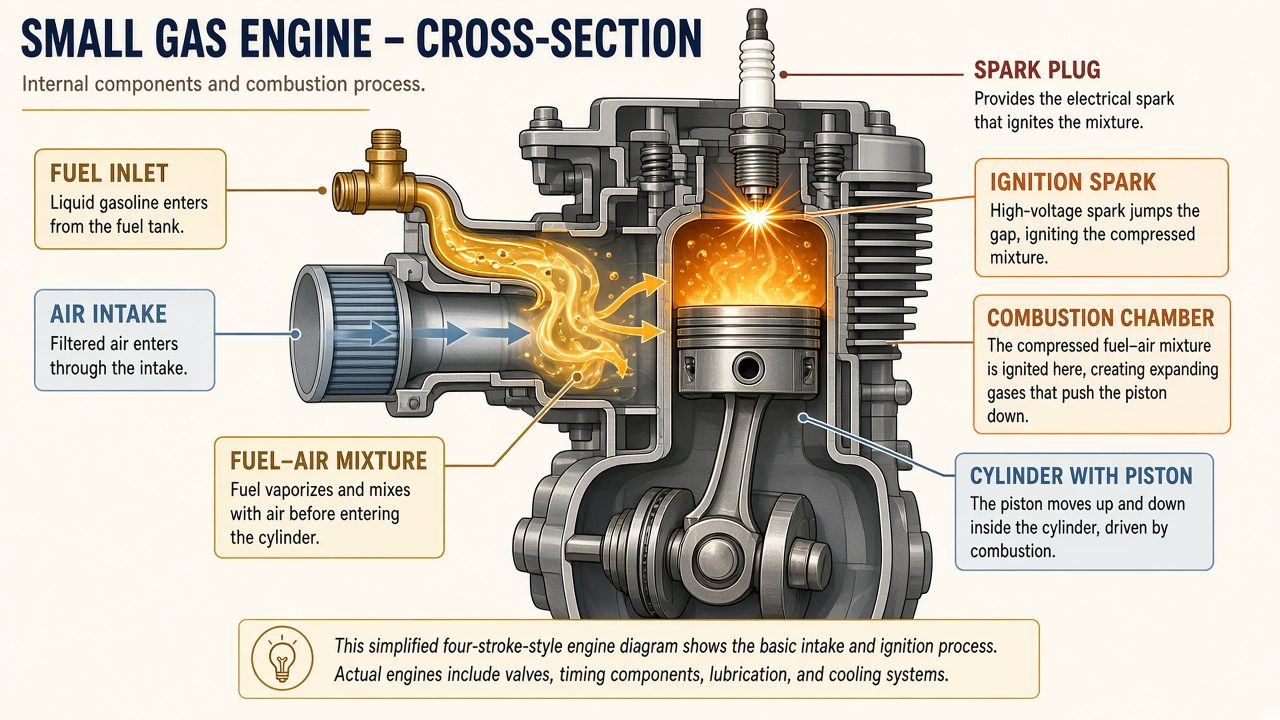
A gasoline lawn mower engine needs four things to start: fuel, air, spark, and compression. When you pull the starter cord or turn the key, the engine turns over and draws a mixture of fuel and air into the cylinder. The spark plug ignites that mixture, and the engine begins to run. The controls on your mower — the choke, primer bulb, and throttle — simply help you deliver the right fuel-and-air mixture at the right moment.
Key Parts Involved in Starting
- Fuel system: The fuel tank, fuel shut-off valve, fuel line, and carburetor deliver gasoline to the engine. Stale fuel or a clogged carburetor is a common reason a mower will not start.
- Choke: The choke restricts air flow to enrich the fuel mixture. It is used when the engine is cold, and it should be opened once the engine warms up.
- Primer bulb: A small rubber bulb that pushes a small amount of fuel into the carburetor. Pressing it a few times before starting helps a cold engine fire more quickly.
- Starter cord or key: The pull cord on a push mower rotates the engine to begin the starting sequence. A riding mower uses an electric starter, activated by turning a key or pressing a button.
- Spark plug: Provides the ignition spark. A loose, dirty, or worn spark plug can prevent starting.
Cold Start vs. Warm Start
A cold start happens when the engine has not been running for a while, such as the first start of the season or after the mower has cooled down. Cold engines need the choke closed to create a richer fuel mixture. A warm start happens when the engine is already hot, such as when you stop to empty the grass bag. In that case, you usually do not need the choke, and the engine should start with one or two pulls.
Why Flat Ground and Disengaged Blades Matter
Starting on flat, level ground keeps the mower stable and ensures the oil is distributed correctly in the engine. If the mower is tilted, oil may flow into the air filter or carburetor, which can cause smoke or starting trouble. The blade must be disengaged so the engine does not have to work against the blade load during starting, and so the blade cannot move unexpectedly while you are pulling the cord.
Key Factors to Consider Before Starting
Before you touch the starter cord, identify what type of mower you have and complete a few simple checks. This prevents damage and reduces the chance of injury.
Identify Your Mower Type
- Push mower: A walk-behind mower with no drive system. You push it yourself. It usually has a pull cord and a blade control bail.
- Self-propelled mower: A walk-behind mower with a drive system that moves the wheels. Starting is the same as a push mower, but the drive control must be released before starting.
- Riding mower: A mower you sit on. It has a key start, a parking brake, a blade engagement lever, and safety interlocks.
- Electric mower: Uses a battery or a power cord instead of gasoline. Starting is simpler and involves a button, lever, or switch rather than a pull cord.
Pre-Start Safety Checks
- Oil level: Check the dipstick and top up if needed. Never run a mower with low oil.
- Fuel level and freshness: Make sure there is enough fresh gasoline. Gasoline older than 30 days can go stale and cause hard starting.
- Blade control and guards: Make sure the blade control is released and the discharge chute or mulching plug is in place.
- Debris: Clear sticks, stones, toys, and other objects from the area where you will mow.
- Work area: Start on a flat, dry surface, not on a slope or inside a garage.
Step-by-Step Guide: Starting a Push or Self-Propelled Mower
Follow these steps in order for a gas-powered walk-behind mower.
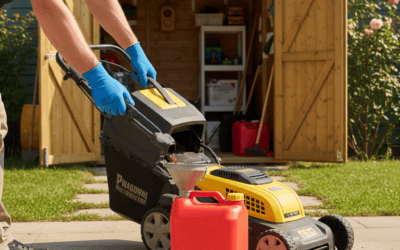
- Move the mower to flat, dry ground. Clear the area of debris and make sure you have firm footing.
- Check the oil. Remove the dipstick, wipe it clean, reinsert it, and check the level. Add oil if it is low.
- Check the fuel. Open the fuel cap and confirm there is fresh gasoline in the tank. If the fuel smells like varnish or has been sitting for more than a month, drain it and refill with fresh fuel.
- Open the fuel shut-off valve. If your mower has a valve on the fuel line or under the fuel tank, turn it to the open position. Some mowers do not have this valve.
- Set the choke. For a cold engine, move the choke lever or knob to the closed position. For a warm engine, leave the choke open.
- Prime the engine. If the mower has a primer bulb, press it three to five times. You should see a small amount of fuel move through the clear fuel line. Do not over-prime, because flooding the carburetor makes starting harder.
- Engage the blade control bail. Hold the bail bar against the handle. Most modern mowers will not start unless this safety control is held down.
- Pull the starter cord. Grasp the handle, pull the cord out slowly until you feel resistance, then give it a firm, smooth pull. Let the cord rewind slowly. Repeat as needed. Most warm engines start within one or two pulls; a cold engine may take three or four.
- Adjust the choke. Once the engine starts, move the choke gradually to the open position. If the engine sputters or dies, close the choke slightly and try again.
- Set the throttle. If your mower has a throttle control, set it to a normal running speed before you begin mowing.
How to Pull the Starter Cord Correctly
Pull the cord in one smooth, firm motion rather than yanking it violently. Keep your hand and arm in line with the cord to avoid injury. Always let the cord rewind slowly instead of letting it snap back, which can damage the starter mechanism. If the mower does not start after five or six pulls, stop and check the troubleshooting section below rather than continuing to pull.
Step-by-Step Guide: Starting a Riding Mower
Riding mowers have more controls and safety interlocks than push mowers. The exact procedure varies by model, but the general sequence is the same.
- Sit in the seat. The seat safety switch prevents the engine from starting unless someone is sitting in the seat.
- Set the parking brake. Engage the parking brake. Many riding mowers will not start unless the brake is set.
- Disengage the blades. Make sure the blade engagement lever or switch is in the off or disengaged position.
- Move the throttle and choke. For a cold engine, move the choke to the closed position and set the throttle to the fast position, if recommended by your owner’s manual.
- Turn the key. Insert the key and turn it to the start position. Release it as soon as the engine starts. Do not hold the key in the start position for more than a few seconds at a time.
- Adjust the choke. After the engine starts, gradually open the choke as the engine warms.
- Release the parking brake and engage the blades. Only after the engine is running smoothly should you release the parking brake, move the throttle to the desired speed, and engage the blade control.
Understanding Safety Interlocks
Riding mowers have several safety switches that prevent starting if conditions are unsafe. Common interlocks include a seat switch that stops the engine if the operator leaves the seat, a brake switch that requires the parking brake to be set, and a blade engagement switch that prevents starting with the blades engaged. If the mower will not crank, check that all of these conditions are met before suspecting a mechanical problem.
How to Start an Electric Lawn Mower
Electric mowers are simpler to start than gas mowers because there is no fuel, choke, or primer to manage.
Battery-Powered Mowers
- Insert a charged battery into the mower until it clicks into place.
- Press the start button or hold the safety button, depending on your model.
- Pull the bail lever toward the handle to start the blade.
- Release the bail lever to stop the blade. The motor will not run unless the bail is held.
Corded Electric Mowers
- Connect the extension cord to the mower first, then plug it into an outlet.
- Use a heavy-duty outdoor extension cord rated for the mower’s amperage.
- Pull the bail lever toward the handle to start the motor.
- Keep the cord behind you and away from the cutting path to avoid cutting it.
Before starting an electric mower, check that the battery is charged, the blade is not obstructed, and the underside of the deck is clear of grass buildup. Electric mowers do not require oil or gasoline, but they do need routine cleaning and blade maintenance.
Quick Troubleshooting: What to Do If the Mower Won’t Start
If your mower will not start, work through this checklist before calling a repair shop.
| Problem | Check | Solution |
|---|---|---|
| No fuel reaching the engine | Fuel level and fuel shut-off valve | Refill with fresh gasoline and open the fuel valve. |
| Stale fuel | Smell and age of the gasoline | Drain the old fuel and replace it with fresh gasoline. |
| No spark | Spark plug wire connection | Push the spark plug boot on firmly. Clean or replace the spark plug if it is fouled. |
| Flooded engine | Strong gasoline smell or wet spark plug | Open the choke fully and pull the cord several times with the throttle at fast. Wait 10 minutes, then retry. |
| Clogged air filter | Dirty or blocked air filter | Clean or replace the air filter. |
| Safety control not engaged | Blade control bail or brake switch | Hold the bail against the handle, or set the parking brake on a riding mower. |
| Low oil | Oil level on the dipstick | Add the correct type and amount of oil. |
Common Starting Problems Explained
Stale fuel is one of the most frequent causes of starting trouble. Gasoline degrades over time and leaves sticky deposits in the carburetor. If your mower sat all winter, drain the old fuel and add fresh fuel before attempting a start. A flooded engine happens when too much fuel enters the cylinder, usually from over-priming or pulling the cord with the choke closed for too long. If you smell gasoline strongly, open the choke, set the throttle to fast, and pull the cord several times to clear the excess fuel. A loose spark plug wire is another simple cause: push the boot firmly onto the spark plug until it clicks. If the mower still will not start after these checks, consult your owner’s manual or a qualified small-engine technician.
Safety Precautions Before and During Starting
Lawn mowers are powerful machines, and starting them incorrectly can cause injury. Follow these safety practices every time.
- Wear appropriate clothing: Wear sturdy shoes, long pants, and eye protection. Do not wear loose clothing or jewelry that could catch on the mower.
- Never start a mower indoors: Gas engines produce carbon monoxide, which is odorless and deadly. Always start and run a gas mower outdoors in a well-ventilated area, never inside a garage or shed.
- Keep hands and feet away from the blade: Never put your hands or feet under the deck while starting or running the mower.
- Prevent accidental blade engagement: On a push mower, the blade will not spin until the bail is held. On a riding mower, keep the blade engagement lever off until the engine is running.
- Do not add fuel while the engine is hot: Turn off the engine and let it cool before refueling. Wipe up any spills.
- Keep children and pets away: Do not allow anyone near the mower while you are starting or mowing.
Direct Answer: How to Start a Lawn Mower in One Minute
Here is the complete starting sequence as a quick checklist.
- Move the mower to flat, dry ground.
- Check the fuel level and engine oil.
- Open the fuel shut-off valve, if present.
- Set the choke to closed for a cold engine.
- Press the primer bulb three to five times, if fitted.
- Pull the starter cord firmly (or turn the key for a riding mower).
- Open the choke gradually as the engine warms.
- Begin mowing with the blade control engaged.
Always refer to your owner’s manual for mower-specific instructions, because choke settings, primer locations, and safety interlocks vary by brand and model. If the mower still will not start after you have checked fuel, spark, air, and safety controls, it is best to seek professional help rather than continuing to pull the cord and risk injury or damage.
Frequently Asked Questions
How many times should I pull the starter cord?
Most warm engines start within one or two pulls, and a cold engine may take three or four pulls. If the mower does not start after five or six pulls, stop and check the fuel, spark plug, air filter, and safety controls. Continuing to pull repeatedly can flood the engine or damage the starter.
Should I use the choke when starting a warm mower?
No. The choke is only needed for a cold engine. If the mower was running recently and is still warm, leave the choke open. Using the choke on a warm engine can flood the carburetor and make the mower harder to start.
Why does my mower start but then die immediately?
This is often caused by a clogged carburetor, stale fuel, a dirty air filter, or a fuel line problem. It can also happen if you move the choke to the open position too quickly before the engine is warm. Check the fuel, clean or replace the air filter, and try opening the choke more gradually.
Is it safe to start a lawn mower in the garage?
No. Gas-powered mowers produce carbon monoxide, which is a colorless, odorless gas that can be fatal. Always start and run a gas mower outdoors in an open, well-ventilated area. Never start a mower inside a garage, shed, or any enclosed space, even with the door open.