Why Regular Oil Changes Matter
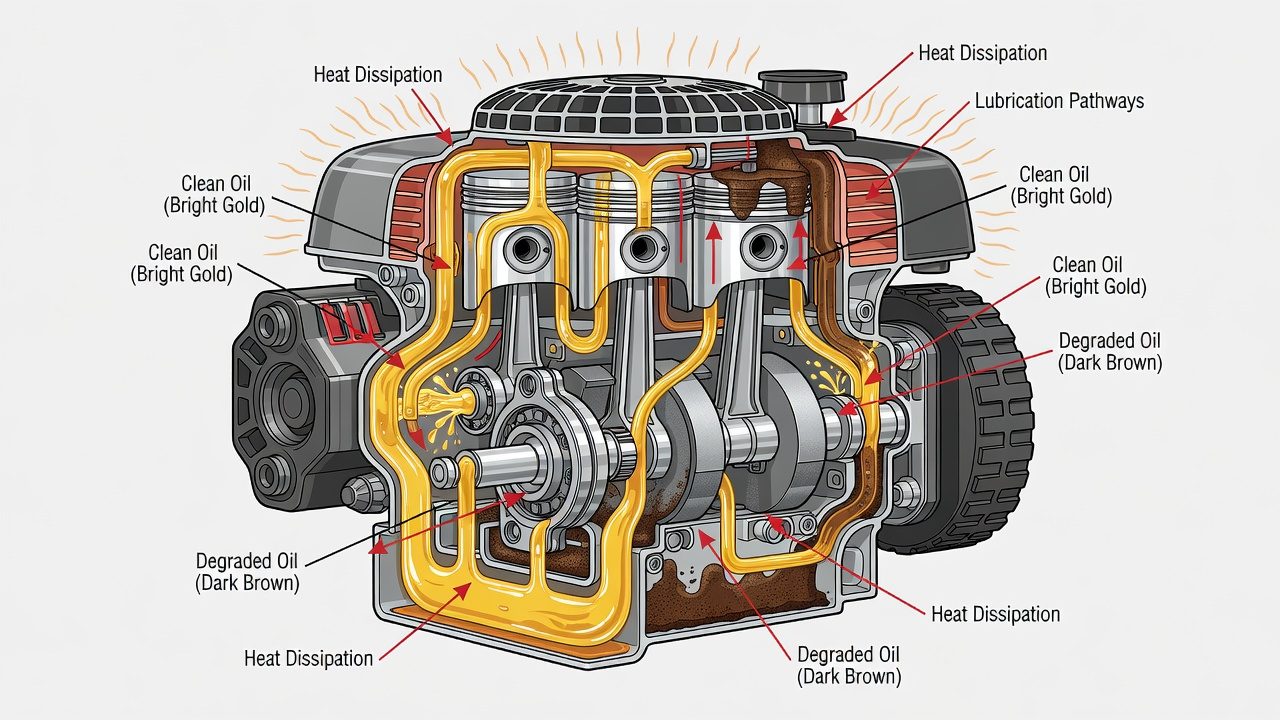
Engine oil is the lifeblood of your lawn mower, serving several critical functions that directly impact performance and longevity. The oil lubricates moving engine parts, reduces friction, dissipates heat, and carries away dirt and debris. Over time, oil degrades from heat exposure and contamination, losing its ability to protect your engine effectively.
Most lawn mower manufacturers recommend changing oil every 50 hours of operation or at least once per season for homeowners. Neglecting oil changes can lead to increased wear on engine components, reduced fuel efficiency, harder starting, and eventually catastrophic engine failure. Regular oil maintenance is one of the easiest and most cost-effective ways to extend your mower’s lifespan and ensure reliable operation year after year.
Key Factors Before You Start
Before you begin an oil change, identify the specific requirements for your mower. These details are essential because procedures and specifications vary significantly across different models and engine types.
- Mower Type: Push mowers, riding mowers, and zero-turn radius mowers have different designs and may require slightly different approaches to accessing the drain plug and filter.
- Oil Type and Grade: Most small engines use SAE 10W-30 or 5W-30 oil, but some manufacturers specify different grades. Check your owner’s manual for the exact recommendation.
- Oil Capacity: Small push mower engines typically hold 15–20 ounces of oil, while riding mowers may hold 1–2 quarts. Overfilling is as problematic as underfilling.
- Oil Filter: Many push mowers don’t have replaceable oil filters, while most riding mowers do. Verify whether your mower requires a filter change.
Locate your owner’s manual before starting. If you’ve misplaced it, most manufacturers provide digital versions on their websites.
Safety Precautions
Working with hot engine oil requires careful attention to safety. These precautions protect you from burns, accidental engine starting, and environmental hazards.
- Cool the Engine: Allow your mower to sit for at least 15 minutes after the last use. This gives the engine and oil time to cool enough to handle safely while remaining warm enough for oil to drain easily.
- Disconnect the Spark Plug Wire: Before working on any part of your mower, disconnect the spark plug wire by twisting and pulling it off the plug. This prevents accidental engine starting if someone pulls the cord while you’re working.
- Work on Level Ground: Place your mower on flat, level ground to ensure proper oil drainage and to prevent the mower from rolling unexpectedly.
- Use Proper Containers: Drain old oil into a suitable container—never into the soil or storm drains. Used oil is recyclable and should be disposed of responsibly. Many auto parts stores and municipal recycling centers accept used oil for free.
- Wear Protective Gear: Wear gloves and old clothes that you don’t mind getting stained with oil. If hot oil splashes, it can cause burns.
Step-by-Step Oil Change Process
Step 1: Prepare Your Workspace
Gather all necessary supplies: new oil (the correct type and quantity for your mower), an oil drain pan or container, a wrench or socket set, fresh oil filter (if applicable), oil filter wrench (if needed), clean rags or paper towels, and your owner’s manual. Position your mower on level ground with the engine off and cooled for at least 15 minutes. Disconnect the spark plug wire and secure it away from the spark plug.
Step 2: Locate and Remove the Oil Drain Plug
Consult your owner’s manual to find the oil drain plug location. On most push mowers, it’s located on the side or bottom of the engine. On riding mowers, it’s typically underneath the engine. Place your drain pan directly beneath the plug to catch all spilled oil. Using the appropriate wrench or socket, carefully unscrew the drain plug by turning it counterclockwise. Once loose enough to turn by hand, carefully remove it completely and set it aside on a clean rag.
Step 3: Allow Oil to Drain Completely
Tip or tilt your mower slightly if necessary to encourage complete drainage into the pan. This may take 5–10 minutes. Don’t rush this step—allowing all old oil to drain ensures you’re starting with the cleanest possible engine. Once the oil has stopped dripping, wipe the drain plug and the area around the drain hole with a clean rag to remove any remaining oil residue.
Step 4: Replace the Oil Filter (If Applicable)
If your mower has a replaceable oil filter, now is the time to change it. Locate the filter, which is usually a cylindrical component on the side of the engine. Using an oil filter wrench, turn the filter counterclockwise to remove it. Empty any remaining oil from the filter into your drain pan. Before installing the new filter, apply a thin layer of new oil to the rubber gasket on the filter. This helps create a proper seal. Screw the new filter on by hand until the gasket contacts the engine, then turn it an additional three-quarter turn. Do not over-tighten, as this can damage the filter and make removal difficult later.
Step 5: Reinstall and Tighten the Oil Drain Plug
Before reinstalling the drain plug, wipe it clean with a rag. Carefully screw it back into the engine by hand to avoid cross-threading. Once hand-tight, use your wrench or socket to snug it down securely. Don’t over-tighten; a firm, snug connection is all that’s needed. Over-tightening can strip the threads or damage the plug.
Step 6: Refill with New Oil
Remove the oil fill cap (usually located on top of the engine) by turning it counterclockwise. Set it aside on a clean surface. Slowly pour the new oil into the opening, using a funnel to prevent spills. Most lawn mower engines require small amounts of oil—typically 15–20 ounces for push mowers and 1–2 quarts for riding mowers. Add oil in stages and check your progress frequently to avoid overfilling.
Step 7: Check the Oil Level
Once you’ve added oil, replace the oil fill cap and let the oil settle for a minute. Most lawn mowers have a dipstick built into the fill cap or located separately. Remove the dipstick, wipe it clean with a rag, reinsert it fully, then remove it again to check the level. The oil should reach the “full” line on the dipstick. If it’s low, add more oil in small amounts. If you’ve added too much, use a turkey baster or syringe to extract excess oil. Proper oil level is crucial—too much oil can damage the engine, while too little causes inadequate lubrication.
Step 8: Dispose of Old Oil Responsibly
Never pour used oil down a drain or onto the ground. Used motor oil is an environmental hazard that contaminates soil and water. Instead, take your drain pan of used oil to a local auto parts store, recycling center, or municipal hazardous waste collection facility. Most accept used oil for free, and many will recycle it into new products. Some retailers will even give you a small discount on new oil if you bring in old oil for recycling.
Model-Specific Variations to Consider
Push Mowers
Push mower engines are typically compact four-stroke engines with small oil capacities (15–20 ounces). Most push mowers lack replaceable oil filters, so your oil change involves only draining and refilling. The drain plug is usually accessible from the side of the engine. Some push mowers have a side-mounted drain plug that requires tilting the mower slightly to access. Always check your manual to verify which side to tilt toward—tilting the wrong way can flood the carburetor with oil.
Riding Mowers
Riding mower engines are larger and typically hold 1–2 quarts of oil. Most riding mowers have both a drain plug and a replaceable oil filter. The drain plug is usually located underneath the engine, requiring you to work underneath or tilt the mower. Many riding mowers have better oil filter access than push mowers, making the filter change straightforward. Because riding mowers often have more powerful engines, using the correct oil grade is especially important for proper lubrication and cooling.
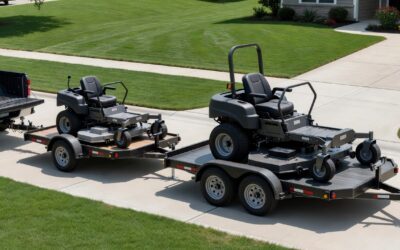
Zero-Turn Radius Mowers
Zero-turn mowers are a type of riding mower with similar oil change procedures, but their compact design may make some components harder to access. The engine is usually mounted vertically or at an angle, which can affect how you position the mower for drainage. Consult your specific model’s manual, as the exact location of drain plugs and filters varies among manufacturers.
Mowers Without Traditional Drain Plugs
Some older or budget mower models may not have a drain plug. In these cases, you’ll need to tip the entire mower to pour out the old oil, then refill through the fill cap. This is messier and less precise than using a drain plug, so extra care is needed to avoid spilling and to ensure you add the correct amount of new oil. Always consult your owner’s manual for instructions specific to your model.
Troubleshooting Common Issues
Drain Plug is Stuck
If the drain plug won’t turn, don’t force it—you risk stripping the threads. Instead, spray the plug with penetrating oil (like WD-40) and wait 15–30 minutes for the lubricant to penetrate. Try again with a properly fitting wrench. If it’s still stuck, tap the wrench gently with a rubber mallet to help break the corrosion. As a last resort, apply heat with a heat gun (not a torch, which can damage nearby components) to help loosen the plug.
Oil Won’t Drain Completely
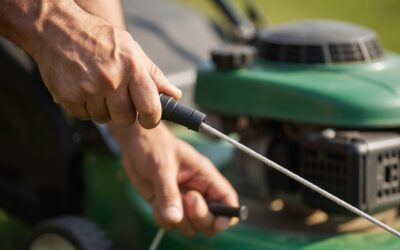
If oil is dripping very slowly or won’t drain after several minutes, the drain hole may be partially clogged. Ensure your mower is tilted enough for gravity to assist drainage. If you’re confident the tilt is sufficient, use a small wire or rod to very gently probe the drain hole to dislodge any debris. Never force anything into the hole, as you could damage internal engine components.
Too Much Oil Added
Overfilling your mower with oil is a common mistake that can cause smoking, fouled spark plugs, and engine damage. If you’ve added too much oil, remove the excess using a turkey baster, large syringe, or by carefully tilting the mower’s oil drain plug open slightly to let a small amount escape. Recheck the level frequently using the dipstick.
Leaking Oil After Change
If oil leaks after you’ve reinstalled the drain plug, the plug may not be tight enough, the gasket may be damaged, or the threads may be stripped. Turn off the engine immediately. Wait for it to cool, then attempt to tighten the plug slightly. If it leaks again, the threads are likely damaged and the plug may need to be replaced or the hole re-tapped by a professional mechanic.
Frequently Asked Questions
How often should I change my lawn mower’s oil?
Most manufacturers recommend changing oil every 50 hours of operation or at least once per season. Homeowners who use their mowers 5–10 hours per week typically need an oil change mid-season and again at the start of the next season. Check your owner’s manual for specific recommendations for your model. If you operate your mower frequently or in dusty conditions, more frequent changes may be beneficial.
Can I use car oil in my lawn mower?
While some car oils work in lawn mowers, it’s best to use oil specifically formulated for small engines. Small engine oils are designed for the higher operating temperatures and different engine design of lawn mower engines. Using the wrong oil can void your warranty and cause engine problems. Always refer to your owner’s manual for the recommended oil type and viscosity grade.
What if I can’t find the exact oil grade my manual recommends?
If you can’t find the exact grade, SAE 10W-30 is a safe choice for most small engines in a wide range of temperatures. The “10W” part refers to the oil’s viscosity in cold conditions, while “30” is the viscosity at operating temperature. If your manual specifies 5W-30 and you can’t find it, 10W-30 will work as an acceptable substitute, though it may not start quite as easily in very cold weather.
Should I change the oil filter every time I change the oil?
If your mower has a replaceable oil filter, it’s good practice to replace it every other oil change, or at minimum once per year. Since filters are inexpensive, many owners replace the filter every time they change oil for maximum engine protection. If your mower doesn’t have a replaceable filter, you can’t change it, so focus on regular oil changes with the correct oil grade and quantity.
Final Thoughts
Changing your lawn mower’s oil is a straightforward maintenance task that pays dividends in engine reliability and longevity. By following these steps, using the correct oil type and quantity, and disposing of old oil responsibly, you’ll keep your mower running smoothly for years to come. Set a reminder at the start of each mowing season to check your oil level and plan your first oil change. This simple habit is one of the best investments you can make in your equipment’s performance and lifespan.