Direct Answer: How to Build a Racing Lawn Mower
Building a racing lawn mower involves three primary pathways: modifying an existing mower for speed, assembling a competitive kit, or constructing from the ground up. The core process requires selecting or sourcing an engine (typically 5–25 hp depending on class), reducing weight through chassis redesign, optimizing aerodynamics, tuning the drivetrain for acceleration, and adhering to your racing category’s technical specifications. Success depends on understanding your target class rules, securing appropriate components, mastering basic fabrication and engine work, and iterative performance testing.
Understanding Racing Lawn Mower Categories and Rules
Racing lawn mowers compete in several organized formats, each with distinct technical requirements. The Brotherhood of the Lawn Mower Racing Association (BLMRA) governs many competitive events in North America, with classes defined by engine displacement, fuel type, and weight minimums. Local lawn mower racing clubs may follow BLMRA standards or establish their own specifications.
Before investing time and money, identify your target racing format:
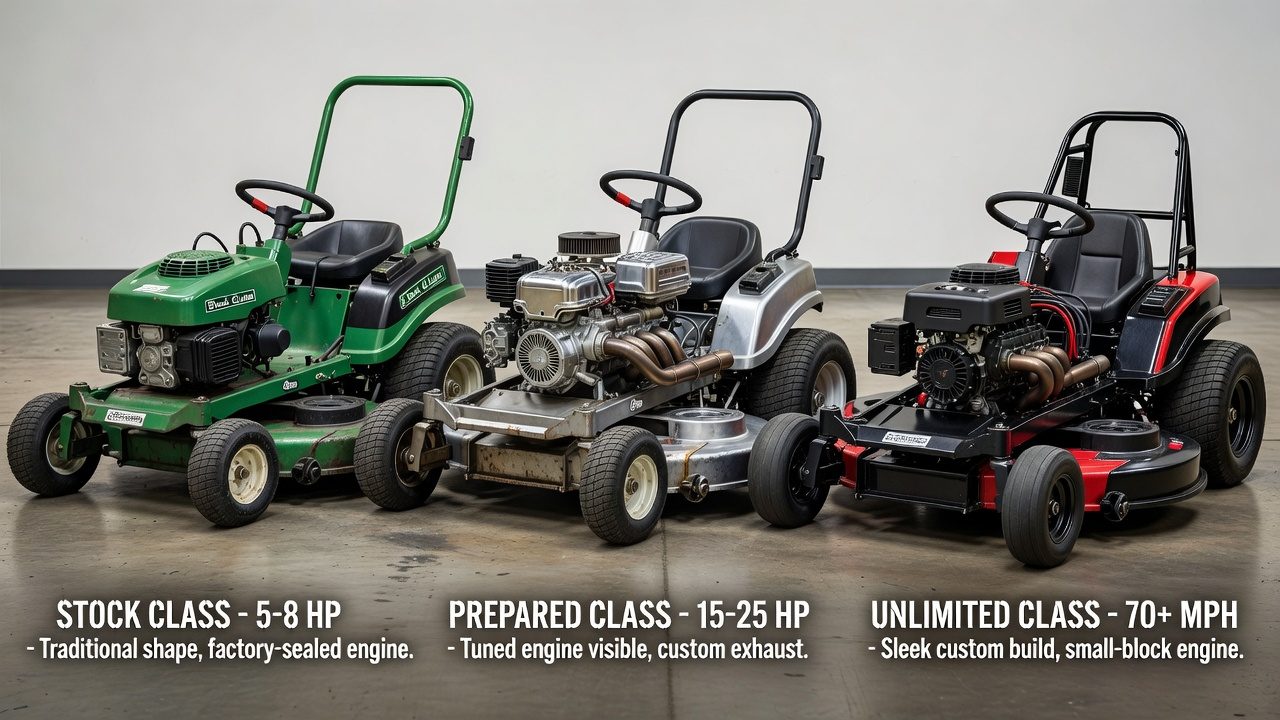
- Stock or Modified Class: Entry-level category allowing modifications to existing lawn mower engines, typically 5–12 hp with modest weight reductions.
- Prepared Class: Permits more aggressive engine tuning, custom carburetors, and performance ignition systems; engines usually reach 15–25 hp.
- Unlimited Class: Minimal restrictions; builders use small-block engines, custom frames, and advanced aerodynamics for speeds exceeding 60 mph.
- Speed-Run Events: Hobbyist events at local tracks or strips, often with relaxed technical rules and lower entry barriers.
Contact your local racing club or BLMRA chapter to confirm displacement limits, weight minimums (typically 200–400 lbs depending on class), fuel requirements, and safety mandates before beginning your build.
Three Pathways: Modification, Kits, or Ground-Up Build
Your construction approach depends on your budget, available skills, and time commitment.
Pathway 1: Modifying an Existing Lawn Mower
Starting with a stock lawn mower is the most accessible entry point. Purchase a used or new commercial-grade mower (typically 5–8 hp) and apply performance upgrades. This approach requires minimal fabrication tools and suits beginners with basic mechanical skills.
- Cost: $1,000–$3,000
- Time: 40–80 hours
- Skills Required: Engine tuning, carburetor work, basic welding
- Advantages: Proven frame geometry, easily sourced donor mower, shorter learning curve
- Limitations: Deck design creates drag; weight reduction is modest; competitive performance capped in serious racing
Pathway 2: Competitive Racing Kits
Several manufacturers and racing organizations sell semi-assembled racing mower kits with pre-engineered frames, engine mounts, and drivetrain systems. Kits compress the design phase and reduce fabrication complexity.
- Cost: $2,500–$6,000
- Time: 60–100 hours
- Skills Required: Mechanical assembly, engine installation, basic welding
- Advantages: Optimized chassis geometry, reduced design risk, community support
- Limitations: Limited customization; cost higher than modification; availability varies by region
Pathway 3: Ground-Up Custom Build
Designing and fabricating a racing mower from scratch offers maximum performance potential but demands advanced welding, machining, and engine expertise. This approach suits experienced fabricators targeting unlimited class racing or speed records.
- Cost: $4,000–$12,000+
- Time: 150–300+ hours
- Skills Required: Advanced welding and fabrication, engine tuning, aerodynamic design
- Advantages: Minimal weight, optimized weight distribution, full performance control
- Limitations: High risk of design errors; requires expensive tools and workspace; lengthy development cycle
Engine Selection and Performance Tuning
The engine is your mower’s power source and the primary target for performance gains. Small-engine manufacturers like Briggs & Stratton, Kohler, and Tecumseh dominate the market, though serious racers often source small-block gasoline engines from automotive suppliers.
Engine Types and Displacement
- Stock Lawn Mower Engines (5–8 hp): Air-cooled, single-cylinder, overhead-valve designs. Reliable but limited power output. Suitable for stock or modified class racing.
- Commercial-Grade Engines (10–15 hp): Twin-cylinder or heavy-duty single-cylinder engines offering higher displacement and factory performance ratings. Ideal for prepared class builds.
- Small-Block Automotive Engines (15–30+ hp): Compact V-twin or inline-four engines from motorcycles, ATVs, or automotive sources. Preferred for unlimited class and serious speed runs. Require custom engine mounts and cooling solutions.
- Electric Motors (Emerging): High-torque electric motors with battery packs eliminate fuel limitations and simplify tuning but face weight penalties and limited endurance. Battery technology is evolving rapidly; few organized racing classes yet accept electric powerplants.
Engine Tuning for Horsepower
Engine modifications are the fastest path to performance gains. Typical tuning progression includes:
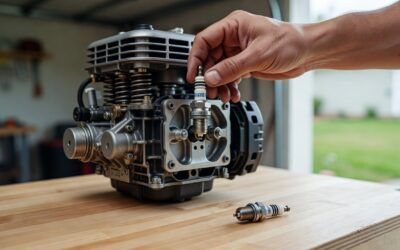
- Carburetor Tuning: Adjusting jet sizes, needle positions, and float levels optimizes fuel delivery. Upgrading to a high-flow carburetor can yield 1–3 hp gains on stock engines. Requires understanding of air-fuel ratios and load testing.
- Ignition System Upgrade: Replacing stock point-type ignition with electronic ignition systems improves spark timing stability. Advancing ignition timing by 2–5 degrees increases combustion efficiency and power output by 10–15 percent.
- Intake Manifold Work: Porting and polishing the intake manifold reduces restriction and improves air flow. Custom intake runners can add 2–5 hp on prepared engines.
- Exhaust Optimization: Removing restrictive mufflers and fabricating high-flow exhaust headers reduces back pressure. Expect 3–8 hp improvement, depending on engine type and tuning precision.
- Cylinder Head Porting: Enlarging intake and exhaust ports, reshaping valve seats, and optimizing combustion chamber geometry improve volumetric efficiency. Advanced porting yields 15–25 percent power gains but requires specialized equipment and expertise.
- Compression Ratio Increase: Milling the cylinder head to raise compression ratio improves thermal efficiency. Higher compression demands higher-octane fuel (91–100 octane racing fuel) and increases engine stress; typical gains are 10–20 percent.
Fuel Selection: Stock lawn mower engines run on regular 87-octane fuel. Performance tuning benefits from 91–93 octane premium fuel or 100+ octane racing fuel. Higher octane prevents engine knock at advanced ignition timing and under load. Some competitors run methanol or unleaded race fuel for unlimited class competition.
Chassis Design and Weight Reduction
Acceleration and handling depend heavily on chassis design and total vehicle weight. Racing lawn mowers benefit from aggressive weight reduction and optimized center-of-gravity placement.
Materials and Frame Geometry
- Mild Steel Tube Frames: Traditional choice for racing mowers. 1.25–1.5 inch diameter tubing with 0.090–0.120 inch wall thickness provides strength-to-weight balance. Welded construction allows custom geometry. Typical unloaded weight: 150–200 lbs.
- Chromoly Steel: Higher strength-to-weight ratio than mild steel, allowing thinner walls and lighter assemblies. More challenging to weld without proper equipment. Unloaded weight: 120–160 lbs.
- Aluminum Frames: Significantly lighter than steel but require advanced welding expertise and cost more. Used in unlimited-class builds targeting minimal weight. Unloaded weight: 80–120 lbs.
Weight Reduction Targets
Competitive racing classes enforce minimum weight limits to maintain safe and fair competition. Stock class mowers typically weigh 250–350 lbs (engine, operator, fuel); prepared class, 300–400 lbs; unlimited class, 200–300 lbs. Achieving class minimums requires systematic weight reduction:
- Replace cast-iron engine blocks with aluminum heads and carburetors.
- Use aluminum fuel tanks, air filters, and intake manifolds.
- Machine flywheel and crankshaft counterweights to reduce unsprung mass.
- Eliminate unnecessary structural members and bracing.
- Use lightweight fasteners (aluminum or titanium) where safe.
- Minimize fuel and fluid reserves; some racers add removable ballast to achieve exact class minimum weight.
Weight Distribution and Balance
Position the engine low and centered in the frame for optimal weight distribution. A forward-biased center of gravity improves launch traction; a rearward bias may enhance high-speed stability. Test-track data and competitor feedback inform final tuning. Operator seating also affects balance; mount the seat to shift CG without compromising driver safety or control.
Drivetrain Configuration and Transmission
The drivetrain transfers engine power to the wheels. Optimization targets both acceleration and top speed depending on your racing format.
Drive Systems
- Belt Drive: Standard on stock lawn mowers. V-belts or serpentine belts connect engine pulley to transmission or axle pulley. Advantages: simple, low-cost, slip-based launch control. Disadvantages: power loss (5–10 percent), belt wear, limited tuning precision.
- Chain Drive: Motorcycle-style chain connects sprockets on engine and rear axle. Advantages: higher efficiency (2–5 percent power loss), precise gear ratio control, favorable for custom builds. Disadvantages: requires more maintenance, chain whip hazards (safety concern).
- Direct Drive: Rigid coupling of engine to wheels, common in high-powered unlimited builds. Advantages: maximum power transfer, instant throttle response. Disadvantages: difficult launch control, potential for wheel spin and loss of traction.
Transmission and Gear Ratio Selection
Gear ratios determine acceleration rate and top speed. Lower ratios (e.g., 3:1) favor rapid acceleration; higher ratios (e.g., 5:1) improve top-end velocity. For 40-yard sprint racing, low ratios dominate; for 100+ yard courses, balanced or high ratios perform better.
- Fixed Ratio (Single Speed): Simple, lightweight. Choose a single ratio optimized for your track. Example: 4:1 for mixed-distance racing.
- CVT (Continuously Variable Transmission): Pulley-based transmission automatically adjusts ratio during acceleration. Advantages: optimizes power delivery across RPM range; smoother launch. Disadvantages: lower efficiency, higher complexity and cost.
- Clutch-Based Launch Control: Slip-clutch engagement delays wheel rotation initially, allowing engine RPM to rise before full power transfer. Improves traction and reduces wheel spin; common in high-horsepower prepared and unlimited builds.
Gear Ratio Tuning: Test different sprocket combinations at your track. For a 40-yard sprint, aim for peak wheel velocity at mid-course; for longer tracks, prioritize steady-state top speed. Small changes in sprocket teeth (e.g., swapping 14-tooth for 15-tooth driver pulley) yield measurable time differences.
Aerodynamics and Fairings
Aerodynamic drag increases with the square of velocity, making drag reduction critical at racing speeds. Racing lawn mower speeds typically range from 40–70+ mph (depending on class), where aerodynamic effects become significant.
Drag Reduction
- Low-Profile Frame Design: Reduce frontal area by lowering the operator seat and engine mounting. Narrower wheelbase cuts lateral drag.
- Aerodynamic Fairings: Fiberglass or carbon-fiber body panels streamline the frame, reducing drag coefficient (Cd) from ~1.2 (stock mower) to 0.8–0.95 (faired racer). Modest gains at sprint distances; significant advantage over 100+ yard courses.
- Wind Tunnel Testing (Advanced): Some serious competitors use wind tunnel data to optimize fairing shapes. Computational Fluid Dynamics (CFD) simulations also guide design; entry cost is high but results are precise.
- Rolling Resistance Reduction: Upgrade tires to low-rolling-resistance racing compounds. Proper tire pressure (15–25 psi depending on tire) balances grip and efficiency.
Fairing Materials and Construction
- Fiberglass: Affordable, durable, easily repaired. Typical layup: 2–4 oz mat or woven roving with polyester resin. Weight: 8–15 lbs for full fairing.
- Carbon Fiber: Lighter and stronger than fiberglass but costly ($2,000–$5,000+ for a complete fairing). Used in unlimited-class and serious prepared builds.
- Aluminum Panels: Lightweight, stiff, easily modified. Requires welding or fastening to frame. Typical weight: 6–12 lbs for complete body.
Safety, Testing, and Performance Iteration
Safe operation and systematic performance validation ensure success and prevent injury.
Safety Requirements
- Roll Bar or Cage: Protects operator in rollover events. Typically a tubular steel structure above operator seating, bolted to frame.
- Seat Belt: 4-point harness or racing safety harness restrains operator during hard acceleration and braking.
- Helmet and Protective Gear: Full-face motorcycle helmet, racing suit, gloves, and boots shield operator from debris and impact.
- Kill Switch: Engine shutoff lever within arm’s reach allows rapid power termination in emergencies.
- Chain Guard or Fairing: Enclosed chain drive prevents operator contact and directs debris away from bystanders.
- Track Safety: Confirm track specifications and safety marshall presence before any high-speed runs.
Testing and Validation
Begin testing in a controlled environment (empty parking lot or private property) at low speeds. Progress gradually:
- Verify steering response, throttle function, and brake effectiveness at 10–15 mph.
- Test acceleration and handling at 20–30 mph, checking for instability or unusual vibration.
- Gradually increase speed, monitoring engine temperature, oil pressure, and fuel delivery.
- Record lap times or sprint distances to quantify performance. Document setup (gear ratio, ignition timing, carburetor jetting) for each test run.
- Identify bottlenecks: is the mower limited by engine power, wheel traction, or aerodynamic drag? Adjust tuning accordingly.
Common Tuning Mistakes to Avoid
- Over-Advancing Ignition Timing: Causes engine knock and detonation, damaging pistons and valves. Advance timing conservatively in 2–3 degree increments and listen for knock.
- Lean Carburetor Jetting: A too-lean air-fuel ratio burns hot, melting pistons and valves. Test on a dyno or with exhaust temperature monitoring before racing.
- Inadequate Cooling: High-power engines generate heat; ensure adequate airflow and consider water cooling or oil cooling for prepared and unlimited builds.
- Excessive Weight Reduction: Removing structural material compromises frame rigidity and safety. Maintain safe design margins even when chasing minimum weight limits.
- Mismatched Gear Ratios: A ratio too low causes wheel spin and traction loss; too high limits acceleration. Test incrementally and record times.
- Ignoring Class Rules: Violating technical specifications disqualifies you and wastes build time. Confirm rules regularly; they evolve seasonally.
Tools, Skills, and Resources You’ll Need
Essential Tools
- Basic hand tools: wrenches, sockets, screwdrivers, pliers, hammers
- Engine diagnostic tools: spark plug socket, compression gauge, fuel pressure gauge, carburetor synchronizer
- Fabrication tools (for custom or ground-up builds): MIG welder, angle grinder, drill press, hacksaw
- Measurement and alignment: dial caliper, feeler gauges, straight edge, laser alignment tools
- Safety equipment: welding mask, work gloves, safety glasses, fire extinguisher
Skill Development
Most builders develop skills through hands-on experience and community mentorship. Start with simple tasks (carburetor tuning, bolt-on exhaust) before attempting advanced work (cylinder head porting, frame welding). Online resources include YouTube channels dedicated to small-engine performance, forum communities like the BLMRA website, and local vocational schools offering welding and fabrication courses.
Community and Mentorship
- Brotherhood of the Lawn Mower Racing Association (BLMRA): Official governing body; website lists regional chapters, race schedules, and technical rules.
- Local Lawn Mower Racing Clubs: Most regions host small racing clubs with experienced builders willing to share advice. Attend spectator events and connect with competitors.
- Online Forums: Dedicated lawn mower racing forums (e.g., lawnmowerracing.org) host technical discussions, build logs, and vendor recommendations.
- Vendor Networks: Performance parts suppliers (e.g., Morrison Racing Engines, Cummins Engine distributors for small engines) offer technical support and tuning guidance.
Frequently Asked Questions
What’s the average cost to build a racing lawn mower?
Costs range widely: modifying an existing mower ($1,000–$3,000), assembling a competitive kit ($2,500–$6,000), or building from scratch ($4,000–$12,000+). Budget depends on your pathway, racing class, and performance target. Stock-class modifications are most affordable; unlimited-class custom builds are most expensive.
How much faster does a racing lawn mower go than a stock mower?
Stock lawn mowers top out around 15–20 mph. A modified mower reaches 30–40 mph; a prepared-class racer, 50–60 mph; and unlimited-class racers exceed 70 mph. Speed depends primarily on engine power and vehicle weight. A 25 hp engine in a 200 lb frame will significantly outpace a stock 5 hp mower in a 350 lb frame.
Do I need welding skills to build a racing lawn mower?
Welding is essential for ground-up builds and helpful for modifications. If you lack welding experience, start with a modification (using an existing frame) or buy a racing kit. Many welding schools offer affordable short courses; learning basic MIG welding takes 20–40 hours of instruction and practice. Alternatively, hire a professional fabricator for frame work while you handle engine tuning yourself.
What racing organization should I join to compete?
The BLMRA is North America’s primary sanctioning body for organized lawn mower racing. Contact the BLMRA (blmra.com) to locate your nearest chapter and confirm their class specifications and race schedule. Many regions also host informal speed-run events at local drag strips or fairgrounds; these often have fewer technical restrictions and lower entry barriers for first-time competitors.