
How to Start a Cub Cadet Riding Lawn Mower: Quick Answer
To start a Cub Cadet riding lawn mower: Sit on the seat and engage the parking brake. Insert the ignition key and turn it to the “On” position to activate the fuel system. If your model has a manual choke, pull it to the full-choke position. Set the throttle lever to the “Start” or “Choke” position (usually marked on the dashboard). Turn the ignition key fully clockwise to engage the starter motor, the engine should crank and start within 2 to 3 seconds. Once running, gradually push the choke lever back to the “Run” position over 30 seconds as the engine warms up, then adjust the throttle to your desired operating speed.
Pre-Start Safety Checklist
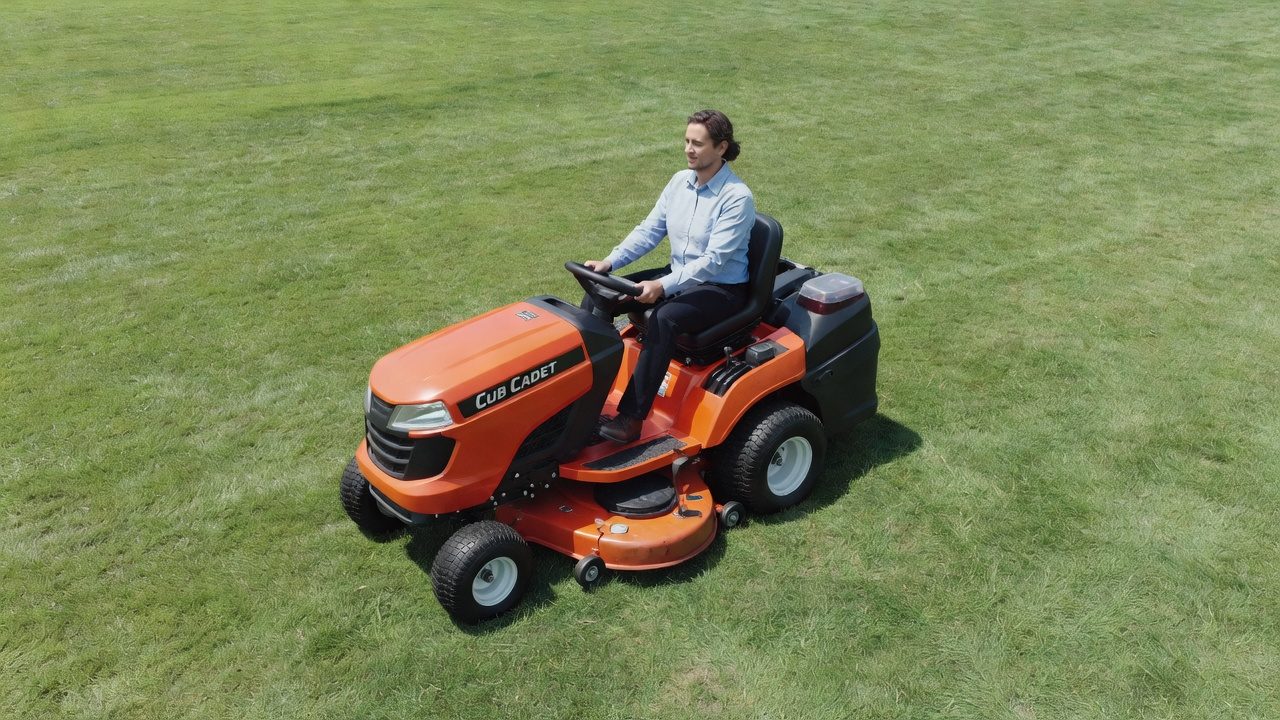
Before attempting to start your Cub Cadet riding mower, complete these essential safety checks:
- Operator presence: You must be seated on the mower seat. Most modern Cub Cadet models include a seat-switch safety cutoff that prevents the engine from starting if no one is seated.
- Parking brake engaged: Verify the parking brake (also called the brake pedal lock) is fully engaged to prevent the mower from rolling during startup.
- Blade control in neutral: Ensure the blade engagement lever or PTO (Power Take-Off) switch is in the “Off” or “Disengaged” position. The cutting deck should not be spinning.
- Clear surroundings: Check that the area around the mower is free of obstacles, children, pets, and debris that could be thrown by the blades or caught in the deck.
- Fuel level adequate: Confirm the fuel tank has sufficient gasoline. Most Cub Cadet tanks hold 2 to 3 gallons; a low fuel level can cause starting difficulties or engine stalling during operation.
- Fuel quality check: Old or contaminated fuel is a common cause of starting problems. Fuel stored over winter can degrade; if you’re starting the mower after prolonged storage, consider replacing stale fuel with fresh gasoline.
Understanding Your Cub Cadet Model Type
Cub Cadet manufactures riding mowers across multiple generations and transmission types, each with slightly different startup procedures. Identifying your model type will help you follow the correct procedure:
Electric-Start Models (Most Common on Modern Mowers)
Nearly all Cub Cadet riding mowers manufactured in the past 15 to 20 years feature electric starters powered by rechargeable batteries (typically 12-volt). These models require an ignition key and a functional battery. The starter motor cranks the engine automatically when you turn the key to the start position. Electric-start mowers are the easiest to operate and are recommended for most users.
Pull-Cord Manual-Start Models (Older or Entry-Level Mowers)
Some older Cub Cadet models and certain budget-level riding mowers use a manual pull-cord starter instead of an electric starter. These require physical pulling of a cord handle to crank the engine. Pull-cord starts demand more effort and technique but don’t require a battery.
Hydrostatic vs. Gear-Shift Transmission
Cub Cadet mowers use either hydrostatic (foot-pedal based) or traditional gear-shift (lever-based) transmissions. This affects how you control movement but does not significantly change the startup procedure. Both transmission types use the same ignition key and choke system.
Automatic vs. Manual Choke
Newer Cub Cadet models often include automatic choke systems that engage without manual adjustment, while older models require you to manually pull or push a choke lever. Check your owner’s manual or dashboard to identify which system your mower uses.
Step-by-Step Startup Procedure for Modern Cub Cadet Models (Electric Start)
Follow these steps to start a contemporary Cub Cadet riding mower with electric start:
Step 1: Mount the Mower and Secure Yourself
Climb onto the mower seat and settle your weight fully. Grasp the steering wheel or handle bars and ensure both feet are positioned on the floor or pedal deck. Many Cub Cadet models have a seat switch that completes an electrical circuit only when someone is seated, if you’re not fully seated, the mower won’t start.
Step 2: Engage the Parking Brake
Locate the parking brake lever or pedal lock (typically on the right side of the seat or near the floor). Push it fully forward or down to lock the transmission. You should hear or feel a click or mechanical engagement. This prevents the mower from rolling or lurching forward during startup. Users looking for related component recommendations can explore our marshall stanmore iii vs harman kardon onyx studio 8 breakdown.
Step 3: Position the Blade Control to “Off”
Look for the blade engagement lever or PTO switch, usually mounted on the dashboard or right armrest. Push it fully backward (or toward the “Off” symbol) to ensure the cutting deck is completely disengaged. The blades should come to a stop.
Step 4: Check and Adjust the Choke (If Manual)
Inspect your dashboard for a choke control. If your model has a manual choke lever, pull it all the way toward you (or toward the “Choke” symbol) to close the choke valve for cold-start enrichment. If your model has an automatic choke, you can skip this step, the system will handle it. Before finalizing equipment decisions, refer to our comprehensive dyson v8 cyclone vs bissell featherweight stick comparison.
Step 5: Set the Throttle to Start Position
Locate the throttle lever on the dashboard (often labeled with a turtle/rabbit icon or “Slow/Fast” markings). Move it to the position marked “Start” or “Choke”, this is typically the lowest or leftmost position. This setting provides the proper engine speed for cold starting.
Step 6: Insert the Ignition Key
Take the ignition key and insert it into the key switch (usually located on the dashboard or steering column). Push it in until it seats fully, you should feel it click into place. Do not force it if it resists; misalignment can damage the switch. For broader ecosystem context, read through our operational guide on bissell crosswave hydrosteam vs shark stainforce.
Step 7: Turn the Key to Ignition
Slowly turn the key clockwise to the “On” position. You may hear a soft beeping sound or see the instrument cluster illuminate, this indicates the electrical system is active and the fuel pump is priming. Wait 1 to 2 seconds in this position to allow fuel to flow to the carburetor.
Step 8: Crank the Engine
Turn the key all the way clockwise to the “Start” position (usually marked with an icon of a curved arrow or lightning bolt). Hold it in this position, do not force it beyond the start position. The starter motor will engage and crank the engine. The engine should catch and begin running within 2 to 5 seconds.
Step 9: Release the Key
As soon as you feel or hear the engine firing (you’ll notice a change in sound and vibration), release the key. It will return automatically to the “On” position. If the engine does not start after 5 seconds of cranking, release the key, wait 10 seconds, and try again. Excessive cranking can drain the battery and overheat the starter motor.
Step 10: Warm Up the Engine and Disengage the Choke
Once the engine is running, if you engaged a manual choke, gradually push the choke lever back toward the “Run” position over the next 20 to 30 seconds as the engine warms up. Push it incrementally, don’t yank it all the way at once, as this can cause the engine to stall. Listen to the engine sound; it should begin to settle and idle more smoothly as the choke is disengaged.
Step 11: Adjust Throttle to Operating Speed
Once the engine is running smoothly and the choke is fully disengaged, move the throttle lever to the desired operating speed. Most operators run at mid-to-high throttle (marked as “Mow” or the upper half of the scale) for cutting grass. Let the engine idle for 30 seconds to 1 minute before engaging the cutting deck or moving the mower.
Starting Vintage or Pull-Cord Cub Cadet Models
If you own an older Cub Cadet mower without an electric starter, use this pull-cord procedure:
Pre-Pull Checks
Sit on the seat, engage the parking brake, and set the blade control to off. If your model has a manual choke, pull it to full-choke position. Set the throttle to the “Start” position.
Locate the Pull-Cord Handle
Find the pull-cord handle, usually mounted on the side or top of the engine housing. Grasp it firmly with one hand, keeping the other hand on the steering wheel for balance.
Execute the Pull
In one smooth, confident motion, pull the cord handle straight toward you with firm force. The cord should extend fully; don’t jerk it in short, weak pulls. After the first pull, allow the cord to retract naturally. Repeat this motion 3 to 5 times for a cold engine or 1 to 2 times if the engine is warm. On the pull that starts the engine, you’ll feel sudden resistance as the engine fires.
Disengage Choke and Throttle
Once the engine starts, gradually push the choke lever back to the “Run” position as described in Step 10 above. Adjust throttle to operating speed.
Troubleshooting: What to Do If Your Cub Cadet Won’t Start
If your mower fails to start, diagnose the problem systematically:
Engine Cranks But Won’t Catch (No Ignition)
Possible causes: Spark plug fouled, fuel line clogged, or ignition system malfunction.
- Remove and inspect the spark plug for carbon buildup or oil fouling. Replace if necessary.
- Check that fresh fuel is reaching the carburetor by loosening the fuel line and observing fuel flow.
- Verify the ignition coil is properly connected and the kill switch (if present) is in the “Run” position.
Starter Motor Clicks But Engine Won’t Crank
Possible cause: Weak or dead battery.
- Check the battery terminals for corrosion or loose connections. Clean corroded terminals with a wire brush.
- Use a multimeter to test the battery voltage (should read 12+ volts). If lower, charge the battery with a charger or replace it.
- Verify the seat switch is making contact by wiggling slightly on the seat while turning the key.
No Sound or Response from Mower (Complete Silence)
Possible cause: Battery completely dead, ignition switch defective, or electrical connection broken.
- Turn on the dashboard lights to verify the battery has at least partial charge. If lights don’t illuminate, the battery is likely dead.
- Charge the battery fully and retry. If the mower still doesn’t respond, the ignition switch or electrical harness may be faulty, consult a technician.
Engine Starts But Immediately Stalls
Possible causes: Choke disengaged too quickly, fuel system issue, or carburetor problem.
- If you manually disengaged the choke, re-engage it and let the engine warm for 1 to 2 minutes before slowly disengaging again.
- Verify the fuel tank is not empty and the fuel is fresh (not stale from winter storage).
- Check for a clogged fuel filter or carburetor, these commonly prevent cold starts after seasonal storage.
Engine Starts Only with the Choke Fully Engaged
Possible cause: Carburetor running too lean (insufficient fuel mixture).
- This often occurs after winter storage. The carburetor may need cleaning or the idle mixture screw may need adjustment.
- Consult your owner’s manual for carburetor adjustment procedures, or take the mower to a service dealer.
Seasonal Startup: Preparing After Winter Storage
Starting your Cub Cadet after 3 to 6 months of winter storage requires extra care:
- Drain old fuel: If you didn’t run the mower empty before storage, the fuel may have degraded. Drain the old fuel from the tank and carburetor, then refill with fresh gasoline. You can add fuel stabilizer to fresh fuel to help cleaning.
- Check the battery: Cold storage weakens batteries. Charge the battery before attempting to start, or replace it if it won’t hold a charge.
- Inspect the spark plug: Remove and examine the spark plug for corrosion or fouling. Replace if dirty or worn.
- Prime the fuel system: If your mower has a fuel pump or primer bulb, press it 5 to 10 times before starting to push fuel into the carburetor.
- Expect slower starts: Don’t be alarmed if the engine takes longer to start in spring. Multiple crank cycles (10 to 15 seconds total) are normal after winter. Stop every 5 seconds to let the starter cool if needed.
Post-Start Operation and Safe Shutdown
After successfully starting your Cub Cadet:
Engine Warm-Up Period
Let the engine idle at low-to-medium throttle for 30 seconds to 1 minute while you check the mower’s operation. Listen for unusual sounds and verify that all controls respond smoothly. This warm-up period allows the engine oil to circulate and lubricates internal components.
Engaging the Cutting Deck
Once the engine sounds stable and smooth, you can engage the blade control lever to activate the cutting deck. Move the blade engagement lever gradually from “Off” to “On”; you should hear the deck engage and feel increased engine load as the blades spin up.
Normal Operation
Adjust the throttle to your desired mowing speed (typically high throttle for efficient cutting) and use the transmission controls to move forward. Always wear appropriate protective gear (long pants, closed-toe shoes, hearing protection).
Shutting Down the Mower
When you’re finished mowing:
- Disengage the cutting deck by pushing the blade control lever to “Off.”
- Reduce throttle to the idle position and allow the engine to cool for 20 to 30 seconds.
- Turn the ignition key counterclockwise to the “Off” position. The engine will stop.
- Remove the key from the ignition.
- Engage the parking brake to prevent accidental rolling.
- Allow the engine and deck to cool before storing the mower, especially if you’ll be working near it.
Maintenance Tips to Prevent Starting Problems
Regular maintenance keeps your Cub Cadet starting reliably:
- Change the oil annually: Fresh oil ensures proper engine lubrication and cooling. Check your manual for the correct oil grade and capacity.
- Replace the air filter: A clogged air filter restricts fuel mixture and causes hard starting. Inspect it every season and replace if dirty.
- Clean or replace the spark plug annually: A fouled spark plug is the most common cause of starting trouble. Spark plugs are inexpensive and simple to replace.
- Use fuel stabilizer: Before storing for winter, run fuel stabilizer through the system or drain the tank entirely to prevent fuel degradation.
- Keep the battery charged: Store the mower with the battery charged, or charge it every 30 days during off-season. Completely discharged batteries may not recover.
- Inspect fuel lines and filter: Look for cracks, leaks, or blockages. Replace degraded fuel lines and clogged filters to maintain fuel flow.
Buyer FAQs: How To Start A Cub Cadet Riding Lawn Mower Solved
Q: Why is my Cub Cadet riding mower not starting even though the battery is good?
A: If the battery is charged and the starter motor cranks but the engine won’t catch, the problem is likely in the fuel or ignition system. Check for a clogged fuel filter, contaminated fuel, or a fouled spark plug. Remove the spark plug and inspect it for carbon or oil buildup, a fouled spark plug is the single most common cause of no-start conditions. If the spark plug looks clean, verify that fuel is reaching the carburetor by disconnecting the fuel line and observing flow when the key is turned on. If no fuel flows, the fuel pump or fuel filter is likely blocked. Finally, check the ignition coil connections, a loose wire can prevent spark from reaching the plug.
Q: Can I start my Cub Cadet without sitting on the seat?
A: No. Nearly all modern Cub Cadet riding mowers include a seat-switch safety feature that prevents engine start if no one is seated. This is a critical safety mechanism designed to prevent injuries from unattended operation. You must be fully seated on the mower seat for the electrical circuit to complete and allow the starter motor to engage. This feature is not adjustable or bypassable for safety reasons.
Q: What does it mean if my mower engine starts but immediately stalls?
A: Immediate stalling after startup usually indicates one of three issues: (1) the choke has been disengaged too quickly, re-engage the choke and allow the engine to warm for 1 to 2 minutes before slowly disengaging; (2) the fuel system is clogged or the fuel is stale, replace old fuel with fresh gasoline and check for a blocked fuel filter; or (3) the carburetor is misadjusted. If the problem persists after addressing fuel quality and choke positioning, the carburetor likely needs professional cleaning or adjustment. This is especially common after winter storage or if the mower has sat unused for several weeks.
Q: How long should I crank the starter before giving up?
A: Crank for a maximum of 5 seconds per attempt. If the engine hasn’t caught after 5 seconds, release the key and wait at least 10 seconds before trying again. Prolonged cranking overheats the starter motor and drains the battery rapidly. After 2 to 3 unsuccessful attempts, diagnose the problem (fuel, spark plug, battery charge, etc.) rather than continuing to crank.

Pros
- Strong 300CCA rating delivers solid starting power for lawn and garden equipment
- Sealed AGM construction is leak-resistant and requires no maintenance
- Direct fit Group U1 size matches many John Deere, Toro, Cub Cadet, and Craftsman machines
- Clear polarity markings and nut-bolt terminals simplify connections
- Durable build suits year-round light-duty outdoor use
Cons
- At 18.68 lbs the battery can feel heavy during handling and installation
- Positive terminal fixed on the left side requires careful polarity matching to avoid issues
- Battery returns must be arranged directly with the seller rather than through standard channels
The WEIZE 12V 300CCA BCI Group U1 AGM SLA starting battery is built specifically for lawn tractors, garden mowers, and light utility vehicles. It measures 7.68 inches long, 5.12 inches wide, and 6.22 inches high with a total height of 7.09 inches and weighs 18.68 lbs. The unit uses nut-and-bolt terminals with the positive post on the left (red) and negative on the right (black), giving a solid, purpose-built appearance for outdoor power equipment.
Performance centers on its 300 cold cranking amps and AGM sealed design that supplies reliable starts and high reserve capacity. This makes it well suited for light-duty seasonal use in equipment from John Deere, Toro, Cub Cadet, and Craftsman. The maintenance-free AGM construction resists vibration and supports consistent power delivery without fluid checks, helping keep tractors and mowers ready throughout the year.
Considerations include the 18.68 lb weight, which can make lifting and positioning more demanding. The fixed left-side positive polarity also requires confirmation of vehicle wiring before install. Additionally, any warranty or return support involves contacting the seller directly because of battery-specific policies.
The WEIZE Group U1 battery is a practical choice for owners of compatible lawn and garden machines who need a straightforward AGM replacement with solid cranking power and brand fitment. It delivers the most value to users seeking durable, maintenance-free starting performance for light-duty tractors and mowers.

Pros
- Extensive cross-compatibility with Cub Cadet, MTD, Troy-Bilt, Craftsman and other major riding mower brands
- True plug-and-play installation using the existing threaded bracket for quick DIY replacement
- Durable plastic and copper materials offer rust resistance and longer outdoor lifespan
- Replaces numerous OEM numbers including 725-06153A, 762-1261-211-50 and Trombetta equivalents
- Compact single-solenoid package ideal for targeted starter repairs
Cons
- Package contains only the solenoid itself with no extra mounting hardware or wiring adapters
- Compatibility still requires double-checking exact model numbers as fitment varies across years and series
- Primarily suited for 12V systems on riding lawn tractors rather than broader equipment types
The Taisouw 725-06153A starter solenoid relay is a direct-replacement 12V component built for popular riding lawn mowers. Constructed from high-quality plastic and copper, it presents a solid, rust-resistant build that feels ready for outdoor use right out of the package. The threaded female bracket design immediately signals simple serviceability.
In real-world performance the unit supports reliable engine cranking across Cub Cadet XT1 and XT2 series, MTD, Troy-Bilt, Craftsman LT2000, John Deere L100-LA175 and similar tractors. Its plug-and-play nature means the old solenoid can be swapped without cutting or drilling, while the copper contacts maintain consistent electrical flow for dependable starting. The part also cross-references multiple OEM numbers such as 725-06153A, 532192507, 582042801 and Trombetta 862-1241-211-12.
Potential drawbacks include the single-item package that omits extra fasteners or wiring, so users must reuse existing hardware. Fitment, while broad, still benefits from verifying the exact model and year before purchase. Because the design focuses strictly on 12V riding mower circuits, it is not intended for other voltage systems or non-lawn equipment.
Overall this solenoid is an excellent value choice for homeowners and small-equipment owners who need a quick, compatible fix for Cub Cadet, Troy-Bilt or Craftsman starters. Anyone matching the listed OEM numbers will gain reliable starting performance and straightforward installation with minimal hassle.

Pros
- Extensive compatibility list covers major riding-mower brands and dozens of specific model numbers
- Premium copper and plastic build provides strong resistance to dust, water, rust and corrosion
- High cranking power improves starting reliability while protecting the ignition switch
- Simple two-terminal design and free installation video make DIY replacement straightforward
- Direct OEM replacement eliminates guesswork for common part numbers like 725-06153A
Cons
- Compatibility is limited to the listed model ranges so owners must double-check fitment before purchase
- Basic electrical familiarity is still needed to safely test and install the solenoid
- No extra wiring harnesses or mounting hardware are included beyond the solenoid unit itself
The LordandLand 725-06153A starter solenoid relay is a direct-replacement component engineered for a wide range of riding lawn mowers and zero-turn tractors. Constructed from tough plastic with durable copper contacts, it immediately impresses with its solid, weather-ready build that promises protection against dust, water jets, rust and corrosion.
In real-world use the solenoid delivers high cranking power that lowers the electrical load on the ignition switch, resulting in quicker and more consistent engine starts. Its extensive cross-reference list covers popular MTD, Troy Bilt, Cub Cadet, Craftsman, John Deere and Ariens models, making it a versatile solution when the original 725-06153, 532192507 or similar part fails. Installation is straightforward: turn the key to On, bridge the large terminals with a screwdriver to test, then swap the unit using the included video guide.
Potential drawbacks include the need to carefully verify exact model compatibility, as the unit is designed only for the specified series, and a basic understanding of mower electrical systems is still required for safe testing and wiring. No additional harnesses or fasteners are supplied, so owners may need existing hardware or simple tools.
Overall the LordandLand 725-06153A offers excellent value for DIY mower owners and small repair shops seeking a reliable, OEM-matched starter solenoid that restores dependable starting performance across many popular riding machines.

Pros
- Wide model compatibility covering Cub Cadet XT1 XT2 XT3 LT and LTX series plus Troy Bilt Craftsman MTD riding mowers
- Replaces numerous OEM part numbers in one convenient package for versatile use
- Comes as a ready to use 2 pack complete with key rings and carabiner for added utility
- Provides durable backup keys that maintain ignition function equal to originals
- Includes responsive customer service for post purchase assistance
Cons
- Limited strictly to listed Cub Cadet Troy Bilt Craftsman MTD models and part numbers so may not fit unlisted variants
- No detailed material or durability testing data provided beyond basic OEM equivalence claims
- Lacks any advanced features such as coded security or multi machine coding options
The Tecreddy Replacement Key is a practical 2 pack starter key set built specifically as a drop in solution for Cub Cadet XT1 ZT1 LT LTX and related Troy Bilt Craftsman MTD riding mowers. It arrives with two keys two key rings and one carabiner creating an immediate impression of value focused utility for owners who need reliable ignition access without original equipment pricing.
In real world use these keys deliver solid performance by matching exact part numbers such as 625-05000 625-05002 925-2054A and 925-1745A across GT SLT LTX LGT LT series including popular units like LTX1040 LT1050 and i1042. The design focuses on straightforward compatibility and backup readiness allowing users to restore mower starting function quickly while keeping extras secured with the included accessories for seasonal lawn maintenance.
Potential drawbacks center on the need to verify exact model and part number match since the keys support only the listed Cub Cadet Troy Bilt Craftsman MTD configurations. Users seeking broader universal fitment or enhanced security coding may find the set limited to basic replacement duties without additional features.
Overall this Tecreddy set offers strong value for Cub Cadet and similar riding mower owners who require affordable OEM style starter keys as backups. It is best suited for homeowners and landscapers maintaining XT1 LT LTX series equipment who prioritize multi pack convenience and direct part number compatibility.
Related Maintenance and Operating Guides
To keep your equipment running at peak operating efficiency, explore our related technical walkthroughs and maintenance tutorials:
- Consult our detailed breakdown on heavy-duty chainsaw buyer guide.
Technical Standards and Compliance
Mechanical safety standards, operational tolerances, and protective gear guidelines align with benchmark specifications established by the American National Standards Institute (ANSI).