

Quick Answer: What Are Power Tools?
Power tools are devices powered by electricity, batteries, or compressed air that perform work with minimal manual effort. Unlike hand tools that rely entirely on human strength and skill, power tools use an external energy source to drive their mechanisms, enabling faster completion of tasks like drilling, cutting, fastening, and finishing. They’re essential in construction, woodworking, home improvement, and manufacturing,…

Pros
- Powerful 80V brushless motor delivers 32HP gas-equivalent performance with quiet fume-free operation and no engine maintenance.
- Complete kit includes four 6.0Ah batteries and 600W charger for substantial runtime up to 1.5 acres.
- SmartCut technology and 42-inch heavy-duty steel deck ensure consistent cuts without bogging in tough conditions.
- Versatile towing up to 350 lbs and optional cargo hauling plus comfort features like high-back seat and LED lights.
- Strong 4-year limited warranty and full compatibility with the Greenworks 80V tool ecosystem.
Cons
- Rear utility cargo bed for 200 lb hauling is sold separately and not included in the kit.
- Runtime of up to 1.5 acres varies with conditions and may require recharging or battery swaps on larger properties.
- As a fully cordless model continuous operation depends on battery levels unlike gas engines with unlimited runtime.
The Greenworks 80V 42" CrossoverT Cordless Riding Lawn Tractor is a ready-to-mow zero-emission tractor designed for homeowners managing medium to large lawns. It features a reinforced 42-inch stamped steel deck of 12-gauge construction along with premium comfort elements such as a high-back padded seat with foldable armrests. The overall build emphasizes durability and user convenience right out of the box with the included battery and charger set.
Performance centers on the 80V TruBrushless motor that provides 32HP gas-equivalent power with instant torque and quiet fume-free operation. SmartCut technology senses grass conditions and automatically adjusts power to maintain a consistent cut even in tall thick or wet areas. The four 6.0Ah batteries support runtime for up to 1.5 acres depending on conditions while dual LED headlights and a 7-position deck height range from 1.5" to 4.5" add practicality. Front and rear attachments further allow towing up to 350 lbs for added yard utility.
Key considerations include that the rear utility storage bin capable of hauling 200 lbs is sold separately so full cargo functionality requires an extra purchase. Runtime remains condition-dependent and may fall short for properties significantly larger than 1.5 acres without using the 600W charger or swapping batteries. The cordless design prioritizes ease and low maintenance but trades off the continuous runtime of traditional gas models.
This tractor delivers strong value for eco-conscious owners of residential properties who want gas-like power without the emissions noise or upkeep. It suits those who already use or plan to expand into the Greenworks 80V family of tools and who appreciate the 4-year limited warranty. Users with exceptionally large or commercial-scale lawns should evaluate battery logistics carefully before purchase.

Pros
- Delivers strong 21 horsepower equivalent power comparable to gas riding mowers.
- Provides up to 1.5 acres of runtime on a full charge with the six included batteries.
- Features low-maintenance dual brushless motors without belts for greater durability.
- Offers versatile 12-position cutting height adjustment from 1.5 to 4.5 inches.
- Includes digital controls for blade settings, drive speeds, and cruise control.
Cons
- Limited to 1.5 acres of cutting per charge without purchasing additional batteries for bigger lawns.
- Requires recharging time for the six 56V batteries after each use session.
- Relies solely on battery power with no hybrid or gas backup option for extended operation.
The EGO Power+ TR4204 is a cordless electric riding lawn mower built as a modern tractor alternative for residential use. It features a robust 42-inch stamped steel deck and arrives ready to go with six 56V 6.0Ah batteries plus a charger, creating an immediate impression of convenience and solid construction free from gas engine complexity.
Performance shines through its equivalent 21 horsepower output and top speed of 6 MPH, allowing efficient coverage of up to 1.5 acres on a single charge. Dual brushless cutting motors operate without belts for added durability and less upkeep, while the digital display lets users select three blade settings, three drive speeds, and cruise control. The 12 adjustable heights ranging from 1.5 to 4.5 inches combined with anti-scalp wheels deliver precise results across varied terrain.
Drawbacks center on battery dependency, as larger properties beyond 1.5 acres require extra batteries and recharging intervals can interrupt workflow. The fully electric design eliminates fuel storage needs but demands access to power sources between sessions.
This mower suits homeowners with medium to large yards who value quiet, emission-free operation and reduced maintenance. Those seeking expandable battery capacity for bigger areas will find the EGO Power+ TR4204 a strong long-term investment in cordless lawn care.
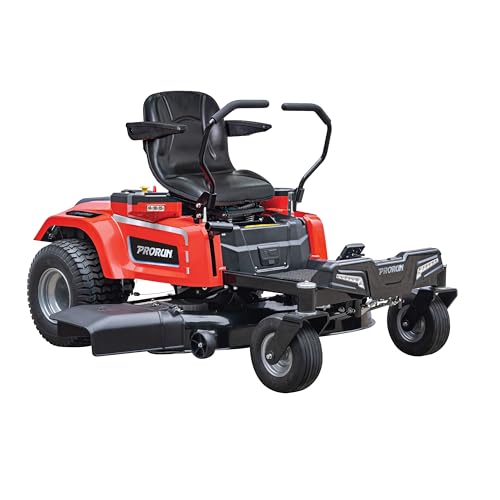
Pros
- High-efficiency brushless motors maximize power output and durability over traditional motors
- Up to 2 acres runtime with three included 10.0 Ah batteries supports substantial mowing sessions
- Zero-emission operation with gas-equivalent 20 HP power for quieter environmentally friendly use
- Six-port auto-switchover battery system provides flexible extended runtime options
- Durable 42-inch steel deck plus included mulch and towing kits add immediate functionality
Cons
- Runtime is limited to approximately 70 minutes or 2 acres which may require recharging for larger properties
- Fully battery-dependent design means performance relies on charge levels and spare battery availability
- 42-inch deck size may require more passes on expansive lawns compared to wider commercial models
The PRORUN PZT60V42 is a fully electric 60V zero-turn riding lawn mower built for residential and light commercial use. Its primary design centers on a robust 42-inch 14-gauge stamped steel twin blade deck powered by direct-drive brushless motors, giving an immediate impression of solid construction and modern battery-focused engineering. The mower arrives complete with three 10.0 Ah batteries, a charger, mulch kit, and towing kit for ready-to-work versatility.
In performance terms, four high-efficiency brushless motors deliver power equivalent to a 20 HP gas engine while producing zero emissions. The system supports up to 2.0 acres or 70 minutes of runtime, and six battery ports with auto switchover intelligently manage all PRORUN 60V battery sizes for continuous operation. A washout port on the steel deck further simplifies post-mow maintenance during real-world sessions.
Potential drawbacks include the finite 70-minute runtime window which can limit coverage on larger properties without spare batteries or recharge breaks. As a fully electric model, it also depends entirely on battery charge levels rather than continuous fuel refills, and the 42-inch deck width may demand extra passes compared with wider traditional options.
Overall the PRORUN PZT60V42 offers strong value for homeowners and small-property managers who want gas-like cutting power without emissions or noise. Those with medium-sized lawns seeking quiet efficient zero-turn performance and included accessories will benefit most from this electric mower.

Pros
- Strong 24HP FR730 engine power for demanding cutting conditions
- Wide 54-inch FAB deck reduces total mowing time
- Zero turn design delivers excellent maneuverability
- Fabricated deck supports durable everyday operation
Cons
- Sparse details beyond engine and deck leave other features unspecified
- Gas-powered FR730 engine needs regular fuel and maintenance
- Large 54-inch deck size may feel oversized on compact properties
The Husqvarna Z254F is a zero turn mower from the established Husqvarna brand in the riding lawn mowers category. It centers on a solid build that pairs a 24HP 726cc FR730 engine with a 54-inch FAB deck for straightforward residential grass care.
Performance stems directly from the listed specifications. The FR730 engine delivers the horsepower needed for steady operation across typical lawns while the wide FAB deck completes passes efficiently. Zero turn handling improves control in real yard layouts based on the model design.
Considerations arise from the limited data available. Secondary elements such as comfort features fuel capacity or extras receive no mention and the gas engine format involves routine upkeep. The large deck suits open areas better than confined spaces.
The Husqvarna Z254F provides the most value for owners of medium or large properties who want reliable engine power and a broad cutting width. Users with smaller lots or those seeking extensive accessory options should weigh the core specs carefully before purchase.
How Power Tools Differ From Hand Tools
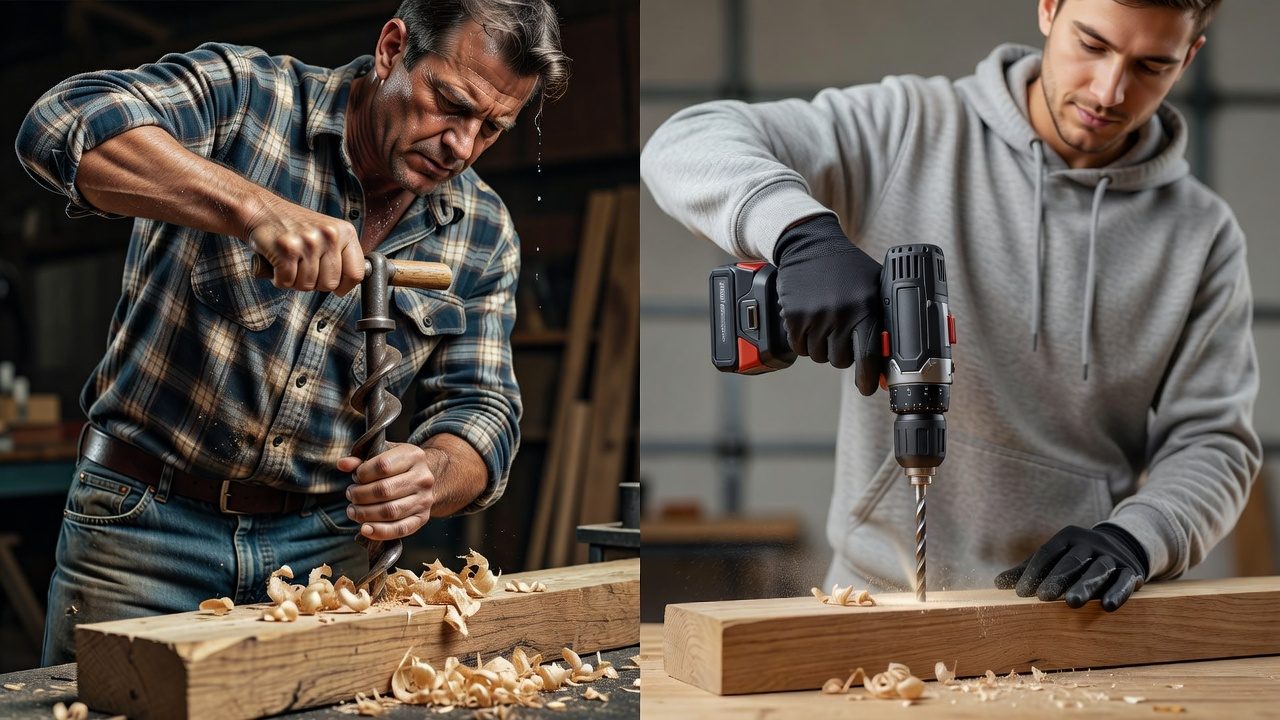
The primary distinction between power tools and hand tools lies in their energy source and operational speed. Hand tools, hammers, wrenches, screwdrivers, chisels, rely on human muscle power and manual control. Power tools automate the repetitive motion or force, allowing a user to accomplish the same task in a fraction of the time and with significantly less physical exertion. For example, a corded drill can bore through wood or metal in seconds, while a hand auger might take minutes. Power tools also provide more consistent results and enable users to complete larger projects that would be impractical or exhausting with hand tools alone.
Main Advantages of Using Power Tools
- Speed and efficiency: Tasks are completed faster, reducing project timelines.
- Reduced physical fatigue: Less manual effort means users can work longer with less strain.
- Consistency: Automated mechanisms produce uniform results across multiple applications.
- Precision: Many power tools offer better accuracy than manual alternatives.
- Capability: Some tasks, like angle grinding or circular cutting, are impractical without power assistance.
- Accessibility: Users with limited strength or mobility can accomplish tasks that hand tools make difficult.
Power Source Categories
Power tools are classified by how they receive their operating energy. Understanding the strengths and limitations of each power source helps users select the right tool for their specific needs.
Corded Electric Power Tools
Corded electric tools draw power directly from a wall outlet through a cable. They deliver consistent, unlimited power for as long as the tool is plugged in, making them ideal for heavy-duty or extended use. Common corded tools include circular saws, angle grinders, table saws, and power sanders. The main drawback is portability, the user must work within the cable’s reach, and the cord can be a tripping hazard or get caught on obstacles. Corded tools are typically more affordable than cordless alternatives and don’t require battery management.
Cordless and Battery-Powered Tools
Cordless power tools use rechargeable lithium-ion or other battery technologies to operate independently of wall outlets. This mobility is their primary advantage, users can work anywhere without access to electricity. Cordless drills, impact drivers, circular saws, and sanders have become increasingly powerful and are now the preferred choice for many DIYers and professionals. The trade-offs include limited runtime (typically 30 minutes to 2+ hours depending on the battery), the need to charge batteries between uses, and generally higher upfront costs. However, battery technology has advanced rapidly, and many cordless tools now rival corded models in power and speed.
Pneumatic Power Tools
Pneumatic tools operate using compressed air supplied by an air compressor. They’re lightweight, durable, and often less expensive than electric alternatives. Pneumatic tools are common in professional shops, factories, and automotive work, nail guns, impact wrenches, air chisels, and angle grinders. The limitation is that they require an air compressor and hose, restricting portability and making them less practical for occasional home use. Pneumatic tools generate less heat than electric tools and are suitable for environments where sparks or electrical safety is a concern.
Common Types by Function
Power tools are also organized by the work they perform. Most tool collections include representatives from each category to handle different tasks.
Drilling and Fastening Tools
Drills are among the most versatile power tools. Cordless drills accept drill bits for boring holes in wood, metal, and plastic, and most include a built-in screwdriver function for driving screws. Impact drivers look similar to drills but operate differently, they deliver rapid bursts of rotational force, making them superior for driving large fasteners and working with tough materials. Impact drivers typically require less user pressure and create less torque reaction, reducing wrist strain. Hammer drills combine rotation with a pounding action, essential for drilling into concrete or masonry.
Cutting Tools
Circular saws use a spinning blade to cut wood, metal, or other materials and are popular for crosscutting and ripping lumber. Reciprocating saws (or “sawzalls”) move the blade in a back-and-forth motion and excel at demolition work and irregular cuts. Miter saws are stationary tools designed for accurate crosscuts at various angles. Angle grinders are multi-purpose tools with a spinning abrasive or blade disc, used for cutting metal, grinding welds, or polishing surfaces. Jigsaws cut curved or intricate shapes in wood and thin materials. To evaluate matched hardware tolerances, consult our detailed overview of marshall stanmore iii vs harman kardon onyx studio 8.
Sanding and Finishing Tools
Orbital sanders use a rectangular or square sanding pad that moves in a circular pattern, ideal for general surface preparation and finishing. Belt sanders employ a continuous moving belt of abrasive material and are aggressive tools for removing material quickly. Detail or mouse sanders reach corners and edges. Rotary tools like Dremels are small, handheld power tools with various attachments for grinding, polishing, cutting, and engraving detailed work.
Other Common Power Tools
- Nail guns: Rapidly drive nails (pneumatic or battery-powered) for framing, roofing, or trim work.
- Circular and table saws: Stationary or portable tools for ripping and crosscutting lumber.
- Oscillating multi-tools: Rapidly vibrating heads accept various blades and pads for cutting, scraping, or sanding.
- Power planes: Electric planes for smoothing or chamfering wood edges.
- Routers: Specialized tools for hollowing out areas in wood or creating decorative edges.
DIY vs. Professional Power Tools
Power tools exist across a spectrum of quality, durability, and price. Understanding the differences helps buyers invest appropriately for their needs. When planning workspace deployment, consider the engineering criteria outlined in our dyson v8 cyclone vs bissell featherweight stick guide.
Consumer-Grade (DIY) Tools
Consumer-grade tools are designed for occasional or light-to-moderate use by homeowners. They’re typically more affordable, lighter weight, and come with fewer features than professional models. A DIY cordless drill might cost $50 to 150 and work perfectly for hanging shelves, assembling furniture, or small projects. These tools are sufficient for most home improvement tasks, and many modern consumer tools perform surprisingly well. The trade-off is longevity, they may not withstand heavy daily use or professional abuse.
Professional-Grade Tools
Professional tools are built for frequent, demanding use and longer lifespan. They typically feature more powerful motors, better cooling systems, improved ergonomics, and stronger construction. A professional-grade drill might cost $200, 400 but endure years of daily job-site use. Professionals may invest in tools that deliver faster speeds, better precision, or specialized capabilities their work requires. For occasional homeowners, professional-grade tools often represent unnecessary expense, but for contractors, carpenters, and serious hobbyists who use tools regularly, the durability and performance justify the investment. For additional operational safety benchmarks, see our published testing notes on bissell crosswave hydrosteam vs shark stainforce.
Choosing the Right Grade
Assess your project frequency and intensity. For annual or occasional projects, consumer-grade tools are sufficient and economical. If you’re renovating a home, building furniture, or tackling regular maintenance, mid-range tools offer better durability. If you plan to use tools regularly or professionally, invest in professional-grade equipment from the start to avoid replacing tools prematurely.
Safety and Usage Considerations
Power tools are safe when operated correctly, but they demand respect and proper technique.
Basic Safety Precautions
- Always read the manual: Understand the tool’s specific operating instructions, limitations, and safety features.
- Wear appropriate personal protective equipment (PPE): Use safety glasses, hearing protection, dust masks or respirators, and gloves when appropriate for the task.
- Inspect tools before use: Check for damaged cords, cracked casings, or loose parts.
- Use proper stance and grip: Maintain balance and control to prevent loss of grip or falls.
- Secure your workpiece: Clamp or secure material being worked on to prevent it from rotating or moving unexpectedly.
- Avoid loose clothing, jewelry, or long hair: These can get caught in rotating parts.
- Disconnect power when changing bits or blades: Never adjust a tool while it’s running or plugged in.
- Keep hands and body clear of the cutting, drilling, or grinding path.
Selecting the Right Tool for a Task
Using the wrong tool for a job increases injury risk and produces poor results. A drill is not designed to drive large construction fasteners, that’s a job for an impact driver. A circular saw works on wood but not efficiently on metal. A rotary tool is precise for detail work but inappropriate for heavy material removal. When unsure, consult online guides, YouTube demonstrations, or experienced users to confirm a tool’s intended purpose.
Maintenance and Care
Proper maintenance extends tool life and ensures safety:
- Keep tools clean: Remove dust and debris after use.
- Check batteries regularly: Replace worn batteries and don’t leave them uncharged for extended periods.
- Inspect cords and plugs: Replace damaged electrical components.
- Oil moving parts: Apply lubricant to hinges, chucks, and other moving components as recommended.
- Store tools properly: Keep them dry and secure, away from moisture and extreme temperatures.
- Replace worn blades and bits: Dull or damaged cutting tools are less effective and more dangerous.
Getting Started With Power Tools
If you’re new to power tools, begin with a basic cordless drill and impact driver, two versatile, beginner-friendly tools that handle most common tasks. These tools are intuitive, relatively safe, and useful for decades of projects. As your skills and projects become more ambitious, add specialized tools as needed. Many beginners feel intimidated by power tools, but most are straightforward to operate once you understand their basic function and apply common-sense safety practices.
Common Questions on What Are Power Tools Answered
What’s the difference between a drill and an impact driver?
Drills rotate continuously and are ideal for boring holes and driving screws at moderate speeds. Impact drivers deliver rapid, concentrated bursts of rotational force and are superior for driving large fasteners, working with tough materials, and reducing user strain. Impact drivers are more powerful but less versatile than drills. Many professionals carry both tools.
Are cordless power tools as powerful as corded tools?
Modern cordless tools are nearly as powerful as corded equivalents for most applications. Lithium-ion battery technology has advanced significantly, and many cordless tools match or exceed corded performance. The trade-off is runtime, cordless tools eventually exhaust their battery charge, while corded tools operate indefinitely. For occasional or moderate use, cordless is convenient; for extended professional use, corded may still offer advantages.
What power tools do I need for basic home improvement?
Start with a cordless drill, impact driver, circular saw, orbital sander, and a jigsaw. Add a cordless reciprocating saw if demolition or rough cutting is common. These five tools handle framing, fastening, finishing, and demolition, the bulk of DIY projects. As specific needs arise, expand your collection with specialized tools.
How often should I replace power tool batteries?
Lithium-ion batteries typically last 300 to 1,000 charge cycles, roughly 3 to 5 years with regular use. You’ll notice reduced runtime as batteries age. Replace them when runtime drops below 50% of original capacity or when they no longer hold a charge. Most manufacturers sell replacement batteries separately, making upgrade convenient and affordable.
Related Maintenance and Operating Guides
To keep your equipment running at peak operating efficiency, explore our related technical walkthroughs and maintenance tutorials:
- Consult our detailed breakdown on cordless stick vacuum buyer guide.
- Consult our detailed breakdown on robotic pool cleaner comparison guide.
Power Tool Safety Fundamentals
Power tools range from handheld drills to riding machines, and each class carries hazards that deserve respect. Overall safety guidance covering powered tools is available from American National Standards Institute (ANSI).









