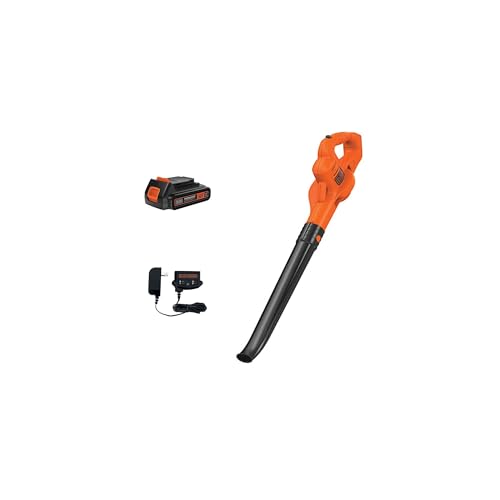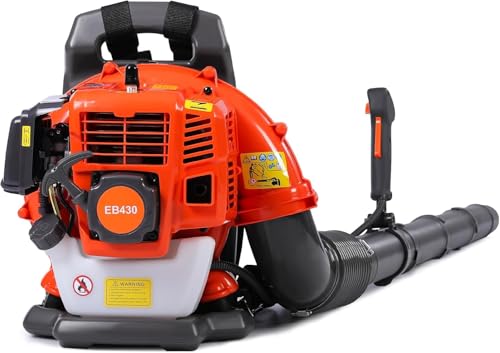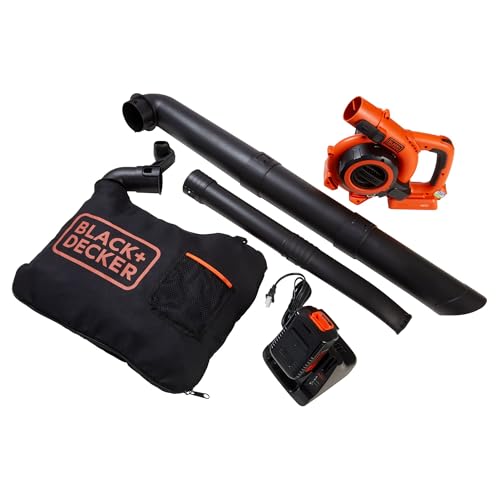
Quick Answer: What Is Cfm In Leaf Blowers
CFM means cubic feet per minute: the air volume a leaf blower moves. Under 300 CFM suits patios; 300–500 CFM handles small yards; 500–700 CFM clears typical lawns; 700+ CFM fits large, wet, or commercial debris. MPH loosens material; CFM carries it, so compare both ratings at the nozzle carefully.
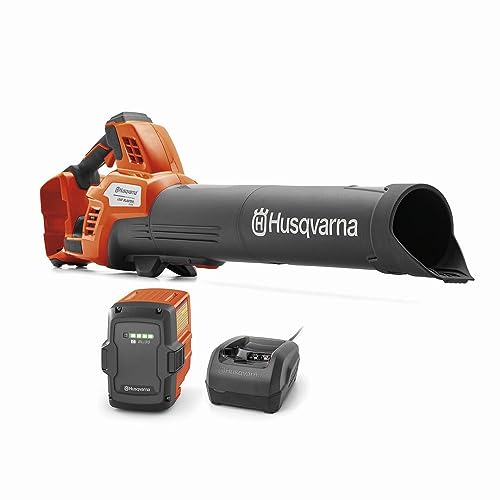
Pros
- Produces up to a rated 765 CFM of blowing power
- Variable-speed trigger offers customizable air delivery
- Includes a 56V 5.0Ah battery and matching charger
Cons
- High-output operation can significantly reduce runtime per charge
- 5.0Ah battery adds noticeable weight for single-handed work
Pros
- M18 FUEL system utilizes dual battery power for high output
- Cordless design offers unrestricted portability across large areas
- Integrates with the Milwaukee M18 tool ecosystem
Cons
- Tool only; requires two M18 batteries and a charger sold separately
- Dual batteries increase overall handheld carrying weight
Pros
- Offers up to a manufacturer-rated 700 CFM air volume
- Brushless motor ensures efficient power delivery
- Includes a 4.0Ah battery and rapid charger
Cons
- The 60V battery pack adds weight during extended handheld use
What Is CFM In Leaf Blowers?
CFM stands for cubic feet per minute. On a leaf blower, it describes how much air volume the blower can move in one minute. If a blower is rated at 600 CFM, it can theoretically move 600 cubic feet of air per minute under the manufacturer’s test conditions.
In practical yard work, CFM determines how wide and productive the blower’s air stream feels. A higher-CFM blower can move a larger mass of leaves, clippings, pine needles, dust, and loose debris at once. That is why CFM is usually the more important number when clearing broad lawns, long driveways, big leaf piles, and open areas.
However, CFM is not the whole performance story. Leaf blowers are normally rated by both CFM and MPH. CFM is air volume. MPH is air speed. CFM tells you how much air is being moved; MPH tells you how fast that air leaves the nozzle.
CFM Vs MPH: The Technical Difference
The simplest way to understand the difference is this: MPH breaks debris loose, while CFM moves the debris across the ground. A high-MPH, low-CFM blower may blast a narrow stream that dislodges stuck leaves but struggles to move a wide pile. A high-CFM, moderate-MPH blower may push a broad wave of dry leaves quickly but may need a concentrated nozzle for wet leaves or matted debris.
| Metric | What It Measures | What It Affects In The Yard | Best For |
|---|---|---|---|
| CFM | Air volume in cubic feet per minute | How much debris the blower can move at once | Large piles, open lawns, driveway clearing, high productivity |
| MPH | Air velocity in miles per hour | How aggressively the air stream loosens stuck material | Wet leaves, compacted debris, cracks, corners, pine needles |
| Nozzle shape | Outlet width and restriction | Changes the balance between spread and force | Round nozzles for volume; flat nozzles for scraping force |
| Air watts | A combined power estimate using airflow and speed | Indicates usable blowing energy more completely than CFM alone | Comparing high-performance models when available |
Can You Convert CFM To MPH?
You cannot accurately convert CFM to MPH without knowing the nozzle outlet area and flow losses. The two numbers measure different properties of airflow. In simplified terms, airflow volume depends on airspeed multiplied by outlet area. A blower can achieve high MPH through a narrow nozzle, but that does not automatically mean high CFM. Likewise, a blower can move a lot of air through a large opening without producing the sharpest airspeed.
This is why two blowers with the same advertised MPH can feel completely different in use. A 180 MPH blower with a small outlet may act like a pinpoint jet. A 150 MPH blower with much higher CFM may clear a sidewalk faster because it pushes a wider sheet of air.
The Physics Behind Leaf Blower CFM
A leaf blower uses a fan or impeller to accelerate air. The motor or engine spins the impeller, the impeller adds energy to the air, and the blower housing directs that air through a tube and nozzle. CFM is the resulting air volume flow rate.
Airflow becomes useful only when it creates enough force at the debris surface. That force depends on several variables:
- Air volume: More CFM moves more air mass over a wider area.
- Air velocity: More MPH increases the impact and shearing force of the air stream.
- Nozzle distance: Air spreads and loses energy as the nozzle gets farther from the ground.
- Surface friction: Wet grass, gravel, mulch, and rough concrete resist debris movement more than smooth pavement.
- Debris mass: Dry leaves need less force than wet leaves, acorns, bark chips, pine cones, and compacted soil.
- Air leaks and restrictions: Clogged intakes, damaged tubes, and blocked nozzles reduce usable CFM.
Why Nozzle Ratings Matter
When comparing products, check whether CFM is measured at the blower housing or at the nozzle. Nozzle CFM is more useful because that is the airflow actually leaving the tube. Some airflow is lost through turbulence, tube friction, bends, and nozzle restriction. A housing-only airflow rating can look impressive but may not reflect the force you feel at the end of the tube.
How Much CFM Do You Need?
The right CFM depends on property size, leaf volume, moisture, surface type, and how quickly you want to work. More CFM is not always better if it adds too much weight, noise, battery drain, or cost. The goal is to match airflow to the actual job.
| Application | Recommended CFM Range | Recommended MPH Range | Notes |
|---|---|---|---|
| Garage, porch, deck, small patio | 150–300 CFM | 90–140 MPH | Enough for dust, dry leaves, sawdust, and light clippings. |
| Townhome or small urban yard | 300–450 CFM | 110–160 MPH | Good balance for light seasonal cleanup without excessive size. |
| Typical suburban lawn | 450–650 CFM | 120–180 MPH | The practical sweet spot for most homeowners. |
| Large yard with mature trees | 600–800 CFM | 130–190 MPH | Better for heavy fall leaf volume and longer clearing passes. |
| Wet leaves, pine needles, and matted debris | 500–800+ CFM | 160–220 MPH | Look for a concentrator or flat nozzle to increase scraping effect. |
| Commercial landscaping | 700–1,000+ CFM | 150–230 MPH | Often backpack gas or high-output battery backpack equipment. |
Is Higher CFM Always Better?
Higher CFM is better only when the job needs more air volume. A 750 CFM blower may clear a large lawn quickly, but it can be overpowered for flower beds, mulch islands, gravel paths, or dry dust near doors. Too much airflow can scatter mulch, throw gravel, damage delicate plants, or push debris past the collection area.
For residential buyers, variable speed control is often more important than buying the highest CFM number available. A blower with a smooth trigger, cruise control, and turbo mode lets you use low airflow around landscaping and maximum airflow on open turf.
CFM Ranges By Leaf Blower Type
Different blower formats produce different CFM levels because they use different motor sizes, fan diameters, battery platforms, engines, and tube designs. If you are comparing cordless leaf blowers, expect the best models to deliver strong burst airflow but limited runtime at full turbo. Gas backpack models often sustain high CFM longer, while corded electric models are lighter but limited by outlet access.
| Blower Type | Typical CFM Range | Strengths | Limitations |
|---|---|---|---|
| Corded electric handheld | 250–600 CFM | Lightweight, inexpensive, no battery charging | Limited by extension cord and circuit capacity |
| Battery handheld | 250–750 CFM | Quiet operation, instant start, low maintenance | High CFM drains batteries quickly |
| Battery backpack | 600–900+ CFM | High airflow with better weight distribution | Higher cost and heavier battery system |
| Gas handheld | 350–600 CFM | Portable, no charging downtime | Fuel mixing, emissions, vibration, maintenance |
| Gas backpack | 600–1,000+ CFM | Best sustained output for large properties | Louder, heavier, more service requirements |
| Walk-behind blower | 1,000–2,000+ CFM | Maximum air volume for commercial cleanup | Bulky, expensive, excessive for most homes |
If you are choosing between fuel systems, see our gas or electric leaf blower comparison. If you are trying to decide whether a shoulder-mounted unit is worth it, review our guide to backpack vs handheld blowers.
How To Choose The Right CFM For Your Yard
Step 1: Measure The Work Area
Estimate the total area you clear most often. A small patio or driveway does not require the same airflow as a half-acre lot with oak, maple, or sycamore trees. As a practical rule, the larger the area and the more leaves you need to move in one pass, the more CFM you should buy.
Step 2: Identify The Debris Type
Dry leaves are easy. Wet leaves, pine needles, seed pods, hedge trimmings, and acorns require more combined airflow and velocity. If your main problem is loose dry leaves, prioritize CFM. If your main problem is stuck debris, prioritize a blower with strong MPH and a concentrator nozzle in addition to adequate CFM.
Step 3: Consider The Surface
Smooth pavement requires less airflow than damp grass. Gravel and mulch require controlled airflow so you do not blast the surface material out of place. For mixed surfaces, choose a variable-speed blower rather than a single-speed high-output unit.
Step 4: Match CFM To Runtime
Battery blowers often advertise peak CFM in turbo mode, but turbo mode can reduce runtime sharply. If a cordless blower claims 650 CFM, check whether that number is available continuously or only for short bursts. For larger yards, a moderate CFM blower with longer runtime may outperform a high-CFM blower that drains its battery before the job is finished.
Step 5: Check Weight And Ergonomics
High CFM usually means a larger motor, fan, battery, or engine. If the blower is too heavy or poorly balanced, the productivity gain can disappear because you fatigue faster. Look for comfortable handles, manageable trigger force, cruise control, and a tube length that lets you aim the nozzle without bending excessively.
Diagnostic Matrix: Why Your Leaf Blower Does Not Feel Like Its Rated CFM
If your blower is rated for high CFM but performs poorly, the problem is often airflow restriction, power loss, battery condition, nozzle mismatch, or unrealistic expectations for wet debris. Use the following troubleshooting matrix before assuming the blower is defective.
| Symptom | Likely Cause | Technical Explanation | Corrective Action |
|---|---|---|---|
| Weak airflow from the nozzle | Blocked intake screen | The impeller cannot pull enough air, reducing total CFM. | Power off the blower, remove battery or spark plug lead, and clean intake vents. |
| High-pitched sound but poor pushing force | Nozzle too narrow for the job | Velocity may be high, but air volume is concentrated into too small a stream. | Use a wider or round nozzle for dry leaf piles. |
| Strong airflow for a few seconds, then drop-off | Battery voltage sag or thermal protection | The controller reduces output to protect the battery or motor. | Use a fully charged higher-capacity battery and allow hot packs to cool. |
| Gas blower bogs under throttle | Dirty air filter, old fuel, carburetor issue, or clogged spark arrestor | The engine cannot maintain RPM, so impeller speed and CFM fall. | Replace fuel, clean filter, inspect plug, and service the exhaust screen. |
| Blower moves dust but not leaves | Insufficient CFM | The air stream lacks volume to move a broad mass of debris. | Upgrade to a higher-CFM model or work in smaller passes. |
| Blower scatters mulch or gravel | Too much airflow or poor trigger control | Air volume exceeds what the surface can tolerate. | Lower speed, increase nozzle distance, or use a more controlled sweeping angle. |
| Wet leaves barely move | Not enough MPH, poor nozzle angle, or excessive moisture weight | Water increases adhesion and mass, requiring more shear force. | Use a concentrator nozzle, reduce nozzle height, and break material loose in layers. |
| Air leaks near tube connection | Loose tube, cracked housing, missing gasket, or damaged latch | Escaping air reduces nozzle CFM. | Reseat the tube, inspect locking tabs, and replace damaged parts. |
Practical Yard Applications: How CFM Changes Technique
Dry Leaves On Grass
Use a broad, low-angle sweeping motion. Keep the nozzle 6 to 12 inches above the ground and work with the wind when possible. A 450–650 CFM blower is usually enough for residential lawns. Higher CFM reduces the number of passes but can also overshoot the pile if you stand too close.
Wet Leaves
Wet leaves require more velocity and patience. Start at the edge of the mat, not the center. Use a flat or concentrator nozzle if available. Short bursts often work better than holding continuous full throttle because bursts break adhesion without blasting loose debris too far away.
Driveways And Sidewalks
Hard surfaces reward both CFM and MPH. Use medium to high speed and sweep debris toward one side rather than pushing it straight ahead. For sand, dust, and grass clippings, too much airflow can create clouds, so reduce speed near doors, vehicles, and open windows.
Mulch Beds And Gravel
Use the lowest effective speed. Aim across the top of the debris rather than directly into the surface. High CFM can move leaves quickly, but it can also displace mulch and gravel. A variable trigger is essential for this type of work.
Gutters And Roof Edges
Moderate CFM can clear dry gutter debris, but control is more important than maximum output. Use manufacturer-approved gutter attachments only. Avoid using a blower from an unstable ladder. Follow applicable safety rules and review OSHA equipment safety regulations when operating powered equipment in elevated or workplace settings.
CFM, Battery Runtime, And Power Management
On cordless blowers, CFM and runtime are tightly linked. Moving more air requires more electrical power. Turbo mode increases fan speed, but fan power demand rises rapidly as speed increases. That is why a blower may run 45 minutes on low but only 10 to 15 minutes on maximum output.
For battery-powered equipment, consider these technical factors:
- Voltage: Higher-voltage platforms can deliver high power with lower current, improving efficiency and heat control.
- Amp-hour capacity: Higher Ah batteries store more energy, usually extending runtime.
- Watt-hours: Voltage multiplied by amp-hours gives a better estimate of energy capacity.
- Battery temperature: Cold batteries provide less output, while overheated batteries may trigger protection circuits.
- Turbo duty cycle: Continuous turbo use drains packs fastest and can heat the motor controller.
Gas Blower CFM: Engine RPM And Maintenance Effects
Gas blowers depend on engine speed to maintain impeller RPM. Anything that prevents the engine from reaching rated speed reduces airflow. A dirty air filter, fouled spark plug, partially clogged spark arrestor, stale fuel, incorrect oil mix, or carburetor problem can make a 700 CFM backpack blower feel like a much smaller machine.
Because gas units produce exhaust, vibration, and more noise, they also demand stricter operating discipline. Use hearing protection, avoid enclosed spaces, and keep hot exhaust away from dry leaves, mulch, fuel containers, and structures.
Maintenance Intervals That Protect CFM
Leaf blower airflow declines when intake screens clog, tubes leak, impellers accumulate debris, batteries age, or engines lose RPM. A simple maintenance schedule preserves performance and extends equipment life. For broader outdoor equipment care, see our guide to chainsaw and outdoor tool maintenance.
| Interval | Battery Blower Maintenance | Gas Blower Maintenance |
|---|---|---|
| Before each use | Check battery charge, inspect intake vents, confirm tube lock, inspect nozzle for blockage. | Check fuel level, inspect air intake, confirm tube lock, inspect throttle operation, check for fuel leaks. |
| After each use | Brush debris from vents, wipe housing, remove battery for storage. | Brush debris from vents, wipe housing, allow engine to cool before storage. |
| Every 10 operating hours | Inspect tube seals, clean fan intake area, inspect battery contacts. | Clean or replace air filter, inspect spark plug condition, check fasteners. |
| Every 25 operating hours | Check charger and battery pack for damage, verify trigger and speed controls. | Inspect spark arrestor screen, check fuel filter if equipped, inspect starter rope. |
| Seasonally | Store batteries partially charged in a cool dry area; avoid freezing or high heat. | Replace stale fuel, service plug and filter, inspect carburetor tuning, stabilize fuel for storage. |
How Manufacturers Rate CFM
CFM ratings can vary because manufacturers may test under different conditions. Some publish maximum airflow with a specific nozzle, some list airflow at the housing, and some quote turbo-mode airflow. When comparing blowers, read the specifications carefully and look for these details:
- At-nozzle CFM: The most useful airflow rating for real-world comparison.
- Maximum CFM: Often measured in the highest speed or turbo setting.
- Standard-mode CFM: More relevant for normal runtime and sustained work.
- Nozzle installed: Different nozzles can change measured CFM and MPH.
- Battery used: Some cordless tools produce maximum output only with larger battery packs.
Common Mistakes When Comparing CFM
- Buying by MPH alone: High MPH with low CFM can feel powerful but clear slowly.
- Ignoring runtime: Peak CFM is less useful if the blower cannot sustain it long enough to finish the job.
- Comparing housing CFM to nozzle CFM: These are not always equivalent.
- Using the wrong nozzle: A concentrator nozzle is excellent for wet leaves but inefficient for wide dry piles.
- Overbuying for small spaces: Excessive CFM can make patios, mulch beds, and gravel areas harder to control.
- Ignoring weight: A heavy blower with high CFM may be slower in practice if it causes arm fatigue.
Buying Checklist: What To Look For Beyond CFM
CFM is important, but the best blower is the one that delivers usable airflow in a controlled, comfortable, and reliable package. Before buying, evaluate the entire system.
| Feature | Why It Matters | Recommended Choice |
|---|---|---|
| Variable speed trigger | Prevents over-blowing mulch, gravel, and tight corners | Strongly recommended |
| Cruise control | Reduces hand fatigue during long clearing sessions | Useful for medium and large yards |
| Turbo mode | Provides temporary peak airflow for stubborn debris | Helpful, but not a replacement for sustained power |
| Nozzle options | Lets you choose volume or scraping force | Round plus flat or concentrator nozzle is ideal |
| Weight and balance | Affects fatigue and control | Test grip position and tube angle when possible |
| Noise level | Important for neighborhoods and operator comfort | Lower dB ratings are preferable, especially for electric models |
| Battery compatibility | Reduces cost if you already own the platform | Choose compatible packs with adequate watt-hours |
| Service access | Matters for filters, plugs, tubes, and replacement parts | Choose brands with available parts and documentation |
Recommended CFM By User Type
| User Type | Best CFM Target | Best Blower Style | Reason |
|---|---|---|---|
| Apartment or patio user | 150–300 CFM | Compact cordless or corded handheld | Low weight and control matter more than maximum airflow. |
| Small-lot homeowner | 300–500 CFM | Battery handheld | Enough for routine cleanup without gas maintenance. |
| Average suburban homeowner | 450–650 CFM | High-output battery handheld | Best balance of clearing speed, noise, and convenience. |
| Large-property homeowner | 600–800 CFM | Battery backpack or gas backpack | Higher airflow and better ergonomics for long sessions. |
| Commercial crew | 700–1,000+ CFM | Professional backpack blower | Sustained productivity and durability matter most. |
Safety Notes When Using High-CFM Leaf Blowers
High-CFM blowers can throw stones, sticks, dust, and small debris at dangerous speeds. They can also expose the operator to high sound levels and airborne particles. Use proper personal protective equipment and operate with awareness of nearby people, pets, vehicles, windows, and fragile landscaping.
- Wear eye protection every time you operate a blower.
- Use hearing protection, especially with gas or high-output models.
- Wear a dust mask or respirator when clearing dry soil, pollen, moldy leaves, or fine debris.
- Do not point the nozzle at people, pets, vehicles, or open doors.
- Keep loose clothing, long hair, and straps away from intakes.
- Do not use gas blowers indoors or in enclosed spaces.
- Check local noise ordinances before early morning or evening operation.
FAQ: What Is CFM In Leaf Blowers?
What does CFM mean on a leaf blower?
CFM means cubic feet per minute. It measures the volume of air a leaf blower moves in one minute. Higher CFM generally means the blower can move more leaves or debris at once.
Is CFM more important than MPH?
For most yard cleanup, CFM is usually more important because it determines how much material the blower can move. MPH is more important when debris is wet, stuck, compacted, or lodged in cracks. The best blower has the right balance of both.
What is a good CFM for a leaf blower?
A good CFM for most homeowners is about 450–650 CFM. Small patios can use 150–300 CFM, small yards often need 300–500 CFM, and large properties or heavy leaf loads benefit from 600–800+ CFM.
How much CFM do I need for wet leaves?
Wet leaves typically need at least 500 CFM with strong airspeed, often 160 MPH or higher. A concentrator or flat nozzle helps break wet leaves loose by increasing the air stream’s scraping effect.
Why does a high-MPH blower sometimes feel weak?
A high-MPH blower can feel weak if it has low CFM. The air may exit very fast, but the stream may be too narrow or low in volume to move a large pile of leaves efficiently.
Does a bigger nozzle increase CFM?
A bigger nozzle can allow a wider air stream and may preserve more volume, but it can reduce airspeed. A smaller nozzle can increase velocity but may reduce usable airflow volume. The best nozzle depends on whether you need broad clearing or concentrated force.
Do cordless blowers really deliver their advertised CFM?
Many cordless blowers deliver advertised peak CFM only with a fully charged battery, the correct battery size, and turbo mode engaged. Sustained airflow may be lower during normal operation, especially as the battery heats or discharges.
What CFM is considered commercial grade?
Commercial backpack blowers often start around 700 CFM and can exceed 1,000 CFM. Commercial users also consider durability, serviceability, fuel or battery logistics, harness comfort, and sustained output under daily use.
To compare alternatives and performance metrics, read our evaluation of what does cfm mean in leaf blowers.
Bottom Line: What CFM Means For Real-World Clearing
CFM is the air volume rating that tells you how much material a leaf blower can move at once. For most homeowners, 450–650 CFM is the practical target. Choose less for patios and small yards, more for large properties and heavy leaf loads. For the best results, compare CFM and MPH together, check whether the rating is measured at the nozzle, and choose a blower with variable speed control so you can match airflow to the surface and debris.