What Is a String Trimmer? (Direct Answer)
Astring trimmer is a handheld gardening tool that cuts grass and weeds using a rapidly spinning nylon monofilament line instead of a blade. Also called a weed trimmer,weed whacker, weed eater, or line trimmer, it’s designed for trimming lawn edges, reaching tight spaces like fence lines and corners, and maintaining areas that a standard lawn mower cannot access.
How Does a String Trimmer Work?
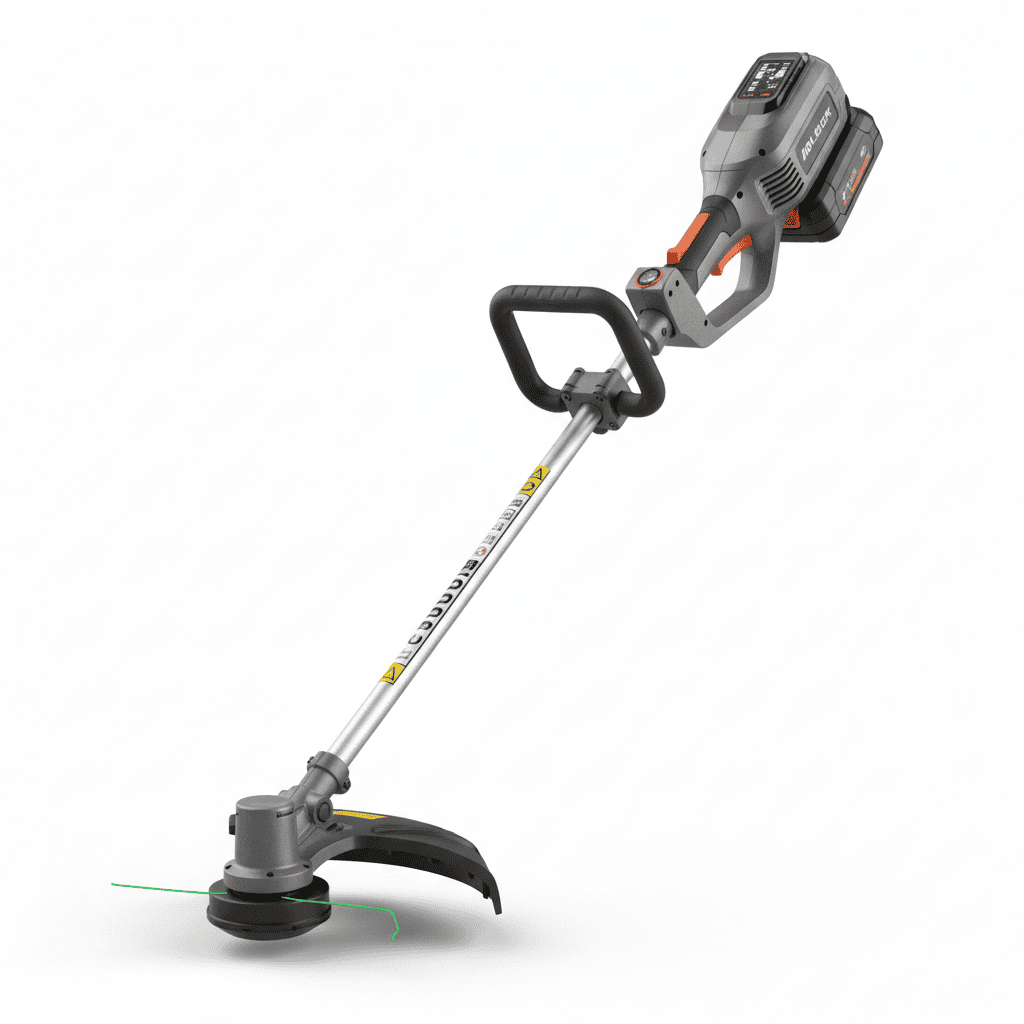
A string trimmer operates through a simple but effective mechanism. The tool’s motor (powered by gas, electricity, or batteries) spins a cutting head at high speeds, typically between 4,000 and 10,000 RPM. The nylon monofilament line attached to this head rotates in a circular motion. When the spinning line contacts grass, weeds, or small vegetation, the rapid rotation cuts through stems and blades cleanly.
Pros
- Brushless motor offers efficient performance with reduced maintenance compared with many gas trimmers
- Quiet cordless operation is well suited for neighborhoods and frequent use
- Variable speed control improves accuracy in tight or delicate areas
- Kit includes a 4.0Ah battery, so it is ready for use with less added setup
Cons
- Runtime can drop when cutting thick grass or running on higher power settings
- The 13-inch cutting width may feel slow on larger properties compared with wider trimmers
- The listing does not provide details such as weight or shaft adjustability, which may matter to some buyers
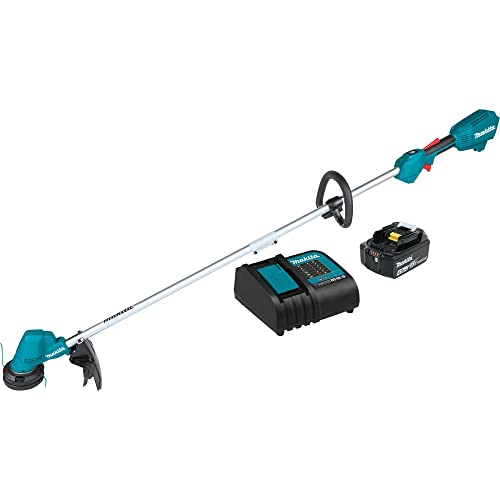
Overview: The Makita XRU23SM1 is an 18V LXT brushless cordless 13-inch string trimmer kit designed for users who want a cleaner, lower-maintenance alternative to gas trimming. The teal Makita design reflects the brand's practical tool-first approach and feels suited to regular yard maintenance.
Performance: Its BL Brushless Motor delivers up to 6,000 RPM, while the variable speed trigger and High/Low button make it easier to match cutting power to the job. Makita says the included 18V LXT 4.0Ah battery can provide up to 1 hour of runtime, which is useful for routine edging and trimming sessions.
Considerations: The 13-inch cutting width is practical for most residential tasks, but it is not the fastest option for larger overgrown areas. Runtime will also vary with grass thickness and how often higher power mode is used.
Verdict: This trimmer makes the most sense for homeowners and light-to-moderate professional users already invested in Makita's 18V LXT system. It offers good control, low noise, and reduced upkeep, but buyers needing maximum coverage for big properties may want a wider or more powerful option.

Pros
- Tap N' Go head supports convenient line advancement during use.
- Curved shaft makes it easier to work around obstacles and tight areas.
- Smart Start and Air Purge are both focused on simpler, easier starting.
- Low-noise engine may be more comfortable for longer trimming sessions.
Cons
- Gas-powered 2-cycle design requires fuel mixing and routine engine maintenance.
- Curved shaft trimmers can be less comfortable for some users than straight-shaft models during extended use.
- The product data does not include weight, runtime, or included accessories, so buyers may need to verify those details separately.
Overview & Design: The Husqvarna 122C is a gas-powered string trimmer with a 22-cc 2-cycle engine and a 17-inch cutting width. Its curved shaft design is intended to improve maneuverability, especially when working around fences, trees, and landscape edges.
Performance & Key Features: This model combines a Tap N' Go twin-line head, Smart Start technology, and an Air Purge system to make trimming and starting more efficient. The low-noise engine is a practical advantage for homeowners who want a gas trimmer with less noise than many traditional options.
Drawbacks & Considerations: As with most gas trimmers, this model requires fuel mixing and regular maintenance. It may also be less appealing to buyers who prefer the lighter feel and simpler operation of battery-powered tools, and the available product data does not list weight or included accessories.
Verdict: The Husqvarna 122C is a solid fit for homeowners who want a gas trimmer with easy starting features, good reach around obstacles, and no battery constraints. It is best suited to users who value practical trimming performance over ultra-lightweight convenience.

Pros
- Automatic feed spool removes the need for manual bumping during use.
- Trim-to-edge functionality makes it versatile for both cutting grass and defining borders.
- Corded design avoids battery downtime and charging wait times.
- VERSATRACK compatibility supports cleaner tool storage.
Cons
- Corded design limits mobility compared with cordless trimmers and requires access to an outlet.
- The 12-inch cutting swath is best suited to lighter-duty residential use rather than large property work.
- Line diameter and cutting width may be less aggressive than heavier-duty trimmers for dense overgrowth.
Overview & Design: The CRAFTSMAN CMEST900 is a corded electric string trimmer and edger with a 12-inch cutting swath. It is designed for straightforward home yard maintenance and includes a turn-to-edge feature for quick switching between trimming and edging.
Performance & Key Features: In everyday use, the automatic feed spool is a practical advantage because it extends the line without bumping the ground. The 0.065-inch line and 12-inch width make it suitable for routine grass cleanup along walkways, fences, and lawn edges.
Drawbacks & Considerations: Because it is corded, movement is limited by the extension cord and outlet access. It is also best viewed as a light to medium-duty tool, so users with larger yards or thicker growth may want a more powerful option.
Verdict: The CMEST900 is a solid fit for homeowners who want an affordable, simple, and low-maintenance trimmer/edger for regular yard touch-ups. It offers useful convenience features without the hassle of batteries or fuel.
The nylon line is effective because its speed generates enough force to sever plant material without the weight and danger of a metal blade. As the line wears down through use, a tap-and-feed or automatic feed system advances fresh line from the trimmer head’s spool, ensuring consistent cutting capability.
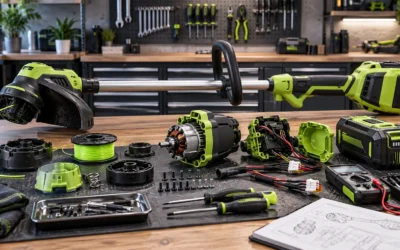
Key Components of a String Trimmer
- Motor: Provides the power to spin the cutting head. Gas, electric (corded), or battery-powered options are available.
- Shaft: A long rod connecting the motor to the cutting head, allowing the operator to reach ground level while standing upright.
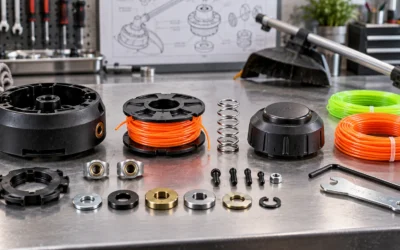
- Cutting Head: The component that holds and spins the monofilament line. Comes in various designs, bump feed, tap feed, or automatic feed.
- Monofilament Line (String): The nylon cord that does the actual cutting. Available in different diameters, typically 0.065 to 0.155 inches thick.
- Handle/Grip: Allows safe operation and control of the trimmer during use.
- Guard/Shield: Protects the operator from debris kicked up by the spinning line.
Types of String Trimmers: Power Source Comparison
| Type | Power Source | Best For | Key Considerations |
|---|---|---|---|
| Gas-Powered | Gasoline engine | Large properties, heavy-duty use, no electricity access | More powerful; requires fuel, maintenance, and produces emissions; louder operation |
| Corded Electric | Household outlet (cord) | Small to medium yards, homeowners wanting low maintenance | Quiet and eco-friendly; limited by cord length; not suitable for far distances from outlets |
| Battery-Powered | Rechargeable lithium-ion battery | Most homeowners with small to medium yards | Quiet, zero emissions, low maintenance; runtime limited by battery capacity; compatible batteries often work across tool ecosystems |
Common Uses for String Trimmers
String trimmers excel at tasks lawn mowers cannot handle:
- Lawn Edges: Creating clean borders along driveways, sidewalks, and patios
- Fence Lines: Trimming grass growing against fences or walls
- Around Obstacles: Reaching around trees, garden beds, and landscaping features
- Tight Spaces: Accessing narrow areas between structures
- Weed Control: Cutting down weeds and overgrowth in unmowed areas
- Brush Clearing: Removing light brush and saplings (with appropriate line and power)
Regional Terminology and Naming Variations
String trimmers are called by different names depending on geographic location and local dialect:
- String Trimmer: Common in formal contexts and instruction manuals
- Weed Trimmer / Weed Eater: Popular in North America, especially the Southern United States
- Weed Whacker / Weed Wacker: Widely used colloquial term
- Line Trimmer: Common in UK and Australia
- Edge Trimmer: Sometimes used when focusing on lawn edging specifically
All terms refer to the same basic tool, though regional preference can affect how the product is marketed and what consumers search for online.
String Trimmer Motor and Power Considerations
The motor is the heart of any string trimmer. Gas-powered trimmers typically range from 25cc to 50cc engines and deliver the most power, making them suitable for thick weeds and large properties. Electric corded models draw6-13amps of household electricity and provide consistent power without refueling. Battery-powered trimmers have become increasingly popular, with modern lithium-ion batteries offering 20-60 minutes of runtime depending on model and cutting intensity. Readers comparing setup options can review our technical analysis on z890 vs x870e motherboard.
Choosing the right power source depends on your property size, proximity to electrical outlets, storage space for fuel, and maintenance tolerance.
Why Use a String Trimmer Instead of Other Tools?
Unlike pruning shears (manual, time-consuming for large areas), a string trimmer covers ground quickly and efficiently. Unlike a standard rotary mower, it reaches into corners and tight spaces. Unlike a scythe or sickle (rarely used in modern yards), it requires minimal skill and is safer for most operators. String trimmers fill a specific niche in lawn maintenance: fast, convenient edge and detail work. For complementary field maintenance guidelines, examine our breakdown of marshall stanmore iii vs harman kardon onyx studio 8.
Everything You Need to Know: String Trimmer FAQ
How fast does the string on a trimmer spin?
Most string trimmers operate at 4,000 to 10,000 RPM (revolutions per minute), with some high-powered models reaching 12,000 RPM or higher. This high-speed rotation creates enough cutting force to sever grass and small weeds instantly.
What is monofilament line, and why is nylon used?
Monofilament line is a single strand of nylon plastic cord stored on a spool in the trimmer head. Nylon is used because it’s durable, flexible, lightweight, and creates a clean cutting edge. It’s also safer than metal blades, if the line strikes a hard object like a rock or pavement, it frays or breaks rather than ricocheting dangerously. To evaluate matched hardware tolerances, consult our detailed overview of dyson v8 cyclone vs bissell featherweight stick.
Can a string trimmer cut thick weeds and brush?
Standard string trimmers with standard line (0.065 to 0.095 inches) handle grass and thin weeds effectively. Heavier-duty models with thicker line (up to 0.155 inches) and more powerful motors can cut thicker weeds and light brush. For dense woody vegetation, a dedicated brush cutter or hedge trimmer is more appropriate.
How often do you need to replace the trimmer line?
Line wear depends on usage, terrain, and obstacles. Operators may notice decreased cutting efficiency and shorter line length after 2 to 4 weeks of regular use. Most trimmer heads feature automatic or manual feed systems that advance fresh line; you’ll need to replace the spool or refill the trimmer when line is exhausted.
Technical Standards and Compliance
Mechanical safety standards, operational tolerances, and protective gear guidelines align with benchmark specifications established by the American National Standards Institute (ANSI).