

Direct Answer: How to Build a Faster Lawn Mower
Building a fast lawn mower requires a combination of engine modifications (carburetor tuning, spark plug upgrades, fuel optimization), weight reduction (removing non-essential components), drivetrain optimization (pulley and belt adjustments), and aerodynamic improvements (blade balance, tire pressure). Most riders can achieve 2 to 5 mph speed increases through basic modifications; competitive builds require extensive engine work and custom fabrication. Speed gains depend on your baseline mower type, modification budget, and willingness to accept warranty voidance and potential safety trade-offs.
Understanding Lawn Mower Speed Baseline and Realistic Expectations
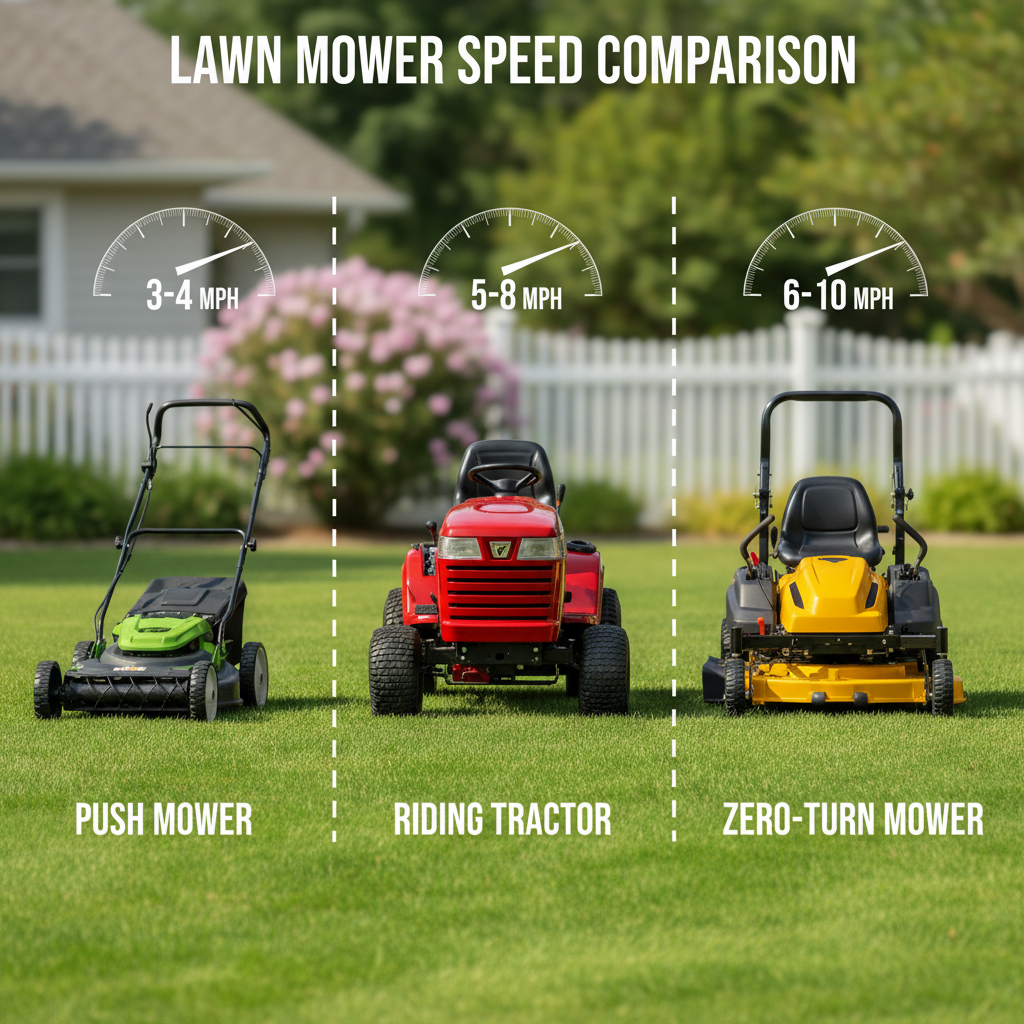
Before modifying your mower, establish a realistic performance target. Stock riding mowers typically operate at 5 to 8 mph forward speed, while zero-turn models may reach 6 to 10 mph. Push mowers average 3 to 4 mph. The mower’s original engine displacement, transmission type, and deck weight determine the ceiling for safe performance gains.
- Garden tractors and riding mowers: Best candidates for modification; stock speeds of 5 to 8 mph can realistically reach 10 to 15 mph with moderate work.
- Zero-turn mowers: Already optimized for speed; gains of 2 to 4 mph are typical without structural modifications.
- Commercial-grade mowers: Built for durability over speed; modifications offer diminishing returns.
- Push mowers: Limited by engine size and weight distribution; expect 1 to 2 mph increases at most.
Critical safety and warranty considerations: Performance modifications void most manufacturer warranties. Extreme modifications (engine displacement increases, reinforced frames) can compromise structural integrity, stability, and braking safety. Lawn mowers are not designed for sustained high-speed operation, and turf damage increases significantly above 12 mph. Always prioritize safety over speed.
Engine Modifications: The Primary Path to Performance Gains
The engine is your primary lever for speed improvement. Most lawn mower engines operate conservatively to ensure reliability and reduce noise. Tuning extracts dormant power without major rebuilds.
Carburetor Tuning
The carburetor controls the air-fuel mixture. Factory settings prioritize fuel efficiency and emissions compliance, not performance.
- Cleaning and jetting: Remove carbon deposits from the carburetor bowl and needle seat. If your mower allows, upsize the main jet by 1 to 2 sizes to richen the fuel mixture at wide throttle. This increases power output by 0.5 to 1.5 hp.
- Needle position: Adjusting the clip position on the needle affects mid-range performance. Moving the clip up (leaning) improves throttle response; moving it down (richening) increases power under load.
- Air intake optimization: Replace the factory air filter with a high-flow foam or mesh filter, or remove the air intake restrictor (if present). This increases airflow and can add 1 to 2 hp with minimal risk.
- Expected gains: Proper carburetor tuning typically yields 1 to 3 mph speed increases and noticeably faster acceleration.
Fuel Quality and Octane Rating
Small gasoline engines in lawn mowers operate efficiently on regular 87-octane fuel. Switching to 91 to 93 octane fuel can improve detonation resistance and allow slightly higher ignition advance, yielding marginal power gains (0.3 to 0.8 hp). However, the cost-to-benefit ratio is poor for most riders. More impactful: use fresh fuel with stabilizer additives to prevent carbon buildup and ensure consistent combustion.
Ignition System Upgrades
Lawn mower ignition systems are simple but effective. Upgrades offer modest returns:
- Spark plug gap and type: Ensure gap is set to manufacturer spec (typically 0.030 to 0.040 inches). Upgrading to a higher-quality spark plug (e.g., iridium or platinum core) improves spark consistency and may add 0.2 to 0.5 hp.
- Ignition coil replacement: OEM replacement coils maintain reliability. Aftermarket high-output coils are rare for lawn mowers and offer minimal benefit over stock.
- Advance curve modification: Some small-engine builders modify the advance curve (timing) for slightly earlier ignition at wide throttle. This requires experimentation and risks detonation; gains are typically under 0.5 hp.
- Expected gains: Ignition work yields 0.3 to 1 hp total, noticeable but not dramatic.
Intake and Exhaust Flow
Unrestricted airflow in and out of the engine increases power.
- Intake manifold porting: Smoothing the intake manifold surface and enlarging ports can improve charge flow. This is advanced work requiring skill; gains are 1 to 2 hp but risk damage if done poorly.
- Exhaust system modification: Remove muffler baffles or install a straight-pipe aftermarket muffler. This reduces backpressure and increases top-end power by 1 to 2 hp. Trade-off: significantly increased noise.
- Header fabrication: Custom exhaust headers with optimized pipe diameter and length improve scavenging. This is expert-level work; gains are 2 to 3 hp but require welding skills and testing.
- Expected gains: Basic intake/exhaust work yields 1 to 2 hp; advanced fabrication can add 3 to 4 hp.
Weight Reduction Strategies
Lighter mowers accelerate faster and climb slopes better. However, excessive weight removal compromises stability and cutting effectiveness. For broader ecosystem context, read through our operational guide on marshall stanmore iii vs harman kardon onyx studio 8.
Safe Component Removal
Identify non-essential components:
- Mulching kit and discharge chute: Removing the mulching baffle saves 5 to 10 lbs. Impact: modest acceleration improvement.
- Cup holders, storage boxes: Remove aftermarket accessories (0.5 to 2 lbs each). Low-priority targets.
- Fuel tank capacity reduction: Smaller tanks save weight but reduce runtime. Not recommended for most users.
- Deck modification: Carefully removing reinforcing ribs (if deck design permits) saves 10 to 20 lbs but risks structural failure. Proceed with caution.
Material Substitution
Replace heavy components with lighter alternatives: For troubleshooting and reliability insights, consult our in-depth dyson v8 cyclone vs bissell featherweight stick report.
- Steel to aluminum or composite: Swap steel deck panels for aluminum (saves 10 to 15 lbs) or reinforced polymer. Verify structural adequacy.
- Lightweight battery: If your mower uses a standard lead-acid battery, switch to a lithium starter battery (saves 5 to 10 lbs). Ensure amperage compatibility.
- Wheel upgrades: Lightweight aluminum wheels with low-rolling-resistance tires reduce rotational mass and rolling resistance.
Weight-to-Power Ratio Impact
For every pound of weight removed, you gain approximately 0.05 to 0.1 mph of top speed (assuming consistent power output). Removing 50 lbs could yield 2.5 to 5 mph additional speed. However, diminishing returns appear quickly; removing weight below 20% of original mass risks structural compromise.
Drivetrain and Transmission Optimization
The transmission (belt-and-pulley or gearbox) converts engine power to wheel speed. Modifications affect acceleration and top speed differently. Readers comparing setup options can review our technical analysis on bissell crosswave hydrosteam vs shark stainforce.
Pulley Ratio Adjustment
Riding mowers typically use V-belt drives with driven and drive pulleys. Increasing the drive pulley diameter or decreasing the driven pulley diameter increases the gear ratio, raising top speed:
- Drive pulley upsizing: Swap the engine pulley for a larger diameter (e.g., 4.0″ to 4.5″). This increases top speed by 10 to 15% but reduces acceleration and hill-climbing power. Torque (pulling force) decreases proportionally.
- Driven pulley downsizing: Use a smaller deck pulley. Similar effect to upsizing the drive pulley. Verify belt compatibility to avoid slippage.
- Safety check: Extreme pulley changes can overload the belt, cause belt slip, or stall the engine under load. Test incrementally.
- Expected gains: Modest pulley tweaks (5 to 10% ratio change) add 1 to 2 mph; aggressive changes risk reliability.
Belt Maintenance and Tension
A worn or loose belt loses power through slip and reduces top speed. Regularly inspect and replace belts as part of seasonal maintenance. Proper tension is critical: a tight belt improves power transmission but increases wear; a loose belt slips and reduces speed. Consult your mower’s manual for tension specs (usually checked by deflection or tension gauge).
Transmission Fluid and Hydrostatic Systems
Zero-turn and some riding mowers use hydrostatic transmissions (infinitely variable). Change transmission fluid to a lower-viscosity spec (if manufacturer permits) to reduce internal drag and improve responsiveness. This yields marginal gains (0.2 to 0.5 hp) and is reversible. Do not over-thin fluid or you risk seal degradation.
Blade and Aerodynamic Improvements
Blade Optimization
While blade design directly affects cutting quality, it also influences mower stability and drag at high speeds:
- Blade balance: An unbalanced blade causes vibration, reduces cutting quality, and increases drag. Ensure blades are precisely balanced (use a blade balancer or trust a small-engine shop).
- Blade sharpness: Dull blades increase cutting resistance and slow acceleration. Keep blades sharp for both cut quality and performance.
- Blade geometry: High-lift blades create more suction and resistance; low-lift blades reduce drag. For speed-focused mowers, low-lift blades allow higher speeds but may reduce cutting consistency on tall grass.
Aerodynamic Enhancements
Air resistance increases with the square of velocity. At lawn mower speeds (10 to 15 mph), aerodynamic drag is modest but measurable:
- Deck fairing: Smooth the deck’s underside to reduce turbulence. Remove dirt buildup and rough edges.
- Reduced deck height: Lower deck position decreases frontal area and drag. Trade-off: reduced grass discharge height and potential for scalping.
- Tire pressure optimization: Properly inflated tires (per manufacturer spec) reduce rolling resistance and improve speed. Over-inflation improves speed but harms traction; under-inflation increases drag. Find the balance.
- Tire tread selection: Turf-specific tires grip soft ground; road-style tires have lower rolling resistance. Choose based on your use case.
Performance Testing and Realistic Speed Expectations
Measuring Speed Gains
Accurately measure mower speed before and after modifications:
- GPS speedometer (smartphone app): Reliable method; average speed over a level, open area (parking lot or field) to account for acceleration ramp-up. Repeat 3 to 5 times.
- Timed distance method: Mark a known distance (50 to 100 feet), drive it at full throttle, and time the run. Calculate mph. Less accurate but equipment-free.
- Acceleration testing: Measure time from 0 to full throttle. Improvements in responsiveness are often more noticeable than top-speed gains.
Expected Performance Gains by Modification Level
| Modification Scope | Speed Gain | Time Investment | Cost | Reversibility |
|---|---|---|---|---|
| Basic (air filter, spark plug, belt tension) | 0.5 to 1.5 mph | 1 to 2 hours | $30 to 80 | Fully reversible |
| Intermediate (carburetor tuning, weight removal, pulley adjustment) | 2 to 5 mph | 4 to 8 hours | $100 to 300 | Mostly reversible |
| Advanced (exhaust work, engine porting, deck modification) | 5 to 10 mph | 20 to 40+ hours | $400 to 1,500 | Partially reversible |
| Competitive (engine rebuild, custom fabrication) | 10 to 20+ mph | 40 to 100+ hours | $1,500 to 5,000+ | Not reversible |
Environmental and Operational Factors
Measured speed varies with conditions:
- Terrain: Soft turf, slopes, and rough ground reduce speed. Hard, level surfaces show maximum speed.
- Grass type and density: Thick, tall grass increases blade resistance and reduces speed by 1 to 3 mph.
- Fuel freshness: Old, stale fuel burns inconsistently and reduces power output. Use fresh fuel for baseline testing.
- Engine temperature: Cold engines produce less power. Allow 5 to 10 minutes of warm-up before testing.
- Seasonal changes: Air density (temperature, altitude, humidity) affects engine performance. Test under consistent conditions.
Safety Considerations and Maintenance
Modified mowers demand heightened maintenance:
- Engine stress: Tuned engines run hotter and harder. Check oil level and condition frequently (every 2 to 3 hours of operation).
- Bearing wear: Increased speed stresses wheel bearings and spindles. Inspect for play and replace worn bearings.
- Belt wear: Aggressive pulley ratios accelerate belt wear. Carry spare belts and check tension regularly.
- Braking and steering: Higher speeds demand responsive brakes and steering. Ensure brake systems are in excellent condition and steering is responsive.
- Blade health: Vibration from high speed can damage blades and spindles. Inspect blades frequently for cracks or imbalance.
- Warranty and insurance: Performance modifications typically void warranties. Verify your homeowners or equipment insurance covers modified mowers, as liability exposure increases.
Buyer FAQs: How To Build A Fast Lawn Mower Solved
How much speed can I realistically add to my riding mower?
Most riders can add 2 to 5 mph through basic to intermediate modifications (carburetor tuning, weight reduction, pulley adjustment) without risking reliability. Competitive builds require extensive work and can exceed 15 mph, but at significant cost and with reduced safety margins. Your baseline mower type and engine size determine the ceiling, a 42″ deck mower with a single-cylinder 18 hp engine has less speed potential than a larger model.
Is it cheaper to buy a faster mower than to modify my current one?
In most cases, yes. High-performance mowers (zero-turn, commercial-grade) start at $3,000 to 8,000. A DIY modification budget of $300 to 1,000 can add meaningful speed to an existing mower, making it cost-effective if you already own a quality machine. However, if your current mower is old, inefficient, or has reliability issues, purchasing a new model may be wiser than sinking time and money into modifications.
Will modifying my mower void the warranty?
Yes, almost certainly. Any modification beyond normal maintenance (blade sharpening, oil changes, air filter replacement) voids the manufacturer’s warranty. Document your modifications in case you need to revert them for warranty service. Check your mower’s manual for specific warranty language.
Can I increase my mower’s speed without modifying the engine?
Yes, but gains are modest. Weight reduction (1 to 2 mph), pulley adjustment (1 to 3 mph), and aerodynamic improvements (0.5 to 1 mph) can collectively add 2 to 5 mph without engine work. However, engine modifications remain the highest-impact path to performance gains. Combining engine tuning with weight reduction and drivetrain optimization yields the best overall results.
Our Final Editorial Take on How To Build A Fast Lawn Mower
Building a faster lawn mower is an achievable DIY project for mechanically inclined enthusiasts. Start with basic, reversible modifications (carburetor cleaning, air filter upgrade, pulley adjustment) to understand your mower’s potential. Measure gains carefully and work incrementally. Accept that extreme modifications come with trade-offs: reduced reliability, increased maintenance, diminished cut quality, and potential structural compromise. For most homeowners, a 2 to 5 mph speed increase from moderate tuning strikes a practical balance between performance gain and risk. If you need a significantly faster mower for racing or hobby purposes, consider joining a lawn mower racing community, these builders offer resources, competition-tested techniques, and peer knowledge that far exceed what solo DIY efforts can achieve.
Technical Standards and Compliance
Mechanical safety standards, operational tolerances, and protective gear guidelines align with benchmark specifications established by the American National Standards Institute (ANSI).









