Quick Answer: How to Mulch Leaves with a Mower
Leaf mulching is the process of finely chopping fallen leaves with a lawn mower and leaving them on your lawn to decompose naturally. Unlike bagging leaves for removal, mulching keeps organic matter in place where it breaks down and enriches your soil with nutrients and organic material.
Pros
- 21-inch steel mowing deck for wide cuts
- Bag, mulch, or rear discharge options
- Single-lever height adjustment from 1.5 to 3.9 inches
- Rear-wheel drive with 10-inch rear wheels
- 140cc OHV engine, per manufacturer specifications
Cons
- Performance claims are manufacturer-stated, not tested
- No customer reviews listed yet

Pros
- Reliable 170cc engine power for effective cutting of thick grass
- Self-propelled RWD design improves traction and reduces user effort on uneven ground
- Flexible 3-in-1 mulch, bag, and rear discharge modes for different yard needs
- Durable all-steel 22-inch deck built for long-term residential use
- Simple 6-position cutting height adjustment via rear wheels
Cons
- Gas engine requires ongoing fuel, oil, and maintenance unlike electric alternatives
- Recoil starter only means manual pull starts without electric start convenience
- Height adjustments limited to rear wheels may feel less precise than full-deck systems
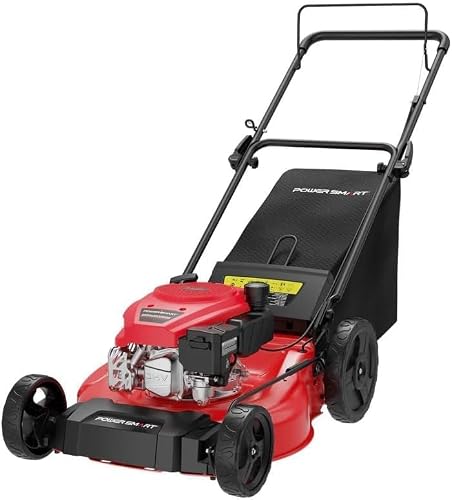
The PowerSmart 22-Inch Self Propelled Gas Lawn Mower is a solid walk-behind model built for everyday residential lawn care. Its all-steel 22-inch deck and overall construction create a durable first impression suited to regular use on typical home yards.
Performance centers on the 170cc 4-cycle OHV engine that supplies ample cutting power with auto choke and recoil starting for quick operation. The self-propelled rear-wheel drive delivers strong traction on slopes and rough ground, while the 3-in-1 system supports mulching, bagging with the 60L grass bag, or rear discharge. Six rear-wheel height settings let users dial in the preferred cut easily.
Drawbacks include the maintenance demands of a gas engine such as fuel and oil needs, along with the manual recoil starter that requires more effort than electric-start options. Height control is also limited to the rear wheels rather than a more comprehensive system.
This mower delivers the most value for homeowners managing medium to larger uneven yards who want self-propulsion and multi-mode flexibility in a straightforward gas package without needing advanced electric features.

Pros
- Auto choke and recoil starter simplify engine starting for dependable performance.
- Rear-wheel-drive self-propulsion improves control and reduces fatigue on hills.
- Versatile 3-in-1 mulch bag rear discharge options with spacious 60L bag.
- Rugged all-steel 22-inch deck built for long-term durability.
- Quick tool-free assembly by just unfolding the handle.
Cons
- Recoil pull-start system requires physical effort to engage the engine.
- Gas engine needs fuel and regular maintenance unlike battery models.
- Steel deck construction favors toughness but can feel heavier during maneuvering or storage.
The PowerSmart 22 in. 170cc Self Propelled Gas Lawn Mower is a walk-behind unit built around a sturdy all-steel deck and rear-wheel-drive layout. Its design prioritizes durability and straightforward operation, giving an immediate impression of a no-nonsense residential mower ready for regular seasonal use on typical home lawns.
Performance centers on the 170cc gas engine with auto choke and recoil starter that supplies solid cutting force, while the self-propelled RWD system delivers traction on slopes and uneven ground. The 22-inch heavy-duty blade, 3-in-1 mulch bag rear discharge modes, large 60L bag, and 6-position height adjustment work together to handle varied grass conditions efficiently with minimal user strain once underway.
Considerations include the manual pull-start that demands physical effort and the gas powertrain that requires fuel and routine upkeep. The steel deck adds lasting strength yet may increase overall handling weight compared with lighter alternatives when moving or storing the unit.
This mower is best for homeowners managing medium lawns with mild hills or mixed terrain who want gas power, multipurpose cutting flexibility, and simple tool-free setup. Users preferring electric starts or cordless convenience should weigh other choices.
The primary advantage of mulching leaves isnutrient recycling. As leaves decompose, they return nitrogen, phosphorus, and potassium to your lawn, the same nutrients you’d otherwise pay for in commercial fertilizers. This process also reduces yard waste, improves soil structure, and supports beneficial soil microorganisms.
Mulching works best in moderate leaf volumes. If leaves completely blanket your lawn more than 2-3 inches thick, they may smother grass. In those cases, you can either mulch in multiple passes or remove excess leaves before mulching.
Preparing Your Mower for Leaf Mulching
Mower Type Considerations
Both push mowers and riding mowers can mulch leaves effectively. Push mowers work well for small to medium yards and give you better control over coverage. Riding mowers are more efficient for larger properties and reduce physical effort. The key requirement is that your mower has or can accommodate a mulching blade.
A mulching blade differs from standard mower blades. It has curved or serated edges that create a vacuum effect, repeatedly lifting and chopping leaves rather than simply cutting them once. To install a mulching blade:
- Disconnect the spark plug wires to prevent accidental starting
- Tip the mower on its side (air filter side up on gas mowers)
- Remove the existing blade by loosening the center bolt
- Install the mulching blade with the marked side facing down (check manufacturer instructions)
- Tighten the center bolt securely
- Reconnect spark plug wires and test
Always refer to your mower’s manual for specific installation steps, as designs vary. For troubleshooting and reliability insights, consult our in-depth z890 vs x870e motherboard report.
Mower Settings for Mulching
Set your mower deck to its highest position (typically 3-4 inches). Higher cutting heights serve two purposes: they allow leaves to circulate longer in the deck before discharge, creating finer mulch, and they protect your grass from damage during repeated passes. Lower settings may scalp your lawn and reduce mulching effectiveness. Readers comparing setup options can review our technical analysis on marshall stanmore iii vs harman kardon onyx studio 8.
Preparing Leaves for Successful Mulching
Leaf Moisture Content
Dry leaves mulch significantly better than wet leaves. Wet leaves clump together, clog the mower deck, and resist chopping into fine particles. Wait for a dry day or allow leaves to air-dry for 1-2 days after rain before mulching. Morning dew typically isn’t a problem, but leaves should be completely dry to the touch. For complementary field maintenance guidelines, examine our breakdown of dyson v8 cyclone vs bissell featherweight stick.
Leaf Thickness and Coverage
Ideally, leaves should cover your lawn in a layer 1-2 inches thick before mulching begins. If leaves are deeper than3 inches, rake them into manageable piles and mulch section by section, or remove excess leaves beforehand. This prevents mower clogging and ensures more uniform mulching.
Timing Considerations
Mulch leaves while they’re still fresh and relatively intact. As leaves age, they become britle and fragment into dust rather than being chopped into usable mulch particles. Fall is the ideal season. Winter mulching is possible in mild climates but becomes difficult as leaves decompose and lose structure.
Step-by-Step Mulching Technique
Mowing Pattern and Passes
Use an overlapping mowing pattern to ensure complete coverage. If mowing in straight lines, overlap each pass by about 50% of your mower’s cutting width. This ensures every section of lawn receives multiple passes, creating finer mulch particles.
Start with one complete pass over the entire lawn. Check the results: if leaves are still visible or chunky, make a second pass perpendicular to the first. Most leaf mulching requires2-3 passes, though extremely thick leaf cover may need 4 passes.
Mowing Speed
Mow at a slower speed than you would for routine grass cutting. Slower speeds allow leaves to circulate longer in the mower deck, creating finer particles. Moving too quickly reduces mulching effectiveness and risks clogging. Adjust your pace to what feels controlled and deliberate rather than rushed.
Handling Dense Leaf Piles
If you encounter dense, compacted leaves, break them up manually with a rake or leaf blower before mowing. Alternatively, make a first pass slowly without expecting complete mulching, then rake up any remaining chunks and mow again. Never force a clogged mower, stop and clear the deck to prevent equipment damage.
Benefits of Mulching Leaves for Lawn Health
Nutrient Cycling and Soil Improvement
Leaves contain valuable nutrients that trees extracted from soil during the growing season. When mulched leaves decompose on your lawn, those nutrients return to the soil where grass roots and soil microorganisms can access them. This reduces your reliance on synthetic fertilizers and builds soil organic matter over time.
Decomposition Timeline
Fine leaf mulch typically decomposes within one growing season (spring through fall), though timing varies based on climate, moisture, and mulch fineness. In warm, moist conditions, decomposition is faster. In cool, dry climates, it may extend into the next season. You’ll notice mulch gradually disappearing as it breaks down and integrates into your lawn.
Waste Reduction
Mulching leaves eliminates the need for bagging, hauling, and disposing of yard waste. This reduces your household’s carbon footprint and saves time compared to raking and disposal. Mulching also reduces municipal yard waste, which benefits local waste management systems.
Common Mulching Problems and Solutions
Mower Clogging and Discharge Issues
If your mower clogs with mulched leaves, the problem is usually too much material entering the deck at once. Solutions include making slower passes, reducing mowing width by following a narrower path, or removing excess leaves before mowing. Clean out the mower deck regularly during mulching to prevent buildup.
Wet Leaves Won’t Mulch Properly
If you’ve started mulching and leaves are clumping rather than chopping, stop and wait for conditions to dry. Attempting to force wet leaves through the mower wastes fuel and can damage the blade. Come back the next day or after several hours of drying.
Uneven Mulch Distribution
Overlapping mowing passes ensures even distribution. If you notice bare spots or thick patches, adjust your pattern. You can also use a leaf blower to redistribute uneven mulch after the final pass.
Winter Mulching Challenges
In cold climates, leaves become brittle and are harder to mulch into fine particles. If you must mulch in late fall or winter, expect less uniform results. Cold also slows decomposition, so mulch may remain visible longer before breaking down.
Maintenance Tips for Mulching Season
- Clean your mower deck regularly after each mulching session to prevent buildup and corosion
- Inspect and sharpen your mulching blade at the start of leaf season and as needed;dull blades tear rather than chop
- Check spark plugs and filters before heavy use, as leaf debris can affect engine performance
- Maintain proper fuel for your mower and consider using fuel stabilizer if storing until spring
Buyer FAQs: How To Mulch Leaves With A Mower Solved
How many passes does it take to mulch leaves completely?
Most leaves require 2-3 mowing passes to break down into fine mulch. The exact number depends on leaf thickness, leaf type (smaller leaves mulch faster than large oak leaves), blade sharpness, and mower power. Make your first pass, assess the results, and continue with additional passes as needed until leaves are finely chopped and mostly invisible from above.
Is it okay to leave mulched leaves on your lawn all winter?
Yes, mulched leaves can remain on your lawn through winter without harming grass. In fact, leaving them provides insulation for soil and dormant grass roots. The mulch will gradually decompose and integrate into soil by spring. If you’re concerned about appearance, wait until leaves are nearly broken down before winter.
Can you mulch leaves in wet conditions?
Wet leaves should not be mulched because they clump, clog the mower, and create uneven results. Wait for dry conditions, ideally, leaves should be completely dry to the touch. If your area receives frequent rain, plan mulching for windows of clear weather in fall.
What if you have a mower without a mulching blade?
You can install a mulching blade as an aftermarket part on most mowers (check compatibility with your model). Alternatively, you can use a standard blade and make multiple slow passes over leaves. Results won’t be as fine as with a dedicated mulching blade, but the process still works for moderate leaf volumes.
Further Reading on Mower Safety
Mulching leaves sends debris back into the deck and can throw clippings toward bystanders, so planning ahead helps. Anyone interested in protecting people near mowing equipment can turn to American National Standards Institute (ANSI), which is worth a quick read.