As an Amazon Associate we earn from qualifying purchases. When you buy through our links, we may earn a commission at no extra cost to you. Prices and availability are subject to change on Amazon. Affiliate disclosure ›
How Much Do Zero Turn Mowers Weigh?
Residential zero-turn mowers typically weigh 500-900 lbs, mid-size models run900-1,200 lbs, and commercial units weigh 1,200-2,500 lbs. Learn what drives weight, the difference between dry and curb weight, and how to assess trailer capacity and lawn impact.
Direct Answer: Residential zero-turn mowers typically weigh about 500 to 900 lbs, mid-size or prosumer models run roughly 900 to 1,200 lbs, and commercial or wide-deck units weigh about 1,200 to 2,500 lbs. Always check whether the figure is dry weight or curb weight (with fuel, blades, and accessories), because the two can differ by 50 to 100+ lbs, which matters for trailer ratings, garage storage, and turf impact.
Field-Verified Equipment & Replacement Hardware
Our editorial team’s recommended OEM-grade replacement parts and heavy-duty equipment selections to ensure optimal reliability and performance.
The Flagship Score evaluates build engineering, verified performance signals, and long-term owner satisfaction.
Updated: Oct 3, 2026
Last update on Oct 3, 2026. Product prices and availability are accurate as of that date/time and are subject to change. Any price and availability information displayed on Amazon.com at the time of purchase will apply. Affiliate links / Images, product titles, and product highlights from Amazon.
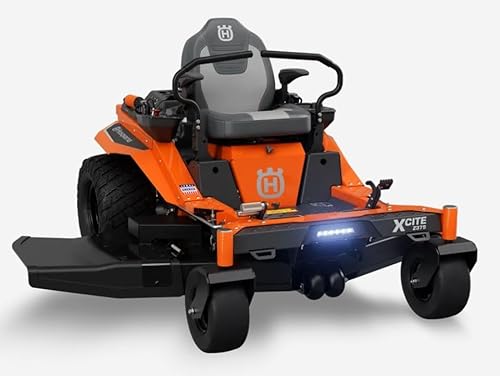
The Husqvarna Xcite Z375 is a high-performance zero-turn riding lawn mower designed for large properties, offering a powerful 26HP Kohler 747cc V-Twin engine and durable 60-inch fabricated steel deck for efficient cutting.
Pros & Cons
Pros
Robust 26HP Kohler engine provides ample power for demanding mowing tasks and thick vegetation
Large 60-inch fabricated steel deck enables faster coverage of extensive lawn areas
Durable 3-blade fabricated construction enhances deck longevity and resistance to wear
Zero-turn capability offers precise control and reduced mowing time in complex layouts
Cons
Large 60-inch deck and overall zero-turn size demand significant storage space and may not suit smaller properties
Base specifications lack details on accessories such as mulching kits or baggers, which may need separate purchase
High-powered engine setup could increase fuel use during long sessions relative to lower-horsepower models
Detailed Review
The Husqvarna Xcite Z375 is a zero-turn riding lawn mower engineered for large-scale residential and light commercial mowing. It combines a solid fabricated steel build with a capable Kohler power plant, creating an immediate impression of durability and purposeful design suited to expansive properties.
Performance centers on the 26HP 747cc Kohler V-Twin engine that supplies strong, consistent power for thick grass and varied terrain, paired with the 60-inch 3-blade fabricated steel deck. This setup delivers a wide, clean cut that covers ground efficiently and maintains quality across long sessions.
Considerations include the substantial footprint of the 60-inch deck and zero-turn frame, which requires ample storage and may feel oversized for compact yards. Available data also omits specifics on add-ons or comfort options, so buyers should confirm full feature sets independently.
The Husqvarna Xcite Z375 delivers the most value for owners of large lawns or light commercial operators who prioritize raw cutting power, deck durability, and zero-turn efficiency over compact size or extensive accessory packages.
The Flagship Score evaluates build engineering, verified performance signals, and long-term owner satisfaction.
Updated: Oct 3, 2026
Last update on Oct 3, 2026. Product prices and availability are accurate as of that date/time and are subject to change. Any price and availability information displayed on Amazon.com at the time of purchase will apply. Affiliate links / Images, product titles, and product highlights from Amazon.
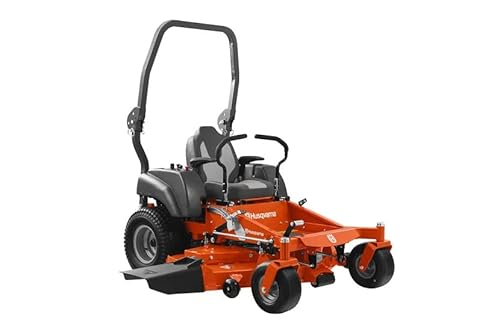
The Husqvarna MZ61 is a commercial-grade zero-turn riding lawn mower built for large properties and heavy-duty use, featuring a 24HP Kawasaki V-Twin engine and wide 61-inch fabricated deck for fast, precise cutting.
Pros & Cons
Pros
Powerful 24HP/726cc Kawasaki V-Twin engine for reliable high-output performance
Wide 61-inch fabricated 3-blade deck for efficient coverage of large areas
Commercial-grade Hydro Gear ZT-3100 transmission for durable zero-turn handling
Generous 5-gallon fuel tank and included ROPS for practical all-day use and safety
4-year consumer warranty coverage on the complete machine
Cons
Large 61-inch deck and zero-turn frame require substantial storage space and may feel oversized for small residential yards
Commercial-oriented components can demand more maintenance knowledge than basic consumer mowers
No bagging, mulching kit, or additional attachments listed as standard equipment
Detailed Review
The Husqvarna MZ61 is a robust zero-turn riding lawn mower from the brand's commercial-leaning lineup, pairing a heavy-duty fabricated deck with a ROPS safety structure. Its overall build emphasizes durability and operator protection for demanding outdoor work rather than lightweight residential convenience.
Performance centers on the 24HP/726cc Kawasaki FR730V Series V-Twin engine that supplies ample torque for thick or wet grass, while the 61-inch 3-blade fabricated deck cuts wide swaths efficiently. The Hydro Gear ZT-3100 commercial hydrostatic transmission enables smooth, precise zero-turn steering that reduces time spent trimming edges and navigating landscaping. A 5-gallon fuel tank further supports longer continuous runs on expansive properties.
Potential drawbacks include the mower's substantial size, which can make storage and transport more challenging for users with limited space. The commercial-grade components also mean the machine may require more frequent or specialized maintenance compared to simpler residential models, and no bagging or mulching systems are noted as included.
Overall, the Husqvarna MZ61 delivers the strongest value for owners of large lawns, estates, or light commercial grounds who prioritize cutting speed, engine reliability, and safety features. Smaller-yard users will likely find it oversized for their needs.
The Flagship Score evaluates build engineering, verified performance signals, and long-term owner satisfaction.
Updated: Oct 3, 2026
Last update on Oct 3, 2026. Product prices and availability are accurate as of that date/time and are subject to change. Any price and availability information displayed on Amazon.com at the time of purchase will apply. Affiliate links / Images, product titles, and product highlights from Amazon.
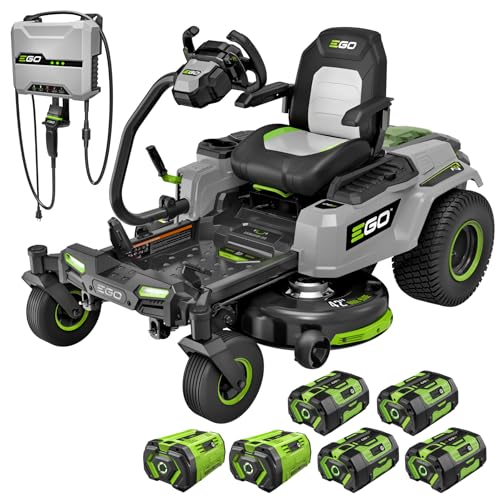
The EGO POWER+ Z6 ZT4215S is a battery-powered zero-turn riding lawn mower designed for homeowners with large yards, delivering Peak Power equal to a 24HP gas engine and up to 2 acres of runtime with included 56V batteries plus e-STEER precision.
Pros & Cons
Pros
Delivers powerful Peak Power performance matching traditional 24HP gas zero-turn mowers while remaining fully electric
Long 2-acre runtime with the complete included battery set reduces downtime for most residential properties
Advanced e-STEER wheel and digital controls offer precise maneuverability and customizable mowing experience
Durable steel deck with suspension and IPX5 rating handles varied terrain and weather conditions quietly
Comprehensive warranty coverage (up to 5 years with registration) supports long-term ownership confidence
Cons
Runtime capped at approximately 2 acres may require recharging for properties larger than that size
Relies entirely on the proprietary EGO 56V battery and charger ecosystem for operation and expansion
Electronic steering wheel design may require an adjustment period for users accustomed to traditional lever controls
Detailed Review
The EGO POWER+ Z6 ZT4215S is a premium battery-powered zero-turn riding lawn mower built for residential users who want gas-like power without the noise, fumes, or maintenance. Its wide frame design and 42-inch 12-gauge stamped steel deck create a solid, balanced feel, especially on slopes, while the deck suspension system helps deliver a quieter cut. The overall impression is of a modern, well-engineered machine that prioritizes ease of use and durability through its IPX5 weather-resistant construction.
Performance centers on Peak Power technology that combines the output of up to six 56V ARC Lithium batteries to match a 24-horsepower gas engine. With the two included 10.0Ah and four 6.0Ah batteries, it can cover up to 2.0 acres on a single charge. The dual-blade system offers adjustable speeds from 2300 to 3200 RPM, ten cutting heights from 1.5 to 4.5 inches, and three driving modes (Control, Standard, Sport) that reach 8 MPH. Industry-leading e-STEER technology uses a steering wheel with advanced electronics for precise zero-turn control, while the color digital screen and EGO Connect app allow real-time customization of speed, blade settings, cruise control, and battery monitoring.
Potential drawbacks include the 2-acre runtime limit, which means larger properties will need mid-job recharging using the included 800W charger. The mower depends completely on the EGO 56V battery platform, so expansion or replacements stay within that ecosystem. Some users transitioning from traditional zero-turn levers may also need time to adapt to the electronic steering wheel.
Overall, the EGO POWER+ Z6 ZT4215S delivers excellent value for homeowners with lawns up to a couple of acres who prioritize quiet electric operation, strong cutting performance, and smart features. Those seeking a reliable, low-maintenance alternative to gas zero-turns with solid warranty support will find this model particularly well suited.
How Much Does a Zero Turn Mower Weigh by Class?
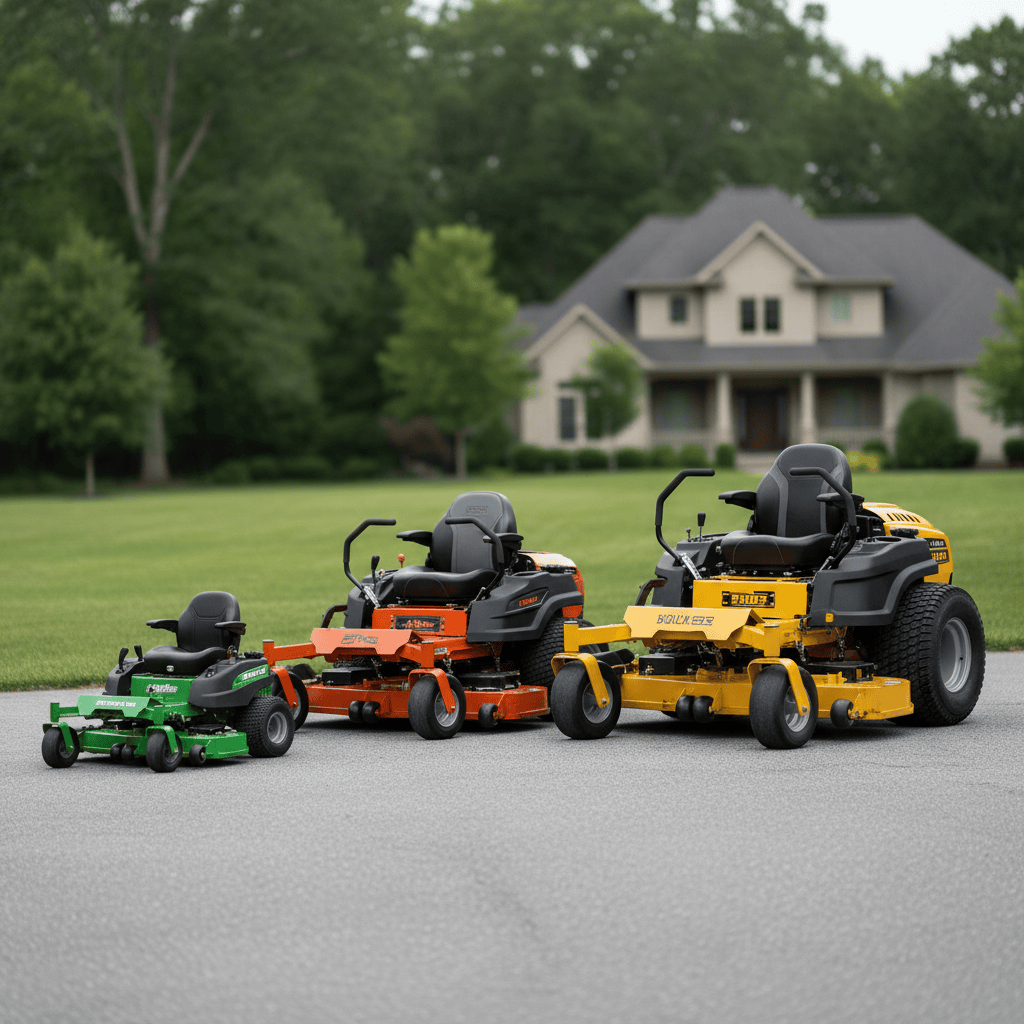
Zero-turn mower weight varies significantly depending on the mower’s class and intended use. Understanding these ranges helps you assess whether model fits your trailer capacity, garage storage, and lawn needs.
Residential Zero-Turn Mowers (500 to 900 lbs)
Residential zero-turn mowers, designed for homeowners with typical yard sizes (up to 2 to 3 acres), typically weigh between 500 and 900 pounds. These machines feature smaller engines (usually 18 to 26 hp), narrower cutting decks (42 to 54 inches), and lighter-duty frames and components. A typical 48-inch residential model hovers around 650 to 750 lbs in dry weight.
Mid-Size or Prosumer Zero-Turn Mowers (900 to 1,200 lbs)
Mid-duty or prosumer zero-turn mowers, used by serious homeowners, small landscaping operations, or property managers, generally weigh between 900 and 1,200 pounds. These machines have more powerful engines (typically 26 to 35 hp), wider decks (54 to 60 inches), reinforced frames, and heavier tires designed for longer daily use and rougher terrain. A 60-inch prosumer model often weighs around 1,050 to 1,150 lbs.
Commercial or Wide-Deck Zero-Turn Mowers (1,200 to 2,500 lbs)
Commercial-grade zero-turn mowers for landscaping professionals and property maintenance crews range from 1,200 to 2,500 pounds or more, depending on deck width and engine size. These robust machines feature powerful engines (35 to 70+ hp), wide decks (60 to 84+ inches), heavy-duty steel frames, and reinforced hydraulic and electrical systems. A typical 72-inch commercial model weighs around 1,600 to 1,800 lbs, while the largest 84-inch models can exceed 2,200 lbs.
What Factors Determine a Zero Turn Mower’s Weight?
Mower weight is not arbitrary, it results from specific design and material choices. Understanding the main weight drivers helps you anticipate how a mower will perform and handle.
Engine Size and Power
The engine is one of the heaviest single components on a zero-turn mower. Larger, more powerful engines ad significant weight. A typical 18hp engine might weigh 80 to 120 lbs, while a 50 hp commercial engine can weigh 250 to 350 lbs or more. Engine weight scales roughly with displacement and durability requirements.
Deck Size and Material
The cutting deck, the frame and undercarriage that holds the blades, contributes substantially to total weight. Wider decks require more material and more robust construction. A residential 48-inch deck might weigh 150, 200 lbs, while a commercial 72-inch steel deck can weigh 400, 600 lbs. Deck material also matters: steel decks are heavier than composite alternatives but offer greater durability in professional use. For broader ecosystem context, read through our operational guide on marshall stanmore iii vs harman kardon onyx studio 8.
Frame and Chassis Construction
The overall frame and chassis provide structural support and stability. Residential mowers use lighter steel or welded tubular frames, while commercial units employ reinforced, thicker-gauge steel frames designed to handle years of daily use. Frame weight typically ranges from 200 to 500 lbs depending on mower class.
Tires and Wheels
Pneumatic tires and wheels contribute 100, 200+ lbs depending on their size and tread type. Larger, more robust tires designed for rough terrain and commercial use are heavier than residential all-terrain tires. A full set of four commercial-grade tires can weigh significantly more than residential equivalents. For troubleshooting and reliability insights, consult our in-depth dyson v8 cyclone vs bissell featherweight stick report.
Fuel Tank, Hydraulics, and Accessories
Additional systems ad weight incrementally. Fuel tanks, hydraulic fluid reservoirs, battery systems, and integrated mulching or bagging attachments all contribute. A full fuel tank (typically 5 to 10 gallons in residential models, 12 to 20+ gallons in commercial units) adds 40 to 150 lbs depending on capacity.
Dry Weight vs. Curb Weight: Which Number Should You Use?
One of the most common sources of confusion in mower weight comparisons is the distinction between dry weight and curb weight. These figures can differ by 50, 100+ lbs, which has real implications for trailer capacity and storage planning. Readers comparing setup options can review our technical analysis on bissell crosswave hydrosteam vs shark stainforce.
Dry Weight Definition
Dry weight is the weight of the mower with no fuel, oil, coolant, or hydraulic fluid. It represents the bare machine and is often used by manufacturers as a baseline specification. Dry weight is useful for understanding the structural load but does not reflect how the mower will actually weigh when you operate it.
Curb Weight Definition
Curb weight (also called operating weight or wet weight) includes all fluids necessary for operation: fuel, engine oil, hydraulic fluid, coolant, and sometimes the battery. Curb weight is the true weight of the mower as it sits ready to mow. A typical fuel tank might ad 40 to 80 lbs, engine oil adds 10 to 15 lbs, and hydraulic fluid adds another 20 to 40 lbs, totaling 70 to 135 lbs of difference.
Shipping Weight
Shipping weight may include packaging and crating materials, inflating the figure even further. Always verify which weight metric a manufacturer is quoting in product listings or spec sheets.
Which Weight Should You Use?
For practical purposes, trailer towing, garage floor assessment, and storage planning, always use curb weight or ad 50 to 100 lbs to the dry weight figure. Trailer capacity ratings are based on actual operating conditions, and ignoring fuel and fluid weight can lead to overloading your trailer, which compromises safety and can damage equipment.
How to Check Trailer, Garage, and Storage Capacity Before Buying
Weight matters most when you need to move, store, or maintain the mower. Follow these steps to ensure your equipment and infrastructure can handle your new purchase.
Step 1: Know Your Trailer’s Weight Rating
Check your trailer’s Gross Vehicle Weight Rating (GVWR) and dry weight. Subtract the trailer’s dry weight from the GVWR to find the maximum payload capacity. For example, if your trailer has a GVWR of 2,500 lbs and weighs 800 lbs, you can safely load 1,700 lbs. Always compare this to the mower’s curb weight plus any additional cargo.
Step 2: Account for Accessories and Fuel
When towing, factor in the weight of a full fuel tank, any mulching bags or collection bins, toolracks, or ramps. These can add 50 to 150 lbs to the total load. A 900 lb residential mower with a full tank and accessories could approach 1,050 lbs or more.
Step 3: Assess Garage Floor and Ramp Capacity
Concrete garage floors typically support 200 to 300 lbs per square foot when properly poured. A zero-turn mower concentrates weight on four tires over a relatively small footprint. Calculate the ground pressure: divide the mower’s weight by the total tire contact area. Ramps should be rated for at least 1.5 times the mower’s weight (safety factor). If your garage floor is uneven, cracked, or suspect, consult a contractor before storing a1,500+ lb commercial mower.
Step 4: Check Lifting and Handling Equipment
If you use a jack, hoist, or lift to service the mower, verify that equipment’s weight rating exceds the mower’s curb weight by a safe margin. Commercial models (1,200 to 2,500 lbs) require heavy-duty equipment.
Does Mower Weight Affect Lawn Compaction or Performance?
Heavier mowers can potentially compact soil and grass, affecting lawn health. However, weight is only one factor; tire type and ground pressure matter equally or more.
Ground Pressure and Lawn Damage
Ground pressure is the force exerted per unit area and is determined by weight divided by the tire contact area. A lighter mower with narrow, hard tires can exert higher ground pressure than a heavier mower with wide, low-pressure tires. Lawns are generally resilient to ground pressures below 8 to 10 psi; pressures above 12 to 15 psi can cause visible compaction, ruting, or soil damage over repeated passes.
Tire Type as Mitigator
Commercial zero-turn mowers typically feature large, low-pressure turf tires designed to distribute weight evenly and minimize soil disturbance. Despite their higher total weight (1,200 to 2,500 lbs), they often cause less turf damage than a lighter residential mower with harder, narrow tires. Choosing a mower with proper turf tires matters more than total weight alone.
Slope Stability and Performance
Heavier mowers can be more stable on slopes due to their lower center of gravity and greater traction. However, extremely heavy machines (2,000+ lbs) may struggle on steep grades due to engine limitations. Most zero-turn mowers are designed to handle slopes up to 15 degrees safely; check the manufacturer’s specification for your model.
Common Questions on How Much Do Zero Turn Mowers Weigh Answered
What is the lightest type of zero-turn mower available?
Entry-level residential zero-turn mowers with 42 to 48 inch decks and 18 to 20 hp engines are the lightest options, typically ranging from 500 to 650 lbs in dry weight or 550 to 750 lbs in curb weight. These compact models sacrifice cutting width and engine power but are easier to transport and maneuver in tight spaces. For the absolute lightest option, some manufacturers offer compact36 to 40 inch zero-turns in the 400 to 500 lb range, though these are less common.
How much do popular brands like John Deere, Kubota, or Husqvarna typically weigh?
Weight varies by specific model within each brand’s lineup. John Deere’s residential Z335E (42-inch deck) weighs approximately 550 to 600 lbs, while the commercial Z994 (60-inch) weighs around 1,500+ lbs. Kubota and Husqvarna follow similar patterns: residential models in the 500 to 800 lb range and commercial units in the 1,200 to 2,000 lb range. Always consult the specific model’s spec sheet for exact curb weight rather than relying on brand-level generalizations.
Where can I find the exact weight for a specific model?
Manufacturer spec sheets are the authoritative source. Visit the brand’s official website, download the product manual or spec sheet, and look for the curb weight or operating weight figure. Dealer websites and product brochures typically include this information. If buying used, contact the dealer or previous owner and request documentation. Online retailer listings sometimes include weight but may list shipping weight instead, so verify with the manufacturer.
Will a heavier zero-turn mower damage my lawn?
Not necessarily. A heavier mower with properly designed low-pressure turf tires will typically cause less damage than a lighter mower with hard, narrow tires. Ground pressure, not total weight alone, determines turf impact. If you are concerned about lawn compaction, choose a mower with wide, pneumatic turf tires rated for residential use, and avoid mowing when the soil is waterlogged or overly soft. On well-draining, established lawns, modern zero-turn mowers are designed to operate safely without visible compaction damage.
Related Maintenance and Operating Guides
To keep your equipment running at peak operating efficiency, explore our related technical walkthroughs and maintenance tutorials:
Mechanical safety standards, operational tolerances, and protective gear guidelines align with benchmark specifications established by the American National Standards Institute (ANSI).