What Is CFM for Leaf Blowers? Direct Answer
CFM stands for cubic feet per minute and measures the volume of air a leaf blower can move in one minute. This metric indicates the blower’s power and effectiveness at clearing debris from yards. Higher CFM values mean the blower can move more air volume, making it more efficient for tackling larger areas and heavier debris like wet leaves. CFM is one of the two primary performance metrics for leaf blowers, alongside MPH (miles per hour), which measures air velocity.
What Does CFM Mean for Leaf Blowers?
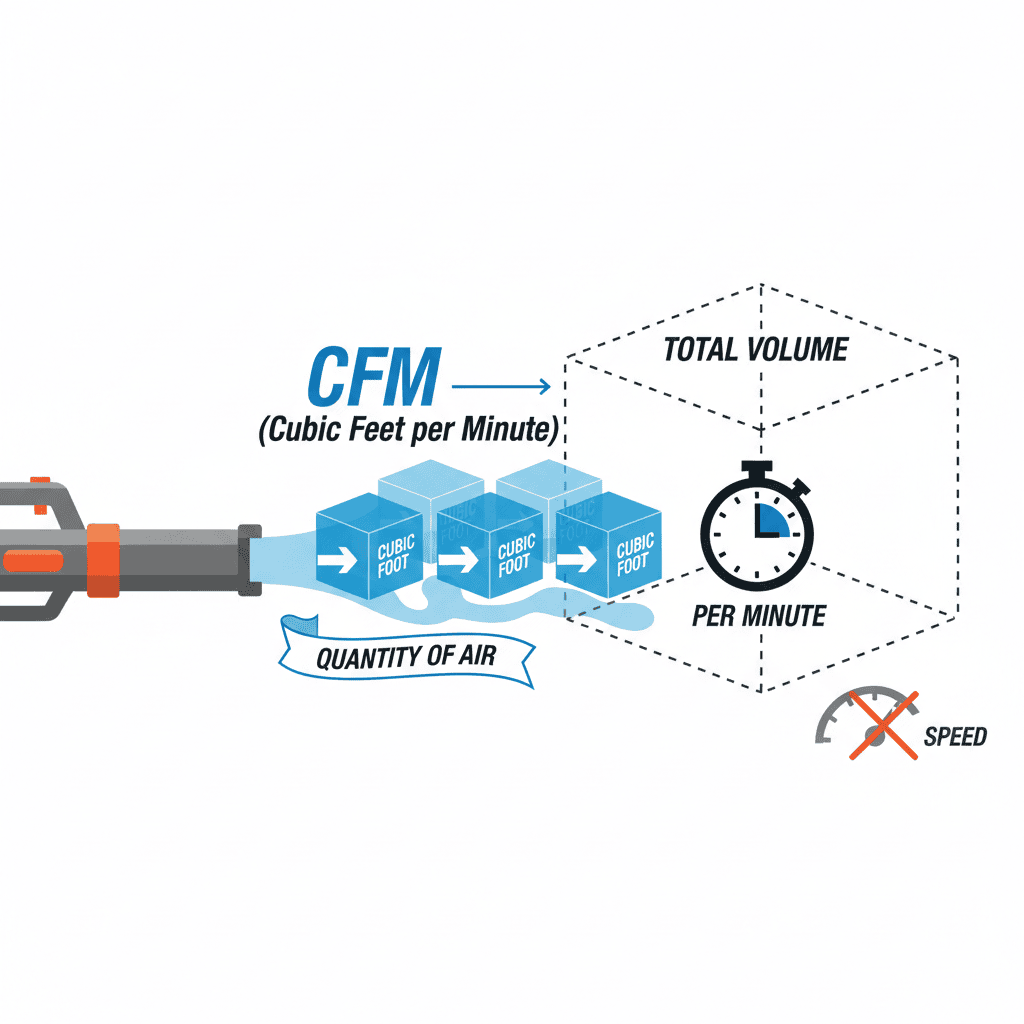
CFM is a fundamental measurement in leaf blower specifications that directly correlates to how much air the machine can push. Think of it as the quantity of air being moved, whereas MPH measures how fast that air travels. A leaf blower with 400 CFM moves significantly more air volume than one with 200 CFM, regardless of how fast the air travels.
How Is CFM Calculated for Leaf Blowers?
CFM is derived from the motor’s engine displacement, horsepower, and design efficiency. Manufacturers test leaf blowers under standardized conditions to measure the actual air volume expelled per minute. The calculation involves measuring the airflow at the blower’s outlet and converting it to cubic feet per minute. More powerful engines and optimized airflow designs typically produce higher CFM ratings.
Why Is CFM More Important Than Other Metrics for Certain Tasks?
CFM matters most when you need to move large volumes of debris or work with wet, heavy leaves. A high-CFM blower can push more material in less time, making it essential for:
- Clearing large yard areas efficiently
- Moving wet leaves that require more force
- Removing debris from gutters and hard-to-reach areas
- Professional landscaping work where speed and coverage matter
While MPH (air velocity) helps break up compacted debris, CFM (air volume) determines how much debris you can actually move. For most homeowners, CFM is the more practical metric to prioritize.
Typical CFM Ranges for Different Types of Leaf Blowers
Leaf blowers come in three main categories, each with distinct CFM ranges:
| Blower Type | Typical CFM Range | Best For |
|---|---|---|
| Handheld Leaf Blowers | 150–400 CFM | Small yards, light debris, quick cleanup tasks |
| Backpack Leaf Blowers | 400–800 CFM | Medium to large residential yards, moderate debris |
| Wheeled/Walk-Behind Blowers | 800–3,000+ CFM | Large properties, heavy debris, commercial use |
How CFM Affects Leaf Blower Performance
CFM directly impacts real-world performance in several practical ways. Understanding these effects helps you match a blower’s specifications to your actual yard conditions and cleanup needs.
CFM’s Influence on Wet Leaves vs. Dry Debris
Wet leaves are significantly heavier than dry leaves and require more air volume to move effectively. A leaf blower with 300 CFM might handle dry leaves easily but struggle with wet autumn leaves. For yards where wet leaves are common, you’ll want a CFM rating at least 100–150 CFM higher than what you’d need for dry debris alone. This extra air volume provides the force necessary to push moisture-laden leaves across your yard without clogging the blower’s chute.
The Relationship Between CFM, Air Velocity, and Blowing Efficiency
CFM and MPH work together to determine overall blowing efficiency. CFM represents air volume, while MPH represents air speed. A blower might have high CFM but moderate MPH, or vice versa. The most effective leaf blowers balance both metrics:
- High CFM + High MPH: Best performance for heavy debris and large areas
- High CFM + Moderate MPH: Good for volume work, lighter on noise and fuel consumption
- Moderate CFM + High MPH: Better for precision work and breaking up compacted debris
For most residential applications, a balanced combination of CFM and MPH provides the best practical results.
How Yard Size and Debris Type Correlate With Required CFM
Your yard’s size and the type of debris present should guide your CFM selection:
- Small yards (under 5,000 sq ft) with light debris: 200–300 CFM is typically sufficient
- Medium yards (5,000–15,000 sq ft) with moderate debris: 400–600 CFM provides efficient coverage
- Large yards (over 15,000 sq ft) or heavy debris: 700+ CFM ensures reasonable cleanup time
- Wet leaves or compacted debris: Add 100–200 CFM to your baseline requirement
CFM vs. MPH: Understanding the Key Metrics
Both CFM and MPH appear on leaf blower specifications, but they measure different aspects of performance. Confusion between these metrics often leads to poor purchasing decisions.
When Should Buyers Prioritize CFM Over MPH?
Prioritize CFM when your primary goal is moving large quantities of debris quickly. CFM matters most for:
- Clearing extensive yard areas
- Handling wet or heavy leaves
- Moving debris piles from one location to another
- Professional or commercial landscaping work
- Situations where cleanup speed is important
Conversely, prioritize MPH when you need to break up compacted or wet debris, clear gutters, or work in tight spaces where precision matters more than volume.
How Manufacturers Balance CFM and MPH
Manufacturers face trade-offs when designing leaf blowers. Optimizing for maximum CFM might sacrifice some air velocity, and vice versa. Engine displacement, fan design, and air pathway geometry all influence this balance. Premium models often achieve both high CFM and high MPH, but they typically cost more and consume more fuel or battery power.
Can a Leaf Blower Have High MPH but Low CFM?
Yes, this is entirely possible. A blower with high MPH but lower CFM will excel at pushing small amounts of material very forcefully—ideal for breaking up compacted leaves or clearing gutters. However, it won’t move large volumes of debris efficiently. This type of blower suits homeowners with small yards or specific precision tasks but frustrates those needing to clear large areas quickly. Always check both specifications rather than focusing on a single metric.
How to Choose the Right CFM for Your Needs
Selecting the appropriate CFM requires honest assessment of your yard conditions, cleanup frequency, and physical capability to handle the equipment.
CFM Recommendations for Small Suburban Yards
For typical suburban properties under 10,000 square feet with moderate seasonal debris, a handheld or lightweight backpack blower with 300–500 CFM provides excellent value and performance. This range offers:
- Sufficient power for regular maintenance cleanups
- Manageable weight and fatigue during extended use
- Reasonable fuel consumption or battery life
- Adequate performance for dry leaves and light debris
If your yard frequently has wet leaves or you prefer faster cleanup, consider the higher end of this range (450–500 CFM).
CFM Requirements for Large Properties and Heavy-Duty Work
Properties exceeding 15,000 square feet or those with significant seasonal debris require 700+ CFM for reasonable cleanup times. Commercial landscapers and property managers typically use wheeled blowers with 1,000–3,000+ CFM to handle multiple properties efficiently. At this level, you’re investing in professional-grade equipment designed for daily use and heavy debris loads.
CFM Considerations for Homeowners vs. Professionals
Homeowners should prioritize efficiency and ease of use. A 400–600 CFM backpack blower handles most residential situations without excessive weight or noise. Homeowners use their blowers seasonally, so mid-range specifications offer the best balance of performance and practicality.
Professionals need higher CFM ratings (800+) to complete multiple properties in a single workday. They also prioritize durability, reliability, and fuel efficiency over initial cost. Professionals often use wheeled blowers or commercial-grade backpack models designed for continuous operation.
Additional Factors When Evaluating CFM
Power Source Considerations
CFM ratings vary by power source:
- Gas-powered blowers: Generally achieve the highest CFM ratings (500–3,000+) but require maintenance and produce emissions
- Corded electric blowers: Moderate CFM (200–500) with unlimited runtime but limited mobility
- Battery-powered blowers: Improving CFM ratings (200–700) with zero emissions and low noise, though runtime is limited
Noise and Environmental Impact
Higher CFM blowers typically produce more noise and consume more fuel or electricity. Consider your neighborhood’s noise ordinances and your environmental preferences when selecting CFM. Some areas restrict blower use during certain hours or require quieter equipment, which may limit your CFM options.
Weight and Ergonomics
Higher CFM blowers are generally heavier. A 700 CFM backpack blower weighs significantly more than a 400 CFM model. If you have physical limitations or need to use the blower for extended periods, prioritize comfort alongside CFM specifications.
Frequently Asked Questions
What CFM do I need for a 1-acre yard?
A 1-acre yard (approximately 43,560 square feet) is quite large and benefits from a CFM rating of at least 800–1,200. This range allows you to clear the property in reasonable time without excessive fatigue. If your property has heavy seasonal debris or frequent wet leaves, aim for 1,000+ CFM. A wheeled or commercial-grade backpack blower is ideal for properties this size.
Is 400 CFM enough for a residential yard?
For most residential yards under 10,000 square feet with typical seasonal debris, 400 CFM is adequate. However, if you frequently encounter wet leaves, have dense tree coverage, or prefer faster cleanup, consider stepping up to 500–600 CFM. The extra power provides noticeable improvement in efficiency without dramatically increasing weight or cost.
How does CFM affect battery life on cordless leaf blowers?
Higher CFM settings on battery-powered blowers consume more energy and reduce runtime. A cordless blower might achieve 45 minutes of runtime at lower CFM settings but only 20–30 minutes at maximum CFM. If you have a large property, consider purchasing a second battery or choosing a gas-powered model for extended use.
Can I compare CFM ratings between different brands?
CFM ratings should be comparable across brands when measured under standard conditions, though manufacturers sometimes use different testing methods. When comparing models, verify that CFM ratings were measured at the same conditions (nozzle diameter, distance, etc.). Reading independent reviews and user feedback helps validate whether advertised CFM translates to real-world performance.
Summary: Making Your CFM Decision
CFM is the most important metric for understanding leaf blower performance because it directly measures air volume—the quantity of debris you can move. Matching the right CFM to your yard size, debris type, and cleanup frequency ensures you invest in equipment that meets your actual needs without overpaying for unnecessary power or struggling with insufficient capability.
Start by assessing your yard size and typical debris conditions, then select a blower in the appropriate CFM range. For most homeowners, 400–600 CFM provides an excellent balance of performance, weight, and cost. Remember that CFM works alongside MPH to determine overall effectiveness, so consider both metrics when making your final decision. With the right CFM-rated blower, seasonal yard cleanup becomes faster, easier, and more enjoyable.